
Indiana Republicans Defy Trump in Stunning Rejection of Redistricting Map
A bipartisan coalition in Indiana delivers an unexpected blow to Trump’s national strategy to reshape congressional districts.
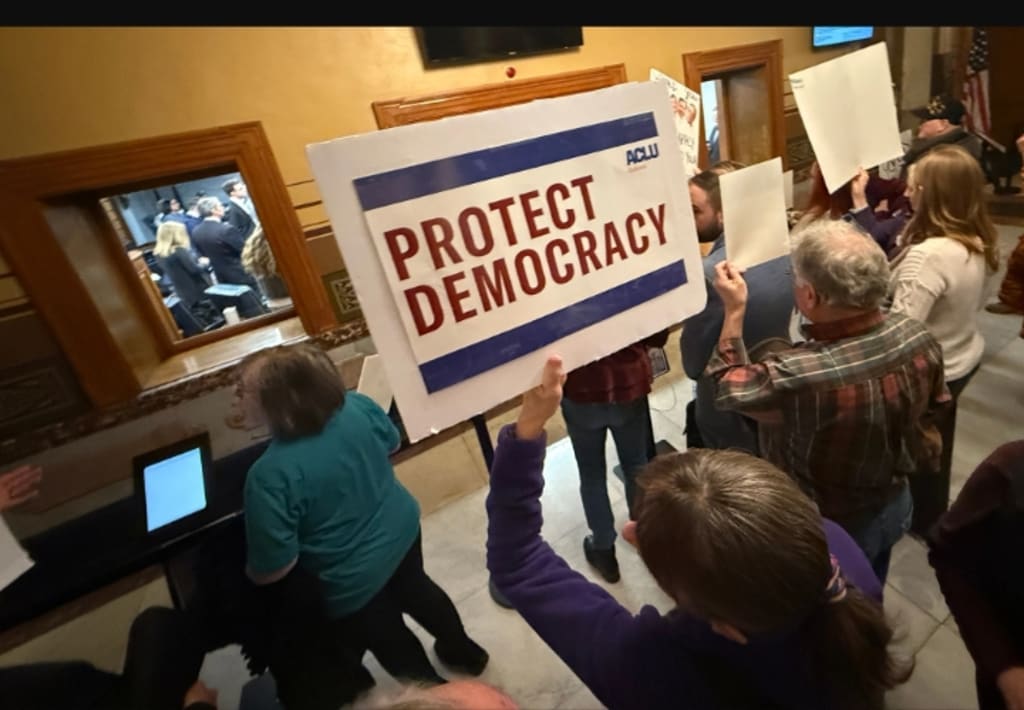
For months, Indiana has been at the center of a political drama that almost felt scripted for prime-time television. Former President Donald Trump had his eyes set on the Hoosier State, pushing hard for a new congressional map that would have strengthened Republican control and squeezed out the last remaining Democratic districts.
But in a stunning twist, Indiana Republicans themselves said “no.”
Yes—Republicans.
In a vote that shocked political observers and irritated Trump’s inner circle, the Indiana Senate rejected Trump’s redistricting map 31–19, with a remarkable 21 Republicans joining Democrats to block the plan. For a state that has long been considered deep-red, this wasn’t just a political disagreement—it was a full-on rebellion.
And that’s where the story gets interesting.
So… What Was Trump Trying to Do?
To understand why this vote matters, you have to look at the bigger picture. Trump and his allies have been pushing a multi-state strategy to redraw congressional maps before the 2026 midterms. Normally, redistricting only happens once a decade after the Census.
But this time, the goal was different:
redraw the lines early to pick up more Republican seats in tight national battles.
In Indiana, the Trump-backed map would have turned the state’s two Democratic districts—one in Indianapolis and another in northwest Indiana—into strongly Republican territory. If the plan succeeded, Republicans could have gone from 7 out of 9 seats to a clean sweep of all 9.
On paper, it was the perfect GOP dream.
In reality, the dream collapsed.
Why Did Indiana Republicans Rebel?
This is where the story becomes less about party politics and more about pressure—and pushback.
Many Indiana Republican senators described the national pressure campaign around the map as “over the top,” “aggressive,” and even borderline threatening. Trump personally reached out to lawmakers. His allies issued warnings about future primary challenges. Outside groups promised financial consequences if the map didn’t pass.
And instead of motivating lawmakers, the pressure backfired.
Several senators reported that their constituents didn’t want a mid-decade redistricting at all. Others said the map sliced up communities for political gain. To many of them, the entire attempt felt like political manipulation rather than responsible governance.
The result? A bipartisan coalition formed—not out of love, but out of shared frustration.
That coalition killed the map.
Trump’s Strategy Takes a Hit
For Trump, the Indiana vote wasn’t just a minor speed bump—it was a strategic setback.
His broader national push is based on the belief that Republicans can expand their House majority if they redraw enough favorable maps. That’s why he also targeted states like Texas and Missouri.
But Indiana was supposed to be an easy win.
A strong Republican state.
Friendly lawmakers.
A loyal voter base.
Instead, it became a public reminder that even in red America, Trump’s influence has limits.
And he definitely didn’t take the defeat lightly.
His allies quickly vowed revenge at the ballot box, hinting at primary challenges for Republicans who voted no. Meanwhile, Indiana’s governor criticized the Senate and sided with Trump, further exposing fractures inside the GOP.
Democrats Celebrate… Quietly
While Republicans fought among themselves, Democrats got to keep something they rarely get to hold in Indiana:
their existing districts.
The failure of the Trump map preserves the seats held by Rep. André Carson and Rep. Frank Mrvan, who represent the only two Democratic-leaning areas in the state.
For Democrats nationwide, this was a rare win in a year dominated by GOP-driven redistricting maneuvers.
What Happens Next?
For now, Indiana’s congressional map stays exactly the same. No new boundaries. No extra Republican seats. No mid-decade surprises.
But the political fallout is just beginning.
Trump loyalists are preparing to target GOP lawmakers who opposed him.
Indiana Republicans are split between pro- and anti-redistricting camps.
National strategists are rethinking how much influence Trump still has over state-level politics.
And both parties are eyeing the 2026 midterms, where every seat will matter in a razor-thin U.S. House.
One thing is clear:
Indiana didn’t just reject a map. It exposed a rift inside the Republican Party that may shape elections for years to come.
---
Final Thoughts
Politics in Indiana doesn’t usually make national headlines, but this vote changed that. It showed the fragility of party unity, the consequences of overplaying political pressure, and the unpredictable dynamics of redistricting battles.
And whether you support Trump or oppose him, one fact is undeniable:
Indiana delivered one of the biggest blows yet to Trump’s redistricting strategy—right when he needed it most.
About the Creator
Keep reading
More stories from Zahid Hussain and writers in The Swamp and other communities.
7 Things You Should Get Rid of in Your Bathroom for a Healthier, Cleaner Life
Your bathroom may be one of the smallest rooms in your home, but it plays a huge role in your daily routine. From brushing your teeth in the morning to unwinding with a shower at night, this space is deeply connected to your health and hygiene. However, many people unknowingly turn their bathrooms into storage zones filled with unnecessary, expired, or even harmful items.
By Zahid Hussain17 days ago in The Swamp
Netanyahu Asked Trump to Postpone Strike on Iran, NYT Reports
Israeli Prime Minister Benjamin Netanyahu privately urged former US President Donald Trump to postpone a potential military strike on Iran, according to a report by The New York Times. The revelation sheds new light on behind-the-scenes diplomacy at a time of heightened tensions in the Middle East, highlighting the delicate balance between military action, political calculation, and regional stability.
By Aarif Lashari4 days ago in The Swamp



Comments
There are no comments for this story
Be the first to respond and start the conversation.