
US Pressures Vanuatu at the UN After International Court of Justice Climate Ruling: A Turning Point in Global Climate Accountability?
When climate justice meets global politics, even small island nations can shake the world stage.

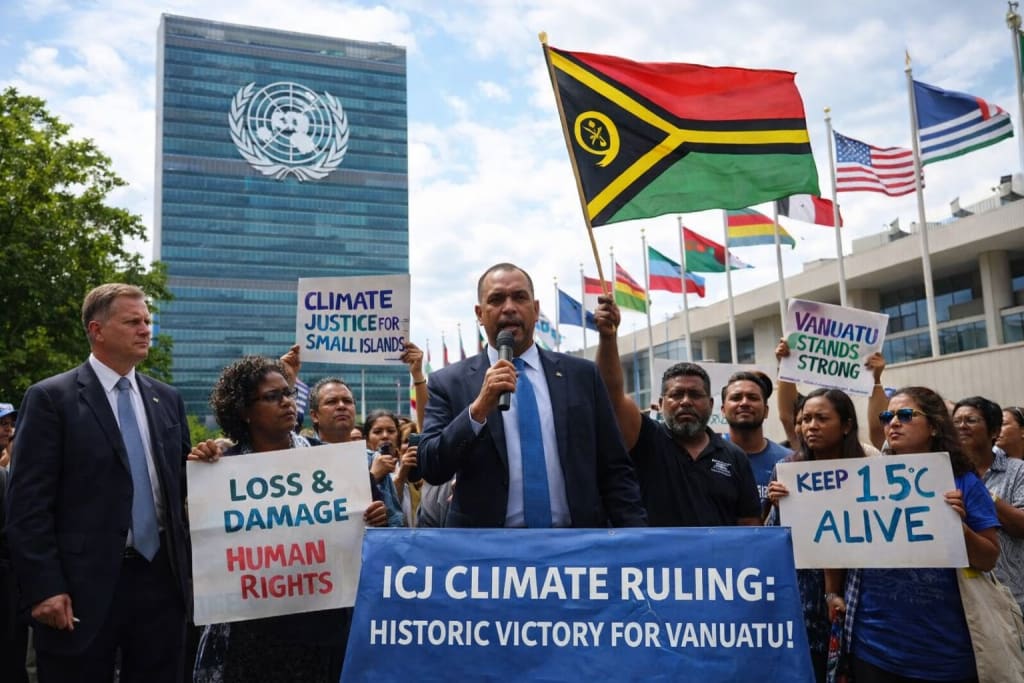
A diplomatic storm is brewing at the United Nations after reports emerged that the United States applied pressure on Vanuatu following a landmark climate advisory opinion issued by the International Court of Justice (ICJ). The ruling, widely celebrated by climate-vulnerable nations, declared that states have a legal duty to prevent environmental harm caused by greenhouse gas emissions.
For small island states facing rising seas and intensifying storms, the decision was more than symbolic. It was validation.
But for major emitters wary of potential legal consequences, it raised difficult questions about responsibility, liability, and the future of global climate negotiations.
Now, tensions between Washington and Pacific nations are highlighting a deeper global divide over who should pay for climate damage — and how far international law should go.
________________________________________
The ICJ’s Landmark Climate Change Ruling
The ICJ’s advisory opinion marked a historic moment in international environmental law. While not legally binding, the ruling carries significant moral and political weight.
The court affirmed that:
• States have an obligation to prevent environmental harm.
• Climate change impacts can implicate international law.
• Failure to curb emissions may violate legal duties owed to other nations.
• Human rights can be affected by climate-related damage.
For climate-vulnerable countries, especially low-lying Pacific island states, the ruling strengthens long-standing arguments that high-emitting industrialized nations bear greater responsibility for global warming.
The opinion is expected to influence future climate litigation, negotiations, and UN resolutions — potentially reshaping how accountability is defined in the climate era.
________________________________________
Why Vanuatu Led the Charge
Vanuatu, a Pacific island nation highly vulnerable to sea-level rise and extreme weather, spearheaded years of advocacy to bring the climate question before the ICJ.
Youth activists, regional leaders, and environmental groups joined forces to push for legal clarity on state obligations. Their campaign argued that international law must reflect the reality that small nations contribute the least to global emissions but suffer the most severe consequences.
For Vanuatu, the ruling represents a diplomatic victory — proof that even smaller states can influence global legal standards.
“This is about survival,” advocates have repeatedly stated. Rising oceans threaten land, livelihoods, freshwater supplies, and entire communities across the Pacific.
The ICJ ruling gave these concerns legal recognition.
________________________________________
US Diplomatic Pushback at the United Nations
Following the decision, diplomatic sources indicated that US representatives urged caution within UN discussions. Reports suggest Washington warned against using the ICJ opinion to pursue binding resolutions or enforcement mechanisms that could expose major economies to legal or financial liabilities.
The United States has not denied engaging in discussions but maintains that its approach seeks to preserve consensus within the UN system.
According to US officials, climate challenges should be addressed through:
• Cooperative agreements like the Paris Agreement
• Multilateral diplomacy
• Voluntary emission reduction commitments
• Technological innovation
Washington has cautioned against interpreting the ICJ ruling in ways that create new legal liabilities or fragment international climate efforts.
In short, the US position emphasizes diplomacy over litigation.
________________________________________
A Growing Divide Over Climate Responsibility
The controversy underscores a widening rift between developed and developing nations.
Wealthier industrialized countries generally favor:
• Voluntary pledges
• Gradual transitions
• Market-based climate solutions
• Avoiding binding liability frameworks
Climate-vulnerable nations increasingly demand:
• Legal recognition of loss and damage
• Clear accountability standards
• Financial compensation mechanisms
• Stronger enforcement language
The ICJ ruling strengthens the hand of vulnerable countries by providing legal affirmation of their concerns. Even if advisory, the opinion shifts the tone of negotiations.
International law experts say the ruling may influence future climate lawsuits filed in domestic and international courts.
And that possibility makes major economies uneasy.
________________________________________
Why Major Powers Are Concerned
One of the most significant implications of the ICJ opinion is its potential use in litigation.
Legal analysts suggest that the ruling could:
• Support claims for climate-related compensation
• Bolster human rights-based climate lawsuits
• Increase pressure on high-emitting countries
• Encourage stricter environmental regulations
Governments are reportedly reviewing their legal exposure in light of the advisory opinion.
Although the ICJ cannot directly impose penalties through this ruling, its authority carries weight. Courts worldwide often reference ICJ opinions when interpreting international law.
For large economies, the concern is less about immediate consequences and more about precedent.
________________________________________
Climate Justice Meets Global Power Politics
The episode reflects a broader reality: climate change is no longer solely an environmental issue. It is now a legal, financial, and diplomatic battleground.
Small island states are reframing the debate from voluntary climate action to enforceable climate responsibility.
They argue that:
• Historical emissions matter.
• Wealthier nations benefited economically from fossil fuels.
• Vulnerable countries are paying the price.
From their perspective, justice requires more than pledges — it requires accountability.
Meanwhile, powerful nations emphasize cooperation and caution against legal pathways that could destabilize international diplomacy.
This tension is likely to intensify as climate impacts worsen.
________________________________________
What Happens Next?
Vanuatu and its allies are expected to push for stronger references to the ICJ ruling in future UN resolutions and climate negotiations.
Upcoming international climate summits may test whether the advisory opinion reshapes commitments on:
• Emissions reductions
• Adaptation funding
• Loss and damage mechanisms
• Human rights protections
Observers say the ruling could influence the interpretation of global agreements like the Paris Agreement, particularly regarding state obligations.
Whether US diplomatic efforts succeed in limiting the ruling’s impact remains uncertain.
What is clear is that the conversation has changed.
________________________________________
A Turning Point in Climate Diplomacy?
The ICJ’s opinion may represent a turning point in how responsibility for climate change is understood globally.
For decades, climate talks focused primarily on reducing future emissions. Now, the discussion increasingly includes:
• Historical accountability
• Legal duty of care
• Climate-induced human rights violations
• Compensation frameworks
The ruling has given smaller nations a stronger legal platform — and placed major emitters under intensified scrutiny.
As global temperatures rise and extreme weather events multiply, the pressure for binding climate accountability will likely grow.
The diplomatic tensions between the United States and Vanuatu illustrate a broader truth: climate justice is no longer theoretical. It is shaping real-world power dynamics at the United Nations.
________________________________________
Why This Story Matters
This dispute is not merely a diplomatic disagreement. It represents a fundamental debate about the future of international law and global equity.
Will climate action remain primarily voluntary?
Or will international courts and legal standards redefine responsibility in the climate era?
For vulnerable island nations, the answer could determine survival.
For major economies, it could redefine liability.
And for the world, it may mark the moment when climate change fully entered the realm of enforceable global accountability.
The ICJ ruling changed the rules of the climate debate. Now, global powers must decide how far those new rules will go.
About the Creator
Adil Ali Khan
I’m a passionate writer who loves exploring trending news topics, sharing insights, and keeping readers updated on what’s happening around the world.
Keep reading
More stories from Adil Ali Khan and writers in The Swamp and other communities.
Top Goldman Sachs Lawyer Kathy Ruemmler Resigns Over Jeffrey Epstein Ties: What It Means for Corporate Accountability
The departure of Kathy Ruemmler — one of the most powerful legal executives in global finance — has sent ripples through the corporate world. As chief legal officer of Goldman Sachs, Ruemmler occupied one of the most sensitive positions in banking, overseeing compliance, litigation strategy, and regulatory oversight for a firm managing trillions in assets.
By Adil Ali Khana day ago in The Swamp
Why Black History Matters in America?
The United States of America is celebrating their 250th anniversary in 2026. I'm proud to be an American and as someone who was born here, I wouldn't imagine myself living anywhere else. This is a country where opportunities are possible. Where anyone can be successful in anything they desire to do. Equality, community, and togetherness are the backbones of what America is and should be about. However, we have an administration who wants to erase and disregard those who have made positive, meaningful impacts in our country, specifically Black figures, such as Martin Luther King, Jr., Rosa Parks, and Maya Angelou. President Trump and his administration have been constantly complaining and fighting against what they call the "Woke agenda". They use this excuse as a distraction from other issues they refuse to address, such as the high cost of living, climate change, and inflation. That equality is dividing America, when in reality, it's bringing us together. Being woke is not tied to a specific political party. No matter where you stand on the political spectrum, you can still care about other people and their plights. Compassion and empathy for others isn't tied to a political party, either. We were taught as children to treat others the way we want to be treated and not judge others because they're different from us. Caring about others isn't a personal attack on your beliefs. It doesn't make you any less of a person. People who are easily offended over African American figures, past or present, or anything related to it, are grasping at straws. Current and future generations need to know who people like Harriet Tubman and Shirley Chisholm were, especially in the classroom. Black History is part of American History. It should be recognized, not hidden or forgotten. Besides, you can't shield children from everything, just because your feelings are easily hurt.
By Mark Wesley Pritchard 13 days ago in The Swamp
Japanese Voters Brave Heavy Snow to Cast Ballots in Snap Election
Japanese citizens across several regions braved heavy snowfall and freezing temperatures to cast their votes in a snap general election, demonstrating a strong commitment to democratic participation despite challenging weather conditions. The unexpected election, called amid political and economic uncertainty, tested both voter determination and the country’s election preparedness during one of the harshest periods of winter.
By Ayesha Lashari7 days ago in The Swamp



Comments
There are no comments for this story
Be the first to respond and start the conversation.