
US Gave Ukraine and Russia a June Deadline to Reach Agreement to End War, Zelenskyy Says
A decisive diplomatic push could shape the future of Europe’s longest and most devastating conflict
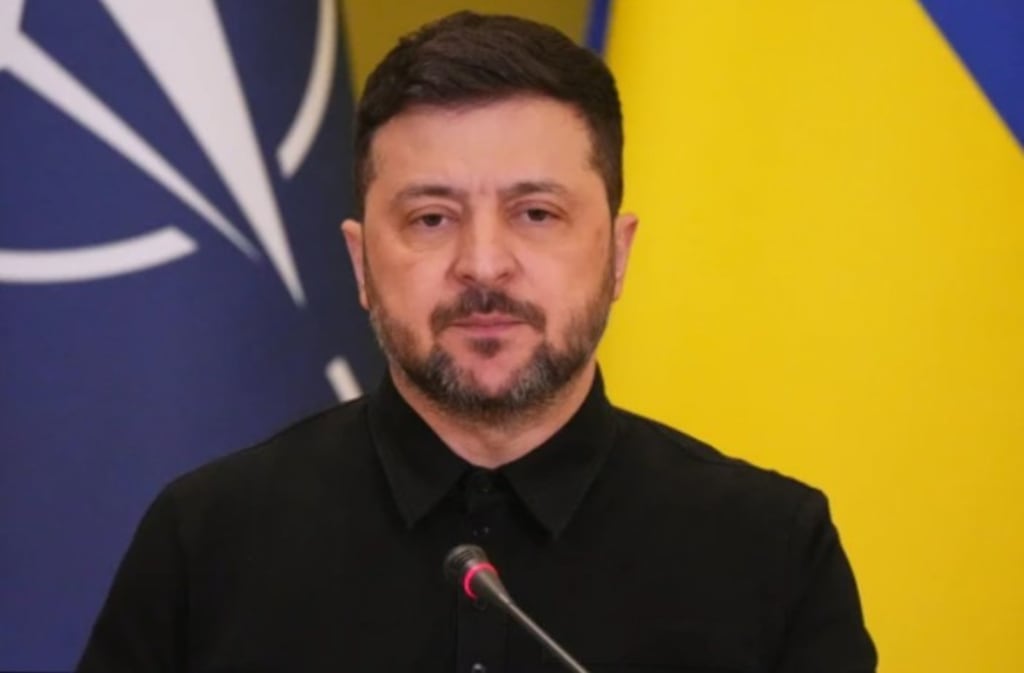
The war between Ukraine and Russia may be approaching a critical diplomatic crossroads. Ukrainian President Volodymyr Zelenskyy has revealed that the United States has set a June deadline for both Kyiv and Moscow to reach an agreement aimed at ending the conflict. While fighting continues on the ground, this timeline signals a renewed and more assertive push by Washington to move the war from the battlefield to the negotiating table.
According to Zelenskyy, the deadline is not merely symbolic. It comes with a clear message: if progress is not achieved by June, the United States is prepared to increase pressure on both sides to force movement toward a settlement. This announcement has sparked intense discussion among analysts, diplomats, and citizens alike, as it raises hopes for peace while also highlighting the immense challenges that remain.
Why the June Deadline Matters
Deadlines in diplomacy are rare, especially in conflicts as complex as the Ukraine–Russia war. By setting a clear timeline, the U.S. appears to be signaling that the status quo—continued fighting, rising casualties, and mounting economic costs—is no longer acceptable.
From Washington’s perspective, the war has become a long-term drain on global stability. It has disrupted energy markets, strained alliances, and deepened geopolitical divisions. A June deadline suggests that the U.S. wants tangible results within months, not years, and is willing to use diplomatic and political leverage to get there.
For Ukraine and Russia, the deadline raises the stakes. Negotiations that once felt open-ended now come with a clock ticking loudly in the background.
Zelenskyy’s Position: Peace, But Not at Any Cost
President Zelenskyy has consistently emphasized that Ukraine seeks peace, but not one that compromises its sovereignty or territorial integrity. In recent statements, he made it clear that certain Russian demands—particularly those involving Ukrainian withdrawal from occupied territories—remain unacceptable.
Ukraine’s leadership is especially firm on issues related to the eastern regions and critical infrastructure. Zelenskyy has stressed the importance of reliable ceasefire mechanisms, protections for civilians, and guarantees that any agreement will actually be honored.
Past attempts at ceasefires and partial agreements have often collapsed, leaving Ukraine skeptical of proposals that lack enforcement or international oversight. As a result, while Kyiv welcomes U.S. involvement and pressure, it remains cautious about rushing into a deal simply to meet a deadline.
Russia’s Calculations and Reluctance
On the Russian side, the picture is equally complicated. Moscow continues to pursue strategic objectives while signaling selective openness to talks. However, core disagreements—territory, security guarantees, and Ukraine’s future alignment with the West—remain unresolved.
For Russia, agreeing to a deal by June may require concessions that could be framed domestically as weakness. This makes negotiations politically sensitive, even if economic sanctions and military costs are mounting.
The U.S. deadline may therefore test how much pressure Russia is truly willing—or able—to absorb before adjusting its position.
The Role of the United States as a Broker
The U.S. has positioned itself as a central mediator in the latest phase of diplomacy. According to Zelenskyy, upcoming talks are expected to take place on U.S. soil, following earlier rounds in neutral locations that failed to produce breakthroughs.
Washington’s role is not limited to hosting discussions. The deadline itself is a form of leverage, implying that continued inaction could lead to intensified diplomatic, economic, or political measures against whichever side is seen as obstructing progress.
At the same time, the U.S. must balance its mediator role with its strong support for Ukraine, a dynamic that adds complexity to the process. Any perception of bias could undermine trust, while excessive pressure risks backfiring.
Ongoing Fighting Underscores the Urgency
While diplomats talk, the war continues to exact a heavy toll. Recent attacks on energy infrastructure have caused widespread power disruptions in Ukraine, affecting millions of civilians. Military casualties continue to rise on both sides, and displacement remains a persistent humanitarian crisis.
These realities give the June deadline added weight. Every delayed agreement means more destruction, more loss of life, and deeper long-term consequences for the region.
For ordinary Ukrainians, the idea of a firm timeline offers a fragile sense of hope—tempered by the painful memory of past negotiations that failed to stop the fighting.
Can a Deadline Deliver Peace?
The key question remains whether a deadline can actually force progress in a war defined by deep mistrust and incompatible demands. Optimists argue that external pressure, especially from a powerful actor like the U.S., can break diplomatic deadlock. Pessimists warn that rushed negotiations may produce fragile agreements that collapse under pressure.
What is clear is that June now looms as a defining moment. If talks succeed, it could mark the beginning of the end of one of the most consequential conflicts of the 21st century. If they fail, the deadline may simply become another missed opportunity, followed by intensified pressure and prolonged war.
About the Creator
Keep reading
More stories from Jameel Jamali and writers in The Swamp and other communities.
New Epstein Files Mention Trump, and SCOTUS Rules on National Guard in Chicago
Two major developments have recently captured national attention: newly released files connected to Jeffrey Epstein that reference former President Donald Trump, and a Supreme Court ruling clarifying the authority to deploy the National Guard in Chicago. While unrelated in substance, both stories intersect at a critical point in American politics—public trust in institutions, leadership accountability, and the rule of law.
By Jameel Jamali2 months ago in The Swamp
Why Black History Matters in America?
The United States of America is celebrating their 250th anniversary in 2026. I'm proud to be an American and as someone who was born here, I wouldn't imagine myself living anywhere else. This is a country where opportunities are possible. Where anyone can be successful in anything they desire to do. Equality, community, and togetherness are the backbones of what America is and should be about. However, we have an administration who wants to erase and disregard those who have made positive, meaningful impacts in our country, specifically Black figures, such as Martin Luther King, Jr., Rosa Parks, and Maya Angelou. President Trump and his administration have been constantly complaining and fighting against what they call the "Woke agenda". They use this excuse as a distraction from other issues they refuse to address, such as the high cost of living, climate change, and inflation. That equality is dividing America, when in reality, it's bringing us together. Being woke is not tied to a specific political party. No matter where you stand on the political spectrum, you can still care about other people and their plights. Compassion and empathy for others isn't tied to a political party, either. We were taught as children to treat others the way we want to be treated and not judge others because they're different from us. Caring about others isn't a personal attack on your beliefs. It doesn't make you any less of a person. People who are easily offended over African American figures, past or present, or anything related to it, are grasping at straws. Current and future generations need to know who people like Harriet Tubman and Shirley Chisholm were, especially in the classroom. Black History is part of American History. It should be recognized, not hidden or forgotten. Besides, you can't shield children from everything, just because your feelings are easily hurt.
By Mark Wesley Pritchard 7 days ago in The Swamp
The USA Never Learns.
Watching the regime of Ayatollah Ali Khamenei put down protests with the utmost violence was and is distressing. Of course, the watchers' distress from afar is nothing to those who paid the ultimate price under the fire of Iranian security forces. It is reckoned that if Western media can be believed, thousands of Iranian protesters died or were injured under the boot of Iranian security forces. Protests started from shopkeepers and ordinary citizens against the cost of living. We are all facing a cost-of-living crisis right now, but the Iranian people are facing absolute poverty. Thanks to the severe sanctions imposed by the US and other Western nations. The Iranian currency, the Rial, has been so devalued that you might as well use Monopoly money to buy goods if you are an ordinary Iranian.
By Nicholas Bishop3 days ago in The Swamp




Comments
There are no comments for this story
Be the first to respond and start the conversation.