
New Epstein Files Mention Trump, and SCOTUS Rules on National Guard in Chicago
Two separate developments ignite political debate, raising questions about accountability, executive power, and the limits of federal authority
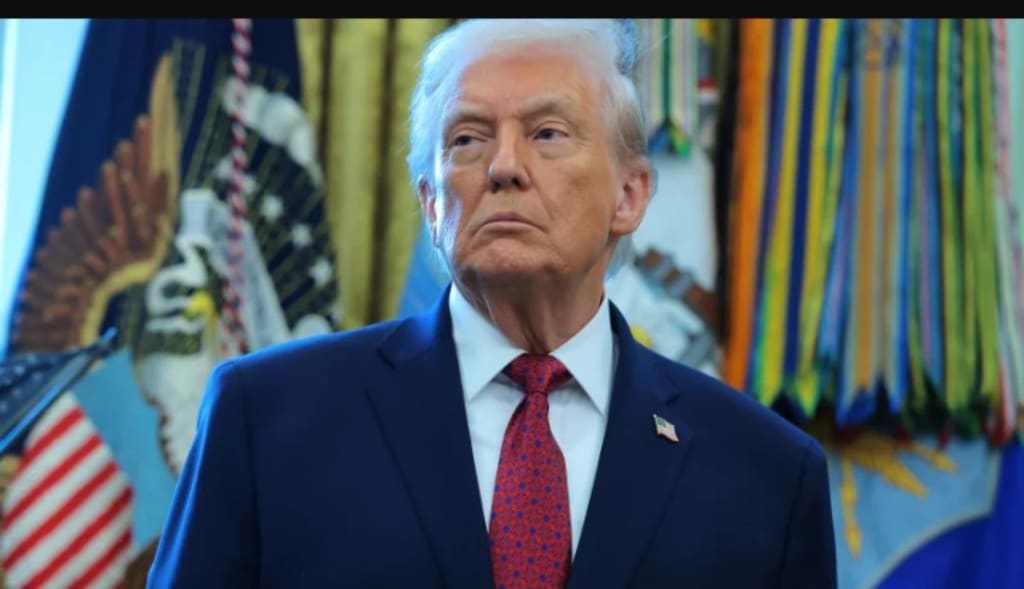
Two major developments have recently captured national attention: newly released files connected to Jeffrey Epstein that reference former President Donald Trump, and a Supreme Court ruling clarifying the authority to deploy the National Guard in Chicago. While unrelated in substance, both stories intersect at a critical point in American politics—public trust in institutions, leadership accountability, and the rule of law.
Together, they highlight how legal disclosures and judicial decisions can reverberate far beyond courtrooms, shaping political narratives and public perception during a deeply polarized era.
New Epstein Files Reignite Scrutiny
The release of additional documents related to the late financier Jeffrey Epstein has once again drawn widespread attention. Epstein, who died in jail in 2019 while awaiting trial on sex trafficking charges, maintained social and political connections with powerful figures for decades. The newly unsealed files, part of ongoing civil litigation, contain names and references that are now being scrutinized by the media and the public.
Among those mentioned is former President Donald Trump. The files reportedly include references and secondhand accounts that place Trump within Epstein’s broader social orbit during the 1990s and early 2000s. Importantly, the documents do not constitute criminal charges, nor do they establish wrongdoing on their own. Legal experts emphasize that inclusion in such files does not imply guilt, as many names appear due to associations, social interactions, or testimony from third parties.
Trump has previously acknowledged knowing Epstein socially but has denied any involvement in or knowledge of Epstein’s criminal activities. He has also stated that he distanced himself from Epstein well before Epstein’s legal troubles became public. Nonetheless, the renewed attention has fueled debate, particularly as the former president remains a central figure in national politics.
Political Fallout and Media Reaction
The mention of Trump in the Epstein-related documents has sparked intense reactions across the political spectrum. Critics argue that the disclosures underscore the need for transparency and accountability among powerful elites, regardless of political affiliation. Supporters, meanwhile, contend that the renewed focus is politically motivated and lacks substantive evidence of wrongdoing.
The media response has been swift and vocal. Headlines, commentary panels, and social media discussions have amplified selective excerpts from the files, often blurring the distinction between allegation, association, and proven fact. This environment has made it challenging for the public to separate legal reality from political narrative.
The broader implication is a growing skepticism toward institutions that appear to shield influential individuals from scrutiny. For many Americans, the Epstein case symbolizes systemic failures in justice, making any new information—however limited—particularly resonant.
SCOTUS Rules on National Guard Authority in Chicago
In a separate but equally consequential development, the U.S. Supreme Court issued a ruling addressing the authority to deploy the National Guard in Chicago. The case centered on whether federal or state officials hold primary control over National Guard deployment during domestic emergencies, particularly in situations involving public safety and civil unrest.
The Court reaffirmed that, under the Constitution and existing federal law, National Guard units remain under the authority of state governors unless formally federalized by the president. This clarification limits unilateral federal intervention in state-managed Guard deployments and reinforces the principle of federalism.
The ruling has immediate implications for Chicago and other major cities where public safety concerns, protests, or emergency responses have prompted political disputes over who controls security forces. It also serves as a legal boundary on executive power, emphasizing that states retain significant autonomy in managing their National Guard units.
Reactions to the Supreme Court Decision
State and local leaders largely welcomed the decision, viewing it as a safeguard against federal overreach. Civil liberties organizations also praised the ruling, arguing that unchecked federal control over domestic military forces could threaten constitutional rights.
Conversely, some critics contend that the decision could complicate coordinated responses to large-scale emergencies that cross state lines or overwhelm local resources. They argue that clearer pathways for federal involvement may still be necessary in extreme circumstances.
Politically, the ruling has revived debates over law and order, executive authority, and the appropriate role of the federal government in local crises—issues that have repeatedly surfaced in recent election cycles.
A Shared Theme: Power and Accountability
Although the Epstein files and the Supreme Court ruling address different issues, they converge around a common theme: how power is exercised and constrained in the United States. The Epstein disclosures raise questions about elite accountability and transparency, while the SCOTUS decision reinforces legal limits on government authority.
For voters, these stories contribute to a broader sense of unease about trust—trust in leaders, in institutions, and in the systems meant to protect the public interest. They also highlight the importance of legal processes, whether through document disclosures or judicial review, in shaping democratic governance.
Conclusion
The mention of Trump in newly released Epstein files and the Supreme Court’s ruling on National Guard authority in Chicago underscore the complex intersection of law, politics, and public perception. One story reopens unresolved questions about accountability among the powerful; the other reaffirms constitutional boundaries on executive power.
As both developments continue to unfold in public discourse, they serve as reminders that transparency and the rule of law remain central to America’s political stability—especially in times of heightened polarization and uncertainty.
About the Creator
Keep reading
More stories from Jameel Jamali and writers in The Swamp and other communities.
Trump Delivers Attacks and Deflects Blame for Americans’ Economic Worries
As Americans continue to grapple with the high cost of living, former President Donald Trump has returned to a familiar political strategy: aggressive attacks on opponents paired with a sustained effort to deflect blame for economic anxiety. In speeches, interviews, and social media posts, Trump has framed rising prices, housing stress, and job uncertainty as the direct result of his rivals’ leadership, while positioning himself as the only figure capable of restoring economic stability.
By Jameel Jamali2 months ago in The Swamp
A Gathering of Evil Bosses
“I’m the queen of chin jutting while I smooth my hair, attacking, insulting, and deflecting to protect my appointer.” “Oh, please, Blondi, my hair is curled, highlighted, and longer than yours. I feature television commercials telling immigrants that we will give them a free plane ride home, and if they voluntarily turn themselves in, they will be allowed to legally apply for re-entry. It runs everywhere, and I look good in it! You can’t compete because of your blond hair. Mine is nicer, and my lips are prettier than yours.”
By Andrea Corwin 10 days ago in The Swamp



Comments
There are no comments for this story
Be the first to respond and start the conversation.