
US and Israel Launch Attacks on Iran as Tensions Rise Over Nuc
Explosions reported in Tehran and elsewhere as military action unfolds and Iran responds, raising concerns about regional escalation

On February 28, 2026, the United States and Israel carried out coordinated military strikes against targets in Iran. The attacks, occurring amid ongoing diplomatic efforts related to Iran’s nuclear program, mark a significant escalation in regional tensions. Explosions were reported in the Iranian capital, and Iran has warned it will respond to what it calls an unlawful offensive.
Officials in Washington and Tel Aviv have described the operation as necessary for national security. Tehran, meanwhile, has condemned the strikes and indicated that it may retaliate. The situation remains fluid with global implications for diplomacy, security, and regional stability.
Overview of the Attacks
In the early hours of February 28, Israel announced it had launched a pre-emptive strike against Iran, including missile and possibly air operations targeting urban and strategic areas. Explosions were heard across parts of Tehran and other cities.
Israeli Defence Minister Yisrael Katz said the attacks aimed to “remove threats” to the state and were part of long-planned action coordinated with the United States. Airspace closures and emergency alerts followed within Israel shortly after the strikes.
The United States confirmed it participated in the military operation, with President Donald Trump describing the action as part of “major combat operations” intended to counter security threats and pressure Iran over its nuclear ambitions.
Target Areas and Military Planning
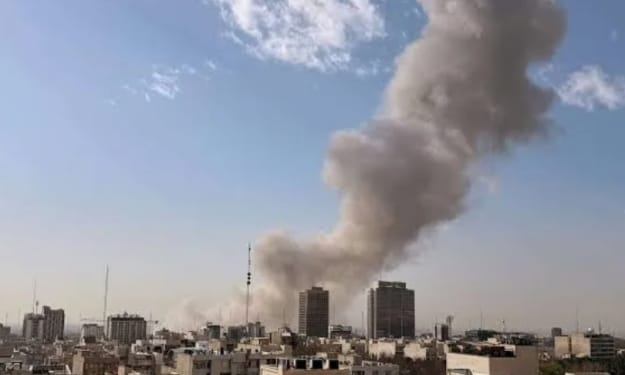
The strikes reportedly hit multiple regions, including locations within Tehran. Iranian media showed smoke and explosions in downtown areas, including near government or infrastructure sites.
Iran’s supreme leader was reportedly moved to a secure location ahead of the attack. Communication networks experienced partial outages in some parts of the capital as authorities worked to manage the fallout.
The operation — described in some reports as “Operation Lion’s Roar” — appears to have been in planning for weeks and executed with coordinated assets from both Israel and the United States.
Iran’s Reaction
In response to the strikes, Iran’s Foreign Ministry issued a statement indicating that “the time has come to defend the homeland,” warning of consequences for the offensive.
Iran closed its airspace and mobilised defensive forces. Officials in Tehran argued that the strikes violated Iran’s sovereignty and threatened regional peace.
While specific Iranian military responses were developing at the time of reporting, authorities have hinted at the possibility of missile or other counter-attacks against Israeli and US interests in the region.
Impact on Civilian Life
The military action has affected civilians in several ways:
Airspace closures: Civil aviation routes in and around Israel and Iran were suspended or rerouted in response to the conflict, affecting international flights and travel plans.
Emergency alerts: Sirens sounded across multiple Israeli cities, warning residents of potential incoming retaliation.
Communications disruption: Mobile and internet services were interrupted in some parts of Tehran as authorities worked to manage the situation.
Authorities in both countries urged residents to remain vigilant and follow public safety instructions.
Regional Security Landscape
The strikes represent a major shift in security dynamics across the Middle East. Historically, direct military action between Iran and Israel was limited to cyber operations, proxy conflicts, and isolated incidents. This joint attack — with US involvement — marks a broader engagement level.
Neighboring countries have responded cautiously. Airspace restrictions in Gulf states and nearby nations reflect broader concerns about escalation.
Global markets also reacted to the conflict, especially in energy sectors, as supply routes and geopolitical risk premiums adjust to the heightened uncertainty.
Nuclear Talks and Diplomatic Context
The attacks come amid stalled negotiations between Iran and international powers over Tehran’s nuclear program. Talks aim to address uranium enrichment capabilities, sanctions relief, and monitoring protocols.
Israeli and US leaders have repeatedly expressed concerns over Iran’s nuclear ambitions and ballistic missile development. These concerns have been central to diplomatic friction, with Israel pushing for stricter limitations and enforcement mechanisms.
Iran has insisted on its right to peaceful nuclear energy development while rejecting external restrictions on its wider missile program and regional security policies. The military strikes may complicate diplomatic leverage and extend the challenges to reach an agreement.
International Reactions
World leaders and international organizations began issuing statements following the outbreak of military action:
United Nations officials called for restraint and urged parties to return to the negotiating table to avoid further escalation.
European countries expressed concern that the conflict could destabilize the region and disrupt fragile diplomatic efforts.
Regional governments are monitoring developments and advising citizens on travel and safety measures.
Global diplomatic efforts continue even as military operations unfold, reflecting broader fears that expanded conflict could draw in additional states or non-state actors.
Historical Context
Tensions between Iran and Israel have long been driven by regional rivalries, differences over nuclear capabilities, and mutual security concerns. In past years, covert operations, targeted strikes, and proxy incidents have reflected this dynamic.
Previous operations, including coordinated airstrikes and cyber campaigns, have targeted military infrastructure and intelligence networks. The current strikes, however, mark one of the most direct military engagements in years.
The evolution of this conflict reflects decades of geopolitical competition and diverging strategic priorities, with multiple international actors involved in diplomatic, economic, and military dimensions.
Potential Future Scenarios
Analysts propose several possible trajectories for the conflict:
Continued military exchange: Iran could respond with direct or indirect attacks, potentially targeting strategic assets or allied bases in the region.
Diplomatic intervention: External actors — including the United Nations and regional coalitions — could push for ceasefire agreements or renewed talks.
Stalemate and containment: Both sides may limit operations to avoid broader war, relying on deterrence and international pressure.
The scale and direction of future actions will largely depend on the decisions of national leadership and international pressure for de-escalation.
Humanitarian and Civilian Concerns
Military conflicts often have a broader impact on civilian life beyond immediate combat zones. The disruption of daily routines — including travel, communication, and economic activity — is already being felt.
Humanitarian agencies have expressed concern about access to basic services and the ability to assist civilians affected by the conflict. Legal obligations under international humanitarian law seek to protect civilians and medical personnel, but risks increase as operations continue.
Ongoing monitoring will be required to assess wider effects on community well-being in impacted areas.
Conclusion
The joint military strikes by the United States and Israel on Iran on February 28, 2026, signal a significant escalation in Middle East tensions. The attacks occurred against the backdrop of ongoing nuclear negotiations, drawing international attention to the risks of armed conflict and diplomatic breakdown.
Iran’s response and the reactions of global leaders will shape the next phase of this crisis. With airspace closures, emergency measures, and growing uncertainty, both regional stability and international diplomacy face serious challenges.
As governments monitor developments and work to prevent further escalation, the focus remains on balancing national security concerns with efforts to restore dialogue and reduce the likelihood of extended conflict.
In the coming days, clearer assessments of damage, casualty figures, and political responses are expected as the situation continues to unfold.
About the Creator
Saad
I’m Saad. I’m a passionate writer who loves exploring trending news topics, sharing insights, and keeping readers updated on what’s happening around the world.
A Gathering of Evil Bosses
“I’m the queen of chin jutting while I smooth my hair, attacking, insulting, and deflecting to protect my appointer.” “Oh, please, Blondi, my hair is curled, highlighted, and longer than yours. I feature television commercials telling immigrants that we will give them a free plane ride home, and if they voluntarily turn themselves in, they will be allowed to legally apply for re-entry. It runs everywhere, and I look good in it! You can’t compete because of your blond hair. Mine is nicer, and my lips are prettier than yours.”
By Andrea Corwin 10 days ago in The Swamp


Comments
There are no comments for this story
Be the first to respond and start the conversation.