
United States Security Market Size and Forecast 2025–2033
How Rising Safety Concerns, Smart Infrastructure, and Digital Transformation Are Reshaping the Nation’s Security Ecosystem

United States Security Market Overview
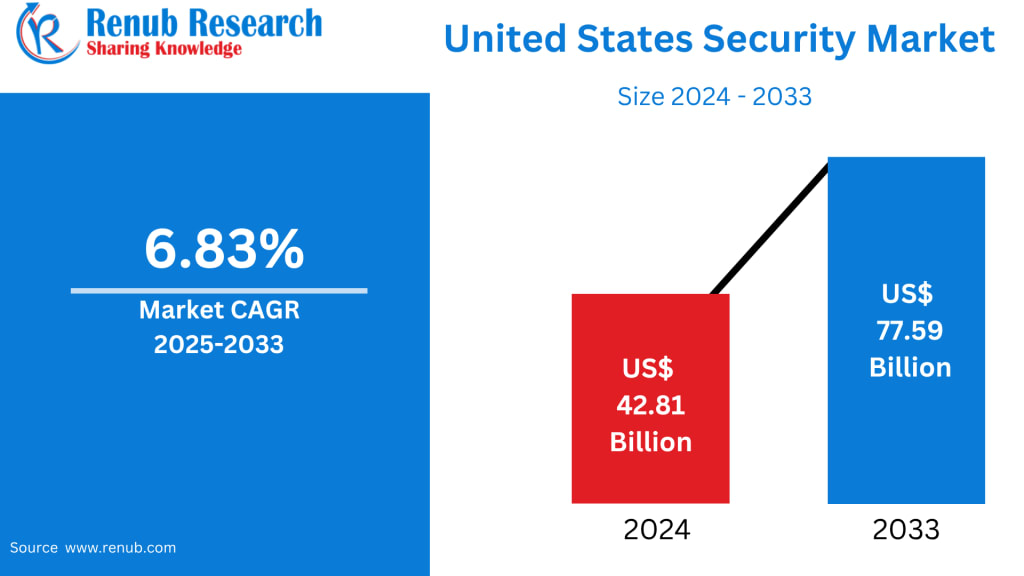
The United States Security Market is undergoing a transformative phase as safety concerns, digital threats, and infrastructure modernization converge to reshape how individuals, businesses, and governments protect assets and people. According to Renub Research, the market is expected to reach US$ 77.59 billion by 2033, rising from US$ 42.81 billion in 2024, at a compound annual growth rate (CAGR) of 6.83% from 2025 to 2033.
This growth reflects a nationwide shift toward intelligent, integrated, and data-driven security ecosystems. Once dominated by traditional surveillance cameras, alarms, and physical barriers, the market now includes AI-powered video analytics, cloud-based monitoring, biometric access control, and cybersecurity platforms. The convergence of physical and digital protection has expanded the definition of security, transforming it from a reactive function into a predictive and strategic capability.
Rising crime rates, cyberattacks, infrastructure vulnerabilities, and the growth of smart cities are compelling both public and private stakeholders to invest heavily in advanced protection systems. From government facilities and transportation hubs to commercial buildings and smart homes, security solutions are becoming more sophisticated, interconnected, and intelligent. As the United States accelerates its digital transformation, the security market stands at the center of this evolution—protecting not only physical spaces but also data, networks, and identities.
United States Security Industry Outlook
The U.S. security industry is characterized by its rapid adoption of next-generation technologies. AI, cloud computing, and the Internet of Things (IoT) are reshaping surveillance and monitoring systems, enabling real-time analytics, automated alerts, and predictive threat detection. Security platforms are no longer isolated tools; instead, they form integrated ecosystems that link cameras, sensors, access points, and analytics dashboards into centralized command structures.
The demand for cybersecurity solutions is also rising sharply. With organizations increasingly relying on digital infrastructure, cloud platforms, and connected devices, protecting sensitive data has become just as critical as guarding physical assets. As a result, many companies are adopting hybrid security models that integrate physical security systems with cybersecurity frameworks, offering end-to-end protection against both physical breaches and digital attacks.
However, the industry also faces important challenges. High implementation costs, data privacy concerns, and system interoperability issues can slow adoption—particularly among small and medium-sized enterprises. Despite these obstacles, ongoing innovation, supportive government initiatives, and the growing awareness of security risks ensure that the market’s long-term outlook remains strong.
Key Factors Driving the United States Security Market
Rising Threats and the Growing Need for Public Safety
Public safety concerns remain the most powerful driver of the U.S. security market. Increasing incidents of theft, cybercrime, terrorism threats, and infrastructure vulnerabilities have intensified demand for robust protection systems. Government agencies, educational institutions, healthcare facilities, and transportation authorities are investing in surveillance, biometric identification, and emergency response technologies to ensure real-time monitoring and rapid incident management.
Critical infrastructure such as airports, seaports, power grids, and public transit systems increasingly rely on integrated security frameworks that combine physical monitoring with digital threat intelligence. Homeland security initiatives and public safety modernization programs continue to direct funding toward advanced surveillance, access control, and perimeter protection technologies. Additionally, community-based safety programs and smart policing initiatives are expanding the reach of modern security systems beyond institutional environments and into residential neighborhoods.
Technological Advancements and Digital Integration
Technology is fundamentally redefining the security landscape. AI-enabled video analytics can now detect suspicious behavior, recognize faces, and identify anomalies with minimal human intervention. IoT devices allow real-time communication between sensors, cameras, and control centers, while cloud platforms enable remote access, centralized management, and scalable deployment across multiple locations.
These technologies enhance situational awareness, reduce response times, and lower operational costs through automation. Predictive analytics, for example, can help identify potential risks before incidents occur, allowing organizations to move from reactive defense to proactive prevention. This shift toward intelligent, self-learning security systems has made technology a central catalyst for sustained market growth in the United States.
Expansion of Smart Cities and Infrastructure Development
Smart city initiatives are another major growth driver. As cities modernize infrastructure with digital connectivity, the demand for intelligent security solutions rises. Urban planners are integrating advanced surveillance, traffic monitoring, and emergency response systems into transportation networks, public spaces, and government facilities.
Smart buildings equipped with automated access controls, environmental sensors, and centralized monitoring platforms are becoming standard in commercial and residential construction. These projects rely on AI- and IoT-enabled networks that facilitate real-time data sharing and coordinated response. Government support for sustainable and connected infrastructure continues to accelerate investment in security technologies, reinforcing the role of smart cities in shaping the future of the U.S. security industry.
Challenges in the United States Security Market
High Installation and Maintenance Costs
Despite technological progress, cost remains a key barrier. Advanced systems such as AI-driven surveillance, biometric authentication, and cloud-based monitoring platforms require significant upfront investment and ongoing technical support. For small and medium-sized businesses, these costs can limit adoption.
Additional expenses associated with system upgrades, software licensing, cybersecurity compliance, and cross-platform integration further increase the total cost of ownership. While large corporations and government institutions can absorb these expenditures, smaller organizations often seek more affordable or modular solutions. To broaden adoption, vendors are increasingly offering scalable, subscription-based, and cloud-hosted security services.
Data Privacy and Cybersecurity Concerns
The digitalization of security systems raises important concerns about privacy and data protection. Continuous data collection through cameras, sensors, and biometric tools creates potential vulnerabilities to cyberattacks and unauthorized access. Breaches can compromise personal privacy, disrupt operations, and damage organizational reputations.
Regulatory complexity also adds to the challenge, as data protection requirements vary across states. Concerns around facial recognition misuse, cloud security, and cross-platform vulnerabilities continue to shape public perception and regulatory oversight. Strengthening encryption, implementing secure cloud architectures, and ensuring transparent data governance will be essential for sustaining consumer trust and long-term market growth.
United States Security Market Overview by States
California Security Market
California remains one of the most dynamic security markets in the United States. Large urban centers, critical infrastructure, and a strong technology sector drive demand for advanced surveillance, access control, and cybersecurity solutions. Smart city projects in major metropolitan areas are accelerating adoption of AI-powered and cloud-based security systems.
Residential communities increasingly use integrated alarm systems and remote monitoring platforms, while commercial enterprises prioritize data-driven protection. State initiatives supporting sustainable and smart infrastructure further promote the deployment of intelligent security technologies. Despite privacy debates and cost concerns, California continues to lead innovation in the U.S. security ecosystem.
Texas Security Market
Texas is experiencing robust growth driven by industrial expansion, urban development, and rising safety needs across public and private sectors. Manufacturing facilities, energy infrastructure, logistics hubs, and commercial complexes rely on advanced surveillance, perimeter protection, and intrusion detection systems.
The state’s proactive approach to smart infrastructure and technology adoption has strengthened its security framework. Growth in residential smart homes, equipped with connected cameras and alarm systems, further supports market expansion. While cybersecurity and integration challenges persist, Texas remains a highly progressive and rapidly evolving security market.
New York Security Market
New York’s dense population, complex infrastructure, and global financial prominence make security a critical priority. Demand for AI-driven video analytics, biometric access controls, and cybersecurity platforms is strong across transportation systems, government buildings, and commercial centers.
The state’s focus on data protection and regulatory compliance has driven investment in secure cloud-based monitoring systems. Smart city initiatives further promote intelligent surveillance and emergency response capabilities. Despite regulatory complexity and privacy concerns, continuous innovation ensures steady growth in New York’s security sector.
Florida Security Market
Florida’s security market is expanding due to concerns over property crime, disaster preparedness, and the safety of tourism-driven infrastructure. Residential and commercial sectors increasingly deploy smart surveillance and alarm systems, while coastal and urban development projects demand resilient security frameworks.
AI- and IoT-enabled platforms enhance disaster response, traffic management, and public safety operations. Government initiatives focused on building resilient communities further support market growth. Although cost management and integration challenges remain, Florida’s emphasis on proactive risk mitigation continues to drive adoption.
Recent Developments in the U.S. Security Market
December 2024: Ahead of its anticipated 2026 IPO, Allied Universal expanded its event-safety analytics capabilities through the acquisition of Unified Command, strengthening its data-driven approach to large-scale security management.
January 2024: Johnson Controls launched the Ilustra Standard Gen3 series of advanced security cameras. Designed and manufactured in India with over 75% localization, the product aligns with the company’s long-term objective to localize production while enhancing global smart security offerings.
These developments highlight the industry’s ongoing focus on innovation, analytics, and scalable technology platforms.
Market Segmentation
By System
Access Control Systems
Alarms and Notification Systems
Intrusion Detection Systems
Video Surveillance Systems
Barrier Systems
Others
By Service
System Integration and Consulting
Risk Assessment and Analysis
Managed Services
Maintenance and Support
By End User
Government
Military and Defense
Transportation
Commercial
Industrial
Others
By States
California, Texas, New York, Florida, Illinois, Pennsylvania, Ohio, Georgia, New Jersey, Washington, North Carolina, Massachusetts, Virginia, Michigan, Maryland, Colorado, Tennessee, Indiana, Arizona, Minnesota, Wisconsin, Missouri, Connecticut, South Carolina, Oregon, Louisiana, Alabama, Kentucky, and Rest of the United States.
Competitive Landscape
The U.S. security market is highly competitive, featuring global leaders and specialized regional providers. Key players include:
ASSA ABLOY
Apex Fabrication & Design, Inc.
Apex Perimeter Protection
Anixter Inc.
Perimeter Protection Germany GmbH
Johnson Controls
Honeywell International, Inc.
ZABAG Security Engineering GmbH
Teledyne FLIR LLC
Axis Communications AB
Market analysis of these companies typically covers overviews, leadership insights, recent developments, SWOT evaluations, revenue performance, and strategic positioning. Competition increasingly centers on AI integration, cloud capabilities, and end-to-end security platforms that combine physical and digital protection.
Final Thoughts
The United States Security Market is entering a new era defined by intelligence, integration, and innovation. With market value projected to rise from US$ 42.81 billion in 2024 to US$ 77.59 billion by 2033, the industry is set for sustained expansion driven by safety concerns, technological advancements, and smart infrastructure development.
While challenges such as high costs and data privacy issues remain, the shift toward AI-powered analytics, IoT connectivity, and cloud-based platforms is transforming security from a reactive necessity into a proactive, strategic asset. As physical and digital threats continue to converge, the demand for comprehensive, data-driven security solutions will only intensify.
For policymakers, enterprises, and technology providers alike, the future of the U.S. security market lies in building resilient, intelligent systems that protect people, infrastructure, and information in an increasingly connected world.
About the Creator
jaiklin Fanandish
Jaiklin Fanandish, a passionate storyteller with 10 years of experience, crafts engaging narratives that blend creativity, emotion, and imagination to inspire and connect with readers worldwide.
Keep reading
More stories from jaiklin Fanandish and writers in The Swamp and other communities.
Germany Sodium-ion Battery Market Size & Forecast 2025–2033
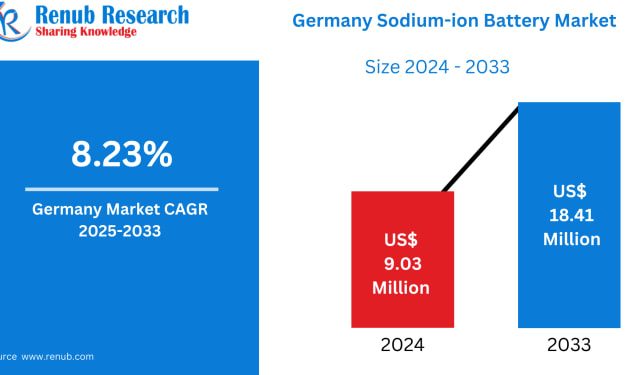
Market Overview Germany’s Sodium-ion Battery Market is poised for steady expansion as the country accelerates its transition toward clean energy and material-secure battery technologies. According to Renub Research, the market is projected to grow from US$ 9.03 million in 2024 to US$ 18.41 million by 2033, registering a Compound Annual Growth Rate (CAGR) of 8.23% during 2025–2033.
By jaiklin Fanandish4 days ago in The Swamp
Trump Is Briefed on Options for Striking Iran as Protests Continue
As anti-government protests erupt across Iran and tensions escalate between Tehran and Washington, U.S. President Donald Trump has been officially briefed on a range of potential military options, including the possibility of striking Iranian targets if the situation worsens. The discussions reflect a dramatic moment in international relations, as unrest in Iran merges with long-standing disputes over its political system, nuclear ambitions and regional influence. �
By Fiazahmedbrohi about 12 hours ago in The Swamp
If You Love Me, You'll Do It
I met Jason when I was five years old. I could say that I loved him from the moment I saw him. He was so handsome to me and I felt in awe by his presence. When they introduced him as the new kid in school, I wanted to be his friend right away. I remember it like it was yesterday. I remember his smile and how he didn't seem shy. He appeared confident and ready to learn. I waved at him and said "hello," before anyone else could even say a word. He sat next to me, and I asked him if he wanted to be friends. He looked so happy as he said, "Yes!"
By Sidney Smith (Sid Smith)6 days ago in Fiction



Comments
There are no comments for this story
Be the first to respond and start the conversation.