
Ukraine–Russia Peace Talks Begin Amid Humanitarian Crisis
Mediators push for ceasefire while war toll continues to rise Talks focus on humanitarian corridors and de-escalation Hope and skepticism surround renewed negotiations Global leaders urge compromise to end suffering

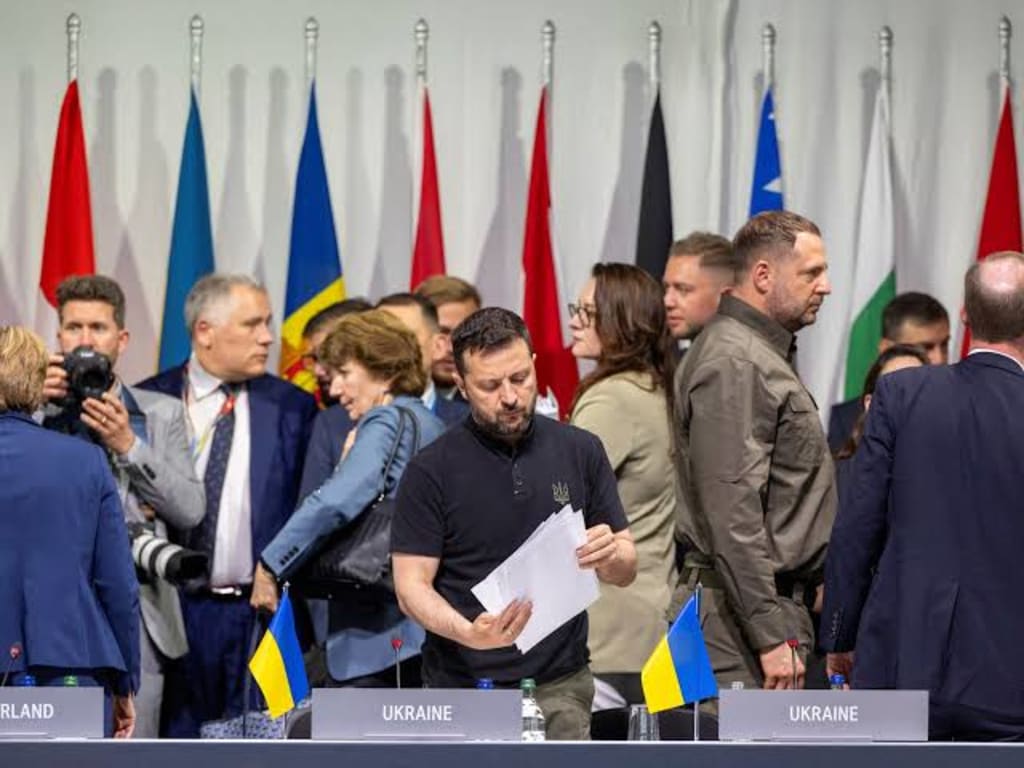
Ukraine and Russia have entered a new round of peace talks as the humanitarian crisis caused by the prolonged conflict continues to worsen. The negotiations, held with international mediation, aim to explore possible ceasefire arrangements and humanitarian corridors while addressing broader political and security concerns that have divided the two nations for years.
The talks come at a critical moment, as millions of civilians remain displaced, infrastructure has been heavily damaged, and winter conditions have further strained basic services such as electricity, heating, and medical care.
Renewed Diplomatic Efforts
Officials from both sides confirmed that delegations met in a neutral location under the guidance of international mediators. While expectations remain cautious, diplomats described the discussions as “constructive but difficult.”
A spokesperson for Ukraine said the primary focus is on protecting civilians and ensuring access to humanitarian aid.
“Our priority is stopping the suffering of our people,” the spokesperson said. “We are prepared to discuss practical steps toward de-escalation.”
Russia’s representatives stated that they were willing to engage in dialogue but insisted that any agreement must address what they called “security guarantees” and long-standing territorial disputes.
Humanitarian Conditions on the Ground
The war has left entire cities in ruins and forced millions of people to flee their homes. International aid agencies report shortages of food, clean water, and medical supplies in several regions near the front lines.
Hospitals continue to operate under extreme pressure, treating both wounded civilians and soldiers. Schools and public services remain closed in many areas, disrupting daily life and education for children.
“The humanitarian situation is becoming unsustainable,” said a representative from a global relief organization. “We urgently need safe access to deliver aid.”
Refugees in neighboring countries face uncertain futures, with many unable to return home due to destroyed housing and continued fighting.
Ceasefire Proposals
One of the main topics under discussion is the possibility of a temporary ceasefire to allow humanitarian operations to expand. Mediators are pushing for agreements on specific zones where fighting would be paused to permit evacuations and supply deliveries.
Previous attempts at ceasefires have often collapsed due to accusations of violations from both sides. This history has made observers skeptical but hopeful that sustained international involvement could improve compliance.
Military analysts say that even a short-term pause in hostilities could significantly ease pressure on civilians and allow damaged infrastructure to be repaired.
International Role
The talks are being closely monitored by the United Nations and several European countries. Western governments have called for a peaceful resolution while continuing to support Ukraine with humanitarian and defensive assistance.
Meanwhile, Russia’s allies have urged both parties to avoid escalation and return to diplomacy.
A UN official said the negotiations represent “a fragile but necessary step toward ending a devastating conflict.”
Political Challenges
Despite renewed talks, major political obstacles remain. Ukraine has consistently demanded the restoration of its territorial integrity, while Russia maintains control over contested regions and insists on recognition of its security concerns.
Domestic political pressures also complicate the process. Leaders on both sides face criticism from hardliners who oppose compromise.
“This is not just a military conflict; it is deeply political,” said a regional analyst. “Any agreement must address trust, sovereignty, and future security arrangements.”
Impact on Global Stability
The war has had far-reaching effects beyond Eastern Europe. Energy prices, food supplies, and international trade have all been disrupted. Grain exports from Ukraine, once a major supplier to global markets, have been reduced, affecting food security in vulnerable countries.
Financial markets remain sensitive to developments in the conflict, and global leaders see the peace talks as crucial to restoring stability.
“The world is watching these negotiations closely,” said an economist. “A breakthrough could ease economic pressure worldwide.”
Voices from Civilians
For ordinary Ukrainians and Russians, the talks represent a glimmer of hope amid years of hardship.
“We just want peace,” said a displaced mother of two sheltering in a temporary camp. “Our children deserve to go back to school and live without fear.”
Families separated by the conflict hope for agreements that will allow reunions and safe travel.
In Russian border regions, residents have also expressed fatigue with the ongoing war and concern over economic difficulties linked to sanctions and instability.
Skepticism and Hope
Experts caution that peace negotiations often take months or even years to produce lasting results. Past efforts have failed due to mistrust and unresolved territorial questions.
Still, the very fact that talks are taking place is seen as a positive sign.
“Dialogue is the only path forward,” said a European diplomat involved in the mediation. “There is no military solution that does not come with unbearable human cost.”
What Comes Next
Negotiators are expected to meet again in the coming weeks to continue discussions. Working groups will focus on humanitarian access, prisoner exchanges, and security arrangements.
International organizations are preparing contingency plans to expand relief operations if agreements are reached.
Whether these talks will lead to a lasting ceasefire remains uncertain. However, the urgency of the humanitarian crisis has created renewed pressure on both sides to find common ground.
Conclusion
The beginning of peace talks between Ukraine and Russia marks a critical moment in a conflict that has caused immense human suffering and global disruption. While major political and military challenges remain, the negotiations offer a rare opportunity to reduce violence and address the growing humanitarian emergency.
For millions of civilians affected by the war, the outcome of these talks could mean the difference between continued despair and the first steps toward rebuilding their lives. As the world watches closely, hope rests on diplomacy to achieve what weapons have failed to secure: lasting peace.
About the Creator
Fiaz Ahmed
I am Fiaz Ahmed. I am a passionate writer. I love covering trending topics and breaking news. With a sharp eye for what’s happening around the world, and crafts timely and engaging stories that keep readers informed and updated.
Keep reading
More stories from Fiaz Ahmed and writers in The Swamp and other communities.
Musk says steps to stop Russia from using Starlink seem to have worked
Elon Musk has stated that recent measures taken to prevent Russia from using Starlink satellite internet services in the war against Ukraine appear to be effective. His comments come amid growing scrutiny of the role private technology companies play in modern conflicts and the challenges of controlling dual-use technologies that can serve both civilian and military purposes. Speaking in an online exchange, Musk said that safeguards were implemented to restrict access in areas where Starlink terminals could be exploited for military operations by Russian forces. “We took steps to prevent misuse, and it seems to have worked,” he noted, without revealing specific technical details. Starlink and the Ukraine War Starlink, operated by Musk’s company SpaceX, has been a crucial communication tool in Ukraine since the early months of Russia’s invasion. When traditional infrastructure was damaged by missile strikes, Starlink terminals helped maintain internet connectivity for hospitals, emergency services, and government agencies. The system also proved vital for Ukraine’s military operations, allowing real-time coordination and battlefield communication. However, concerns emerged that Russian forces could also gain access to the network by capturing terminals or acquiring them through third-party markets. Reports surfaced that Starlink devices were appearing in Russian-controlled territories, raising questions about how widely the service could be controlled in a war zone. Musk has previously emphasized that Starlink was intended primarily for civilian and humanitarian use, not as a weapon of war. Still, the reality of modern conflict has made it difficult to separate civilian technology from military applications. Measures to Prevent Misuse According to Musk, SpaceX worked with governments and security experts to limit unauthorized access. While he did not specify the exact steps taken, analysts believe they may include geofencing, software updates, and monitoring of suspicious activity patterns. Geofencing allows service providers to restrict usage in certain geographic areas. If a terminal is detected in a prohibited zone, its connection can be disabled. Other measures may involve authentication systems that verify authorized users and prevent cloning or black-market distribution. “These systems were not originally designed for war,” said a satellite communications expert. “What we’re seeing now is the rapid adaptation of commercial technology for security purposes.” Political and Ethical Questions Musk’s statement has renewed debate over the responsibility of private companies in conflicts. Starlink is not owned by a government, yet its influence on the battlefield is significant. Some critics argue that SpaceX holds too much power in deciding who can communicate and who cannot. Others defend Musk’s position, saying that restricting Russian access is a necessary step to prevent the technology from being used to support aggression. “This highlights the uncomfortable reality that private firms now shape outcomes in international security,” said a foreign policy analyst. “Governments depend on them, but control over these systems remains limited.” The issue also raises concerns about transparency. Because SpaceX has not released detailed technical explanations, independent observers cannot easily verify how effective the restrictions truly are. Ukraine’s Reliance on Starlink Ukrainian officials have repeatedly praised Starlink for keeping the country connected during attacks on power grids and telecom infrastructure. The system has been described as a lifeline for both civilians and soldiers. At the same time, Ukraine and its allies have pushed for assurances that the service will not be exploited by Russian forces. Musk’s latest comments may provide some reassurance, though questions remain about long-term enforcement. Ukraine’s military has increasingly integrated Starlink into drone operations and command systems, making reliable access critical to its defense strategy. Risks of Escalation Some experts warn that as technology companies become more involved in conflict zones, they risk becoming targets themselves. Cyberattacks, sanctions, and political pressure could be used to influence corporate decisions. There are also fears that restricting access could set a precedent for future conflicts, where companies are expected to choose sides. “This is new territory,” said a security researcher. “We are moving into an era where corporations are not neutral actors. Their platforms can determine who has information and who does not.” International Response Western governments have largely supported efforts to limit Russian access to advanced communication tools. Several officials have said that preventing misuse of satellite internet aligns with broader sanctions and security objectives. However, humanitarian groups caution that any restrictions must avoid harming civilians. Starlink is also used by aid workers, journalists, and emergency responders in conflict areas. Balancing security concerns with humanitarian needs remains a delicate task. What Comes Next Musk’s statement suggests that SpaceX will continue refining its control systems as the war evolves. Analysts expect further collaboration between private tech firms and governments to manage the role of satellite networks in warfare. Future regulations may also emerge, defining clearer rules for how commercial satellite services can be used in conflict zones. For now, Musk’s claim that the measures “seem to have worked” signals a temporary success in limiting Russian use of Starlink. But the broader challenge remains: how to regulate powerful private technologies in an increasingly unstable global environment. As wars become more dependent on digital infrastructure, the line between civilian innovation and military utility continues to blur. The Starlink case illustrates how modern conflicts are no longer fought only with weapons, but with networks, software, and satellites orbiting far above the battlefield.
By Fiaz Ahmed about 9 hours ago in The Swamp
These Countries Have Declined Trump’s Invitation to Join Gaza ‘Board of Peace’
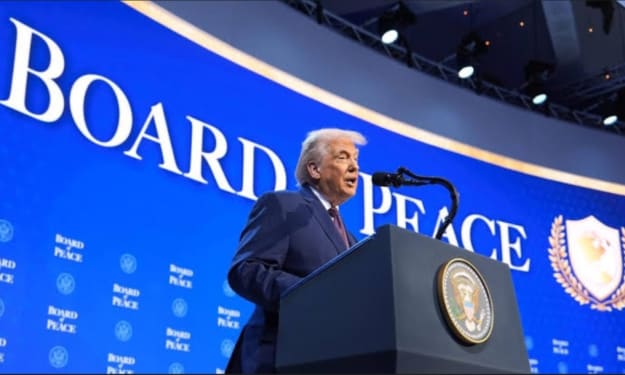
In late January 2026, U.S. President Donald Trump’s launch of the “Board of Peace” — a new multinational body intended to oversee Gaza’s post-war reconstruction and broader global conflict mediation — was met with a striking global diplomatic response. While several nations, especially from the Middle East and Asia, accepted Trump’s invitation, a notable group of countries explicitly declined or refused to join the initiative. Their decisions reflect deep concerns about the board’s structure, its relationship to the United Nations (UN), and broader geopolitical dynamics shaping the post-Gaza peace landscape.
By Salaar Jamaliabout 8 hours ago in The Swamp



Comments
There are no comments for this story
Be the first to respond and start the conversation.