
Ukraine and the question of nationalism
One of the pretexts that Russian President Vladimir Putin used to justify the military invasion of Ukraine was the presence of “Ukrainian nationalists” who hate Russian speakers and carry out “genocide” against them, especially in the east of the country
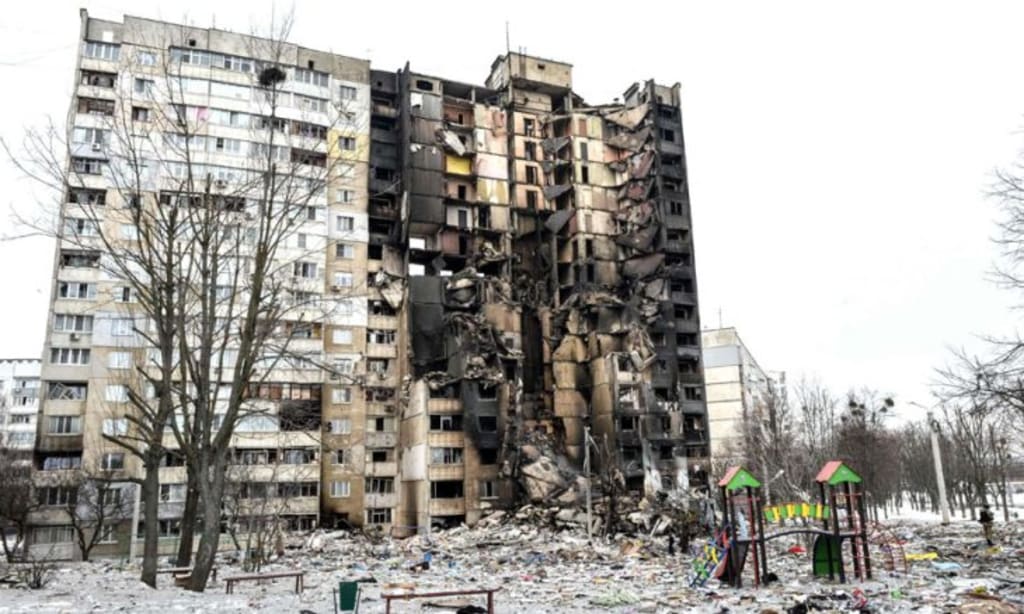
One of the pretexts that Russian President Vladimir Putin used to justify the military invasion of Ukraine was the presence of “Ukrainian nationalists” who hate Russian speakers and carry out “genocide” against them, especially in the east of the country. Although this pretext is part of Putin's lying machine, it is based on what is real, that is, the presence of nationalists in Ukraine. The difference here is between nationalists whom Putin makes “neo-Nazis” and “drug users” and nationalists who are present in every country, and more clearly, between nationalists whose role is to be exaggerated as part of political propaganda, and nationalists who are in fact part of an ideological and political combination that ruled the country in the past period , and can be governed by any other country.
Putin's politicized conception of the issue of nationalism in Ukraine was invested in, before the invasion, by encouraging the residents of some eastern regions to secede, not based on the right to self-determination, but rather to use them as influence and a base for the invasion later. The issue of these residents did not develop in an internal context as much as it was controlled by Russia. In the sense that the Ukrainian contradictions were not allowed to be resolved democratically, based on the transformation that took place in 2014, but Moscow rushed to invest in them to undermine the new anti-Kremlin authority.
Here, exaggerating the role of the "Ukrainian nationalists" is paralleled by investing in the cause of Ukrainians classified as close to Moscow, and making them a tool in the hands of Putin's authoritarianism. The latter manipulated the demographics in its favour, and widened the gap between the two parties, and this manipulation is often ignored when a number of researchers address the issue of divisions in Ukraine, where the focus is on the conflict between the Russians and these militants of their Ukrainian identity, as an entry point for analysis, which draws an intersection Unintentional with the false propaganda of Putinism, seeking to politicize the divisions in its favor. The basis of the hypothesis that these researchers follow is the isolation of divisions from politicization, economic transformations and forms of government.
Nationalism in Ukraine, according to them, is a fixed issue that does not change, despite the existence of a nascent democracy, which could have been an opportunity to form an inclusion space, open, deliberative and flexible, accompanied by a free economy linked to Europe, so that nationalism would dissolve in the broad formation of the country, instead of hardening and turning towards extremism.
The opportunity to control nationalism, through the form of governance, economy, and integration into Europe, is equivalent in a negative sense to the Putinist model, which wants to invest in the issue of nationalism for authoritarian goals, not only in Ukraine, but in Russia itself, as nationalism is part of the regime’s propaganda about “recovery.” The glories of the Soviet Union are more than an element in the formation of the Russian political community. A good number of press reports said that Putin's invading army is facing fierce resistance in the eastern regions of the country, which Russia considers its incubator, and it is inferred that there is a division in Ukraine. One of these reports explained the resistance in these regions, despite the presence of a Russian-speaking majority, by saying that “the last three decades have produced a national figure that unites most Ukrainians, betting on the European option and heading west.”
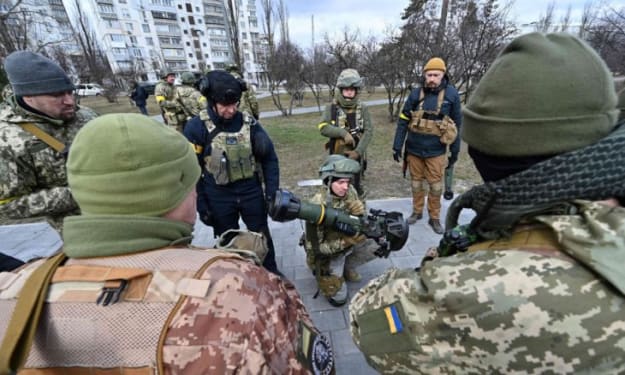
Apart from the report’s exaggeration of the impact of the “universal identity,” the transfer of nationalism from the political horizon that mitigates its extremism, to the war horizon that hardens it, as Putin did, is not guaranteed results. Moscow’s arming of the population of the east of the country, who defines themselves against “nationalism” will further harden this tendency, and make even the regions of eastern Ukraine inaccessible to the “tsar” who deals with nationalism as a guaranteed element in his expansionist agenda, and not as a feeling that moves according to external threats and the nature of The political system and its accommodating institutions become stronger and defensive in the first case and weaken and become more willing to integrate with other elements in the second case.
About the Creator
Keep reading
More stories from Zernouh abderrahman and writers in The Swamp and other communities.
Turkey's position on Russia's invasion of Ukraine
Here is the Russian invasion of Ukraine entering its third week, and here is Turkey showing its policy since February 24, when Russia began invading Ukraine, that it will remain in harmony and coordination with the West and NATO, but it does not want to risk its deep economic relationship with the Russian Federation, and although Turkey has implemented the Montreux Convention and prevented more Russian warships from crossing into the Black Sea, but it does not intend to impose sanctions on Russia, as other countries have done, and it will make every effort to keep channels of dialogue open with Moscow in order to solve the problem of instability, and this has met Very welcome by the West.
By Zernouh abderrahman4 years ago in The Swamp
‘An Incomprehensible Nightmare’: Grief Turns to Anger Over Swiss Bar Fire as Le Constellation Owner Arrested
New Year’s Eve is meant to symbolize hope, renewal, and fresh beginnings. In the Swiss Alpine resort town of Crans-Montana, however, the arrival of 2026 became a moment of unimaginable horror. A devastating fire at the popular nightclub Le Constellation claimed 40 lives and injured more than a hundred others, transforming a place of music and celebration into the epicenter of one of Switzerland’s deadliest peacetime disasters in decades. What followed was a wave of national mourning — and then something more powerful. As details emerged, grief began to turn into anger, and a collective question echoed across Switzerland and beyond: How could this have happened? A Night That Changed Everything Shortly after midnight on January 1, Le Constellation was packed with young people celebrating the New Year. Witnesses recall a festive atmosphere, champagne flowing, music pulsing, and crowds pressed close together. Within minutes, everything changed. Investigators believe that sparkler-style fireworks attached to champagne bottles ignited flammable soundproofing material on the ceiling. Flames spread rapidly through the confined basement space, filling the venue with smoke and heat before many people could react. Panic followed. Survivors described a desperate rush for exits, poor visibility, and crushing crowds as people tried to escape. Some broke windows. Others were trapped. Emergency services arrived quickly, but the fire’s speed and intensity left little chance for many inside. By dawn, the scale of the tragedy was clear. A Community in Mourning Crans-Montana, better known for ski holidays and postcard-perfect views, became a town united by sorrow. Many of the victims were teenagers and young adults, some as young as 14. Families from Switzerland, France, and Italy gathered in hospitals, churches, and temporary shelters, searching for answers and clinging to hope. A national day of mourning was declared. Bells rang across the country. Vigils were held, candles lit, and names read aloud. Swiss leaders were joined by foreign dignitaries in remembrance ceremonies, underscoring the international impact of the loss. But even as memorials continued, troubling information began to surface. From Grief to Outrage Public emotion shifted dramatically when authorities revealed that Le Constellation had not undergone a mandatory fire safety inspection since 2019, despite regulations requiring regular checks for venues hosting large crowds. For many families, this disclosure felt like a second shock. How could a nightclub operate for years without inspection? Who was responsible for ensuring safety standards were met? And why were obvious risks — such as indoor fireworks — allowed at all? The mayor of Crans-Montana acknowledged failures in oversight, admitting that inspections simply had not taken place. That admission sparked widespread anger, not only toward the bar’s owners but also toward local authorities and regulatory bodies. On social media and in public forums, the tone changed from mourning to demand: someone must be held accountable. The Arrest That Changed the Investigation That demand intensified when Swiss prosecutors announced the arrest of Jacques Moretti, co-owner of Le Constellation. Authorities placed him in pre-trial detention, citing concerns that he could leave the country and potentially evade justice. Prosecutors are now investigating possible charges including involuntary homicide, negligence, and causing bodily harm. His wife and business partner was questioned separately and placed under house arrest. For many families, the arrest offered a measure of reassurance — a sign that the tragedy was being taken seriously. For others, it raised further questions about how responsibility would ultimately be shared between private owners and public institutions. Voices of the Survivors Amid legal developments, survivors continue to process their trauma. Some remain hospitalized with severe burns and smoke inhalation injuries. Others are physically safe but psychologically scarred. Several have described recurring nightmares, survivor’s guilt, and a sense of disbelief that they lived while friends did not. Parents of victims have spoken of empty bedrooms, unfinished dreams, and futures erased in minutes. Their testimonies have become a powerful reminder that behind every statistic is a human life — and that accountability is not abstract, but deeply personal. A National Reckoning on Safety The fire has triggered a sweeping review of fire safety standards across Switzerland. Authorities have launched inspections of nightclubs, bars, and event spaces nationwide. Indoor pyrotechnics are being restricted or banned, and enforcement mechanisms are under renewed scrutiny. Yet critics argue that inspections alone are not enough. They are calling for: Clearer responsibility between municipalities and venue owners Transparent public records of safety inspections Stronger penalties for non-compliance Faster intervention when risks are identified If a disaster of this scale can happen in a country renowned for precision and regulation, many ask, what does that mean for public safety elsewhere? An Incomprehensible Nightmare — and a Turning Point The phrase repeated by grieving families — “an incomprehensible nightmare” — captures the emotional weight of the tragedy. But as legal proceedings move forward, that nightmare may also become a turning point. The Le Constellation fire has exposed systemic weaknesses, forced uncomfortable truths into the open, and sparked a nationwide conversation about responsibility, prevention, and justice. Whether those conversations lead to lasting reform remains to be seen. What is certain is this: the 40 lives lost on that New Year’s night will not be forgotten — and for many, justice will mean ensuring that such a tragedy never happens again.
By Muhammad Hassan7 days ago in The Swamp


Comments
There are no comments for this story
Be the first to respond and start the conversation.