
UAE Withdraws Its Remaining Forces from Yemen Amid Rising Tensions with Saudi Arabia
A voluntary military exit highlights a deepening rift between two key Gulf allies and raises new questions about Yemen’s fragile future


The United Arab Emirates (UAE) has announced that it is withdrawing its remaining military forces from Yemen. The move, described by Emirati officials as voluntary, comes at a time of growing political and military tension with Saudi Arabia, its long-time regional ally. This decision marks a major turning point in the Yemen conflict and signals a serious strain in relations between two of the most powerful countries in the Gulf.
The UAE’s withdrawal ends its direct military presence in Yemen, which began in 2015 as part of the Saudi-led coalition fighting the Houthi movement. Although the UAE had already reduced most of its troops several years ago, it continued to maintain a small number of forces, mainly involved in counterterrorism operations. With this latest step, Abu Dhabi says its mission in Yemen has officially come to an end.
Background: The Yemen War and the Gulf Coalition
The war in Yemen began more than a decade ago and has become one of the world’s worst humanitarian crises. Saudi Arabia and the UAE joined forces to support Yemen’s internationally recognized government against the Houthis, who control large parts of the country, including the capital, Sanaa. The Houthis are widely seen as being backed by Iran, a regional rival of both Riyadh and Abu Dhabi.
At first, Saudi Arabia and the UAE worked closely together. Saudi Arabia focused mainly on airstrikes and border security, while the UAE deployed ground forces and supported local militias, especially in southern Yemen. Over time, however, their goals began to diverge.
The UAE built strong ties with the Southern Transitional Council (STC), a powerful group that seeks independence for southern Yemen. Saudi Arabia, on the other hand, has remained committed to keeping Yemen unified under one central government. This difference has caused repeated friction between the two allies.
What Triggered the Current Crisis
The current crisis escalated after Saudi Arabia carried out airstrikes near Yemen’s southern port city of Mukalla. Saudi officials said the strikes targeted shipments they believed were linked to UAE-backed groups and posed a threat to regional security. The UAE denied that the shipments contained weapons and rejected accusations that it was undermining Saudi interests.
Soon after, Yemen’s government announced it was canceling its defense agreement with the UAE and demanded that Emirati forces leave the country. Saudi Arabia publicly supported Yemen’s demand and urged the UAE to withdraw all remaining troops within a very short time frame.
In response, the UAE said it had already decided to end its mission and was withdrawing its remaining forces on its own terms. Emirati officials emphasized that the decision was not made under pressure, but rather as part of a long-planned strategy.
A Serious Rift Between Allies
While both countries are trying to present the situation calmly, analysts say the withdrawal reveals a serious and growing rift between Saudi Arabia and the UAE. For years, the two nations have competed quietly over influence in the region, including trade, military power, and political leadership.
In Yemen, this rivalry has become more visible. Saudi Arabia sees the UAE’s support for southern groups as a challenge to its vision for Yemen’s future. The UAE, meanwhile, has focused on securing ports, fighting extremist groups, and building local allies that protect its strategic interests.
The decision to withdraw forces may reduce direct military tension between the two countries in Yemen, but it does not resolve the deeper disagreements that have emerged.
Impact on Yemen
For Yemen, the UAE’s withdrawal creates both risks and uncertainty. On one hand, fewer foreign troops could reduce fighting in some areas. On the other hand, the exit may leave power gaps, especially in the south, where UAE-backed forces have played a key role in security.
The Southern Transitional Council has already rejected demands to weaken its position, raising fears of renewed clashes between southern forces and troops loyal to Yemen’s central government. If fighting increases, civilians are likely to suffer the most.
Humanitarian groups warn that any new instability could worsen an already dire situation. Millions of Yemenis rely on aid for food, water, and medical care. Continued political conflict makes it harder for aid to reach those in need.
Regional and Global Reactions
The international community is watching developments closely. Western governments and the United Nations have repeatedly called for de-escalation in Yemen and for renewed peace talks. Some diplomats hope that the UAE’s withdrawal could encourage broader negotiations, while others worry it may lead to new power struggles on the ground.
For Saudi Arabia, the situation is also delicate. Riyadh has been trying to reduce its military involvement in Yemen and focus on domestic economic reforms. A public dispute with the UAE complicates these efforts and could weaken the coalition’s position against the Houthis.
What Comes Next
It remains unclear how the crisis will unfold. Much depends on how Saudi Arabia, the UAE, and Yemen’s local factions manage the transition. If cooperation breaks down completely, Yemen could slide into another phase of conflict, even as the main war shows signs of slowing.
The UAE’s withdrawal is a clear signal that the balance of power in the region is shifting. It highlights how alliances can change when national interests no longer align perfectly. For Yemen, the hope is that this moment leads to dialogue rather than deeper division.
As events continue to develop, one thing is certain:
The decision by the UAE to leave Yemen has reshaped the political landscape, not only in Yemen itself, but across the Gulf region.
About the Creator
Keep reading
More stories from dua fatima and writers in The Swamp and other communities.
Power Failure Brings Channel Tunnel Rail Traffic to a Halt
A sudden power failure in the Channel Tunnel caused widespread chaos for travelers, bringing rail traffic between the United Kingdom and mainland Europe to a complete stop. The incident led to severe delays and cancellations of Eurostar trains, leaving thousands of passengers stranded at major stations such as London’s St Pancras International and Paris’ Gare du Nord. The disruption happened during a busy travel period, making the situation even more stressful for families, tourists, and business travelers.
By dua fatima13 days ago in The Swamp
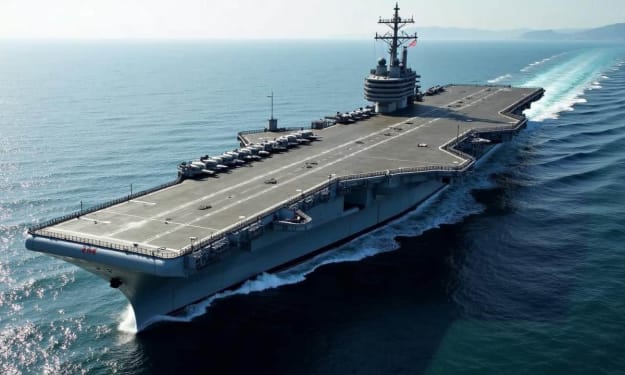
With Its 337 Meters and 100,000 Tons, the World’s Largest Aircraft Carrier Rules the Oceans
Stretching an astonishing 337 meters in length and weighing close to 100,000 tons, the world’s largest aircraft carrier is not just a ship—it is a floating symbol of modern military power, engineering excellence, and global influence. Often described as a mobile airbase at sea, this colossal vessel dominates the oceans, reshaping how naval warfare, diplomacy, and power projection are conducted in the 21st century. A Giant of the Seas To grasp the scale of this aircraft carrier, comparisons help. At 337 meters, it is longer than three football fields placed end to end. Its displacement of around 100,000 tons makes it heavier than many skyscrapers combined. Powered by advanced nuclear reactors, the carrier can operate for decades without refueling, allowing it to remain at sea for extended missions across the globe. This immense size is not for spectacle alone. The carrier is designed to support a full air wing of more than 70 aircraft, including fighter jets, early warning planes, helicopters, and unmanned aerial systems. Its flight deck is a carefully choreographed space where aircraft take off and land every few minutes, day and night, in all weather conditions. Engineering at Its Finest Building such a vessel is one of the most complex engineering challenges humanity has mastered. Thousands of engineers, technicians, and naval architects work for years to bring an aircraft carrier to life. From its reinforced steel hull to its advanced radar systems, every component is designed to withstand extreme conditions, including rough seas, combat damage, and long-term deployment. The nuclear propulsion system is a defining feature. Unlike conventional ships, this carrier does not rely on diesel or gas fuel. Its reactors generate enormous power, not only for propulsion but also for onboard systems such as radar, weapons, and aircraft launch mechanisms. This allows the ship to reach high speeds and maintain them over vast distances without logistical constraints. A Floating City Life aboard the world’s largest aircraft carrier resembles that of a small city. More than 5,000 sailors and aviators live and work on the ship during deployments. There are sleeping quarters, medical facilities, kitchens capable of serving thousands of meals a day, gyms, and even onboard shops. The crew operates around the clock, ensuring that the carrier remains combat-ready at all times. Pilots train continuously, engineers maintain critical systems, and command staff coordinate operations that may span multiple regions. Discipline, precision, and teamwork are essential, as a single mistake on such a complex platform can have serious consequences. Power Projection and Global Influence Beyond its technical marvels, the true significance of the world’s largest aircraft carrier lies in its strategic role. Wherever it sails, it sends a powerful message. An aircraft carrier strike group—typically consisting of destroyers, cruisers, submarines, and supply ships—represents one of the most formidable military forces on Earth. This capability allows its operator to respond rapidly to crises, whether through combat operations, humanitarian assistance, or deterrence. From disaster relief missions to enforcing no-fly zones, aircraft carriers offer unmatched flexibility. Their presence alone can influence diplomatic negotiations, reassure allies, or discourage potential adversaries. Changing the Nature of Warfare Modern aircraft carriers have evolved far beyond their World War II predecessors. Advanced sensors, stealth aircraft, electronic warfare systems, and missile defenses have transformed them into highly resilient platforms. The integration of unmanned systems is further expanding their reach, allowing surveillance and strike missions without putting pilots at risk. However, the rise of advanced anti-ship missiles and submarine technologies has also sparked debate. Critics argue that such massive vessels are vulnerable targets in high-intensity conflicts. Supporters counter that layered defenses, mobility, and escort fleets make aircraft carriers far more survivable than they appear. A Symbol of National Ambition Possessing the world’s largest aircraft carrier is also a matter of prestige. It reflects a nation’s industrial capacity, technological sophistication, and long-term strategic vision. Only a handful of countries have the resources and expertise to build and operate such ships, making them exclusive symbols of great-power status. For the public, these carriers often capture the imagination. Images of jets launching from their decks, crews working in synchronized precision, and the sheer scale of the vessel inspire awe and curiosity, reinforcing their status as icons of modern naval power. Conclusion At 337 meters long and weighing around 100,000 tons, the world’s largest aircraft carrier truly rules the oceans. It is a masterpiece of engineering, a floating city, and a central pillar of modern military strategy. While debates continue about the future of naval warfare, one thing remains clear: as long as nations seek to project power, protect interests, and influence global events, these colossal carriers will remain at the heart of maritime dominance.
By Fiazahmedbrohi about 22 hours ago in The Swamp
Center Stage with Gina C.
*** I'm keen to republish the interviews I did for my series with Vocal creators. It's been a few years and I thought it might be nice to revisit these wonderful conversations. I'll be releasing them one at a time for a few weeks/months.
By Heather Hubler5 days ago in Interview



Comments
There are no comments for this story
Be the first to respond and start the conversation.