
Power Failure Brings Channel Tunnel Rail Traffic to a Halt
Thousands of travelers stranded as Eurostar and shuttle services face major disruption during peak travel season

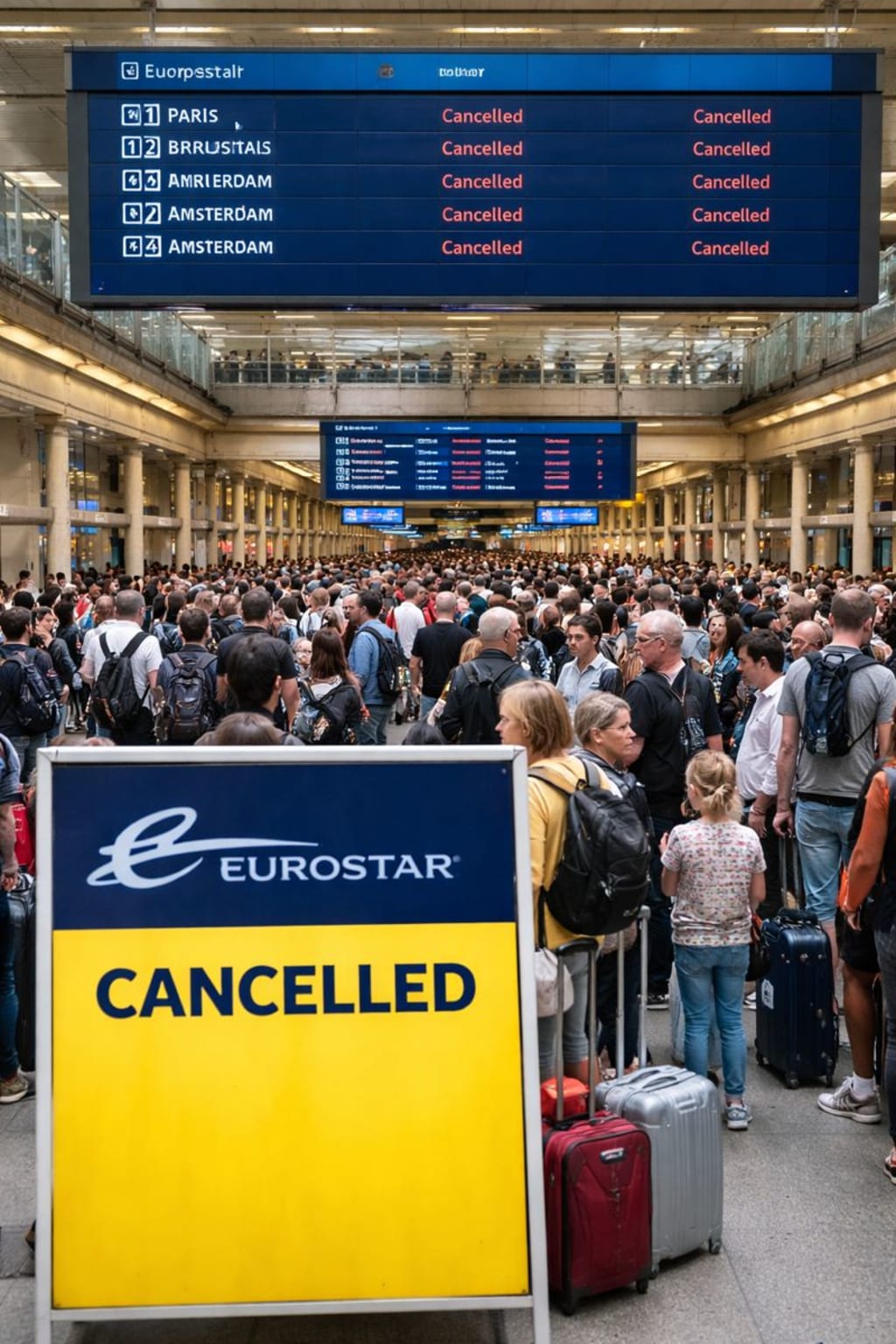
A sudden power failure in the Channel Tunnel caused widespread chaos for travelers, bringing rail traffic between the United Kingdom and mainland Europe to a complete stop. The incident led to severe delays and cancellations of Eurostar trains, leaving thousands of passengers stranded at major stations such as London’s St Pancras International and Paris’ Gare du Nord. The disruption happened during a busy travel period, making the situation even more stressful for families, tourists, and business travelers.
The Channel Tunnel, also known as the Chunnel, is a vital transport link that connects the UK with France under the English Channel. It is used by high-speed passenger trains, vehicle shuttle services, and freight trains. Any disruption to this tunnel has an immediate and wide-reaching impact, and this power failure was no exception.
What Happened
According to tunnel operators, the problem was caused by a failure in the power supply system that provides electricity to trains running through the tunnel. As a safety measure, all rail traffic was stopped while engineers investigated and worked to fix the issue. Eurostar, the main passenger train operator using the tunnel, announced that services were suspended “until further notice.”
Passengers were advised not to travel unless they had already arrived at the station, as trains were either delayed indefinitely or canceled altogether. The sudden halt left many people confused and frustrated, especially those who had already passed security and border checks and could not easily leave the terminal areas.
Scenes of Travel Chaos
At major train stations, the atmosphere quickly turned tense. Long queues formed as travelers waited for updates, many sitting on the floor with their luggage. Information screens showed repeated delays or cancellations, while announcements offered limited clarity about when services would resume.
Some passengers reported waiting for hours without clear guidance. Families with children and elderly travelers found the situation particularly difficult. With hotels fully booked due to the holiday season, many stranded passengers struggled to find accommodation or alternative travel options.
Social media quickly filled with images and videos of crowded stations and angry travelers demanding answers. Many criticized the lack of communication, saying they felt abandoned during a stressful and expensive disruption.
Impact on Vehicle and Freight Services
The power failure did not only affect passenger trains. The vehicle shuttle service, which allows cars, buses, and trucks to cross the Channel by rail, also faced serious disruption. Long lines of vehicles were reported at terminals in Folkestone and Calais as drivers waited for updates.
Freight services were also impacted, raising concerns about delays in deliveries of goods between the UK and Europe. While passenger inconvenience drew the most attention, industry experts warned that repeated disruptions could have long-term economic effects if reliability becomes a concern.
Efforts to Restore Services
Tunnel operator Getlink confirmed that technical teams were working urgently to restore power and ensure the system was safe before allowing trains to run again. Engineers carried out inspections and repairs, stressing that safety was the top priority.
Later in the day, officials said that rail traffic would resume gradually once the issue was resolved. However, even after power was restored, delays continued as operators worked to clear backlogs and reposition trains and crews.
Eurostar advised passengers to check their travel status online and offered options to rebook tickets or request refunds. Still, many travelers said the compensation did little to make up for missed connections, canceled plans, or lost holiday time.
Why the Channel Tunnel Matters
The Channel Tunnel is one of the most important pieces of transport infrastructure in Europe. It carries millions of passengers every year and plays a key role in trade and tourism. For many travelers, it is the fastest and most convenient way to move between the UK and countries like France, Belgium, and the Netherlands.
Because of its importance, even a short disruption can have a huge ripple effect. This incident highlighted how dependent modern travel is on complex electrical and technical systems, and how vulnerable these systems can be to unexpected failures.
Questions About Infrastructure Resilience
The power failure has raised questions about the resilience of critical infrastructure. Travelers and experts alike are asking how such a major link could be brought to a halt by a single technical issue. Some have called for stronger backup systems and better emergency planning to reduce the impact of future disruptions.
Transport analysts say that while technical failures can never be fully eliminated, clear communication and faster response times can help reduce passenger frustration. Transparent updates and better coordination between operators and authorities could make a significant difference during crises.
Passenger Reactions
For many travelers, the experience was exhausting and disappointing. Some missed important events, such as weddings, business meetings, or family gatherings. Others faced extra costs for food, hotels, and alternative transport.
Despite the frustration, a few passengers praised station staff who worked long hours to manage crowds and provide assistance under difficult conditions. However, most agreed that better planning and communication are needed to prevent similar chaos in the future.
Looking Ahead
As services slowly return to normal, attention will turn to investigations into what caused the power failure and how similar incidents can be avoided. Transport authorities and operators are expected to review safety systems and emergency procedures in the coming weeks.
For now, the incident serves as a reminder of how fragile even the most advanced transport networks can be. A single power failure was enough to disrupt thousands of lives and bring one of Europe’s busiest travel routes to a standstill.
The Channel Tunnel remains a symbol of modern engineering and international cooperation, but this event shows that continuous investment, maintenance, and preparedness are essential to keep such vital connections running smoothly.
About the Creator
Keep reading
More stories from dua fatima and writers in The Swamp and other communities.
UAE Withdraws Its Remaining Forces from Yemen Amid Rising Tensions with Saudi Arabia
The United Arab Emirates (UAE) has announced that it is withdrawing its remaining military forces from Yemen. The move, described by Emirati officials as voluntary, comes at a time of growing political and military tension with Saudi Arabia, its long-time regional ally. This decision marks a major turning point in the Yemen conflict and signals a serious strain in relations between two of the most powerful countries in the Gulf.
By dua fatima19 days ago in The Swamp




Comments
There are no comments for this story
Be the first to respond and start the conversation.