
U.S. Colleges Received Over $5 Billion in Foreign Gifts and Contracts in 2025
New data reveals the scale of international funding in American higher education, raising questions about transparency, influence, and national security.

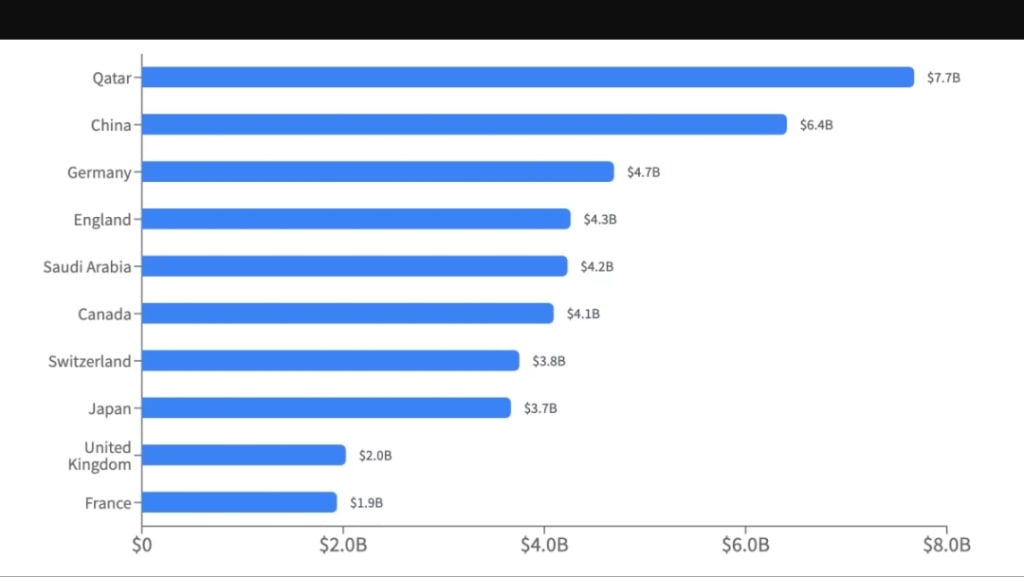
In 2025, colleges and universities across the United States received more than $5.2 billion in reportable foreign gifts and contracts, according to newly released data from the U.S. Department of Education. The figures reflect a significant level of foreign engagement with American higher education institutions and have sparked renewed debate over transparency, influence, and the potential national security implications of foreign funding.
The data, compiled under Section 117 of the Higher Education Act, represents the most comprehensive snapshot yet of the money flowing into U.S. universities from foreign governments, corporations, and other entities. The law requires colleges that receive federal financial aid to report any gifts or contracts from foreign sources valued at $250,000 or more, helping the federal government and the public understand these financial relationships.
Key Findings from the 2025 Data
The 2025 disclosures revealed several noteworthy trends:
Total reportable foreign gifts and contracts exceeded $5.2 billion, covering more than 8,300 transactions.
Qatar was the largest single foreign source, contributing over $1.1 billion — about 20% of the total.
Other major contributors included the United Kingdom ($633 million), China ($528 million), Switzerland ($451 million), Japan ($374 million), and Germany ($292 million).
Leading institutional recipients included Carnegie Mellon University, MIT, Stanford University, and Harvard University, each reporting hundreds of millions in foreign funding.
The report also highlighted compliance issues: more than $2 billion worth of gifts and contracts were reported late, violating statutory deadlines. While universities often cite administrative delays or data collection challenges, late reporting raises concerns about oversight and accountability.
Why This Matters
Foreign funding for U.S. higher education is not illegal, and in many cases it supports groundbreaking research in science, technology, medicine, and engineering. However, the scale of these inflows has prompted concern from policymakers, national security officials, and watchdog groups.
Education Secretary Linda McMahon emphasised that the data provides “unprecedented visibility” into funding sources, particularly from countries considered potential security risks. Transparency helps ensure that academic priorities are not unduly influenced by foreign governments or corporations while protecting sensitive research.
At the same time, critics argue that the figures alone don’t tell the full story. The reports do not include detailed information on the purpose of the funding, the specific projects involved, or how the money is used. University officials stress that most foreign funding supports legitimate research collaborations and academic programs.
Who Benefits Most?
The largest recipients of foreign funding tend to be research-intensive universities with global reputations. For example:
Carnegie Mellon University and MIT each reported nearly $1 billion in foreign gifts and contracts.
Stanford University received over $775 million, and Harvard University reported more than $324 million.
These universities often partner with foreign governments, multinational corporations, and international research organizations to advance studies in fields like artificial intelligence, public health, and renewable energy. While the partnerships are often productive, the high volume of foreign money also raises questions about influence and oversight.
The Debate Over Transparency and Influence
The disclosures have reignited debate on two key issues: transparency and national security.
Supporters of strict reporting argue that visibility into foreign funding is critical for protecting national interests. Knowing who is financing research can help identify potential conflicts of interest or attempts to influence sensitive technologies. It also allows policymakers and the public to assess whether foreign investments align with U.S. values and priorities.
University officials caution against overinterpretation. They argue that foreign funding is a longstanding practice that fosters collaboration, innovation, and global competitiveness. Mischaracterizing legitimate research partnerships as security risks could discourage beneficial engagement with international partners.
The American Council on Education, representing colleges nationwide, emphasises that the data shows compliance rather than impropriety. At the same time, the council urges careful interpretation of the figures, noting that millions of dollars in research funding may involve multiple partners and purposes, not all of which carry security risks.
Historical Context
The 2025 figures reflect a growing trend over the past decade. U.S. universities have received tens of billions in foreign gifts and contracts over the years, often with limited public visibility. Recent administration efforts have focused on stricter enforcement of reporting requirements, improving data accessibility, and providing more transparency for federal and public oversight.
While foreign engagement has long been a key feature of American higher education, the scale of the 2025 figures underscores both the benefits and the potential risks of these financial relationships.
Looking Ahead
As foreign funding continues to grow, several trends are likely to dominate discussion:
Increased scrutiny of gifts from countries considered geopolitical competitors.
Reinforced reporting standards to ensure timely and accurate disclosure.
Balancing academic freedom with national security, particularly in cutting-edge research areas.
Policymakers, university leaders, and the public will continue to evaluate foreign funding flows carefully to maintain both the global competitiveness of U.S. higher education and the protection of national interests.
Conclusion
The release of 2025 foreign funding data highlights the scale and complexity of international engagement in U.S. higher education. While billions of dollars support legitimate research and collaboration, transparency and oversight remain critical to prevent undue influence and ensure national security.
For universities, policymakers, and students alike, these figures underscore the need for a careful balance between openness, innovation, and vigilance — ensuring that America’s world-class research institutions remain both globally connected and securely governed.
About the Creator
Asad Ali
I'm Asad Ali, a passionate blogger with 3 years of experience creating engaging and informative content across various niches. I specialize in crafting SEO-friendly articles that drive traffic and deliver value to readers.
The Saddest Thing - The Billionaires Who Rule America Aren't Even Enjoying Themselves
This single post says more about our ruling class than a thousand policy papers. The saddest thing about today's system is that the men robbing the rest of us - sabotaging our economic prospects, our pensions, our access to affordable healthcare - are not even happy.
By Scott Christenson🌴6 days ago in The Swamp



Comments
There are no comments for this story
Be the first to respond and start the conversation.