
Turkey’s TPAO and Chevron Agree Joint Oil and Gas Exploration
Partnership aims to boost energy security and unlock new offshore and onshore reserves Deal strengthens Turkey–U.S. cooperation in the energy sector Joint venture targets untapped hydrocarbon potential amid rising demand Ankara seeks reduced import dependence through strategic exploration agreement Chevron brings advanced drilling expertise to Turkey’s energy ambitions

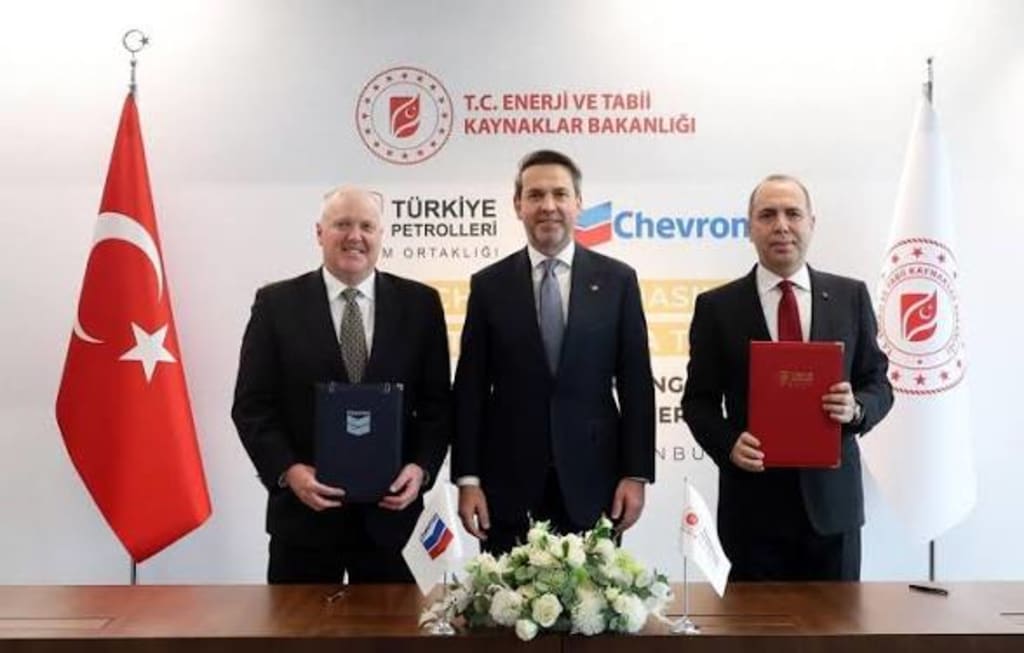
Turkey’s state-owned energy company, Turkish Petroleum Corporation (TPAO), has reached a joint exploration agreement with U.S. energy giant Chevron to develop oil and natural gas resources, marking a significant step in Ankara’s strategy to expand domestic energy production and reduce reliance on imports.
The agreement, announced by Turkish energy officials, outlines cooperation in offshore and onshore exploration activities, with an initial focus on geological surveys and feasibility studies. While financial details of the deal have not been publicly disclosed, both sides described the partnership as a long-term strategic collaboration aimed at unlocking untapped hydrocarbon potential.
Strengthening Energy Independence
Turkey imports more than 90 percent of its oil and gas needs, making energy security a top national priority. The government has spent the past decade investing heavily in exploration infrastructure, including seismic research vessels and deep-water drilling ships. Partnering with Chevron, one of the world’s largest energy companies, signals Turkey’s intent to combine domestic ambition with international technical expertise.
Energy Minister Alparslan Bayraktar said the agreement would accelerate exploration efforts and bring advanced technology to Turkey’s energy sector. “This partnership supports our vision of becoming more self-sufficient in energy while ensuring responsible and efficient resource development,” he stated.
Chevron officials echoed the sentiment, noting that Turkey represents a promising market with growing demand and strategic geographic importance. The company said it sees opportunities in both offshore Mediterranean prospects and selected onshore basins.
Focus Areas for Exploration
Although specific locations have not been formally confirmed, industry analysts expect the collaboration to prioritize offshore regions in the eastern Mediterranean and parts of the Black Sea basin. Turkey has already reported natural gas discoveries in the Black Sea in recent years, which are now moving into production phases.
Exploration will likely begin with seismic surveys to assess reserves, followed by drilling programs if commercially viable resources are identified. Experts say Chevron’s deep-water drilling experience could significantly improve the success rate of complex offshore operations.
“This deal gives Turkey access to world-class exploration technology and risk-sharing mechanisms,” said an energy analyst based in Istanbul. “It also allows Chevron to enter a region where geopolitical and technical challenges require strong local partnerships.”
Economic and Strategic Impact
The agreement could have major economic implications if substantial reserves are discovered. Domestic production would help Turkey reduce its energy import bill, which currently costs tens of billions of dollars annually and contributes to the country’s trade deficit.
Lower dependency on imported gas could also strengthen Turkey’s negotiating position with traditional suppliers such as Russia, Iran, and Azerbaijan. At the same time, Ankara aims to position itself as a regional energy hub linking producers in Central Asia and the Middle East with European markets.
From Chevron’s perspective, the deal provides access to a growing economy with increasing energy demand. Turkey’s industrial sector and expanding population require reliable and diversified energy sources, making long-term investment attractive.
Environmental and Regulatory Considerations
The partnership will operate under Turkey’s regulatory framework, which requires environmental impact assessments and compliance with international safety standards. Turkish authorities emphasized that exploration activities will be conducted with strict oversight to minimize ecological risks, particularly in sensitive marine areas.
Environmental groups, however, have expressed concerns about offshore drilling in the Mediterranean, warning that spills or accidents could harm tourism and marine biodiversity. They argue that Turkey should prioritize renewable energy rather than expanding fossil fuel exploration.
Government officials counter that energy transition goals and hydrocarbon exploration are not mutually exclusive. Turkey has increased investment in wind and solar power while maintaining that domestic oil and gas production remains essential for economic stability in the near term.
Diplomatic and Commercial Significance
The TPAO-Chevron agreement also carries diplomatic weight, reflecting improving energy cooperation between Turkey and the United States. Analysts say the partnership could enhance bilateral ties at a time when Ankara is seeking to rebalance relationships with Western allies.
“This is not just an energy deal—it’s also a strategic signal,” said a former Turkish diplomat. “It shows that international companies still see Turkey as a viable and important energy market despite regional tensions.”
The agreement comes as global energy markets remain volatile due to geopolitical conflicts, supply disruptions, and fluctuating prices. Countries with domestic production capacity are viewed as better positioned to manage these uncertainties.
Next Steps
The initial phase of the partnership will focus on data sharing, seismic analysis, and exploration planning. If promising results emerge, the two companies will move toward drilling operations and possible field development. Any commercial production would likely take several years before contributing to Turkey’s energy supply.
Industry observers note that success will depend not only on geological findings but also on political stability, regulatory clarity, and market conditions.
Conclusion
The joint exploration agreement between Turkey’s TPAO and Chevron represents a major development in Turkey’s pursuit of energy security and economic resilience. By combining national ambition with international expertise, the partnership aims to identify new oil and gas resources that could reshape Turkey’s energy landscape.
While challenges remain—ranging from environmental concerns to regional geopolitics—the deal underscores Ankara’s determination to play a stronger role in global energy markets. For Chevron, the partnership opens a new frontier in a strategically important region, reinforcing its presence in emerging energy zones.
As exploration efforts begin, the results will determine whether this collaboration becomes a cornerstone of Turkey’s future energy strategy or another cautious step in a complex and competitive global industry.
About the Creator
Fiaz Ahmed
I am Fiaz Ahmed. I am a passionate writer. I love covering trending topics and breaking news. With a sharp eye for what’s happening around the world, and crafts timely and engaging stories that keep readers informed and updated.
Keep reading
More stories from Fiaz Ahmed and writers in The Swamp and other communities.
Suicide Risk if Trans Prisoners Are Put in Jails Based on Sex at Birth, Court Told
A court has been warned that placing transgender prisoners in facilities according to their sex at birth rather than their gender identity could significantly increase the risk of suicide and self-harm, as legal challenges continue over prison placement policies and the rights of transgender inmates. During recent proceedings, lawyers representing advocacy groups and affected individuals argued that rigid placement rules fail to account for the vulnerabilities faced by transgender prisoners, particularly trans women housed in male prisons. Medical experts and human rights organizations submitted evidence suggesting that such policies expose inmates to heightened risks of violence, psychological trauma, and severe mental distress. The case centers on whether prison authorities should prioritize biological sex or gender identity when determining where transgender inmates are held. Governments defending the policies say they are acting in the interests of safety and clarity within the prison system. However, critics contend that blanket rules ignore individual circumstances and medical advice. Evidence of Mental Health Risks Psychiatrists and prison healthcare specialists told the court that transgender people already experience disproportionately high rates of depression, anxiety, and suicidal ideation compared with the general population. These risks are amplified in custodial settings, where isolation and fear of assault can worsen existing mental health conditions. One expert witness stated that housing trans women in male prisons frequently leads to harassment and threats, forcing some inmates into solitary confinement for their own protection. While intended as a safety measure, prolonged isolation has been shown to increase the likelihood of self-harm and suicidal thoughts. “Transgender prisoners face a unique combination of stigma, vulnerability, and institutional stress,” the court heard. “Policies that disregard gender identity can exacerbate these pressures and result in serious harm.” Human rights organizations presented international data indicating that suicide attempts among transgender prisoners are significantly higher than among non-transgender inmates, particularly in systems that do not allow case-by-case assessments. Government Position Officials defending the policy said prisons must balance the rights of transgender inmates with the safety of other prisoners. They argued that sex-based placement rules offer a clear framework and reduce the risk of conflicts or accusations of unfair treatment. A government lawyer told the court that prison authorities already have discretion to move inmates if there is a clear and immediate risk to their safety. However, campaigners say this discretion is inconsistently applied and often requires prisoners to endure harm before action is taken. Authorities also pointed to the creation of specialized units or wings in some facilities for vulnerable prisoners, including transgender inmates. Critics counter that such units are limited in number and can still isolate individuals from meaningful social interaction or rehabilitation programs. Personal Testimonies The court heard anonymized testimonies from transgender prisoners who described living in constant fear after being placed in prisons that did not align with their gender identity. Some said they avoided showers, communal areas, and even medical appointments due to the risk of harassment or assault. One former inmate said that being housed according to sex at birth made them feel “erased and unsafe,” leading to severe depression and thoughts of suicide. Lawyers argued that these experiences demonstrate the human cost of inflexible policies. Advocacy groups stressed that the issue is not theoretical but affects real people whose mental health and physical safety are at stake. “This is about dignity and survival,” one campaigner said outside the courtroom. “Trans people should not be placed in environments that make them targets.” Legal and Ethical Implications The case raises broader questions about how prison systems accommodate gender-diverse individuals within institutions designed around binary classifications. Legal scholars say the outcome could influence future policies on healthcare access, risk assessments, and prisoner classification. International human rights standards increasingly call for individualized assessments rather than automatic placement based on sex at birth. The United Nations and several European bodies have recommended that prisons consider gender identity alongside safety, health, and personal circumstances. Opponents of change argue that such policies could be difficult to implement and might provoke backlash from both staff and inmates. Supporters maintain that the legal system must evolve to reflect modern understanding of gender and mental health. What Happens Next Judges are expected to rule in the coming months on whether current prison placement rules violate equality and human rights protections. If the challenge succeeds, prison services may be required to revise their policies and introduce more flexible, case-by-case decision-making. Experts say that regardless of the legal outcome, the debate has already exposed gaps in mental health care for transgender prisoners. Many facilities lack specialized training for staff or adequate psychological support for vulnerable inmates. The ruling could have far-reaching consequences for correctional systems, potentially reshaping how prisons address the needs of transgender people while maintaining overall safety. Conclusion The court’s warning about suicide risk highlights the complex intersection of gender identity, incarceration, and mental health. As legal arguments continue, the case underscores the importance of balancing institutional order with compassion and evidence-based policy. For transgender prisoners, the decision could determine not only where they are housed, but whether their time in custody becomes a period of protection and rehabilitation or one marked by fear and psychological harm. If this topic is personally difficult for you or someone you know, support is available. If you’d like, I can help you find mental health helplines or resources in your country.
By Fiaz Ahmed 3 days ago in The Swamp
Why Black History Matters in America?
The United States of America is celebrating their 250th anniversary in 2026. I'm proud to be an American and as someone who was born here, I wouldn't imagine myself living anywhere else. This is a country where opportunities are possible. Where anyone can be successful in anything they desire to do. Equality, community, and togetherness are the backbones of what America is and should be about. However, we have an administration who wants to erase and disregard those who have made positive, meaningful impacts in our country, specifically Black figures, such as Martin Luther King, Jr., Rosa Parks, and Maya Angelou. President Trump and his administration have been constantly complaining and fighting against what they call the "Woke agenda". They use this excuse as a distraction from other issues they refuse to address, such as the high cost of living, climate change, and inflation. That equality is dividing America, when in reality, it's bringing us together. Being woke is not tied to a specific political party. No matter where you stand on the political spectrum, you can still care about other people and their plights. Compassion and empathy for others isn't tied to a political party, either. We were taught as children to treat others the way we want to be treated and not judge others because they're different from us. Caring about others isn't a personal attack on your beliefs. It doesn't make you any less of a person. People who are easily offended over African American figures, past or present, or anything related to it, are grasping at straws. Current and future generations need to know who people like Harriet Tubman and Shirley Chisholm were, especially in the classroom. Black History is part of American History. It should be recognized, not hidden or forgotten. Besides, you can't shield children from everything, just because your feelings are easily hurt.
By Mark Wesley Pritchard 7 days ago in The Swamp
For Serbia’s Muslim Students, Protest Brings a Long-Missing Sense of Belonging
In Serbia, public protests have long been associated with political change, economic frustration, or demands for accountability. But for a growing number of Muslim students, recent demonstrations have carried a more personal meaning. Beyond slogans and banners, these protests have become spaces where young people feel seen, heard, and included in a society where they have often felt peripheral. Muslims make up a small but significant minority in Serbia, concentrated largely in regions such as Sandžak and parts of southern Serbia. Many Muslim students leave their hometowns to study in larger cities like Belgrade or Novi Sad, where cultural and religious differences can feel more pronounced. While university life offers opportunity, it can also heighten feelings of isolation, particularly in environments where minority identities are rarely reflected in public discourse. For these students, participation in protest movements has offered something unexpected: a shared civic identity. Standing shoulder to shoulder with fellow students from different ethnic and religious backgrounds, many Muslim participants describe feeling part of a broader collective for the first time. The protests, often centered on issues like education standards, political transparency, or civil rights, have created a rare space where identity is defined less by background and more by shared purpose. Several Muslim students have spoken about how protest participation changed their relationship with the state and society. Rather than feeling like observers on the margins, they felt like contributors to Serbia’s future. This shift may seem subtle, but in a country still shaped by the legacy of ethnic conflict and political polarization, it carries real weight. Universities have played a key role in this transformation. Student-led movements tend to emphasize inclusivity and solidarity, focusing on common struggles such as rising living costs, limited job prospects, and concerns about academic freedom. These issues cut across identity lines, allowing Muslim students to engage without feeling singled out or tokenized. For many participants, the protests also provided emotional affirmation. Public spaces in Serbia have not always felt welcoming to visibly Muslim individuals, particularly women who wear hijab. During demonstrations, however, students describe an atmosphere of mutual protection and respect. Shared chants and collective movement helped dissolve social barriers, even if only temporarily. This sense of belonging has had a ripple effect beyond the protests themselves. Muslim student groups report increased confidence in organizing discussions, cultural events, and civic initiatives on campus. The visibility gained through protest participation has encouraged some students to speak more openly about their experiences, both positive and negative, within Serbian society. Importantly, this moment has not erased longstanding challenges. Muslim students still face structural inequalities, underrepresentation, and occasional discrimination. Participation in protests does not guarantee lasting inclusion, nor does it resolve deep-rooted social tensions. However, it has opened a door—one that allows minority students to imagine themselves as active stakeholders rather than passive residents. Some students describe the protests as a form of civic education. Through organizing, debating, and negotiating differences, they learned how democratic engagement works in practice. For those who previously felt disconnected from national politics, this hands-on experience reshaped their understanding of citizenship. The protests have also challenged assumptions held by the broader public. Seeing Muslim students visibly engaged in movements advocating for shared national concerns disrupts simplistic narratives about loyalty or integration. It reinforces the idea that minority identities and civic commitment are not mutually exclusive. Faculty members and observers note that such moments are especially significant for young people. University years are formative, shaping how individuals relate to authority, community, and self-expression. When Muslim students find inclusion during this period, it can influence how they engage with society long after graduation. There is also a symbolic dimension to these protests. Public squares, streets, and campuses have historically been spaces where power dynamics are contested. For Muslim students to occupy these spaces confidently signals a quiet but meaningful shift. It asserts presence without confrontation, belonging without assimilation. The sense of unity experienced during protests may not be permanent. Movements lose momentum, demands evolve, and political realities intrude. Yet many students say the memory of collective action stays with them. Knowing that solidarity is possible, even if fragile, changes how they view both themselves and others. In a region where identity has often been used to divide, these protests offer a different narrative—one centered on shared aspirations rather than inherited differences. For Serbia’s Muslim students, the demonstrations have been more than acts of dissent. They have been moments of recognition. Ultimately, the significance of these protests lies not only in their political outcomes but in their social impact. They have shown that inclusion does not always begin with policy; sometimes it begins with standing together in public, demanding change, and realizing that one’s voice belongs there too. For Muslim students in Serbia, that realization has been powerful. It has transformed protests from events into experiences—and from expressions of frustration into affirmations of belonging
By Saboor Brohi 4 days ago in The Swamp


Comments
There are no comments for this story
Be the first to respond and start the conversation.