
Tulsi Gabbard's Surprising Appointment as Director of National Intelligence: A Bold Shift in U.S. Foreign Policy?
Trump’s choice of Tulsi Gabbard signals a new era for intelligence, sparking debate over diplomacy, loyalty, and America’s strategic future.

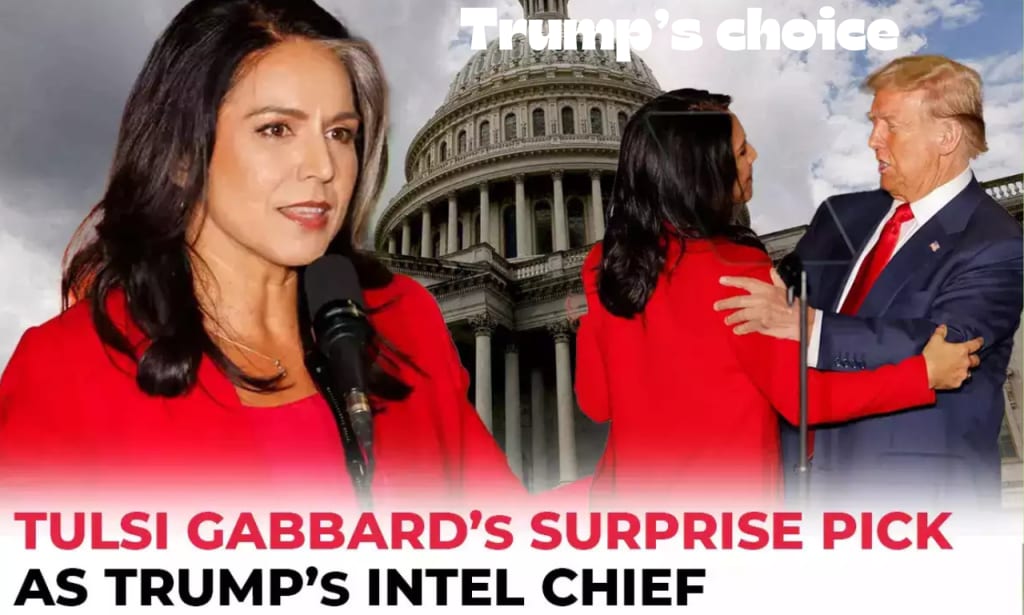
Former President Donald Trump’s recent announcement appointing former Congresswoman Tulsi Gabbard as the Director of National Intelligence (DNI) has sparked intense debate, both in Washington and among the public. Known for her unorthodox stance on U.S. foreign policy, Gabbard's transition from Democratic representative to Trump ally has been a gradual yet strategic evolution, shaping her into a potent figure in the MAGA movement. Gabbard’s appointment may indicate a shifting focus within the Intelligence Community (IC), particularly concerning traditional diplomatic norms and U.S. military intervention.
From Democratic Iconoclast to MAGA Ally
Gabbard’s political journey is anything but typical. Starting as a Democrat with an anti-establishment approach, she quickly garnered a reputation for advocating unconventional foreign policies. Her views often clashed with mainstream Democratic perspectives, particularly regarding U.S. military interventions and relationships with foreign leaders like Syrian President Bashar al-Assad. Gabbard met with Assad in 2017—a move criticized by some as soft on adversaries. But for Trump and his supporters, her positions align well with his “America First” doctrine, which questions the motives behind prolonged military interventions and prioritizes national interests.
Leaving the Democratic Party in 2022, Gabbard publicly endorsed Trump, drawing support from prominent figures in Trump’s circle, including Steve Bannon. Her decision to join the GOP solidified her as an influential, albeit controversial, figure, leading to her eventual nomination as DNI. Gabbard’s background as an Army National Guard veteran and her anti-interventionist philosophy reflect a rare mix that appeals to a substantial segment of the American public—those weary of U.S. entanglements abroad.
A Polarizing Nomination and a Potentially Unprecedented Approach to Intelligence
As Director of National Intelligence, Gabbard would oversee 18 agencies within the Intelligence Community, including the CIA and NSA. Traditionally, the DNI coordinates intelligence gathering and advises the president on national security matters. However, Gabbard’s nontraditional stance on foreign policy may bring a radical shift in the intelligence priorities of the U.S., emphasizing diplomacy over confrontation.
Trump’s praise for Gabbard’s “fearless spirit” highlights his expectation that she will challenge the status quo, particularly in areas where he believes the intelligence community has deviated from core American interests. Trump’s pick underscores his desire for a DNI who not only shares his foreign policy skepticism but is also willing to confront the long-standing practices of the Intelligence Community, which some critics argue have led to entanglements in complex, seemingly unwinnable conflicts.
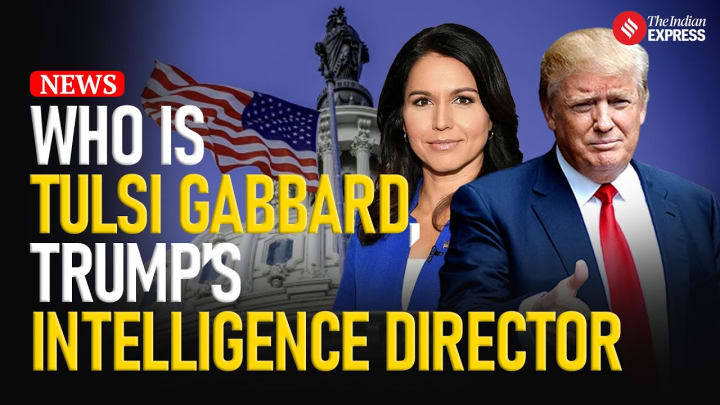
Mixed Reactions from Both Sides of the Aisle
Gabbard’s confirmation may face substantial resistance on Capitol Hill. Her previous interactions with adversarial leaders, as well as her public disagreements with U.S. allies, make her a contentious choice. Many Democrats, already wary of her, express concern over her alignment with Trump and controversial foreign policies. Republicans, while generally supportive of Trump’s nomination choices, are not unanimously enthusiastic about Gabbard, as some see her as too unconventional for the crucial role of DNI.
Gabbard’s track record as a maverick includes advocating for de-escalation with Russia and vocal opposition to U.S. troop presence in Syria. In 2022, she controversially echoed Russian President Vladimir Putin’s rhetoric by arguing that NATO’s expansion posed a “legitimate security concern” to Russia, a view widely criticized by foreign policy experts as undermining Ukrainian sovereignty. Her stance resonated with Trump’s base, but it raised alarm among many foreign policy and national security analysts concerned about U.S. commitments to its allies.
Implications for U.S. Foreign Policy
Should Gabbard’s nomination pass, her role as DNI could signify a drastic departure from the U.S.’s traditional approach to intelligence and global engagement. Her beliefs may encourage a shift toward reduced military interventionism and a more cautious approach to alliances. This stance aligns closely with Trump’s stated goals of avoiding “endless wars” and focusing on issues closer to home.
Under Gabbard’s guidance, intelligence priorities might lean towards negotiating solutions rather than military intervention, as seen in her approach to Assad. This could recalibrate the Intelligence Community’s focus, potentially reshaping American foreign policy in a direction that some see as isolative and others as pragmatic.
How Will Gabbard’s Policies Influence America’s Security Landscape?
Trump’s announcement praised Gabbard’s commitment to “championing our Constitutional Rights, and securing Peace through Strength.” These words suggest that Trump envisions a Director of National Intelligence who will use diplomatic tools, alongside traditional intelligence methods, to safeguard American interests. Gabbard’s unique worldview may bridge ideological gaps, promoting both military restraint and strength through strategic alliances rather than sheer force.
The Future of the Intelligence Community under Gabbard
Even if Gabbard faces hurdles in the Senate, her nomination alone signals Trump’s determination to push for change within the Intelligence Community. Critics argue her appointment could destabilize the IC by fostering divisiveness and creating an overly political atmosphere. Supporters, however, see her as a refreshing choice, potentially unafraid to challenge entrenched intelligence practices that have, they argue, overextended American commitments abroad.
If confirmed, Gabbard’s legacy as DNI would likely depend on how well she balances her noninterventionist instincts with the demands of an intelligence community focused on both domestic and foreign threats. While her approach may be divisive, it undeniably challenges the conventional notion of what intelligence should prioritize in an increasingly multipolar world.
About the Creator
mureed hussain
Hi, I’m a creative writer passionate about health & wellness, love, longevity, aging, and pet care. With extensive Quora experience, I craft engaging posts, thoughtful questions, and insightful answers.
Find me at>>[email protected]
Keep reading
More stories from mureed hussain and writers in The Swamp and other communities.
Trump's Controversial Choice: Matt Gaetz as Attorney General
In a move that has stirred both excitement and alarm, former President Donald Trump has nominated Congressman Matt Gaetz for Attorney General. Known for his unwavering loyalty to Trump and his bold political persona, Gaetz's nomination signals a potential reshaping of the Justice Department's role in American governance. This decision has been met with immediate resistance from within the Justice Department, with critics voicing serious concerns about the future direction of law enforcement and the potential implications of such an unconventional pick.
By mureed hussainabout a year ago in The Swamp
The Forsyth House Fire
Since 1851, Forsyth House has stood on the corner of Union Street and Gordon Street in the heart of Glasgow. Its iconic, or was... because on Sunday 8th of March, 2026, a fire broke out in a small, seemingly un-named shop in the building and tore all that history down. As I write, the rubble is still unsettled and the street is still blocked off. Central Station is quiet on the upper level, and around 30 small businesses have quite literally gone up in smoke.
By S. A. Crawford3 days ago in The Swamp


Comments
There are no comments for this story
Be the first to respond and start the conversation.