
Trump's Controversial Choice: Matt Gaetz as Attorney General
A Move Sparking Concern and Division within the Justice Department

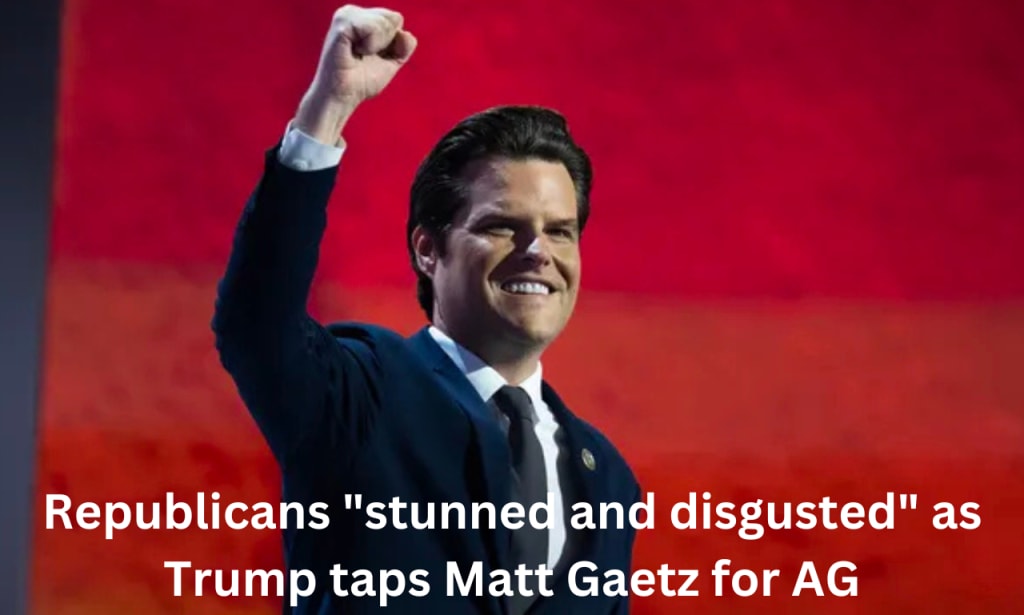
In a move that has stirred both excitement and alarm, former President Donald Trump has nominated Congressman Matt Gaetz for Attorney General. Known for his unwavering loyalty to Trump and his bold political persona, Gaetz's nomination signals a potential reshaping of the Justice Department's role in American governance. This decision has been met with immediate resistance from within the Justice Department, with critics voicing serious concerns about the future direction of law enforcement and the potential implications of such an unconventional pick.
For many DOJ veterans, Gaetz’s selection as Attorney General marks a departure from the department’s traditional mission to maintain lawfulness, neutrality, and public service. Unlike past Attorneys General, who typically come with substantial legal and prosecutorial experience, Gaetz brings a different type of qualification to the table: his close alliance with Trump. Despite his lack of a prosecutorial background, Trump’s nomination of Gaetz underscores a shift in focus, one that may favor loyalty over impartiality and partisanship over legal precedents.
A Controversial Public Image
Gaetz has been a polarizing figure in American politics. With his fervent support of Trump, he often makes headlines with his unorthodox political stance. Known for his involvement in several controversies, Gaetz has been scrutinized for matters ranging from his support of whistleblower Edward Snowden to advocating for marijuana decriminalization. While some of these positions resonate with his core supporters, they are seen as unusual priorities for someone who could be leading the Justice Department. Additionally, Gaetz faced a federal investigation over alleged involvement in a sex trafficking case—although he was never formally charged, the association has raised questions about his suitability for the role.
DOJ Officials Sound the Alarm
For current and former DOJ officials, Gaetz’s nomination has been met with shock and frustration. Many within the Justice Department worry that Gaetz’s lack of prosecutorial background, combined with his unapologetically partisan reputation, could disrupt the department’s mission. Known for his combative approach within Congress, Gaetz has developed a reputation as a disruptor rather than a unifier. His relationships with colleagues in Congress, both within and outside his own party, have often been contentious, raising further skepticism about his ability to lead a department whose work requires rigorous impartiality and adherence to legal norms.
Ty Cobb, a former White House lawyer under Trump, expressed deep concern over Gaetz’s nomination, noting that Gaetz's approach may erode the foundational principles of the Justice Department. Cobb highlighted the potential risk of an Attorney General whose actions could be perceived as motivated by political loyalty rather than justice, undermining the credibility and authority of the DOJ itself.
The Implications for Justice and Law Enforcement
The nomination has raised critical questions about the future of law enforcement in the United States. If confirmed, Gaetz’s leadership may signal a fundamental reorientation of the DOJ, emphasizing partisan loyalty and personal allegiance over judicial independence. Trump’s comments praising Gaetz as “gifted” and “tenacious” suggest that he expects Gaetz to address what he perceives as entrenched corruption within the department. While such statements might resonate with Trump’s base, they also serve as a stark departure from the nonpartisan principles historically associated with the DOJ.
Critics argue that a Gaetz-led DOJ could prioritize political retribution over impartial enforcement of the law. In this view, the nomination aligns with Trump’s vision of the Justice Department as a tool for addressing perceived political enemies and maintaining control over legal narratives, rather than as a body dedicated to upholding justice impartially. Such a shift could have far-reaching consequences, especially given that the DOJ is typically seen as an institution immune to the changing tides of political influence.
Senate Resistance and Political Calculations
The GOP-controlled Senate’s hesitation to confirm Gaetz highlights the divisive nature of his nomination. Even among Republican senators, Gaetz’s combative reputation and partisan history raise concerns about his suitability for the role of Attorney General. The Senate’s cautious approach signals a recognition of the risks associated with confirming an individual whose primary qualification appears to be allegiance to the president.
While Gaetz’s nomination may ultimately fail to pass the Senate, Trump’s choice nonetheless sends a powerful message. His administration appears willing to disrupt traditional norms of judicial impartiality, favoring instead a model of governance that emphasizes personal loyalty. Observers predict that this strategy will continue to inform Trump’s approach to appointments and leadership within his administration, regardless of the Senate’s final decision.
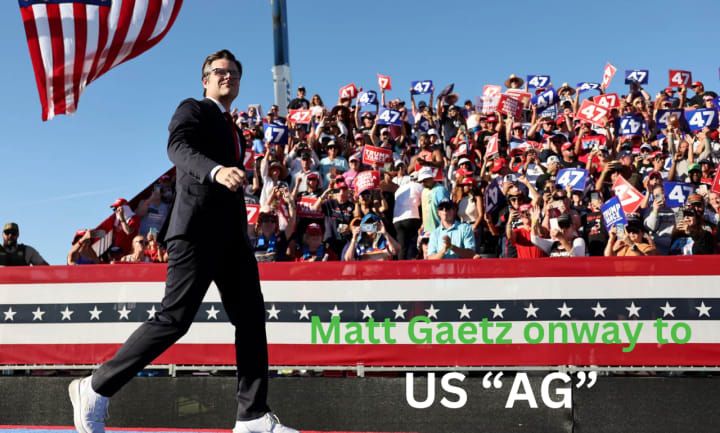
As Trump continues to prioritize loyalty, Gaetz’s nomination has raised fundamental questions about the future of justice and impartiality in the United States. For supporters, this signals a new era of law enforcement focused on rooting out perceived corruption within government. For critics, it marks a troubling step toward the politicization of institutions meant to serve the people, free from the influence of partisan agendas.
The debate surrounding Gaetz’s appointment continues to unfold, and while the outcome remains uncertain, the implications of this nomination for the Justice Department—and the nation—will likely resonate for years to come.
About the Creator
mureed hussain
Hi, I’m a creative writer passionate about health & wellness, love, longevity, aging, and pet care. With extensive Quora experience, I craft engaging posts, thoughtful questions, and insightful answers.
Find me at>>[email protected]
Keep reading
More stories from mureed hussain and writers in The Swamp and other communities.
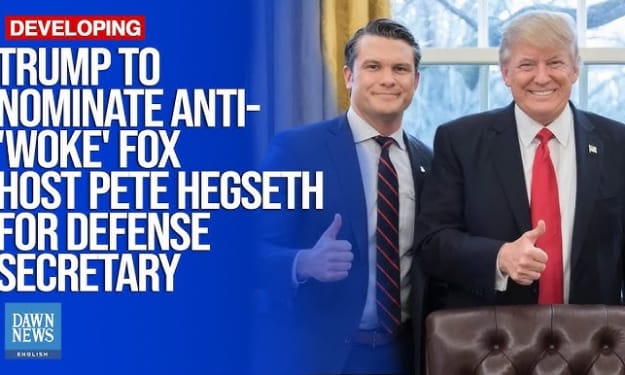
Trump Taps Fox News Host Pete Hegseth for Defense Secretary: A Controversial Choice or Strategic Masterstroke?
Introduction The recent announcement that former President Donald Trump has selected Fox News host and former Army National Guard officer Pete Hegseth as his choice for Secretary of Defense has set the political sphere abuzz. While Hegseth is known for his military experience and outspoken political views, his nomination for such a crucial and high-stakes role raises significant questions. Is Hegseth’s potential leadership at the Department of Defense a calculated move in line with Trump’s vision for national security, or does it introduce new challenges given Hegseth’s lack of traditional governmental defense experience? Here, we examine what this appointment could mean for U.S. defense policy, Hegseth’s suitability for the role, and the likely implications on both domestic and international stages.
By mureed hussainabout a year ago in The Swamp
The Forsyth House Fire
Since 1851, Forsyth House has stood on the corner of Union Street and Gordon Street in the heart of Glasgow. Its iconic, or was... because on Sunday 8th of March, 2026, a fire broke out in a small, seemingly un-named shop in the building and tore all that history down. As I write, the rubble is still unsettled and the street is still blocked off. Central Station is quiet on the upper level, and around 30 small businesses have quite literally gone up in smoke.
By S. A. Crawford2 days ago in The Swamp
Top tipple tricks
Been thinking a lot about drinking, lately. Not least because of a recent episode of over-indulgence and the inevitable after effects. Some readers may recall the earlier articles I wrote about beating the booze. Here I set out an experiment in techniques for cutting down on my alcohol intake. The experiment was successful, the techniques worked, and I have armed myself with an arsenal of weapons in the war against the demon drink. I have yet to fire the first round however. It's all a question of timing (perhaps procrastination).
By Raymond G. Taylor6 days ago in Psyche



Comments (1)
Matt Gaetz’s nomination for Attorney General is a highly controversial move. While it may energize Trump’s base, his lack of legal experience and close ties to the former president raise serious concerns about the DOJ’s impartiality. If confirmed, Gaetz’s leadership could shift the department from a neutral enforcer of the law to a politically driven institution, undermining trust in the justice system.