
Trump Warns Iran ‘Time Is Running Out’ for Nuclear Deal as US Military Builds Up in Gulf
Rising tensions in the Middle East as President Trump pressures Tehran while Washington deploys a massive military force

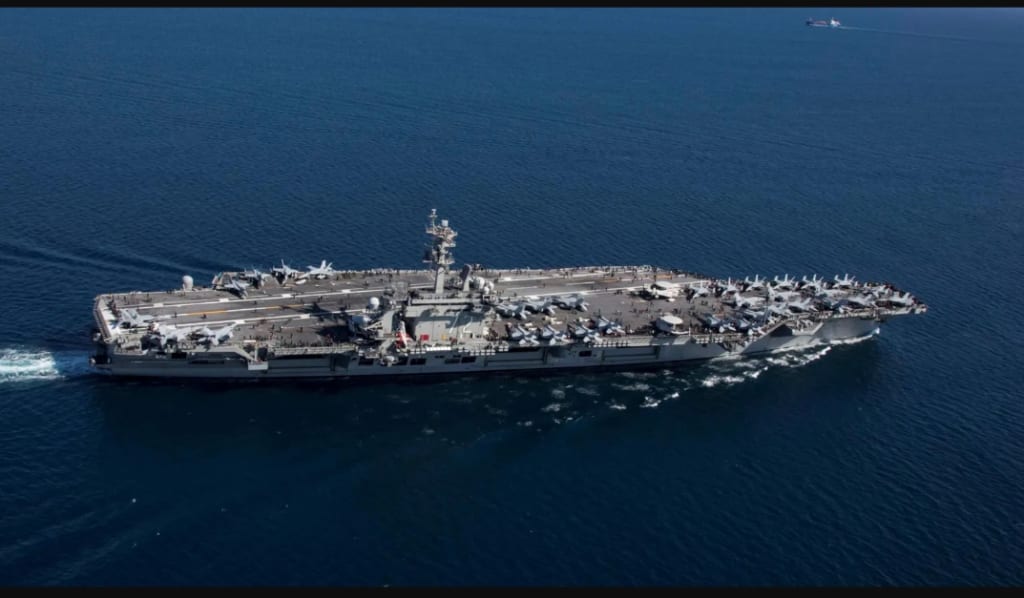
U.S. President Donald Trump has issued a forceful warning to Iran, declaring that “time is running out” for the country to negotiate a nuclear deal with Washington. The statement comes amid a significant U.S. military buildup in the Persian Gulf, signaling a heightened readiness for potential action if diplomatic efforts fail. As global powers watch nervously, this development underscores the fragile balance between diplomacy and military escalation in one of the world’s most volatile regions.
Trump’s Ultimatum to Tehran
In recent remarks, Trump emphasized that Iran must “come to the table” and negotiate a deal that prevents the nation from developing nuclear weapons. He warned that failure to do so would trigger consequences far worse than previous U.S. military actions in the region.
“Time is running out; it is truly of the essence! Hopefully Iran will quickly ‘come to the table’ and negotiate a fair and equitable deal — no nuclear weapons — one that is good for all parties,” Trump posted on his social media platform, Truth Social.
The President referenced past strikes on Iranian nuclear facilities as evidence that the U.S. is prepared to escalate military action if necessary. Analysts note that Trump’s rhetoric is intended both as a warning and as political messaging aimed at demonstrating strength ahead of the 2026 midterm elections.
The Military Buildup
The United States has moved a substantial military force into the Persian Gulf, including the USS Abraham Lincoln carrier strike group, supported by guided-missile destroyers, reconnaissance aircraft, and fighter jets. Military officials describe the deployment as a routine readiness operation, but observers see it as a clear signal to Tehran.
CENTCOM has conducted multi-day exercises to test rapid deployment, airpower dispersal, and operational sustainability in a high-threat environment. The scale of the buildup is among the largest U.S. military concentrations in the region in recent years and has prompted heightened alert levels among allied Gulf states and Israel.
The military posture reinforces Trump’s ultimatum, demonstrating that Washington is not relying solely on diplomatic pressure but is prepared to use force if Iran continues its nuclear program without concessions.
Tehran Pushes Back
Iran has rejected Trump’s threats, framing them as coercion rather than negotiation. Iranian Foreign Minister Abbas Araghchi stated that threats of force are counterproductive and that Tehran reserves the right to defend itself if attacked. Tehran also warns that any U.S. strike could trigger retaliation from Iranian forces and allied militias across the region, including potential targets in Iraq, Yemen, and Lebanon.
Regional actors, including Turkey, Egypt, Qatar, and Saudi Arabia, are working quietly to de-escalate tensions. These nations are pushing for a diplomatic “off-ramp” to prevent conflict while preserving Iran’s dignity in negotiations, but progress remains limited.
The Nuclear Deal Question
At the center of this standoff is the nuclear program issue. Trump withdrew the United States from the 2015 Iran nuclear deal during his first term, arguing that the agreement failed to prevent Iran from eventually developing nuclear weapons. After the U.S. exit, Tehran gradually breached key limits on uranium enrichment, heightening concerns among international observers.
The current effort focuses on ensuring that Iran halts nuclear weapons development entirely while agreeing to strict verification and inspection measures. Iran, however, maintains its right to pursue peaceful nuclear energy under international law, creating a significant impasse in negotiations.
Potential Consequences
The stakes of this standoff are high. A failure to reach a diplomatic resolution could lead to military conflict in the Middle East, disrupting global oil markets and potentially drawing in U.S. allies. Regional instability could increase, particularly through proxy conflicts in Iraq, Yemen, and Lebanon, and heighten tensions with Israel and Gulf states.
Domestically, the prospect of military escalation carries political implications. War or confrontation could influence public opinion, impact markets, and affect upcoming midterm elections, with Trump’s hardline approach being both a rallying point for supporters and a point of criticism for opponents.
Diplomacy or Escalation?
The situation presents a delicate diplomatic crossroads. Trump’s warning underscores urgency, but critics argue that threats of force reduce the space for genuine negotiation. Diplomatic channels remain open, but time is limited, and any misstep could result in rapid escalation.
Key world powers are watching closely. While the U.S. emphasizes readiness, countries like Russia, China, and European Union members continue to encourage negotiation to prevent a larger conflict. The coming weeks will be critical in determining whether diplomacy prevails or military confrontation becomes inevitable.
Conclusion
President Trump’s stark warning that “time is running out” for Iran to negotiate a nuclear deal — combined with an unprecedented U.S. military buildup in the Gulf — places both nations at a tense standoff. With Tehran rejecting coercion and regional powers advocating diplomacy, the next steps will determine whether the crisis escalates into war or remains contained through negotiation.
The international community, energy markets, and political observers in the U.S. are watching closely. As tensions mount, the world faces a pivotal moment in the Middle East, where the line between diplomacy and military action is razor-thin.
About the Creator
Asad Ali
I'm Asad Ali, a passionate blogger with 3 years of experience creating engaging and informative content across various niches. I specialize in crafting SEO-friendly articles that drive traffic and deliver value to readers.
Apple Reportedly Aiming to Upgrade the MacBook Pro Twice This Year
Apple fans, get ready: 2026 could be a big year for MacBook Pro upgrades. According to recent reports, Apple is planning not one, but two major MacBook Pro updates within the same year. For many, this is exciting news — and for others, a dilemma: do you buy now or wait for the next update? Either way, 2026 could be one of the busiest years ever for Apple’s flagship laptop. Two Updates in One Year: What’s the Deal? The first update is expected in the first half of 2026, featuring Apple’s next-generation M5 Pro and M5 Max chips in both 14-inch and 16-inch MacBook Pro models. These chips promise better performance, longer battery life, and smoother experiences for demanding tasks like video editing, 3D rendering, and software development. Later in the year, possibly in the fall, Apple could release a second wave of MacBook Pros with even more dramatic changes. Rumors suggest these laptops could include: A new OLED display with touch functionality A Dynamic Island-like interactive area, similar to what iPhones now feature Thinner, lighter design for improved portability Potential cellular connectivity, allowing internet access without Wi-Fi Updated M6 Pro and M6 Max chips for extreme performance If these rumors come true, the second update would mark a significant leap in both hardware and design for Apple’s professional laptop line. Why Apple Might Release Two Upgrades in a Single Year On the surface, two updates in one year might seem unusual for Apple, which usually prefers a single major release. However, Apple has done something similar in recent years. For example, in 2023, Apple released the M2 Pro and M2 Max MacBook Pros early in the year, then followed with M3 Pro and M3 Max models later. This strategy allows Apple to release incremental improvements first — such as updated chips — while waiting for larger innovations like OLED displays or new designs to be ready. For consumers, this approach presents both opportunities and questions. Should you buy early and enjoy immediate performance upgrades, or wait for the bigger, later release that could offer new design features and cutting-edge technology? What Users Can Expect from the Updates Early 2026: Performance-Driven Upgrade The first wave of upgrades focuses on performance rather than design. Apple’s M5 Pro and M5 Max chips are expected to provide significant improvements in processing speed, graphics performance, and energy efficiency. This update will likely maintain the current MacBook Pro look, meaning users will get a familiar design with upgraded internal hardware — perfect for those who prioritize power over aesthetics. Late 2026: Design and Features Overhaul The second update could be more transformative. Rumors suggest Apple plans to integrate features like: OLED touch display for more vivid colors and touchscreen functionality Dynamic Island interface, bringing interactive notifications and controls from iPhones to MacBooks Sleeker design, reducing weight and thickness for better portability Possible cellular connectivity for internet access on the go If realized, these features would mark a significant evolution for the MacBook Pro, combining Apple’s powerful silicon with innovative design and functionality. The Buy-Now or Wait Dilemma For tech enthusiasts and professionals, deciding when to upgrade could be tricky. Early adopters might prefer the first update to benefit from faster chips immediately, particularly for work that demands high performance. Others may opt to wait for the second release, especially if they are interested in OLED screens, touch functionality, or the slimmer design. While the first update is solid for performance, the second could redefine what a MacBook Pro is capable of — blending power, portability, and modern design features. Apple’s 2026 Plans Beyond the MacBook Pro The MacBook Pro isn’t the only product rumored to see upgrades in 2026. Reports indicate Apple might also refresh: The MacBook Air with updated processors Mac Studio models with improved performance Studio Display updates with enhanced features Potential low-cost Mac laptops and a 12.9-inch MacBook powered by A-series chips This suggests Apple intends 2026 to be a year of comprehensive hardware updates, targeting both professional users and casual consumers. Why This Matters for Consumers Apple’s dual-update approach shows a willingness to innovate quickly, but it also raises questions about timing and purchasing decisions. With faster chips available early and larger design improvements expected later, consumers must weigh performance vs. design. It also reflects broader trends in tech: companies are under pressure to deliver rapid innovation while keeping users engaged and willing to upgrade. Apple’s approach could influence other laptop manufacturers to rethink release schedules and features. Final Thoughts A year with two MacBook Pro upgrades is unusual, but it’s exciting. Early adopters can enjoy immediate performance gains, while others may wait for design innovations and OLED screens. Either way, 2026 is shaping up to be a big year for Apple fans and professional users. If Apple successfully delivers these updates, it could redefine the MacBook Pro’s role in both professional and consumer markets — combining cutting-edge performance with next-level design features. Whether you’re planning to buy early or wait for the second wave, one thing is certain: Apple’s MacBook Pro line is about to be more powerful and more exciting than ever.
By Muhammad Hassan4 days ago in The Swamp
Danish PM Visits Greenland for Show of Support After Trump's Controversial Threats
In a display of solidarity and political diplomacy, Danish Prime Minister Mette Frederiksen visited Greenland in late 2019, a move that was seen as a response to U.S. President Donald Trump’s controversial remarks about buying the autonomous territory. Greenland, a vast, resource-rich island that is part of the Kingdom of Denmark, had found itself at the center of an international diplomatic storm after Trump expressed interest in acquiring it, leading to tensions between Denmark and the U.S.
By Ayesha Lashari5 days ago in The Swamp


Comments
There are no comments for this story
Be the first to respond and start the conversation.