
Trump Unveils $12 Billion Critical Minerals Stockpile
Proposal targets lithium, rare earths, and battery materials National security and clean energy drive new strategy Move seeks to counter China’s dominance in mineral markets Industry welcomes plan as environmental groups raise concerns Stockpile modeled after U.S. petroleum reserves Debate grows over mining, cost, and sustainability Critical minerals become centerpiece of economic policy

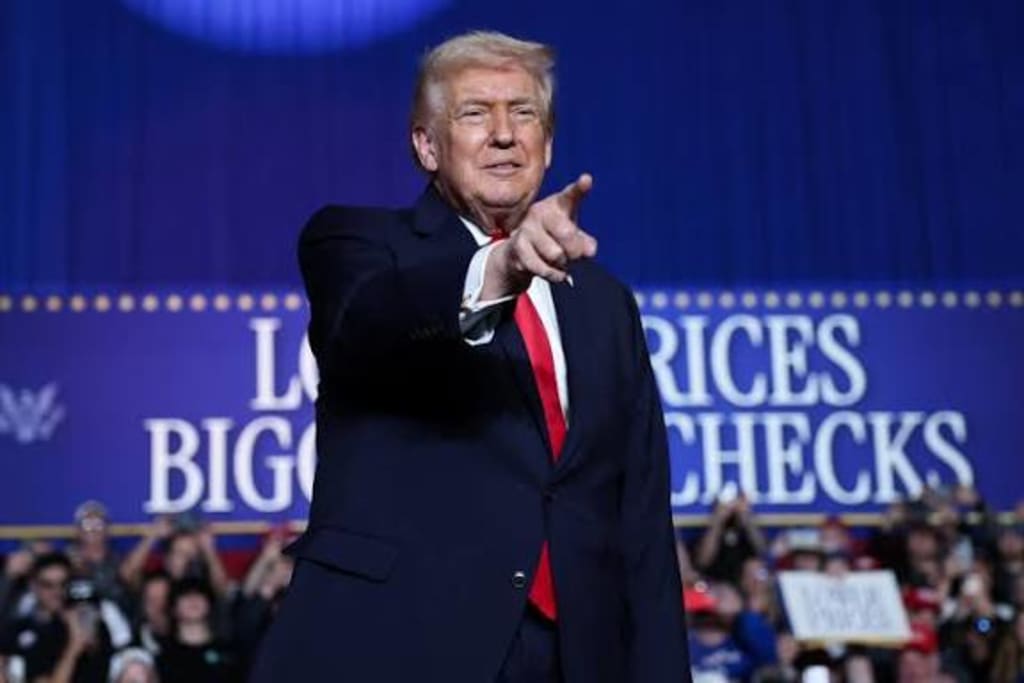
Former U.S. President Donald Trump has announced a sweeping new initiative to establish a $12 billion national stockpile of critical minerals, a move aimed at strengthening America’s supply chains and reducing dependence on foreign sources for materials essential to modern technology and national defense. The proposal, unveiled at a campaign-style event focused on economic security, has already ignited debate among policymakers, industry leaders, and environmental groups.
Trump described the plan as a “strategic shield” for the U.S. economy, arguing that access to critical minerals such as lithium, cobalt, nickel, and rare earth elements is vital for the country’s future competitiveness.
“We cannot allow America to be held hostage by foreign suppliers,” Trump said. “These minerals power our military, our electric vehicles, and our industries. This stockpile ensures we are prepared for any global disruption.”
What Are Critical Minerals?
Critical minerals are materials considered essential for economic and national security but vulnerable to supply chain disruptions. They are key components in electric vehicle batteries, wind turbines, smartphones, semiconductors, and advanced weapons systems.
The United States currently relies heavily on imports for many of these minerals, particularly from China, which dominates global rare earth processing and controls large portions of lithium and cobalt supply chains.
Experts say geopolitical tensions, trade restrictions, and conflicts have exposed vulnerabilities in global mineral markets. The COVID-19 pandemic and the war in Ukraine further highlighted how fragile supply chains can become under stress.
Details of the Stockpile Plan
According to Trump’s policy outline, the proposed $12 billion fund would be used to purchase and store large reserves of strategically important minerals. These materials would be held in federally managed facilities and released during emergencies or market disruptions.
The plan also calls for accelerating domestic mining projects and expanding mineral processing capacity inside the United States. Trump said regulatory barriers would be reduced to allow faster development of mines and refineries.
“This is about American jobs and American security,” he said. “We will mine responsibly, process domestically, and protect our future.”
The stockpile would mirror existing petroleum reserves, which have long served as a buffer against oil shortages. Supporters argue a similar system is overdue for critical minerals.
National Security Implications
Defense analysts note that many weapons systems rely on rare earth elements for guidance systems, radar, and advanced electronics. Any disruption to supply could weaken military readiness.
A senior defense expert commented that “strategic mineral independence is just as important as energy independence.” The stockpile, they argue, would give the U.S. leverage in negotiations and protection during global crises.
Trump’s proposal aligns with broader bipartisan concern in Washington over China’s dominance in mineral processing. Both Republican and Democratic lawmakers have previously supported measures to boost domestic production and recycling.
Economic and Industry Response
Mining and manufacturing groups largely welcomed the announcement. Several U.S.-based mining companies saw their stock prices rise following the speech, reflecting investor optimism about increased government support.
Industry leaders argue that a guaranteed buyer for critical minerals would stabilize prices and encourage long-term investment. They also believe the initiative could create thousands of jobs in rural and industrial regions.
However, some economists caution that government stockpiling can distort markets if not carefully managed. “Buying large volumes could drive up prices and disadvantage smaller manufacturers,” said one market analyst.
Environmental and Community Concerns
Environmental groups expressed alarm over plans to speed up domestic mining. They warn that mining projects can damage ecosystems, pollute water sources, and disrupt Indigenous lands.
“Stockpiling minerals without strict environmental safeguards is dangerous,” said a spokesperson for a conservation organization. “We must balance security with sustainability.”
Communities near proposed mining sites are also wary. Past experiences with abandoned mines and toxic waste have left many skeptical of promises of “responsible mining.”
Trump responded to criticism by stating that new technologies would make mining cleaner and safer than in the past. He also pledged that environmental reviews would still occur, though at a faster pace.
Political Reactions
The announcement has quickly become a political flashpoint. Supporters view it as a bold move to counter China and secure America’s industrial future. Critics argue it is an expensive plan with unclear funding sources and insufficient attention to environmental impact.
Some lawmakers questioned whether $12 billion would be enough to meaningfully reshape global supply chains, while others suggested that recycling and substitution technologies should receive equal attention.
“This cannot be just about digging more mines,” said one senator. “We also need innovation in battery recycling and alternative materials.”
Global Implications
If implemented, the stockpile could influence global mineral markets. Other countries may respond by creating their own reserves or restricting exports to protect domestic industries.
China, which currently dominates rare earth processing, could see the initiative as a challenge to its market power. Analysts warn that trade tensions could intensify as nations compete for limited resources.
At the same time, resource-rich nations in Africa and South America may seek stronger partnerships with the U.S. as demand rises.
Conclusion
Trump’s proposal for a $12 billion critical minerals stockpile reflects growing recognition that minerals are the backbone of modern economies and national security. The plan aims to protect the U.S. from supply shocks, boost domestic industry, and reduce dependence on foreign powers.
Yet it also raises difficult questions about cost, environmental impact, and long-term strategy. Whether the initiative becomes policy will depend on political support, regulatory design, and public acceptance.
As global competition for critical minerals intensifies, the announcement signals that the race for resource security is becoming a central issue in economic and geopolitical planning. The coming months will determine whether this ambitious proposal reshapes America’s approach to the materials that power its future.
About the Creator
Fiaz Ahmed
I am Fiaz Ahmed. I am a passionate writer. I love covering trending topics and breaking news. With a sharp eye for what’s happening around the world, and crafts timely and engaging stories that keep readers informed and updated.
Keep reading
More stories from Fiaz Ahmed and writers in The Swamp and other communities.
Mountain Biking the Himalayas in Everest’s Shadow
The Himalayas have long drawn adventurers seeking spiritual enlightenment and physical challenge. For centuries, climbers and trekkers have traced ancient trails toward Mount Everest, the highest point on Earth. Today, a new breed of explorer is discovering these paths in a different way—on two wheels. Mountain biking in the shadow of Everest has emerged as one of the most thrilling and demanding adventure experiences in the world, combining extreme landscapes with cultural immersion and raw endurance. The journey typically begins in Lukla, home to one of the world’s most notorious airstrips. From there, narrow dirt paths wind through Sherpa villages, across swinging suspension bridges, and into vast alpine valleys carved by glaciers over millennia. Every turn offers a view that feels unreal: snow-capped peaks glowing in the sunlight, prayer flags fluttering in the wind, and yaks slowly moving along the same trails riders follow. A Landscape Built for Challenge Mountain biking in the Everest region is not about speed—it is about survival, balance, and respect for the terrain. Trails rise and fall sharply, sometimes climbing thousands of feet in a single day. Riders navigate rocky switchbacks, loose gravel, and narrow ledges where one wrong move could mean a long fall into a river gorge below. At elevations above 4,000 meters (13,000 feet), oxygen levels drop dramatically. Pedaling becomes harder with each breath, and even experienced cyclists must slow their pace. Many routes require pushing bikes uphill for hours at a time. The effort, however, is rewarded with panoramic views of Everest, Lhotse, and Ama Dablam—peaks that dominate the skyline like stone giants. Unlike mountain biking in developed countries, the trails here are shared with hikers, livestock, and porters carrying supplies. Courtesy and patience are essential. A simple nod or greeting often leads to friendly smiles and short conversations with locals curious about these foreign machines rolling through their homeland. Culture Along the Trail One of the most remarkable aspects of biking the Everest region is the close connection with Sherpa culture. Riders pass through villages such as Namche Bazaar, Tengboche, and Dingboche, where traditional stone houses line narrow paths and monasteries stand quietly above the clouds. Stopping at tea houses is part of daily life on the trail. Cyclists warm themselves with cups of butter tea or hot lemon while eating plates of dal bhat—rice and lentils that provide the calories needed for long climbs. Evenings are spent listening to stories from guides who grew up in the mountains and understand every bend in the trail. The Buddhist influence is visible everywhere. Mani stones carved with prayers line the paths, and prayer wheels spin in the wind. Riders quickly learn the rule of passing these sacred objects on the left, a small gesture of respect that connects sport with spirituality. Weather and Risk The Himalayan environment is unpredictable. Clear mornings can turn into snowstorms by afternoon. Sudden winds funnel through valleys, dropping temperatures without warning. Proper gear is essential, including thermal clothing, waterproof jackets, and strong brakes designed for long descents. Altitude sickness is a real concern. Even highly fit riders can experience headaches, nausea, and dizziness. Responsible tours build rest days into their itineraries, allowing the body time to adjust. Guides are trained to recognize symptoms and make difficult decisions if someone needs to descend. Despite these risks, the sense of safety comes from traveling with experienced local teams who know when to ride and when to wait. Environmental Responsibility With growing interest in adventure tourism, protecting the fragile Himalayan ecosystem has become a priority. Many biking groups follow strict “leave no trace” principles. Plastic waste is minimized, and riders are encouraged to use refillable bottles and avoid disturbing wildlife. Local authorities and tourism organizations now promote sustainable tourism, ensuring that increased visitors do not damage the trails or overwhelm communities. Mountain biking, when done responsibly, brings income to villages without requiring large-scale infrastructure development. A Journey of Perspective What makes mountain biking in Everest’s shadow truly unforgettable is not just the physical challenge but the emotional impact. Riders experience a deep sense of humility when surrounded by mountains that have stood for millions of years. Every climb becomes a meditation on endurance, and every descent feels like freedom. Unlike trekking, biking adds speed and flow to the journey, allowing riders to cover long distances while remaining deeply connected to the landscape. The wind on the face, the sound of tires on stone, and the silence between villages create moments of pure awareness. Many cyclists describe the experience as life-changing. It tests limits, reshapes priorities, and builds respect for cultures that thrive in one of the world’s harshest environments. Conclusion Mountain biking the Himalayas in Everest’s shadow is not a casual vacation—it is a test of body and spirit. It demands preparation, courage, and respect for both nature and tradition. Yet for those willing to take on the challenge, it offers something rare: a journey through the heart of the world’s greatest mountains, powered by human effort and guided by ancient trails. In a place where earth touches the sky, every pedal stroke becomes part of a story written in snow, stone, and determination.
By Fiaz Ahmed about 19 hours ago in The Swamp
Gold Dives and Silver Crashes, Extending Sell-Off in Precious Metals After Historic Plunge
The precious metals market is undergoing one of its most dramatic reversals in decades as gold dives and silver crashes, extending a brutal sell-off that began after a historic plunge. Once seen as the ultimate safe-haven assets amid global uncertainty, both metals have suffered sharp losses, rattling investors and forcing a rethink of bullish assumptions that dominated markets only weeks ago.
By Salaar Jamalia day ago in The Swamp


Comments
There are no comments for this story
Be the first to respond and start the conversation.