
Mountain Biking the Himalayas in Everest’s Shadow
Pedaling ancient trails beneath the roof of the world Where endurance meets culture and breathtaking scenery A two-wheeled journey across Sherpa villages and glaciers Testing limits on the highest mountain paths on Earth From Lukla to Namche: cycling the Everest region An extreme sport in a sacred landscape Exploring the Himalayas beyond trekking

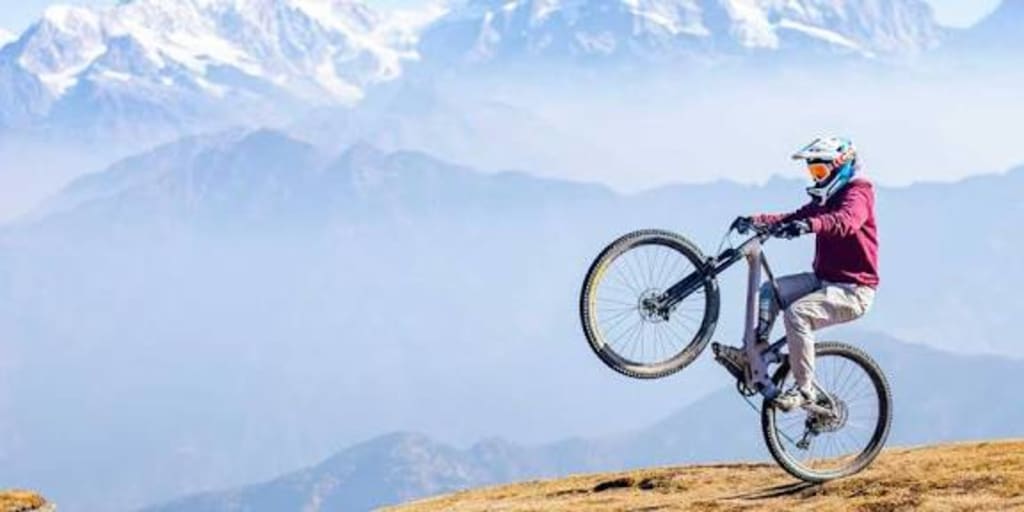
The Himalayas have long drawn adventurers seeking spiritual enlightenment and physical challenge. For centuries, climbers and trekkers have traced ancient trails toward Mount Everest, the highest point on Earth. Today, a new breed of explorer is discovering these paths in a different way—on two wheels. Mountain biking in the shadow of Everest has emerged as one of the most thrilling and demanding adventure experiences in the world, combining extreme landscapes with cultural immersion and raw endurance.
The journey typically begins in Lukla, home to one of the world’s most notorious airstrips. From there, narrow dirt paths wind through Sherpa villages, across swinging suspension bridges, and into vast alpine valleys carved by glaciers over millennia. Every turn offers a view that feels unreal: snow-capped peaks glowing in the sunlight, prayer flags fluttering in the wind, and yaks slowly moving along the same trails riders follow.
A Landscape Built for Challenge
Mountain biking in the Everest region is not about speed—it is about survival, balance, and respect for the terrain. Trails rise and fall sharply, sometimes climbing thousands of feet in a single day. Riders navigate rocky switchbacks, loose gravel, and narrow ledges where one wrong move could mean a long fall into a river gorge below.
At elevations above 4,000 meters (13,000 feet), oxygen levels drop dramatically. Pedaling becomes harder with each breath, and even experienced cyclists must slow their pace. Many routes require pushing bikes uphill for hours at a time. The effort, however, is rewarded with panoramic views of Everest, Lhotse, and Ama Dablam—peaks that dominate the skyline like stone giants.
Unlike mountain biking in developed countries, the trails here are shared with hikers, livestock, and porters carrying supplies. Courtesy and patience are essential. A simple nod or greeting often leads to friendly smiles and short conversations with locals curious about these foreign machines rolling through their homeland.
Culture Along the Trail
One of the most remarkable aspects of biking the Everest region is the close connection with Sherpa culture. Riders pass through villages such as Namche Bazaar, Tengboche, and Dingboche, where traditional stone houses line narrow paths and monasteries stand quietly above the clouds.
Stopping at tea houses is part of daily life on the trail. Cyclists warm themselves with cups of butter tea or hot lemon while eating plates of dal bhat—rice and lentils that provide the calories needed for long climbs. Evenings are spent listening to stories from guides who grew up in the mountains and understand every bend in the trail.
The Buddhist influence is visible everywhere. Mani stones carved with prayers line the paths, and prayer wheels spin in the wind. Riders quickly learn the rule of passing these sacred objects on the left, a small gesture of respect that connects sport with spirituality.
Weather and Risk
The Himalayan environment is unpredictable. Clear mornings can turn into snowstorms by afternoon. Sudden winds funnel through valleys, dropping temperatures without warning. Proper gear is essential, including thermal clothing, waterproof jackets, and strong brakes designed for long descents.
Altitude sickness is a real concern. Even highly fit riders can experience headaches, nausea, and dizziness. Responsible tours build rest days into their itineraries, allowing the body time to adjust. Guides are trained to recognize symptoms and make difficult decisions if someone needs to descend.
Despite these risks, the sense of safety comes from traveling with experienced local teams who know when to ride and when to wait.
Environmental Responsibility
With growing interest in adventure tourism, protecting the fragile Himalayan ecosystem has become a priority. Many biking groups follow strict “leave no trace” principles. Plastic waste is minimized, and riders are encouraged to use refillable bottles and avoid disturbing wildlife.
Local authorities and tourism organizations now promote sustainable tourism, ensuring that increased visitors do not damage the trails or overwhelm communities. Mountain biking, when done responsibly, brings income to villages without requiring large-scale infrastructure development.
A Journey of Perspective
What makes mountain biking in Everest’s shadow truly unforgettable is not just the physical challenge but the emotional impact. Riders experience a deep sense of humility when surrounded by mountains that have stood for millions of years. Every climb becomes a meditation on endurance, and every descent feels like freedom.
Unlike trekking, biking adds speed and flow to the journey, allowing riders to cover long distances while remaining deeply connected to the landscape. The wind on the face, the sound of tires on stone, and the silence between villages create moments of pure awareness.
Many cyclists describe the experience as life-changing. It tests limits, reshapes priorities, and builds respect for cultures that thrive in one of the world’s harshest environments.
Conclusion
Mountain biking the Himalayas in Everest’s shadow is not a casual vacation—it is a test of body and spirit. It demands preparation, courage, and respect for both nature and tradition. Yet for those willing to take on the challenge, it offers something rare: a journey through the heart of the world’s greatest mountains, powered by human effort and guided by ancient trails.
In a place where earth touches the sky, every pedal stroke becomes part of a story written in snow, stone, and determination.
About the Creator
Fiaz Ahmed
I am Fiaz Ahmed. I am a passionate writer. I love covering trending topics and breaking news. With a sharp eye for what’s happening around the world, and crafts timely and engaging stories that keep readers informed and updated.
Keep reading
More stories from Fiaz Ahmed and writers in The Swamp and other communities.
France Spirals Down EU Wealth List Towards ‘Third-World Status’
France’s economic standing within the European Union is under renewed scrutiny after recent data revealed a steady decline in household wealth and purchasing power compared with several of its neighbors. Once considered one of Europe’s strongest economic pillars alongside Germany, France has slipped down the EU wealth rankings, prompting political debate and concern among economists over what some critics have dramatically described as a drift toward “third-world status.” While the phrase is controversial and widely criticized as exaggerated, it reflects growing frustration over stagnating growth, rising public debt, and widening inequality that have left many French households feeling worse off than they were a decade ago. Falling Behind European Peers According to recent Eurostat and OECD figures, France’s GDP per capita and median household wealth now trail behind countries such as Germany, the Netherlands, Ireland, and several Nordic states. Southern and Eastern European economies once considered less prosperous are also closing the gap faster than France. Economists point to sluggish productivity growth as a major factor. While France maintains a strong industrial base and world-class infrastructure, its output per worker has failed to keep pace with innovation-driven economies in northern Europe. “France is not collapsing, but it is clearly losing relative ground,” said one European economic analyst. “The problem is not absolute poverty, but stagnation compared to neighbors who are modernizing more quickly.” Rising Public Debt and Budget Pressure France’s public debt has reached historically high levels, exceeding 110 percent of GDP. Successive governments have relied on borrowing to fund social programs, pensions, and public services, leaving little room for fiscal flexibility. The burden of debt servicing has increased sharply as interest rates rose across Europe. This has limited the government’s ability to invest in long-term growth projects such as digital infrastructure, green energy, and industrial modernization. At the same time, tax pressure on workers and businesses remains among the highest in the EU. Critics argue that heavy taxation discourages entrepreneurship and drives skilled workers abroad, worsening the country’s competitiveness problem. Cost of Living and Social Strain For ordinary citizens, the economic slowdown is most visible in the rising cost of living. Food prices, housing costs, and energy bills have climbed faster than wages, reducing real purchasing power for millions of families. Urban centers such as Paris, Lyon, and Marseille face growing housing shortages, forcing young professionals and low-income workers into long commutes or substandard accommodation. Rural regions struggle with unemployment and declining public services. These pressures have fueled recurring protests and strikes over pensions, labor reforms, and public spending cuts. Social unrest has become a defining feature of France’s political landscape, reflecting deep anxiety about economic security and the future of the welfare state. The Controversial “Third-World” Label The description of France approaching “third-world status” has sparked backlash from academics and policymakers who argue the term is misleading and inflammatory. France remains one of the world’s largest economies, with advanced healthcare, transportation, and education systems. However, the phrase has gained traction in political discourse as a symbol of decline rather than a literal comparison. Supporters of the term say it captures the growing perception that public services are deteriorating and that opportunities are shrinking for younger generations. “People feel their country is slipping backwards,” said a political sociologist. “The rhetoric reflects emotion more than statistics, but it reveals a loss of confidence.” Structural Challenges Several long-term structural issues are weighing on France’s economy. Labor market rigidity continues to discourage hiring, especially among small and medium-sized businesses. Youth unemployment remains stubbornly high, and many graduates struggle to find stable work aligned with their education. The education system, while historically strong, has faced criticism for failing to adapt to the needs of a technology-driven economy. Investment in research and innovation lags behind competitors such as Germany and Sweden. In addition, demographic trends pose challenges. An aging population increases pension and healthcare costs, placing further strain on public finances. Government Response The French government has pledged reforms aimed at boosting competitiveness and restoring growth. Measures include reducing corporate taxes, reforming pension systems, and encouraging foreign investment. Officials argue these policies will stabilize public finances and create jobs. President Emmanuel Macron has repeatedly warned that without structural reform, France risks long-term economic decline. However, attempts to implement change have met strong resistance from unions and protest movements, making progress slow and politically risky. Opposition parties accuse the government of protecting elites while ordinary citizens bear the burden of austerity measures. European Implications France’s economic performance has implications beyond its borders. As one of the EU’s largest economies, its slowdown affects the entire bloc’s stability. A weaker France could undermine European unity at a time when the EU faces external pressures from global competition, energy security concerns, and geopolitical tensions. European officials have urged France to accelerate reforms while preserving social cohesion, warning that prolonged stagnation could deepen divisions within the union. Conclusion France is far from becoming a “third-world” country, but its decline in relative wealth rankings is a warning sign. Rising debt, slow productivity growth, and social unrest have weakened confidence in the nation’s economic future. While the country retains immense strengths in culture, industry, and infrastructure, failure to address structural problems could leave it increasingly behind its European peers. The debate now centers on whether France can modernize its economy without sacrificing the social protections that define its identity. The answer will shape not only its own future, but the direction of the European Union itself.
By Fiaz Ahmed about 21 hours ago in The Swamp
We Must Not Ban the Guga Hunt
The guga hunt, a centuries-old tradition carried out in the remote regions of Scotland’s Shetland Islands, has become a focal point of debate in recent years. Environmental groups, animal rights activists, and policymakers have called for stricter regulations—or even a total ban—citing concerns about wildlife conservation and ethical treatment. Yet supporters argue that banning the hunt would not only destroy a cultural cornerstone but also undermine sustainable practices that have been refined over generations.
By Aarif Lashari6 days ago in The Swamp

Comments
There are no comments for this story
Be the first to respond and start the conversation.