
Trump Threatens Canada With 100% Tariffs Over Potential China Trade Deal
Former U.S. president revives hardline trade rhetoric, warning Ottawa of severe economic consequences amid rising global tensions

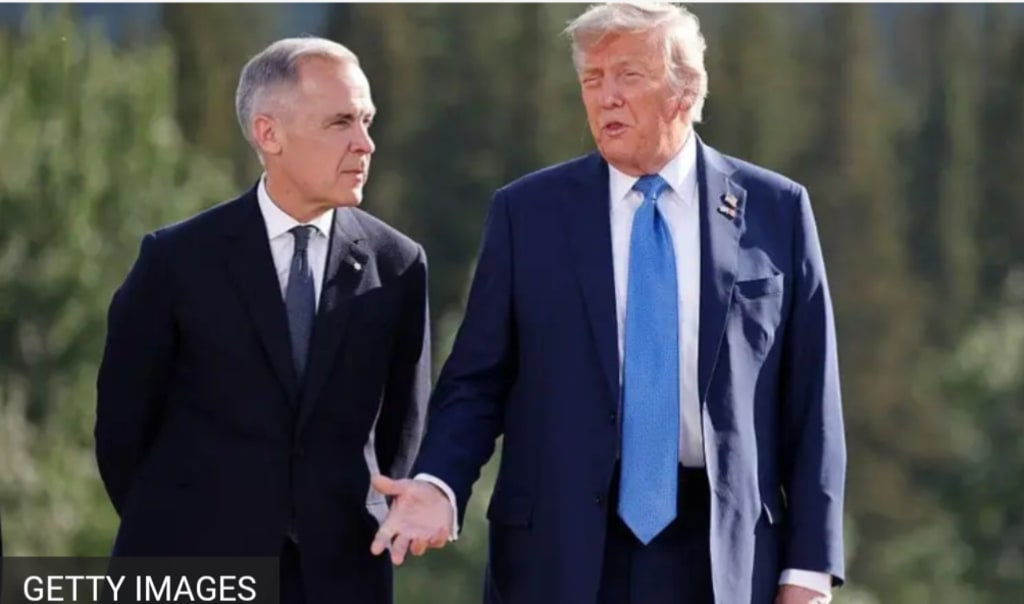
Former U.S. President Donald Trump has once again reignited trade tensions by threatening to impose 100% tariffs on Canadian goods if Canada were to “make a deal with China.” The statement, delivered during a campaign-style address and amplified through social media, underscores Trump’s continued emphasis on protectionist trade policies and his confrontational stance toward Beijing — even beyond his time in office.
The warning has sparked concern among policymakers, economists, and businesses on both sides of the U.S.-Canada border, highlighting how fragile global trade relations remain amid geopolitical rivalries and shifting alliances.
---
A Familiar Trade Playbook
Trump’s remarks are consistent with the aggressive trade approach that defined his presidency from 2017 to 2021. During that period, he imposed sweeping tariffs on Chinese imports, citing unfair trade practices, intellectual property theft, and national security risks. Canada, despite being one of America’s closest allies, was not spared. Trump levied tariffs on Canadian steel and aluminum, triggering retaliatory measures and tense negotiations that eventually led to the renegotiation of NAFTA into the United States–Mexico–Canada Agreement (USMCA).
By threatening a 100% tariff — a figure far higher than most previous trade penalties — Trump is signaling a willingness to use extreme economic pressure to deter allies from deepening ties with China.
---
Why China Is at the Center
China remains the focal point of U.S. trade anxieties. Both Republicans and Democrats increasingly view Beijing as a strategic competitor rather than just an economic partner. Trump’s framing goes a step further, suggesting that any country strengthening trade relations with China risks punitive action from Washington.
Canada currently maintains significant trade with China, particularly in agriculture, natural resources, and education services. While Ottawa has been cautious in recent years — especially after diplomatic strains such as the Huawei-related detentions — it has not severed economic ties with Beijing.
Trump’s warning implies that even a limited or sector-specific agreement with China could trigger harsh consequences if he were to regain power.
---
Potential Impact on Canada
A 100% tariff would be economically devastating if implemented. The United States is Canada’s largest trading partner, accounting for roughly three-quarters of Canadian exports. Industries such as automotive manufacturing, energy, agriculture, lumber, and consumer goods rely heavily on seamless cross-border trade.
Economists warn that such tariffs would:
Dramatically raise costs for Canadian exporters
Increase prices for American consumers
Disrupt tightly integrated North American supply chains
Risk triggering a trade war that damages both economies
Canadian officials have so far responded cautiously, emphasizing the importance of rules-based trade and multilateral cooperation rather than escalating rhetoric.
---
Legal and Political Realities
While Trump’s threat is headline-grabbing, experts note that imposing a blanket 100% tariff on Canada would face significant legal and political hurdles. The USMCA includes dispute resolution mechanisms designed to prevent unilateral trade actions of this magnitude. Additionally, Congress, business lobbies, and U.S. state governments — particularly those dependent on Canadian trade — would likely resist such measures.
However, Trump has previously demonstrated a willingness to push executive authority to its limits, using national security justifications under U.S. trade law to bypass traditional constraints.
---
Campaign Strategy or Policy Signal?
Many analysts view the statement as part of Trump’s broader campaign messaging rather than an immediate policy blueprint. By drawing a stark line between the U.S. and China — and warning allies not to cross it — Trump appeals to voters who favor economic nationalism and tougher foreign policy.
At the same time, the rhetoric sends a clear signal to global partners: under a potential second Trump administration, trade relationships would be explicitly conditioned on geopolitical alignment.
---
Implications Beyond North America
The threat also carries global implications. If allies like Canada are pressured to choose between the U.S. and China, other middle powers — including those in Europe and Asia — may face similar dilemmas. Such an approach could accelerate the fragmentation of the global trading system into competing blocs, undermining decades of economic integration.
For businesses, the uncertainty alone is damaging. Companies making long-term investment decisions depend on predictable trade rules, not sudden tariff threats tied to political shifts.
---
Conclusion
Trump’s warning to Canada over potential trade dealings with China revives a familiar chapter of economic brinkmanship. While the feasibility of a 100% tariff remains questionable, the message itself is powerful: trade, in Trump’s worldview, is inseparable from geopolitical loyalty.
As the U.S. election cycle intensifies, allies like Canada may find themselves navigating an increasingly complex landscape — balancing economic interests, diplomatic relationships, and the possibility of dramatic policy swings south of the border. Whether this threat becomes reality or remains campaign rhetoric, it underscores how deeply trade has become entangled with global power politics.
About the Creator
Keep reading
More stories from Salaar Jamali and writers in The Swamp and other communities.
Democrats Vow Not to Fund ICE After Shooting, Imperiling Spending Deal
In the aftermath of another fatal law-enforcement shooting in Minneapolis, Senate Democrats on January 24, 2026 announced they will refuse to support federal funding that includes money for U.S. Immigration and Customs Enforcement (ICE) unless significant reforms are enacted — a decision that now threatens a crucial government spending deal and raises the specter of a partial federal shutdown.
By Salaar Jamaliabout 21 hours ago in The Swamp



Comments
There are no comments for this story
Be the first to respond and start the conversation.