
Trump Threatens 200% Tariff on French Wines as Macron Reportedly Snubs ‘Board of Peace’ Seat
Global politics has once again collided with trade — and this time, it’s happening over wine.
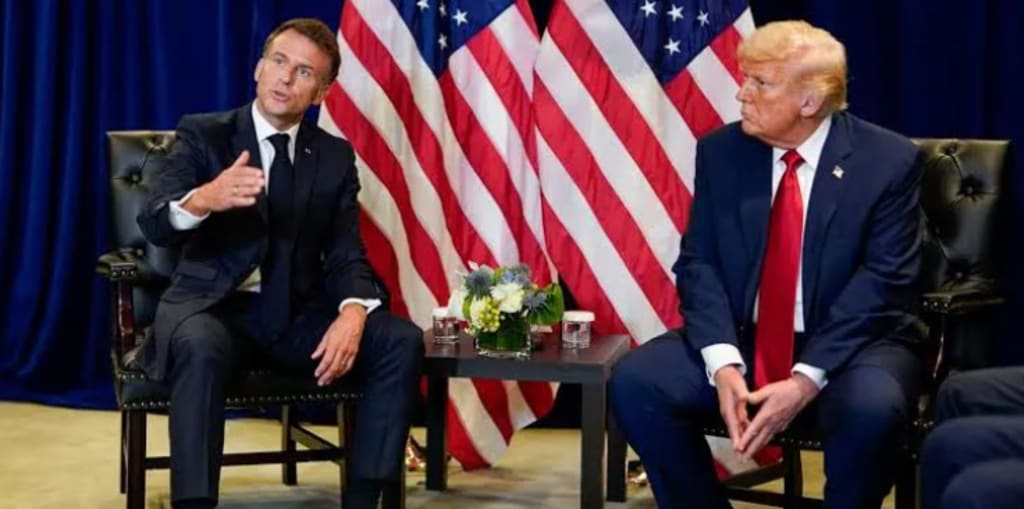
Former U.S. President Donald Trump has reportedly threatened to impose a staggering 200% tariff on French wine and champagne after French President Emmanuel Macron declined to participate in Trump’s proposed “Board of Peace.” The dramatic warning has sparked controversy across diplomatic, economic, and political circles, reviving memories of earlier transatlantic trade disputes while introducing an entirely new layer of geopolitical tension.
So how did wine become the centerpiece of an international power play? Let’s break it down.
A Tariff Threat That Shook the Wine World
Donald Trump is no stranger to bold economic threats, but this one raised eyebrows even among seasoned political observers. According to reports, Trump suggested that French wine and champagne imports into the United States could face a 200% tariff unless Macron agreed to join the Board of Peace.
For context, the United States is one of the largest markets for French wine exports, with Americans spending billions annually on champagne, Bordeaux, Burgundy, and other premium labels. A tariff of this scale would effectively triple retail prices, putting French wines out of reach for many consumers and potentially wiping out U.S. demand overnight.
While Trump later noted that Macron was not required to join the board, the message was clear: refusal could come at a steep economic cost.
What Exactly Is the ‘Board of Peace’?
The Board of Peace is a proposed international body championed by Trump, allegedly designed to oversee ceasefires, mediate conflicts, and promote long-term global stability. The initiative was initially linked to maintaining peace in the Middle East, particularly following ceasefire efforts involving Israel and Hamas, but it has since expanded into a broader global concept.
Membership reportedly comes with significant financial commitments, potentially exceeding $1 billion over several years, along with active participation in conflict monitoring and decision-making. Trump has floated the idea of inviting major world leaders — including heads of state from Europe, Asia, and beyond — positioning the board as an alternative or complement to existing global institutions.
However, critics argue the proposal lacks transparency and overlaps with established bodies like the United Nations, raising questions about its legitimacy and long-term viability.
Why Macron Reportedly Said No
France’s refusal appears rooted in both principle and politics.
As a permanent member of the UN Security Council, France already plays a central role in global peacekeeping and diplomacy. French officials reportedly view the Board of Peace as redundant and potentially undermining established international frameworks.
Additionally, there is concern in Paris that the board would be U.S.-dominated, giving Washington disproportionate influence over global conflict resolution. From Macron’s perspective, joining could signal acceptance of an informal power structure that bypasses multilateral consensus.
In response to Trump’s tariff threat, French officials have expressed frustration, describing the move as economic coercion rather than genuine diplomacy.
Europe Pushes Back
The reaction from Europe has been swift and firm.
European Union leaders have criticized the idea of using trade penalties to pressure political alignment, warning that such tactics could violate international trade norms. Behind the scenes, EU officials are reportedly discussing possible countermeasures should the tariffs be enacted.
This situation revives memories of previous U.S.–EU trade conflicts — including disputes over steel, aluminum, and digital taxes — but analysts say this case is unique because it explicitly ties economic punishment to diplomatic participation.
If the dispute escalates, it could strain transatlantic relations at a time when unity is already being tested by global conflicts and economic uncertainty.
The Wine Industry Caught in the Crossfire
For French winemakers, the threat is deeply unsettling.
The U.S. market is essential to France’s wine and champagne industry, especially for small and mid-sized producers who rely heavily on exports. A 200% tariff would make French bottles virtually unsellable in American stores and restaurants, forcing importers to cancel contracts and seek alternatives.
The ripple effects could extend far beyond vineyards. Distributors, retailers, sommeliers, and hospitality businesses would all feel the impact. Even American consumers would lose access to many of the wines they enjoy, while prices for remaining imports would soar.
Market reactions have already shown unease, with shares of major French luxury and beverage companies dipping following the news.
Trump’s Transactional Foreign Policy Returns
Supporters of Trump argue that this approach reflects strong, results-driven leadership, using America’s economic power to force meaningful engagement. They view tariffs as leverage — not punishment — and claim that traditional diplomacy often fails without real consequences.
Critics, however, see the tactic as reckless and destabilizing. Linking trade sanctions to participation in a loosely defined peace initiative is unprecedented, they argue, and risks turning global diplomacy into a transactional bargaining game.
Regardless of perspective, the episode reinforces a familiar Trump-era theme: economics and politics are inseparable, and trade tools are fair game in international negotiations.
What Happens Next?
At the time of writing, the tariff threat remains just that — a threat. No formal trade action has been announced, and diplomatic channels are still open.
Macron has shown no public sign of reversing his stance, while European leaders continue to signal resistance to economic intimidation. Whether cooler heads prevail or the dispute escalates into a full-blown trade clash remains to be seen.
What is certain is that this standoff highlights how fragile global alliances can be when diplomacy, economics, and personal politics collide.
For now, French wine remains on American shelves — but the cork is firmly wedged under mounting pressure.
About the Creator
Keep reading
More stories from Aqib Hussain and writers in The Swamp and other communities.
Trump Says He Will “100%” Carry Out Greenland Tariffs Threat, as EU Vows to Protect Its Interests
When former U.S. President Donald Trump declared that he would “100%” follow through on imposing tariffs connected to Greenland, the statement landed like a geopolitical thunderclap. Once again, Trump revived a familiar mix of economic pressure, unconventional diplomacy, and headline-grabbing rhetoric—this time triggering a firm response from the European Union, which vowed to protect its interests. The moment reflects more than a trade dispute; it reveals how economic tools are increasingly used as instruments of political power. Greenland, the world’s largest island, occupies a unique position in global politics. Though geographically part of North America, it is an autonomous territory within the Kingdom of Denmark and closely tied to the European Union through trade and political agreements. Its strategic importance has grown in recent years due to melting Arctic ice, access to rare earth minerals, and its location along emerging shipping routes. Trump’s renewed focus on Greenland taps into these realities, but his approach has reignited controversy rather than cooperation. Trump’s tariff threat echoes his earlier, widely publicized interest in acquiring Greenland during his presidency. At the time, the idea was dismissed by Danish officials as absurd, yet it underscored a serious point: the United States views Greenland as a critical strategic asset. Now, instead of proposing a purchase, Trump is leaning on tariffs—an economic lever he frequently favored while in office. By framing the move as something he would carry out “100%,” Trump signaled both resolve and defiance, a style that has long defined his political brand. From Trump’s perspective, tariffs are a straightforward solution. He has repeatedly argued that they protect American interests, rebalance unfair trade relationships, and force allies and rivals alike to negotiate on U.S. terms. Supporters see this approach as tough but effective, believing that economic pressure is sometimes the only language international partners respect. In this context, Greenland becomes part of a larger narrative: America asserting itself in a competitive, multipolar world. The European Union, however, sees the issue differently. EU officials responded swiftly, making it clear that any tariffs affecting Greenland or Denmark would be met with firm resistance. For the EU, the threat is not just economic but symbolic. Allowing unilateral tariffs to go unanswered could set a precedent that undermines collective bargaining power and the rules-based international order the bloc relies on. The EU’s vow to protect its interests reflects a broader determination to stand united when faced with external pressure. At the heart of the dispute lies a clash of philosophies. Trump’s worldview prioritizes national leverage and bilateral deals, often at the expense of multilateral institutions. The EU, by contrast, emphasizes cooperation, shared rules, and mutual benefit. When these two approaches collide, trade disputes quickly escalate into political standoffs. Greenland, despite its relatively small population, finds itself caught in the middle of this ideological tug-of-war. There are also economic implications to consider. Tariffs rarely operate in isolation; they ripple through supply chains, affect prices, and influence investor confidence. Greenland’s economy, which relies heavily on fishing, mining, and trade partnerships, could face uncertainty if caught between U.S. tariffs and EU countermeasures. For ordinary people—workers, exporters, and consumers—these high-level political decisions translate into real-world consequences. Beyond economics, the situation raises questions about sovereignty and respect. Greenland’s leaders have consistently emphasized their right to self-determination and their desire to shape their own future. Being treated as a bargaining chip in a larger power struggle risks sidelining local voices. Any long-term strategy involving Greenland will need to acknowledge not only its strategic value but also the aspirations of its people. The timing of Trump’s statement is also notable. As global tensions rise and alliances are tested, bold declarations resonate more strongly than ever. For Trump, reaffirming his willingness to use tariffs reinforces his image as a decisive leader unafraid of confrontation. For the EU, responding firmly helps maintain credibility and unity among member states. Both sides are speaking not only to each other but also to domestic audiences watching closely. Ultimately, Trump’s promise to “100%” carry out the Greenland tariffs threat highlights a broader reality of modern geopolitics: economic policy is inseparable from political strategy. Whether this standoff evolves into a full-blown trade conflict or becomes a catalyst for renewed dialogue remains uncertain. What is clear is that Greenland—once seen as remote and peripheral—is now firmly at the center of global conversations about power, influence, and the future of international relations. As the EU prepares to defend its interests and Trump doubles down on his hardline stance, the world is reminded that even the most unexpected places can become flashpoints. In this new era, tariffs are not just about trade—they are about who sets the rules and who is willing to challenge them.
By Aqib Hussaina day ago in The Swamp
It’s Not Monday, But It’s Not Friday Yet Either
There is a peculiar emotional space in the middle of the week. It’s not Monday, with its fresh starts and reluctant alarm clocks. But it’s also not Friday, with its promise of rest, release, and reward. It’s the in-between—the stretch of time where momentum exists, but excitement feels distant.
By Aarif Lashari5 days ago in The Swamp
US Supreme Court Appears Likely to Uphold Restrictions on Transgender Athletes
The US Supreme Court is poised to make a landmark decision that could reshape the landscape of youth and collegiate sports across the country. Reports indicate that the Court appears likely to uphold restrictions on transgender athletes, a move that would reinforce state-level bans preventing transgender girls and women from competing in sports aligned with their gender identity.
By Aarif Lashari7 days ago in The Swamp
Smart phones, Humans and Aliens.
WARNING. I will be tapping into one of your favorite creative tensions: The absurdity of humans worshipping their glowing rectangles as if they were tiny oracles. There’s something deliciously poetic about that contradiction, and it lends itself beautifully to an instructive proviso.
By Novel Allen5 days ago in Poets


Comments
There are no comments for this story
Be the first to respond and start the conversation.