
Trump Tariffs Live Updates: Trump Heads to Davos as Greenland Threats Roil World and Markets
Escalating tariff rhetoric, renewed Greenland tensions, and global market volatility collide as Trump takes his agenda to the World Economic Forum.


Global markets and diplomatic circles were on edge as former U.S. President Donald Trump headed to the World Economic Forum in Davos, with tariff threats and renewed controversy over Greenland dominating headlines. What was expected to be a platform for economic dialogue quickly turned into a flashpoint for geopolitical anxiety, as Trump’s hardline trade stance and rhetoric about Greenland sent shockwaves through financial markets and international alliances.
As live updates unfolded, investors, policymakers, and world leaders reacted to a familiar Trump formula: aggressive economic nationalism paired with provocative foreign policy signals. The convergence of these issues underscored how closely trade, security, and global stability have become intertwined.
Tariff Threats Return to Center Stage
Trump’s renewed focus on tariffs revived fears of another escalation in global trade tensions. Speaking ahead of his Davos trip, he reiterated his belief that tariffs are a powerful tool to protect American industries and force better trade terms from both rivals and allies.
Markets responded swiftly. Stock indices in Asia and Europe showed signs of volatility as investors assessed the risk of new trade barriers. Analysts warned that even the threat of tariffs can disrupt supply chains, weaken business confidence, and slow global growth, particularly at a time when many economies remain fragile.
Trump, however, framed tariffs as leverage rather than punishment. According to his messaging, uncertainty is a necessary pressure point—one that compels other nations to negotiate on U.S. terms. This approach, while applauded by supporters, has repeatedly unsettled global markets.
Greenland Rhetoric Adds Fuel to the Fire
Compounding market unease were Trump’s renewed remarks regarding Greenland, a territory whose strategic importance has grown amid Arctic competition. His comments, perceived by many as threatening or dismissive of established diplomatic norms, stirred concern in Europe and beyond.
Greenland’s leadership and Denmark have responded with firm statements emphasizing sovereignty and international law. Yet the controversy has revived broader questions about Arctic security, resource competition, and the role of major powers in the region.
For investors, the Greenland issue is not merely symbolic. The Arctic’s strategic value—linked to shipping routes, defense, and critical minerals—means that geopolitical tension there can have real economic implications. Trump’s rhetoric added another layer of uncertainty to an already tense global environment.
Davos: An Unlikely Stage for Confrontation
The World Economic Forum in Davos is traditionally a venue for cooperation, dialogue, and consensus-building. Trump’s arrival, however, promised disruption. His “America First” philosophy often clashes with the globalist tone of the forum, where free trade and multilateral solutions are widely promoted.
Ahead of his appearance, Trump signaled that he would not soften his message. Instead, he positioned himself as a counterweight to what he has long criticized as elite-driven globalization. Supporters see this as refreshing honesty, while critics argue it undermines international cooperation at a critical moment.
World leaders attending Davos faced a delicate balance: engaging with Trump’s economic power while managing the instability his rhetoric can generate.
Market Reaction and Investor Anxiety
Financial markets remained sensitive to every update. Currency fluctuations, bond yields, and commodity prices reflected investor caution as Trump’s statements circulated. Economists noted that markets are not only reacting to potential policy changes but also to unpredictability itself.
Trade-dependent sectors, including manufacturing and technology, appeared particularly vulnerable. Companies with global supply chains faced renewed uncertainty about costs, access to markets, and long-term planning.
Despite this, some investors viewed the turbulence as temporary, pointing to past episodes where markets ultimately adapted to Trump-era trade policies. Still, the immediate reaction highlighted how closely Trump’s words continue to influence global financial sentiment.
Diplomatic Fallout and Global Responses
International responses were swift. European officials called for calm and emphasized the importance of dialogue over confrontation. Some leaders expressed concern that tariff escalation and territorial rhetoric could weaken alliances at a time when unity is needed to address shared challenges such as climate change and economic inequality.
Others, however, saw an opportunity to push back, arguing that Trump’s approach forces long-overdue conversations about fairness in trade and burden-sharing in security.
What Comes Next
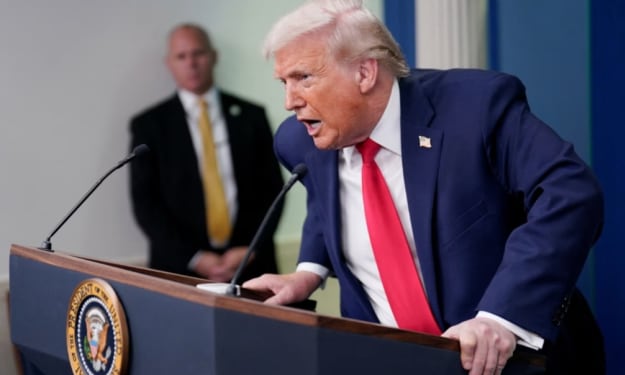
As Trump took the stage in Davos, the world watched closely for signs of escalation or reassurance. Would his rhetoric translate into concrete policy moves, or was it primarily a negotiating tactic aimed at strengthening his position?
What remains clear is that Trump’s presence continues to act as a catalyst for global debate—and market volatility. The combination of tariff threats and Greenland-related tensions served as a reminder that in today’s interconnected world, political statements can move markets as powerfully as economic data.
Whether Davos would cool tensions or amplify them was still uncertain. But one thing was undeniable: Trump’s return to the global spotlight ensured that trade, sovereignty, and economic power would dominate conversations long after the forum concluded.
About the Creator
Asad Ali
I'm Asad Ali, a passionate blogger with 3 years of experience creating engaging and informative content across various niches. I specialize in crafting SEO-friendly articles that drive traffic and deliver value to readers.
Trump’s Presser Set the Stage for a Doozy at Davos
Donald Trump’s pre-Davos press conference was supposed to be a scene-setter. Instead, it became a spectacle that sent shockwaves through diplomatic circles and boardrooms alike, ensuring that this year’s World Economic Forum in Davos would be anything but routine. In trademark fashion, Trump used the presser to air grievances, make sweeping claims, and sketch out a vision of global economic relations that left allies uneasy and critics energized. By the time he boarded his plane for Switzerland, it was clear that Davos was bracing for what many attendees privately described as “a doozy.”
By Salaar Jamaliabout 13 hours ago in The Swamp
Trump Links Greenland Dispute to Not Getting Nobel Peace Prize
In a surprising twist during a press conference earlier this week, former U.S. President Donald Trump linked his controversial Greenland dispute to the fact that he did not receive the Nobel Peace Prize. His comments sparked reactions from politicians, international media, and the public, highlighting once again the unusual rhetoric that characterized his presidency.
By Aarif Lashari2 days ago in The Swamp
Smart phones, Humans and Aliens.
WARNING. I will be tapping into one of your favorite creative tensions: The absurdity of humans worshipping their glowing rectangles as if they were tiny oracles. There’s something deliciously poetic about that contradiction, and it lends itself beautifully to an instructive proviso.
By Novel Allen5 days ago in Poets



Comments
There are no comments for this story
Be the first to respond and start the conversation.