
Trump Signs Bill to End Shutdown but Another Budget Cliff Looms Over ICE Funding
Temporary relief for government operations as immigration funding battle continues
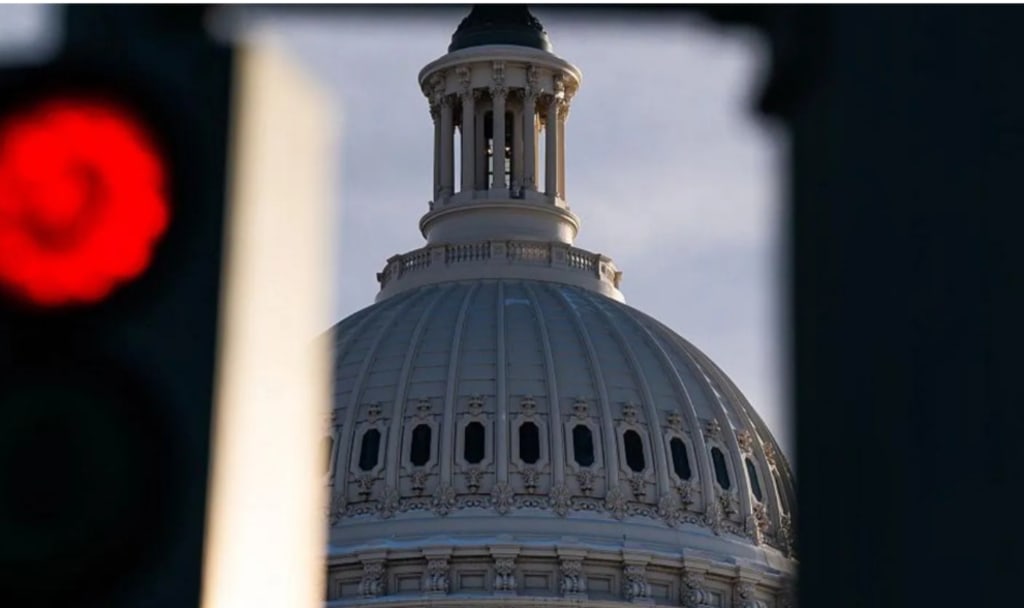
The United States government narrowly avoided a prolonged shutdown after former President Donald Trump signed emergency legislation designed to keep federal agencies open. However, while the immediate crisis has been resolved, a new financial deadline is already approaching — one that could significantly impact funding for Immigration and Customs Enforcement (ICE).
The move highlights ongoing political divisions in Washington over immigration policy, border enforcement, and federal spending priorities. While lawmakers celebrated the short-term solution, many experts warn that the next budget fight could be even more contentious.
How the Government Shutdown Was Avoided
Government shutdowns occur when Congress fails to pass funding legislation needed to keep federal agencies operating. In this case, lawmakers reached a last-minute agreement to approve temporary spending measures. Trump’s signature finalized the deal, ensuring that federal workers would continue receiving paychecks and government services would remain operational.
The emergency funding bill is considered a stopgap measure, meaning it only funds government operations for a limited period. While it prevents immediate disruption, it does not solve deeper disagreements over federal spending allocations.
Why ICE Funding Is Becoming the Next Major Battle
Immigration policy remains one of the most politically sensitive issues in the United States. Funding for ICE — the agency responsible for immigration enforcement and deportation operations — has been a major point of disagreement between political parties.
Supporters of increased ICE funding argue:
Border enforcement is essential for national security
Immigration laws must be consistently enforced
Agencies need modern resources and staffing support
Critics argue:
Enforcement budgets are already high
Funding should shift toward immigration processing and humanitarian programs
Oversight of enforcement practices should increase
These disagreements have made ICE funding a recurring flashpoint during federal budget negotiations.
The “Budget Cliff” Explained
A budget cliff refers to a looming funding deadline where government agencies risk losing financial support if lawmakers fail to reach an agreement. In this case, ICE funding is tied to upcoming spending deadlines that could once again threaten partial government operations.
If Congress fails to reach agreement:
Certain enforcement programs could face temporary funding disruptions
Political pressure could increase dramatically
Immigration policy debates could intensify during election cycles
Political Pressure on Both Sides
Both major political parties face pressure from their voter bases. Immigration enforcement remains a defining political issue in many regions of the United States.
Some lawmakers push for:
Expanded detention capacity
Increased border surveillance technology
Faster deportation processing
Others focus on:
Immigration court reform
Pathways to legal residency
Refugee and asylum system improvements
Economic and Operational Impact of Funding Uncertainty
Uncertain funding can create real-world operational challenges for federal agencies. When agencies do not know their long-term budgets, it becomes difficult to plan hiring, equipment purchases, and program expansion.
For ICE, funding uncertainty could affect:
Staffing levels
Facility maintenance
Technology modernization
Coordination with local law enforcement
The Broader Immigration Policy Debate
The ICE funding fight reflects deeper national disagreements about immigration strategy. Some policymakers view enforcement as the top priority, while others emphasize humanitarian protections and immigration system reform.
The debate is also influenced by:
Border migration trends
International humanitarian crises
Labor market demands
Regional political priorities
Market and Economic Reactions
While immigration policy does not usually dominate financial markets, government shutdown threats can affect investor confidence. Markets often react negatively to political instability, especially when it impacts federal spending and public services.
Repeated budget conflicts can create:
Short-term market volatility
Business uncertainty around regulations
Delayed federal contracting payments
Election-Year Implications
Budget fights involving immigration often become major election campaign topics. Lawmakers frequently use funding debates to signal policy priorities to voters.
Campaign messaging may focus on:
Border security
Public safety
Economic impact of immigration
Human rights and refugee protection
What Happens Next
The next phase of negotiations will likely involve intense bargaining over ICE funding levels. Lawmakers must balance political pressures with operational needs of federal agencies.
Possible outcomes include:
Another temporary funding extension
A long-term immigration funding compromise
Renewed shutdown risk if negotiations fail
Why This Moment Matters
This situation highlights how closely government funding and immigration policy are connected. Even when shutdowns are temporarily avoided, underlying policy disagreements remain unresolved.
For federal workers and agencies, short-term funding solutions create ongoing uncertainty. For lawmakers, each funding deadline becomes another high-stakes negotiation.
The Long-Term Outlook
Many policy experts believe immigration funding debates will continue for years. The combination of political division, border policy complexity, and global migration pressures makes long-term consensus difficult.
Future negotiations may increasingly focus on balancing enforcement funding with broader immigration system reform.
Conclusion
Trump’s decision to sign the emergency funding bill helped prevent immediate government disruption. However, the looming budget deadline tied to ICE funding shows that the broader political battle is far from over.
The coming months will likely bring intense negotiations, political debate, and possible market uncertainty. Whether lawmakers can reach a long-term funding agreement remains one of the key questions shaping U.S. immigration policy and federal budgeting in the near future.
About the Creator
Keep reading
More stories from Aarif Lashari and writers in The Swamp and other communities.
“Trump Is Sowing the Seeds of the Next Ukraine War”
Recent political commentary and international analysis have raised concerns that current or future US policy decisions under Donald Trump could influence the long-term security situation surrounding Ukraine. The phrase “sowing the seeds of the next Ukraine war” reflects fears among some analysts that shifts in Western unity, military aid strategies, or diplomatic positioning could shape future regional conflicts.
By Aarif Lashari5 days ago in The Swamp
Why Black History Matters in America?
The United States of America is celebrating their 250th anniversary in 2026. I'm proud to be an American and as someone who was born here, I wouldn't imagine myself living anywhere else. This is a country where opportunities are possible. Where anyone can be successful in anything they desire to do. Equality, community, and togetherness are the backbones of what America is and should be about. However, we have an administration who wants to erase and disregard those who have made positive, meaningful impacts in our country, specifically Black figures, such as Martin Luther King, Jr., Rosa Parks, and Maya Angelou. President Trump and his administration have been constantly complaining and fighting against what they call the "Woke agenda". They use this excuse as a distraction from other issues they refuse to address, such as the high cost of living, climate change, and inflation. That equality is dividing America, when in reality, it's bringing us together. Being woke is not tied to a specific political party. No matter where you stand on the political spectrum, you can still care about other people and their plights. Compassion and empathy for others isn't tied to a political party, either. We were taught as children to treat others the way we want to be treated and not judge others because they're different from us. Caring about others isn't a personal attack on your beliefs. It doesn't make you any less of a person. People who are easily offended over African American figures, past or present, or anything related to it, are grasping at straws. Current and future generations need to know who people like Harriet Tubman and Shirley Chisholm were, especially in the classroom. Black History is part of American History. It should be recognized, not hidden or forgotten. Besides, you can't shield children from everything, just because your feelings are easily hurt.
By Mark Wesley Pritchard 7 days ago in The Swamp
Gold, Silver Price Cut: Is This the Right Time to Buy as Rates Fall by 40 Percent? Experts Weigh In
Gold and silver prices have seen a dramatic pullback, with rates reportedly falling by as much as 40 percent from recent highs, reigniting a familiar question among investors: is this the right time to buy? The steep decline has caught the attention of retail buyers, long-term savers, and market analysts alike, as precious metals that once seemed perpetually expensive now appear relatively more affordable. Yet, as experts caution, price corrections alone do not guarantee an ideal entry point.
By Sadaqat Aliabout 4 hours ago in The Swamp
Foot Bindings
I asked my grandmother how she knew she'd fallen in love. I am not sure I ever did love him, she said. This was before I met my husband. I was naive, a naked spring, a raw nerve of a thing. That cannot ever be me, I knew. Sadness swept in gently like a Moscow thaw. It is no simple thing, looking into a woman's vast soul and seeing its foot bindings. Now, in Italy divorced with my skin singed off, when I say I don't love him mean: I have succeeded at feeling nothing most days and it mostly works. Do you want the comfort of Nothing? Do you want Nothing, too? Be warned: you'll never be free, even when you are nothing. Here is what doesn't work: Accepting the stages of grief. Talking about it. Sitting with the feeling. Missing him—no, the person you were when you believed in death do us part. Writing poetry. That, too. When I say I don't love him I mean: I feel capsized in an endless, starved tide. What sometimes works: selective memory. You must forget ripe tomatoes and his beard and feeling perfectly sheltered in a big blue world. Forget coffee in bed, laughter watching TV, blowing out the candles on the birthday cake and the quiet all-encompassing knowledge that you are chosen. Remember only how love turned to a banal everyday survival act, a trapeze act unsure whether he will catch you, how the warmth stagnated and became sour, remember the foot bindings and remember the resentment boiling in your veins as you stick it out for the kids. Six-hour Netflix binges help, too. A man's fingers tracing your spine. Frozen pizza at 2 a.m. Random trips to the museum just to stand near things that last a while. The realization that crying won’t change anything. Seeing that life is just a dream, and refusing to participate in your own suffering. Bite your fist. Walk on eggshells around joy. When I say I don't love him, I mean he didn’t break my heart, he just stopped touching it and it forgot how to beat right.
By Ella Bogdanovaabout 16 hours ago in Poets




Comments
There are no comments for this story
Be the first to respond and start the conversation.