
Trump Says US Has Begun ‘Major Combat Operations’ in Iran After Israel Launches Strikes – Live Updates
Escalation in the Middle East raises fears of wider regional conflict as Washington signals direct military involvement
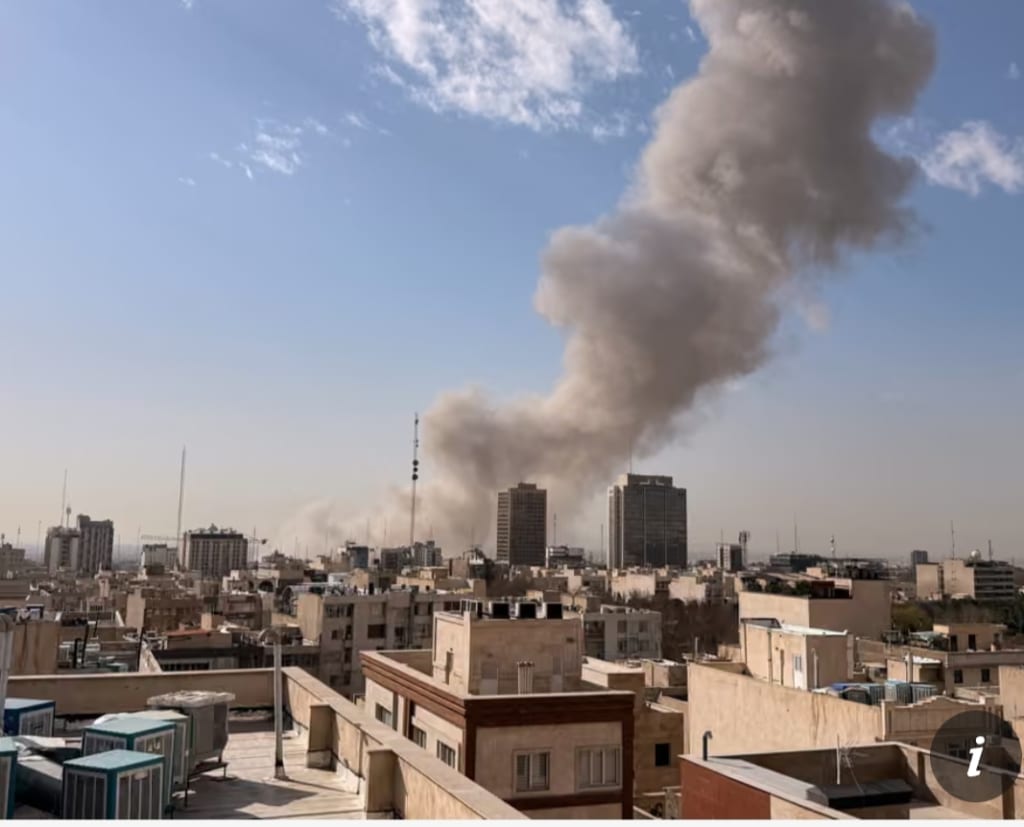
Tensions in the Middle East have surged dramatically after former President Donald Trump announced that the United States has begun what he described as “major combat operations” in Iran, following Israeli strikes on Iranian targets. The statement, delivered amid rapidly unfolding developments, signals a potential turning point in a volatile regional crisis that could have global implications.
While official confirmation from the Pentagon and allied governments is still emerging, the announcement has already triggered urgent diplomatic activity, market reactions, and international calls for restraint.
What We Know So Far
According to initial reports, Israel launched a series of coordinated strikes targeting what it described as Iranian military infrastructure and strategic facilities. Israeli officials have framed the action as a defensive measure, citing concerns over security threats and alleged Iranian-backed activities in the region.
Shortly afterward, Trump stated that US forces had begun “major combat operations” in Iran, signaling direct American military involvement.
Details remain limited, including the scale of US operations, specific targets, and whether the actions were coordinated in advance with Israeli authorities.
Defense analysts caution that early information in fast-moving situations can evolve quickly.
Washington’s Position
Trump’s remarks suggest a shift from strategic deterrence to active engagement. In his statement, he framed the move as necessary to protect American interests and regional stability.
However, it remains unclear whether the operations were authorized under existing congressional frameworks or represent a new escalation requiring legislative oversight.
US military officials have not yet released a full operational briefing.
If confirmed, direct combat operations inside Iranian territory would mark one of the most significant escalations between the two nations in decades.
Israel’s Initial Strikes
Israeli authorities have long expressed concern over Iran’s military capabilities and regional influence. In recent years, Israel has conducted limited strikes in Syria and elsewhere against Iranian-linked targets.
However, strikes directly involving Iranian territory represent a more dramatic development.
Israel has stated that its actions were intended to prevent imminent threats, though independent verification of those claims remains ongoing.
Tehran has condemned the strikes, calling them violations of sovereignty.
Iran’s Response
Iranian officials have vowed retaliation, warning that both Israel and the United States would face consequences.
State media reported heightened military readiness across key defense installations. Iran’s Revolutionary Guard Corps issued statements emphasizing the country’s right to self-defense.
Regional observers note that Iran maintains a network of allied groups across the Middle East, raising concerns about potential indirect responses beyond its borders.
Global Reaction
World leaders have reacted swiftly, with several European governments urging immediate de-escalation.
The United Nations called for restraint, emphasizing the risk of a broader regional war.
Energy markets responded quickly to the news, with oil prices spiking amid fears of supply disruptions through the Strait of Hormuz — a critical global shipping route.
Stock markets in Asia and Europe showed signs of volatility as investors assessed geopolitical risks.
Regional Implications
The Middle East remains a complex web of alliances and rivalries. Any sustained military confrontation between the US, Israel, and Iran could draw in additional actors.
Neighboring Gulf states are reportedly increasing security measures, while diplomatic channels are being activated to prevent wider conflict.
Military analysts warn that miscalculation could rapidly escalate the situation beyond initial intentions.
Historical Context
US-Iran relations have been strained for decades, particularly since the 1979 Iranian Revolution.
Tensions intensified following the US withdrawal from the Iran nuclear agreement in 2018 and subsequent sanctions.
In recent years, confrontations have included cyber operations, maritime incidents, and targeted strikes, but direct large-scale combat has been avoided.
If confirmed, the current operations would represent a major departure from previous patterns of engagement.
Congressional and Domestic Debate
Within the United States, questions are likely to arise regarding the legal and strategic basis for military action.
Lawmakers from both parties have previously expressed concerns about entering new conflicts without clear authorization.
Public opinion may also play a significant role, particularly given broader debates about America’s role in global conflicts.
Military Considerations
Iran possesses significant missile capabilities and asymmetric warfare tools. Its geographic size and terrain present challenges for sustained operations.
US forces in the region — including naval assets and air bases — may face heightened risk depending on Iran’s response.
Defense experts stress that even limited strikes can carry unpredictable consequences.
Diplomatic Efforts Underway
Despite the military developments, diplomatic channels are reportedly active behind the scenes.
Regional intermediaries and global powers are said to be working to contain the crisis.
Past confrontations have sometimes been followed by quiet negotiations to avoid prolonged escalation.
Whether such diplomacy can succeed this time remains uncertain.
What Comes Next?
The coming hours and days will be critical.
Key questions include:
The scope and duration of US operations
Iran’s immediate response
Whether other regional actors become involved
The potential impact on global energy supplies
Markets, governments, and military planners worldwide are closely monitoring developments.
Conclusion
The announcement that the United States has begun “major combat operations” in Iran following Israeli strikes marks a potentially transformative moment in Middle Eastern geopolitics.
While full details are still emerging, the situation carries significant risks — both regionally and globally.
As diplomatic efforts race to contain the crisis, the world watches to see whether escalation continues or whether channels for de-escalation can prevail.
In an already fragile geopolitical landscape, the stakes could hardly be higher.
About the Creator
Keep reading
More stories from Aarif Lashari and writers in The Swamp and other communities.
Plane Carrying Banknotes Crashes Near Capital, Killing 20
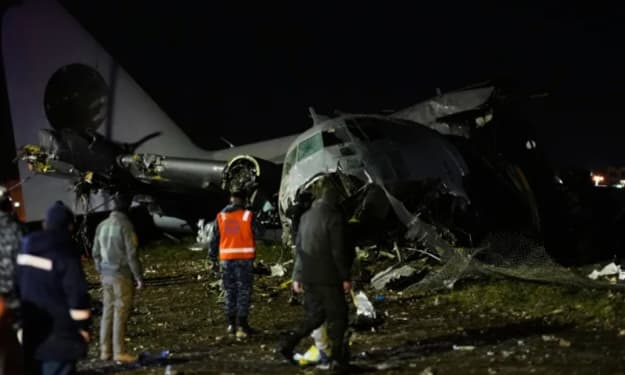
A cargo aircraft reportedly carrying large quantities of banknotes has crashed near a national capital, killing 20 people and triggering an urgent investigation into the circumstances surrounding the flight. Officials confirmed that the aircraft went down shortly after takeoff, with no immediate survivors reported among those onboard.
By Aarif Lashariabout 3 hours ago in The Swamp
A Gathering of Evil Bosses
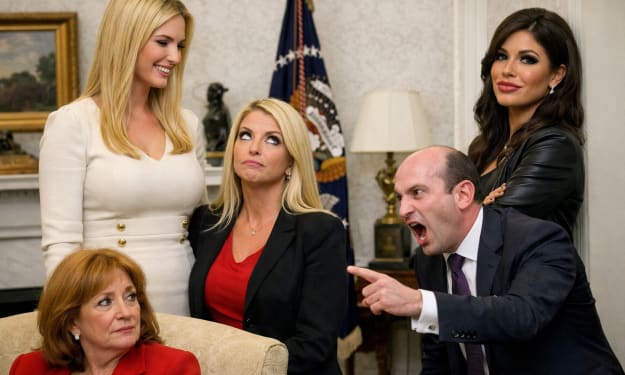
“I’m the queen of chin jutting while I smooth my hair, attacking, insulting, and deflecting to protect my appointer.” “Oh, please, Blondi, my hair is curled, highlighted, and longer than yours. I feature television commercials telling immigrants that we will give them a free plane ride home, and if they voluntarily turn themselves in, they will be allowed to legally apply for re-entry. It runs everywhere, and I look good in it! You can’t compete because of your blond hair. Mine is nicer, and my lips are prettier than yours.”
By Andrea Corwin 10 days ago in The Swamp
Members of Iran’s Elite Accused of Hypocrisy Over Children’s Lives in the West
Top members of Iran’s political and clerical elite are facing sharp criticism from opposition activists and ordinary citizens for what critics describe as “brazen hypocrisy”: while preaching strict Islamic values, economic self-sacrifice, and resistance to Western influence, many senior officials’ children reportedly live comfortable, Western-based lives funded in part by state wealth. At the heart of the debate are allegations that families of high-ranking regime figures have used their political influence and access to state resources to secure education, careers, and residences in countries such as the United States, United Kingdom, Canada, and Australia, fueling public anger among Iranians facing economic hardship and political repression at home. Elite Education and Wealth Abroad Among the most cited cases is that of Ali Larijani, Iran’s top national security adviser and a veteran cleric and former parliamentary speaker. His daughter, Fatemeh Ardeshir Larijani, has been living and working in the United States, where she served as an assistant professor at a major medical school until recently — a position she lost after an online petition called for her deportation. Opposition websites also highlight relatives of other senior officials. These include the son of former foreign minister Mohammad Javad Zarif, who has been reported to have lived in a multi-million-dollar Manhattan home, and the daughter of a former energy minister who remains based in the U.S. In the United Kingdom, nephews of Larijani are said to reside and work in Scotland and England, while other elite families — including relatives of former presidents and revolutionary commanders — reportedly hold roles in international finance and academia. Critics have dubbed these children and grandchildren of the regime’s elite “aghazadeh,” a Persian term meaning “offspring of the powerful,” and argue that their lifestyles in Western cities sharply contradict the harsh narratives their parents advance back home. Public Anger and Accusations of Hypocrisy Many Iranians see this phenomenon as emblematic of wider double standards among the ruling class. While the state enforces strict dress codes, curbs on personal freedoms, and harsh punishments for perceived moral violations, elite families appear to enjoy personal liberties and economic opportunities that are denied to the general population. “This is not just privilege,” said one Iranian writer based in Europe. “It’s hypocrisy — a ruling order that for decades preached austerity, resistance to the West, and moral discipline now sees its children prospering in the very societies they criticized.” Social media campaigns and petitions calling for the deportation of elite children from Western countries have gained traction in recent weeks, though practical avenues for enforcement remain limited. Western governments have shown reluctance to target individuals solely because of family ties, with some officials suggesting that such figures might possess valuable intelligence connections. Domestic Context: Hardship and Repression The controversy over elite privileges unfolds against a backdrop of broad public frustration in Iran. Economic difficulties — including inflation, unemployment, and fuel price hikes — have strained families across the country. Meanwhile, government crackdowns on dissent, which have sometimes involved lethal force against protestors, have deepened public anger. Human rights groups have documented numerous cases of youths and protesters killed during demonstrations in recent years, adding to the sense among many Iranians that ordinary citizens suffer while the powerful remain insulated. Critics argue that when senior figures criticize Western society or advocate for strict social norms while their children enjoy freedom abroad, it erodes the legitimacy of the Islamic Republic’s moral and political message. For many Iranians, these contrasting realities underscore a broader disconnect between rhetoric and lived experience. International and Diplomatic Dimensions Western governments have generally refrained from punitive action against individual children of foreign officials on ideological grounds, emphasizing legal protections for residency and education. Some analysts argue that their presence abroad allows Western intelligence and academic communities access to insights about the Iranian elite — access that authoritarian regimes sometimes seek to exploit. To opponents of the regime, however, this only adds another layer to what they view as entrenched privilege: children benefit from Western institutions while ordinary citizens face economic pressure and political reprisals at home. A Flashpoint in Broader Discontent The spotlight on elite hypocrisy may not by itself shake the foundations of Iran’s political system, but it encapsulates deepening fissures in Iranian society. As economic grievances grow and public disillusionment with governance rises, critics say these stark contrasts between the lifestyles of the powerful and the plight of ordinary people could well become a sustained rallying point for reformers and dissidents alike.
By Fiaz Ahmed 3 days ago in The Swamp


Comments
There are no comments for this story
Be the first to respond and start the conversation.