
Plane Carrying Banknotes Crashes Near Capital, Killing 20
Authorities launch investigation after cargo aircraft tragedy raises questions about security and oversight
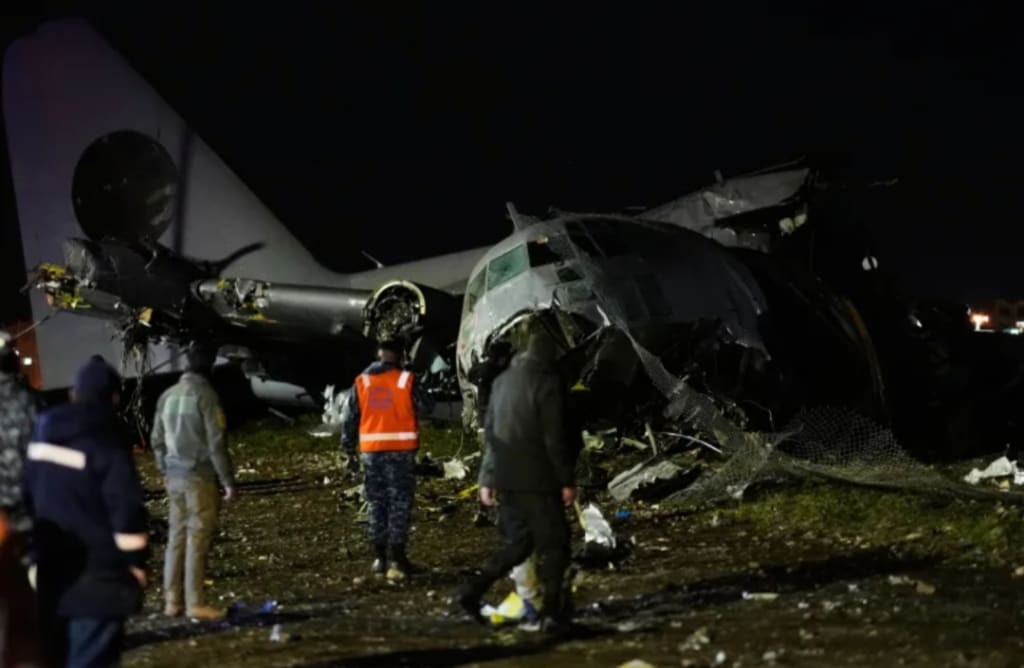
A cargo aircraft reportedly carrying large quantities of banknotes has crashed near a national capital, killing 20 people and triggering an urgent investigation into the circumstances surrounding the flight. Officials confirmed that the aircraft went down shortly after takeoff, with no immediate survivors reported among those onboard.
The tragedy has stunned the public, not only because of the loss of life but also due to the unusual cargo involved — significant shipments of currency believed to be destined for financial distribution.
What Authorities Have Confirmed
Emergency services responded rapidly after the aircraft lost contact with air traffic control. According to aviation authorities, the plane encountered difficulties moments after departure and crashed in a populated area near the outskirts of the capital.
Rescue teams secured the site and began recovery operations, while investigators initiated a formal inquiry into the cause of the crash.
Officials confirmed that 20 individuals — including crew members and security personnel — were killed.
Details about the flight’s exact route and the total amount of currency onboard have not been publicly disclosed.
The Nature of the Cargo
Transporting banknotes by air is not uncommon, particularly when central banks or financial institutions need to move large quantities of cash securely between cities or regions.
Such flights are typically conducted under strict security protocols. They may involve armed guards, confidential flight plans, and coordination with law enforcement agencies.
The presence of high-value cargo raises additional layers of oversight and risk management.
Authorities have emphasized that there is currently no evidence of criminal interference but have not ruled out any possibilities.
Crash Site and Emergency Response
Eyewitnesses described hearing a loud explosion before seeing smoke rising from the crash site.
Emergency responders established a perimeter to prevent unauthorized access, especially given the sensitive nature of the cargo.
Specialized teams were deployed to recover debris and secure any surviving banknotes.
Officials stressed that public safety was the immediate priority, followed by preservation of evidence.
Investigating the Cause
Aviation investigators are examining multiple factors, including:
Mechanical failure
Weather conditions
Pilot communication records
Flight data recorder information
Air traffic control logs
Modern aircraft are equipped with black boxes that record cockpit audio and flight parameters. These devices will play a crucial role in determining what went wrong.
Preliminary findings are expected in the coming weeks, though full investigations can take months.
Security and Oversight Questions
The unusual cargo has prompted scrutiny of financial transport procedures.
Analysts say transporting physical currency remains necessary in certain circumstances, particularly in economies where cash usage is high.
However, the logistics of moving large sums by air require coordination between aviation authorities, central banks, and security agencies.
Questions may arise about whether existing protocols were sufficient and whether any additional safeguards are needed.
Impact on Financial Operations
Depending on the scale of the shipment, the crash could temporarily disrupt cash distribution systems.
Central banks often move currency to replenish regional reserves, support banking operations, or replace damaged notes.
Officials have indicated that contingency plans are in place to maintain financial stability.
There is no indication of broader economic risk resulting from the incident.
Human Toll and Mourning
Beyond procedural questions, the tragedy represents a profound human loss.
Families of the victims have begun receiving support from authorities and employers.
Government officials expressed condolences and pledged a transparent investigation.
Public memorials may be organized as details become clearer.
Aviation Safety Context
Aviation accidents involving cargo aircraft are statistically rare, particularly near major capitals where airspace monitoring is extensive.
However, when they do occur, they prompt comprehensive reviews of safety standards.
International aviation bodies may assist in the investigation if the aircraft manufacturer or components involve cross-border jurisdictions.
Safety agencies typically issue interim recommendations if immediate risks are identified.
Broader Implications
While speculation often surrounds high-profile crashes, officials have urged the public to await verified findings.
Transporting valuable assets by air remains a standard global practice. Yet incidents like this highlight the inherent risks associated with aviation operations, even under strict regulation.
Transparency in communication will be critical in maintaining public trust.
Looking Ahead
In the coming days, investigators will focus on reconstructing the aircraft’s final moments.
Data from flight recorders, maintenance logs, and pilot histories will be carefully analyzed.
Authorities may also examine whether external factors — such as bird strikes, fuel system issues, or structural failures — contributed to the crash.
Until definitive conclusions emerge, officials caution against premature assumptions.
Conclusion
The crash of a cargo aircraft carrying banknotes near a capital city has left 20 people dead and raised urgent questions about aviation safety and financial transport protocols.
As investigations proceed, the focus remains on honoring the victims and determining the precise cause of the tragedy.
While the presence of high-value cargo adds complexity to the case, experts emphasize that aviation safety systems are designed to thoroughly examine such incidents.
The coming weeks will bring greater clarity. For now, the incident stands as a sobering reminder of the risks inherent in air transport — and the human cost when systems fail.
About the Creator
Keep reading
More stories from Aarif Lashari and writers in The Swamp and other communities.
Mark Keenan: Ireland’s Property Bubble Really Burst 20 Years Ago in 2006 – While Those ‘In the Know’ Played a Double Game
Two decades after the first cracks appeared in Ireland’s once-booming property market, debate continues over when the bubble truly burst — and who saw it coming. Property commentator Mark Keenan argues that Ireland’s housing bubble effectively began collapsing in 2006, well before the global financial crisis of 2008 brought the economy to its knees.
By Aarif Lashariabout 14 hours ago in The Swamp
A Gathering of Evil Bosses
“I’m the queen of chin jutting while I smooth my hair, attacking, insulting, and deflecting to protect my appointer.” “Oh, please, Blondi, my hair is curled, highlighted, and longer than yours. I feature television commercials telling immigrants that we will give them a free plane ride home, and if they voluntarily turn themselves in, they will be allowed to legally apply for re-entry. It runs everywhere, and I look good in it! You can’t compete because of your blond hair. Mine is nicer, and my lips are prettier than yours.”
By Andrea Corwin 10 days ago in The Swamp




Comments
There are no comments for this story
Be the first to respond and start the conversation.