
Trump’s Travel Ban: A Controversial Policy That Changed U.S. Immigration History
Understanding the 12-Country Travel Ban, Its Impact, and the Ongoing Debate

Introduction
In 2017, former President Donald Trump issued an executive order that changed the way the world viewed U.S. immigration. Commonly known as the "Trump travel ban," the policy targeted citizens from several countries—many of them Muslim-majority—and restricted their entry into the United States. Though the ban has since been rescinded, its legacy continues to spark debate.
What Was the Trump Travel Ban?
The Trump travel ban was a series of executive orders and presidential proclamations that limited travel and immigration to the United States. The first version was signed on January 27, 2017, only a week after Donald Trump took office. It quickly became one of the most controversial policies of his presidency.
The policy was introduced under the claim of protecting national security. The administration argued that these measures were necessary to prevent terrorism and ensure stronger vetting procedures.
The Countries Affected
At different stages, the ban was revised and expanded. Over time, it affected a total of 12 countries. These were:
Iran
Iraq (later removed)
Libya
Somalia
Sudan (later removed)
Syria
Yemen
Chad (later removed)
North Korea
Venezuela (specific government officials only)
Nigeria
Myanmar (Burma)
Most of these were Muslim-majority nations, which led to the policy being widely referred to as the "Muslim Ban" by critics. The administration, however, denied this label and maintained that the policy was based on national security, not religion.
Legal Battles and Supreme Court Decision
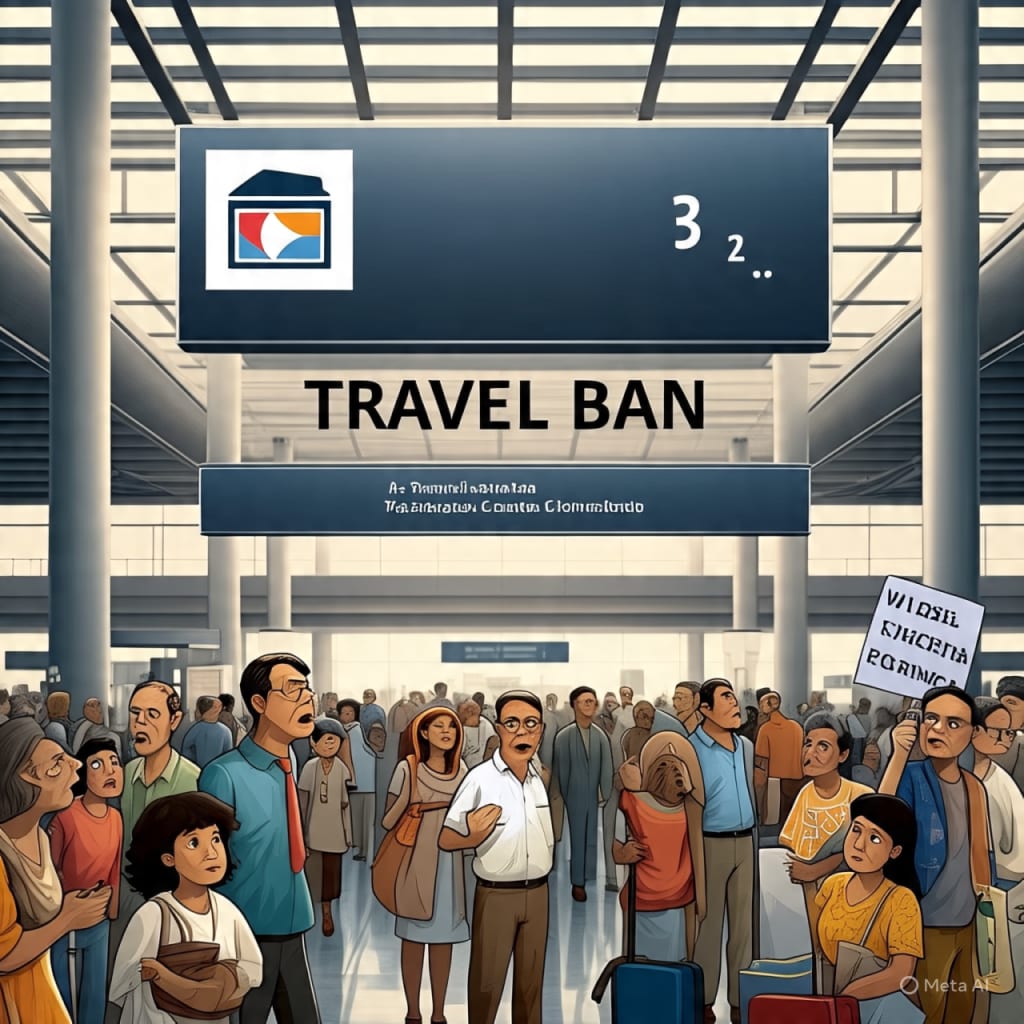
The travel ban was met with immediate protests and legal challenges across the United States. Airports became crowded with demonstrators and lawyers offering free help to detained travelers. Several federal courts blocked different versions of the ban.
Finally, in June 2018, the U.S. Supreme Court upheld the third version of the ban in a 5–4 decision. The ruling gave legal validation to the policy, stating that the president had the authority to make immigration decisions based on national security.
Impact on Families and Communities
The travel ban caused widespread emotional and social disruption. Many families were separated. Students, business travelers, and even those seeking medical treatment were denied entry. Critics argued that the ban targeted people based on religion and nationality rather than actual threats.
In many communities across the United States, people from affected countries reported increased discrimination, visa issues, and mental health problems due to uncertainty and fear.
Supporters' Viewpoint
Supporters of the travel ban viewed it as a strong stance on national security. They believed it protected the U.S. from individuals coming from countries that did not have proper vetting systems. The policy was seen as part of President Trump’s broader “America First” agenda.
For many of his voters, the travel ban fulfilled a campaign promise to tighten immigration and make America safer.
Policy Reversal by President Biden
One of President Joe Biden’s first actions in office was to revoke the travel ban on January 20, 2021. He called the ban “a stain on our national conscience” and emphasized the importance of welcoming people regardless of their religion or origin.
While the ban is no longer in effect, the process to reunite families and repair diplomatic relations is ongoing.
Global Reaction and Long-Term Effects
The travel ban damaged the United States' reputation as a welcoming nation. Many foreign governments criticized the move, calling it discriminatory. International organizations and human rights groups also expressed strong concerns.
Though the ban is over, its influence on U.S. immigration policy remains. It highlighted how executive power can rapidly change international mobility and affect millions of lives.
Conclusion
The Trump travel ban is one of the most debated immigration policies in recent U.S. history. While intended to protect national security, it raised questions about religious freedom, fairness, and American values. The ban affected 12 countries and left a lasting mark on global perceptions of the United States. As the world continues to evolve, it is important to reflect on the lessons learned and work toward policies that balance safety with compassion and inclusion.
Its effects went far beyond legal borders, influencing public opinion, diplomatic ties, and the lives of thousands of individuals. Many families are still recovering from years of separation and uncertainty. As we move forward, it is vital for future leaders to adopt more inclusive approaches that prioritize both national interests and universal human dignity.
About the Creator
Saad
I’m Saad. I’m a passionate writer who loves exploring trending news topics, sharing insights, and keeping readers updated on what’s happening around the world.
India Builds Rockets and Warplanes — So Why Not Passenger Jets?
India has earned global recognition for its accomplishments in defense and space technology. From sending satellites into orbit with the Indian Space Research Organisation (ISRO) to producing advanced fighter jets like the Tejas, the nation has proven that it can engineer highly sophisticated and high-stakes technology. Yet, when it comes to commercial aviation — particularly the production of large passenger jets — India remains conspicuously absent. This gap raises a pressing question: if India can build rockets and warplanes, why not passenger aircraft?
By Fiaz Ahmed Brohi3 days ago in The Swamp


Comments
There are no comments for this story
Be the first to respond and start the conversation.