
Trump’s Name Added to Kennedy Center Exterior, One Day After Vote to Rename
A Sudden Controversy: Trump’s Name Added to Kennedy Center One Day After Board Vote"

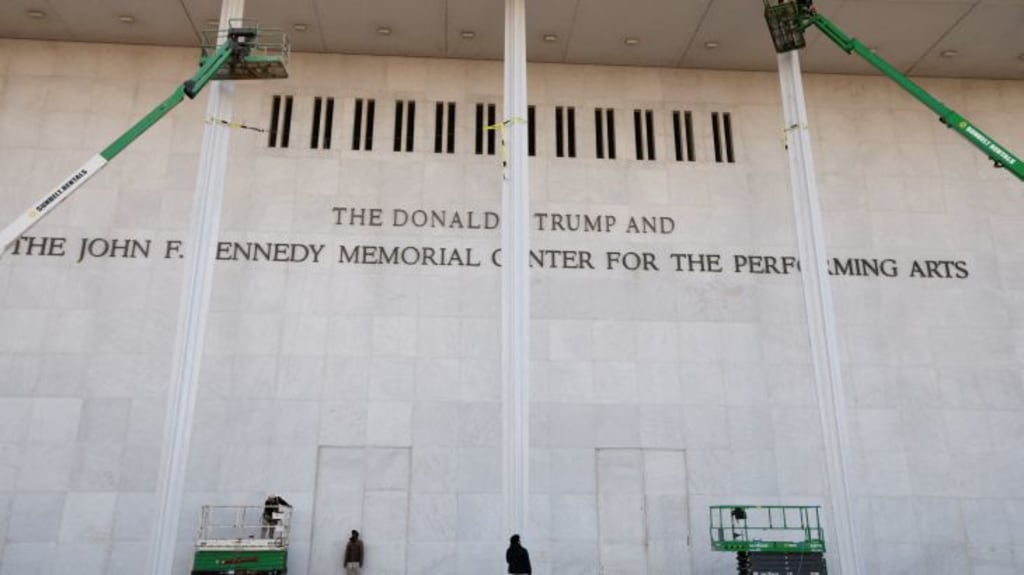
In a move that has sparked nationwide debate, the name of former U.S. President Donald Trump has been added to the exterior of the John F. Kennedy Center for the Performing Arts, just one day after a vote by the center’s board approved the renaming. The decision has reignited discussions about the intersection of politics, culture, and historical legacy in the United States.
A Sudden and Controversial Change
The Kennedy Center, a cultural landmark in Washington, D.C., has long been associated with the legacy of President John F. Kennedy and the promotion of the performing arts. The announcement that Trump’s name would now appear on the center’s exterior caught many by surprise, especially considering that the vote to rename had been a contentious one, marked by months of debate and public scrutiny.
According to sources close to the Kennedy Center board, the decision followed a narrowly passed resolution, which cited Trump’s contributions to arts funding and initiatives during his tenure. While supporters argue that the addition acknowledges a broader spectrum of American leadership in cultural promotion, critics have described it as a politically motivated move that undermines the institution’s historical neutrality.
Public Reaction and Political Divide
The news quickly went viral, with reactions from politicians, artists, and the general public pouring in across social media platforms. Many Democrats expressed outrage, framing the addition as an attempt to politicize a revered cultural institution. Representative Alexandria Ocasio-Cortez tweeted that the renaming “distorts history and erases the Kennedy Center’s commitment to unity through art.”
Conversely, supporters of Trump and conservative commentators hailed the move as long overdue. Some argued that Trump’s policies, including tax incentives for arts organizations and support for cultural initiatives, merited recognition alongside other historical figures associated with the center.
Local residents near the Kennedy Center have also weighed in, noting the logistical changes needed to accommodate the new signage. “It’s strange seeing the name change so quickly,” said a nearby theatergoer. “Whether you support it or not, it definitely makes a statement.”
The Process Behind Renaming
The process to rename the Kennedy Center began earlier this year, prompted by both public calls to honor broader contributions to American arts and the political influence surrounding major cultural institutions. The board of directors held multiple closed-door meetings before the final vote, which reportedly passed with a slim margin.
Renaming cultural landmarks in the United States is rare and often fraught with controversy. Experts point to previous cases, such as the renaming of sports arenas or the removal of Confederate symbols, noting that decisions like this can shape public perception of history for generations.
Cultural historians have been quick to weigh in. Dr. Helena Montgomery, a professor of American Studies, explained, “The Kennedy Center has always symbolized artistic excellence and political neutrality. Adding the name of a recent and polarizing political figure is unprecedented. This will likely spark debate about whether cultural institutions should reflect contemporary politics or focus solely on their artistic mission.”
Implications for the Arts Community
For artists and performers, the renaming raises questions about how political associations might influence future programming and funding. Some fear that performers opposed to Trump’s policies may hesitate to participate in events at the center, while others believe the renaming could attract new audiences aligned with the former president’s base.
The Kennedy Center’s leadership has emphasized that the decision does not alter its mission. In a statement, the center said, “Our commitment to artistic excellence and diversity remains unchanged. The addition of a name does not redefine the cultural experiences we provide to the public.”
Looking Ahead
As the Kennedy Center adjusts to the new signage, discussions about its broader implications are likely to continue. This renaming episode highlights the complex interplay between politics, culture, and public memory. Whether the decision will be seen as a recognition of contribution or a politicization of art remains to be seen, but it is certain to be a topic of debate for years to come.
Observers suggest that the episode may serve as a precedent for other cultural institutions facing pressure to recognize or reject political figures. For now, the Kennedy Center stands as a symbol of American artistry, now carrying an unexpected addition to its storied legacy.
As debates unfold, one thing remains clear: the intersection of politics and culture is never far from the public eye, and the Kennedy Center’s latest decision ensures it will remain center stage in that discussion.
About the Creator
Fiaz Ahmed Brohi
I am a passionate writer with a love for exploring and creating content on trending topics. Always curious, always sharing stories that engage and inspire.
Keep reading
More stories from Fiaz Ahmed Brohi and writers in The Swamp and other communities.
Imran Khan and Bushra Bibi Sentenced to 17 Years in Toshakhana 2 Case: A Defining Moment in Pakistan’s Political Turmoil
Pakistan’s already turbulent political landscape witnessed another seismic shift as former Prime Minister Imran Khan and his wife Bushra Bibi were sentenced to 17 years in prison in the Toshakhana 2 case. The verdict has not only intensified political polarization in the country but has also reignited national and international debate over accountability, governance, and the role of the judiciary in Pakistan’s power struggles.
By Fiaz Ahmed Brohiabout a month ago in The Swamp
It’s Not Monday, But It’s Not Friday Yet Either
There is a peculiar emotional space in the middle of the week. It’s not Monday, with its fresh starts and reluctant alarm clocks. But it’s also not Friday, with its promise of rest, release, and reward. It’s the in-between—the stretch of time where momentum exists, but excitement feels distant.
By Aarif Lashari4 days ago in The Swamp



Comments
There are no comments for this story
Be the first to respond and start the conversation.