
Trump’s Controversial Plan to Exclude Democratic Governors from Bipartisan Meeting Sparks Political Debate
A move that challenges decades of bipartisan tradition and raises questions about unity in American governance
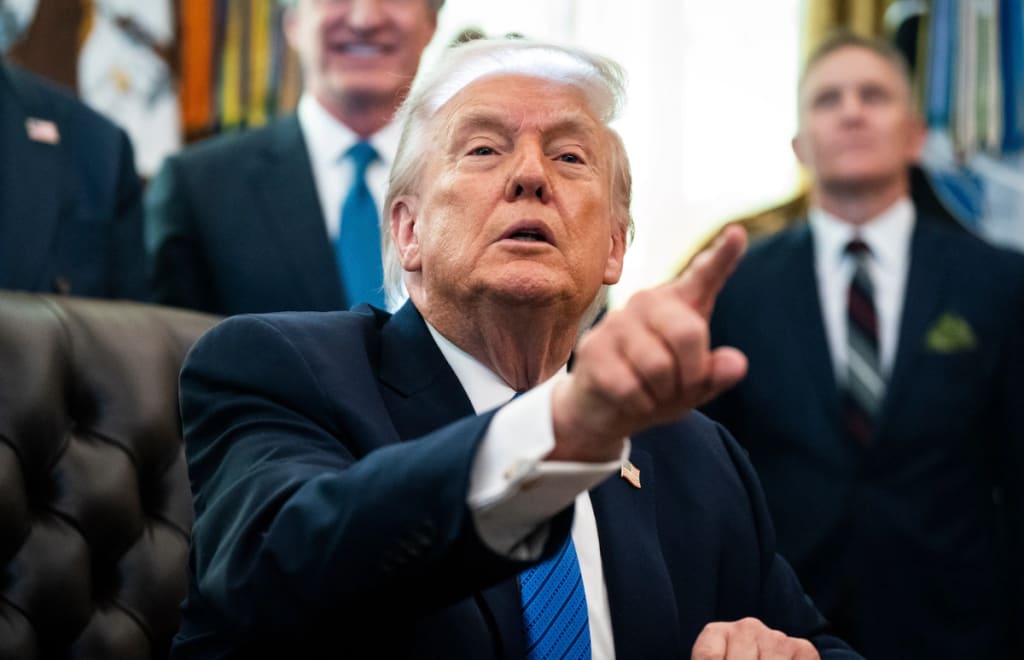
In a move that has sparked intense debate across the political spectrum, former U.S. President Donald Trump has reportedly planned to exclude Democratic governors from a traditionally bipartisan meeting. The decision, if implemented, would mark a significant departure from longstanding norms of cooperation between political parties at the state and federal levels. Critics argue that such a step could deepen political divisions, while supporters believe it reflects a shift toward clearer ideological alignment and accountability.
This development has reignited conversations about the importance of bipartisan collaboration in American politics, particularly at a time when polarization continues to shape public discourse and policymaking.
The Tradition of Bipartisan Governor Meetings
For decades, meetings involving governors from both major political parties have served as a platform for dialogue, policy coordination, and crisis management. These gatherings often transcend partisan lines, focusing on shared challenges such as public health emergencies, infrastructure development, national security, and economic recovery.
Historically, presidents and federal officials have invited governors regardless of party affiliation, recognizing that states play a critical role in implementing federal policies. Such meetings symbolize unity and reinforce the idea that governance is a collective responsibility rather than a partisan battlefield.
Trump’s Reported Plan and Its Rationale
According to reports, Trump’s plan aims to limit participation to Republican governors, effectively sidelining Democratic leaders. While details about the meeting’s agenda remain unclear, the move appears to align with Trump’s broader political strategy of consolidating support within the Republican Party and emphasizing ideological consistency.
Supporters of the plan argue that Democratic governors have often opposed Trump’s policies, particularly on immigration, climate change, and public health measures. They believe that excluding them could streamline discussions and prevent political clashes that might hinder policy implementation.
However, critics view the decision as a symbolic and practical step toward further politicizing governance, potentially undermining cooperation on national issues.
Political Reactions and Public Response
The reaction to Trump’s reported plan has been swift and polarized.
Democratic leaders have condemned the idea, calling it divisive and counterproductive. Many argue that excluding Democratic governors would weaken the federal-state relationship and reduce opportunities for collaboration on pressing issues such as disaster response, education, and healthcare.
Republican supporters, on the other hand, have defended Trump’s approach, framing it as a pragmatic decision to engage with governors who share similar policy priorities. Some conservatives argue that bipartisan meetings often become arenas for political confrontation rather than productive dialogue.
The public response has been equally divided. While some citizens see the move as a reflection of modern political realities, others worry that it could further erode trust in government institutions and deepen partisan divides.
Implications for Federal-State Relations
One of the most significant concerns surrounding this plan is its potential impact on federal-state relations. Governors, regardless of party, play a crucial role in implementing federal policies and managing state-level crises. Excluding Democratic governors could create communication gaps, complicate coordination, and slow down responses to national emergencies.
For example, during the COVID-19 pandemic, bipartisan cooperation between federal and state governments was essential in distributing vaccines, managing lockdowns, and providing economic relief. A breakdown in such collaboration could have serious consequences during future crises.
Moreover, the move could set a precedent for future administrations, normalizing partisan exclusion in governance and weakening the tradition of inclusive leadership.
The Broader Context of Political Polarization
Trump’s reported plan reflects the broader trend of political polarization in the United States. Over the past decade, partisan divisions have intensified, influencing everything from legislative processes to public discourse.
Bipartisan cooperation has become increasingly rare, with both major parties often prioritizing ideological purity over compromise. Trump’s leadership style, characterized by strong partisan rhetoric and a focus on loyalty, has both energized his base and alienated critics.
This incident highlights the ongoing struggle between traditional norms of governance and the evolving dynamics of modern politics.
Legal and Ethical Considerations
While there is no legal requirement to include governors from both parties in meetings, the decision raises ethical questions about fairness and representation. Governors represent millions of citizens, and excluding them based on party affiliation could be seen as disregarding the voices of those constituents.
Ethics experts argue that inclusive governance is a cornerstone of democracy. Even if political disagreements exist, leaders have a responsibility to engage with diverse perspectives to ensure balanced policymaking.
Potential Long-Term Consequences
If Trump’s plan becomes a reality, it could have several long-term consequences:
Increased Partisan Division: Exclusionary practices could deepen mistrust between political parties and their supporters.
Policy Inefficiencies: Lack of bipartisan input may result in policies that fail to address the needs of all states and communities.
Erosion of Democratic Norms: Breaking from bipartisan traditions could weaken the institutional norms that support democratic governance.
Public Cynicism: Citizens may become more skeptical of political institutions, perceiving them as driven by partisan agendas rather than public interest.
Supporters’ Perspective: A Shift Toward Ideological Clarity
Supporters of Trump’s approach argue that bipartisan meetings often produce watered-down policies that satisfy no one. They believe that engaging primarily with like-minded governors could lead to clearer, more decisive policymaking.
From this perspective, political alignment could enhance efficiency, reduce internal conflicts, and strengthen the implementation of a unified policy agenda. Supporters also argue that voters elect leaders based on ideological preferences, and it is reasonable for leaders to work closely with those who share their vision.
Critics’ Perspective: A Threat to Democratic Unity
Critics counter that democracy thrives on dialogue and compromise. Excluding Democratic governors, they argue, undermines the spirit of federalism and collaborative governance.
They warn that such actions could create parallel political systems, where each party governs its own network of states with minimal cooperation. This fragmentation could weaken national unity and hinder responses to nationwide challenges.
Conclusion
Trump’s reported plan to keep Democratic governors out of a traditionally bipartisan meeting has sparked a powerful debate about the future of American governance. While supporters view the move as a step toward ideological clarity and efficient policymaking, critics see it as a dangerous departure from democratic norms and a threat to national unity.
As political polarization continues to shape the United States, the importance of bipartisan cooperation remains a central question. Whether this plan is implemented or not, it serves as a reminder of the fragile balance between political strategy and democratic principles.
In a nation built on the ideals of unity and shared governance, the challenge lies in finding ways to bridge divides rather than deepen them. The outcome of this controversy may not only influence political relationships today but also set the tone for how future leaders approach collaboration and inclusion in American politics.
About the Creator
The Saddest Thing - The Billionaires Who Rule America Aren't Even Enjoying Themselves
This single post says more about our ruling class than a thousand policy papers. The saddest thing about today's system is that the men robbing the rest of us - sabotaging our economic prospects, our pensions, our access to affordable healthcare - are not even happy.
By Scott Christenson🌴6 days ago in The Swamp
Cloudflare Guidance Above Expectations
the digital age, where cyber threats loom large and web performance can make or break a business, Cloudflare has emerged as a game‑changer. What began as a solution for faster load times has evolved into a comprehensive platform for web security, performance optimization, and network reliability. Importantly, Cloudflare’s guidance—its documentation, developer tools, and customer support—regularly exceeds expectations, empowering businesses of all sizes to operate confidently in an increasingly hostile online environment.
By Ayesha Lasharia day ago in The Swamp



Comments
There are no comments for this story
Be the first to respond and start the conversation.