
Trump executive order aims to rename the Department of Defense as the Department of War
Trump’s Pentagon renaming isn’t just a policy—it’s a psychological earthquake shaking the nation and the world.

A Nation in Shock
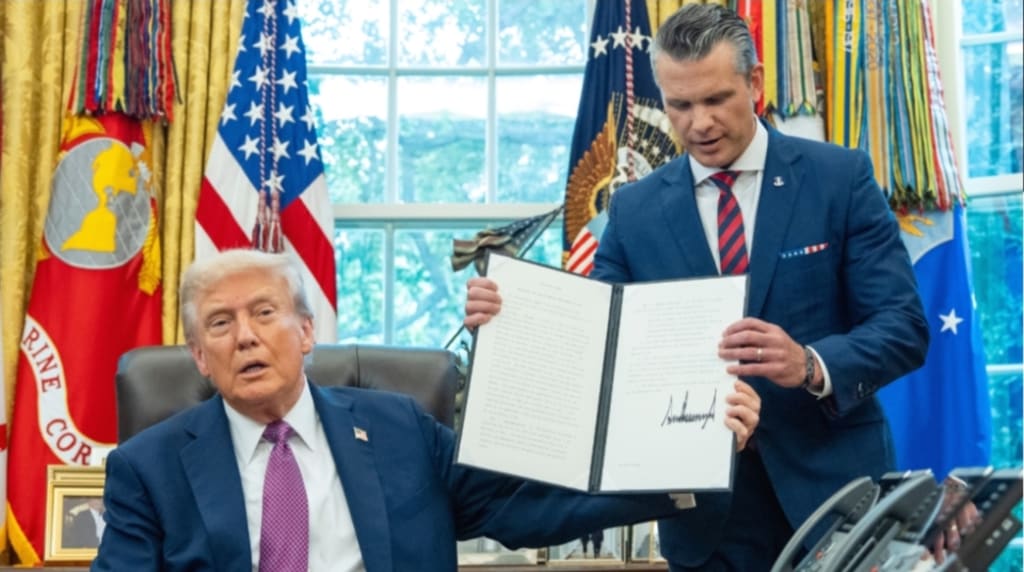
History doesn’t always change with gunfire. Sometimes, it changes with a single word. On September 5, 2025, President Donald Trump stunned the world by rebranding the U.S. Department of Defense into the Department of War.
For some, it was a bold return to honesty and strength. For others, it was a chilling reminder that America is stepping into an era of permanent conflict. What’s certain is that this decision has already begun to redefine how America sees itself—and how the world sees America.
This isn’t just a name change. It’s a psychological earthquake. And it could shape the future of generations to come.
A Step Back in Time
The name “Department of War” is not new. From 1789 until 1947, the United States used that title to oversee its military affairs. But after World War II—when the world was desperate to turn from bloodshed to peace—the department was renamed the Department of Defense.
That single shift in language symbolized America’s transformation: from a nation of raw military power to a global leader promising peace and stability.
Trump’s decision to roll back that change is no coincidence. It’s a deliberate act of symbolism, designed to remind both citizens and rivals that America is not hiding behind soft words anymore.
Why Trump Did It
Supporters argue that Trump’s renaming is about truth. For decades, the U.S. has been involved in conflicts around the world—from Iraq and Afghanistan to Syria and Ukraine. Calling it “defense,” Trump insists, is dishonest.
His message is simple: America is at war, and it’s time to stop pretending otherwise.
But critics see another motive: politics. By reviving the name, Trump has tapped into his base’s desire for boldness, strength, and national pride. It’s a rallying cry to his supporters—and a provocation to his enemies.
The Global Shockwave 🌍
The world’s reaction was swift:
- NATO allies expressed concern that the U.S. might be shifting away from its cooperative defense role into a more aggressive, unilateral stance.
- China and Russia seized on the change to accuse America of imperialism and aggression.
- Middle Eastern nations braced for what they saw as a signal of more U.S. military intervention.
In international politics, words are not just words—they are weapons. And America just rearmed itself with one of the most powerful words of all: war.

A Nation Divided
At home, the renaming has become a lightning rod. Some Americans celebrate it as a return to honesty, power, and patriotism. To them, “war” is not something to hide from—it’s something to win.
Others are alarmed. Parents of soldiers fear what this could mean for their children. Taxpayers worry about endless increases in military spending. Everyday citizens question whether their country is now branding itself not as a defender of freedom, but as a permanent aggressor.
The divide is clear: one side hears courage, the other hears danger.
Symbolism That Shapes Reality
Right now, the change is mostly symbolic. The Pentagon’s signs, websites, and documents are being updated. The Secretary of Defense is now officially called the Secretary of War.
But history shows us that symbols shape actions. By changing the language, Trump may also be changing the mindset of America’s leaders, soldiers, and citizens.
If Congress approves the change into law, it won’t just be a symbolic gesture—it will be a permanent rewriting of America’s identity.
What This Means for You
This isn’t just Washington politics—it impacts your life:
- National security: Does the new posture make America safer, or does it invite more enemies?
- The economy: Will military spending rise even higher, while education, healthcare, and infrastructure get sidelined?
- Future generations: What values will children inherit when their country embraces “war” over “defense”?
Whether you see this as strength or recklessness, it’s impossible to ignore.
The Viral Question 🔥
So we must ask: Is this America’s rebirth of strength—or the beginning of endless war?
Trump’s supporters believe it is the dawn of a fearless new era. Critics fear it is a step toward permanent conflict.
The truth is, America is now at war with itself—caught between two visions of its own future.
The Day America Chose War
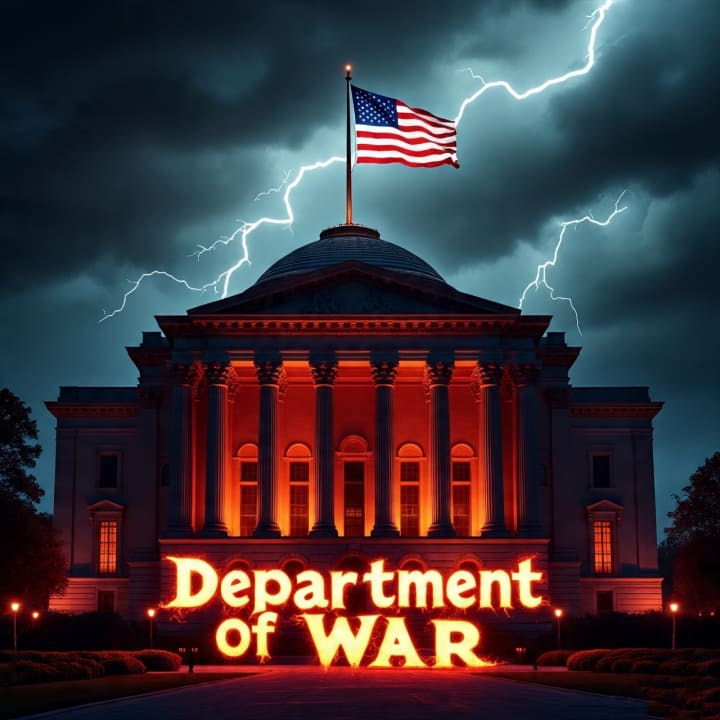
History will remember this moment as a turning point. On September 5, 2025, America stopped calling itself a nation of defense and started calling itself a nation of war.
Maybe it’s courage. Maybe it’s recklessness. But either way, it’s a choice that will echo across the globe—and across generations.
The world will never look at the Pentagon, or America, the same way again.
🚀 Call-to-Action: Don’t Just Watch History—Understand It
If this story moved you, challenged you, or made you think, then you’re exactly the kind of reader I write for.
👉 Subscribe to my Vocal Media profile today.
You’ll get exclusive stories, deep analysis, and powerful insights that go beyond the headlines. Together, we’ll uncover the truth the mainstream won’t tell—and explore what these changes really mean for our lives and our future.
Don’t just watch history happen. Be part of the conversation that shapes it.
About the Creator
The Narrative Hub
Your daily destination for the most compelling stories and insightful articles. At The Narrative Hub, we bring you trending topics, human experiences, and thought-provoking narratives—all in one place.
Keep reading
More stories from The Narrative Hub and writers in The Swamp and other communities.
Afghanistan Earthquake 2025: Kunar Province Faces Deadliest Disaster in Decades
On the night of August 31, 2025, Afghanistan was rocked by a devastating 6.0 magnitude earthquake that struck Kunar Province, specifically the Nurgal District. With its shallow depth of just 8 kilometers, the tremor unleashed unprecedented destruction. Within hours, mud-brick homes collapsed, entire villages were flattened, and terrified families were left scrambling for safety.
By The Narrative Hub5 months ago in The Swamp
Le Pen Hopeful Appeal Will Allow Her to Run for French President
Marine Le Pen, one of France’s most polarizing political figures, is once again at the center of national attention as she places her hopes on an appeal that could determine her political future. The long-time leader of France’s far-right movement believes that a successful legal challenge may clear the path for her to run in the next French presidential election, a race she has contested multiple times but never won. The appeal comes at a critical moment not only for Le Pen personally, but also for the broader direction of French politics, which has been increasingly shaped by debates over immigration, national identity, economic insecurity, and relations with the European Union. The Legal Hurdle Facing Le Pen Le Pen’s presidential ambitions were thrown into uncertainty after a court ruling linked to allegations involving the misuse of European Parliament funds. Prosecutors have argued that party funds were improperly used to pay staff who were allegedly working for her political movement in France rather than for the European Parliament. If upheld, the ruling could result in penalties that would bar her from holding public office for a period of time—effectively ending her chances of contesting the presidency. Le Pen has strongly denied wrongdoing, describing the case as politically motivated and designed to sideline her ahead of a high-stakes election. Her appeal, now moving through the judicial system, is seen by supporters as a final opportunity to keep her presidential bid alive. A Familiar Face in French Politics Marine Le Pen is no stranger to the presidential race. She reached the second round in both the 2017 and 2022 elections, losing each time to Emmanuel Macron. Despite those defeats, her share of the vote has steadily increased, signaling growing support for her nationalist platform. Over the years, Le Pen has worked to soften the image of her party—rebranded from the National Front to the National Rally—seeking to distance it from its extremist roots while broadening its appeal to working-class voters, young people, and those disillusioned with mainstream parties. Her political messaging now focuses heavily on cost-of-living pressures, opposition to immigration, criticism of globalization, and skepticism toward the European Union. Why the Appeal Matters Beyond Le Pen The outcome of Le Pen’s appeal carries implications far beyond one individual. If she is allowed to run, the next presidential election could once again become a referendum on France’s political divide between liberal centrism and nationalist populism. Polls consistently show Le Pen as one of the most popular opposition figures in the country. Her exclusion from the race could reshape the political landscape, leaving a vacuum on the far right and potentially benefiting other populist or conservative contenders. Critics argue that barring her would undermine democratic choice, while supporters of the ruling insist that no politician should be above the law. The case has reignited debates about judicial independence, political accountability, and the fine line between justice and political interference. Supporters Cry Foul, Opponents Demand Accountability Le Pen’s supporters have rallied behind her, framing the legal battle as an attempt by the political establishment to silence opposition voices. They argue that similar cases involving mainstream politicians have not resulted in such severe consequences. On the other hand, her opponents say the case underscores the importance of transparency and ethical standards in public office. They insist that the rule of law must apply equally to all, regardless of popularity or political power. The sharply divided reactions reflect France’s broader political polarization, which has intensified amid economic challenges, social unrest, and shifting global alliances. The Stakes for France’s Future If Le Pen’s appeal succeeds and she enters the presidential race, France could face one of its most consequential elections in decades. Issues such as immigration policy, relations with NATO, support for Ukraine, and France’s role in the European Union would likely dominate the campaign. Le Pen has previously called for stricter border controls, reduced EU influence over national policy, and a more inward-looking economic strategy. While she has softened some positions in recent years, critics remain concerned about how her leadership could reshape France’s democratic institutions and international standing. What Happens Next? The timing of the court’s decision will be crucial. A favorable ruling would allow Le Pen to begin campaigning in earnest, while an unfavorable outcome could force her party to quickly identify an alternative candidate. Regardless of the outcome, the case has already energized her base and ensured that she remains a central figure in public debate. Whether she appears on the ballot or not, Marine Le Pen’s influence over French politics is unlikely to fade anytime soon. Conclusion Marine Le Pen’s hope that an appeal will allow her to run for French president represents a defining moment for both her career and the French political system. At stake are not only her personal ambitions but also broader questions about democracy, justice, and the future direction of France. As the legal process unfolds, the nation—and much of Europe—will be watching closely. The decision could shape the next chapter of French politics and determine whether one of its most controversial figures gets another shot at the country’s highest office.
By Fiaz Ahmed Brohi6 days ago in The Swamp




Comments
There are no comments for this story
Be the first to respond and start the conversation.