
Trump Drops Tariff Threat, Says He Won’t Use Force to Take Greenland
A Diplomatic Reset as Trump Walks Back Tariffs and Rules Out Military Action Over Greenland


In a notable shift in tone and strategy, former U.S. President Donald Trump has stepped back from earlier threats involving Greenland, announcing that he will neither impose new tariffs nor use military force to gain control of the Arctic territory. The statement, made during high-level international discussions, signals a cooling of tensions that had unsettled European allies, global markets, and diplomatic circles.
Greenland, a self-governing territory under the Kingdom of Denmark, has long held strategic importance due to its location in the Arctic and its untapped natural resources. Trump’s renewed interest in the island once again placed it at the center of global debate, reviving memories of his earlier proposal to buy Greenland during his first term. This time, however, the rhetoric escalated more sharply before being dialed back just as quickly.
From Pressure to Pullback
In recent days, Trump had suggested that the United States could consider economic pressure — including tariffs on certain European countries — if opposition to U.S. ambitions in Greenland continued. These remarks triggered swift reactions from European leaders, who rejected any notion that Greenland’s sovereignty was negotiable.
Amid growing backlash, Trump clarified his position, stating unequivocally that he would not use force to take Greenland and that tariff threats were off the table. The reversal came after consultations with NATO leadership and other international stakeholders, suggesting that diplomatic engagement played a role in easing tensions.
This sudden pullback underscores how quickly geopolitical rhetoric can escalate — and de-escalate — in today’s interconnected world.
Why Greenland Matters So Much
Greenland’s significance goes far beyond its icy landscape. The island occupies a critical position in the Arctic, a region increasingly shaped by climate change, emerging shipping routes, and competition for rare earth minerals. These minerals are essential for modern technologies, including renewable energy systems, defense equipment, and consumer electronics.
The United States already maintains a military presence in Greenland, notably through an air base used for missile defense and Arctic surveillance. From Washington’s perspective, deeper involvement in Greenland aligns with broader national security and strategic interests, especially as rival powers expand their footprint in the Arctic.
However, strategic interest does not equate to ownership, a point repeatedly emphasized by Denmark and Greenland’s own leadership.
European and Danish Response
European leaders reacted firmly to Trump’s earlier comments, emphasizing respect for international law, sovereignty, and alliance unity. Denmark reiterated that Greenland is not for sale and that its future will be decided by the people of Greenland themselves.
The episode briefly strained relations within NATO, raising concerns about internal cohesion at a time when global security challenges are already mounting. Trump’s decision to walk back both tariff threats and military rhetoric helped stabilize relations, but it also highlighted lingering differences in how allies approach diplomacy and power.
Market Reaction and Global Implications
Financial markets responded positively to Trump’s announcement. Investors, already wary of escalating trade tensions, welcomed the news that tariffs would not be used as a bargaining tool in the Greenland dispute. Global stock markets showed signs of relief, reflecting reduced fears of a new transatlantic trade conflict.
Beyond markets, the incident served as a reminder of how political statements can have immediate economic consequences. Even the suggestion of tariffs or military action can disrupt investor confidence and diplomatic stability.
A “Framework” Without Details
Trump indicated that discussions had led to a general framework for future cooperation in the Arctic, though specifics remain unclear. While he expressed optimism about reaching an agreement beneficial to U.S. interests, no concrete proposals regarding Greenland’s status were outlined.
This ambiguity leaves room for speculation. Some analysts view the framework as a diplomatic face-saving measure, allowing Trump to step back without appearing to abandon strategic goals entirely. Others see it as a genuine attempt to refocus on collaboration rather than confrontation.
What remains certain is that Denmark and Greenland continue to reject any notion of a transfer of sovereignty.
What Comes Next?
While Trump has ruled out force and tariffs, the broader issue of Arctic geopolitics is far from settled. As melting ice opens new routes and access to resources, competition in the region is likely to intensify. The United States, Europe, and other global powers will need to navigate these challenges carefully to avoid future disputes.
For Greenland, the episode has reinforced its strategic importance — and its desire for autonomy and respect on the global stage. For the United States and its allies, it has highlighted the limits of pressure tactics and the enduring value of diplomacy.
Conclusion
Trump’s decision to drop tariff threats and rule out military force over Greenland marks a significant, if temporary, easing of geopolitical tension. The move reassured allies, calmed markets, and shifted the conversation back toward diplomacy rather than confrontation.
At the same time, the episode underscores how strategic interests in regions like the Arctic can quickly become flashpoints in international politics. As global attention on Greenland continues to grow, future discussions will likely demand a more measured, cooperative approach — one that balances security concerns with respect for sovereignty and international norms.
In the evolving landscape of global diplomacy, the Greenland episode stands as a clear example of how words matter — and how quickly the course of international relations can change.
About the Creator
Asad Ali
I'm Asad Ali, a passionate blogger with 3 years of experience creating engaging and informative content across various niches. I specialize in crafting SEO-friendly articles that drive traffic and deliver value to readers.
What Next for Iran’s Supreme Leader? Navigating Crisis, Protest, and Uncertain Succession
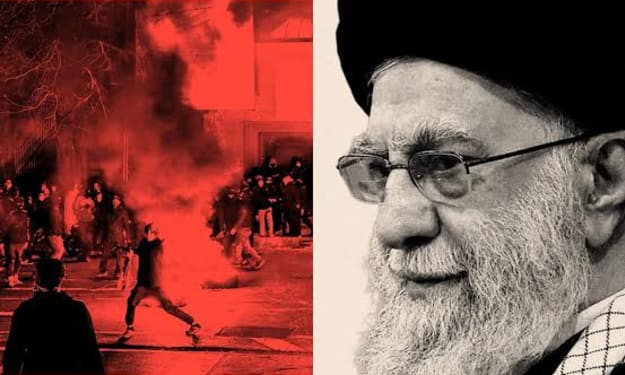
Iran’s Supreme Leader Ayatollah Ali Khamenei stands at a crossroads. As one of the longest-serving heads of state in the Middle East, his authority has shaped Tehran’s domestic and foreign policy for decades. But mounting internal unrest, economic collapse, and growing questions about succession are forcing Iran and the world to confront an urgent and complex question: What comes next for Iran’s Supreme Leader? A Leader Under Pressure At age 86, Ayatollah Khamenei’s grip on power faces unprecedented challenges. Since late 2025, Iran has experienced widespread protests rooted in economic hardship, rising inflation, government corruption, and disillusionment with the clerical ruling system. These demonstrations have quickly evolved from localized unrest into nationwide calls for profound political change, including criticism of the highest religious authority in the land. � rtvonline.com +1 In response, state security forces have launched a brutal crackdown on protesters, employing live fire, mass detentions, and severe communication blackouts meant to stifle information and prevent mobilization. Reports indicate that thousands have been arrested and hundreds killed, underscoring the gravity of the crisis. � Wikipedia Khamenei has doubled down in rhetoric, dismissing protesters as “rioters” and insisting that dissent must be suppressed to preserve national stability. But his hardline stance has deepened public frustration and fueled calls for a regime transformation. � Al Jazeera The Question of Succession Unlike many modern leaders, the position of Supreme Leader in Iran is not hereditary, yet succession remains a critical concern. Constitutional mechanisms vest ultimate authority in the Leader of the Islamic Republic, not the president or parliament, and succession is determined by the Assembly of Experts—a clerical body often aligned with conservative elements of the state. Speculation about what happens after Khamenei has intensified due to his age and the turmoil gripping the nation. Within elite political circles, the debate centers on two paths: the continuation of clerical rule under a new hardline figure, or a potential shift toward a more inclusive or even transitional leadership model. � euronews Notably, Tehran Times and other regime-aligned outlets have dismissed rumors that Khamenei would install one of his sons, such as Mojtaba, as his successor, reinforcing that succession decisions will conform to strict constitutional criteria. � euronews Opposition Voices and Alternative Visions While hardliners remain influential, the streets of Iran tell a different story. Protesters have chanted slogans targeting Khamenei and even calling for the nationalist figure Reza Pahlavi—son of the last shah—to return as a symbol of broader political change. Such slogans reflect the diversity of opposition sentiment, which ranges from secular democratic reform to more radical shifts away from the Islamic Republic. � ایندیپندنت فارسی +1 In exile, Pahlavi has positioned himself as a potential transitional leader, advocating for referendums and democratic governance rather than a return to monarchy. His supporters see him as a unifying figure who could guide Iran through a post-regime transition, although his actual influence within Iran remains debated. � theguardian.com Other opposition groups, including reformers, secularists, and even some nationalist factions, offer varying visions for Iran’s future. Some advocate for constitutional reforms within a republican framework, while others push for more grassroots, decentralized governance. The diversity of these voices illustrates that the future leadership landscape is neither singular nor predictable. � Reddit Regional and Global Implications What happens next in Iran is not just a domestic matter. Tehran’s foreign policy under Khamenei has been defined by its regional network of alliances and proxy relationships—often referred to as the “Axis of Resistance”—which has included armed allies in Lebanon, Iraq, Syria, and Yemen. � Foreign Affairs Forum A leadership transition could have significant implications for these networks and for the broader geopolitical balance in the Middle East. A weakened or transitioning leadership might be less able to project power externally, while a resurgence of consolidated clerical authority could mean continued resistance to Western influence and ongoing tensions with neighbors. International pressure, particularly from the United States and Europe, has evolved alongside these internal struggles. In early 2026, Washington imposed new sanctions on Iranian officials and related economic networks while pausing direct military action. These measures aim to increase pressure on the regime without escalating conflict. � wsj.com Paths Forward: Stability, Reform, or Transformation Several scenarios could unfold in the coming months and years: Regime Consolidation: Hardliners could tighten control, suppressing dissent and maintaining the clerical status quo, possibly under new leadership selected by the Assembly of Experts. Internal Reform: The establishment of limited reforms aimed at appeasing public demands without fundamentally altering the system—an approach that may buy time but risks further unrest. Transitional Leadership: A negotiated shift toward a transitional governing body, potentially influenced by figures like Pahlavi or other reformist leaders, leading to constitutional changes. Widespread Upheaval: Continued protests could intensify, leading to unpredictable outcomes ranging from civil conflict to a more rapid regime collapse. The only certainty is that the future of Iran’s Supreme Leader and the system he represents is being questioned like never before. As the internal crisis deepens, the world watches not just who will succeed Khamenei, but what leadership model will emerge from decades of entrenched authoritarian rule.
By Fiaz Ahmed Brohi6 days ago in The Swamp
The Summer I Was Chosen by a Northern Mockingbird
During the long, suspended days of the pandemic, a wild mockingbird began visiting my driveway and chose me, again and again. What started as a strange encounter became a brief, meaningful connection that I still carry with me.
By Erica Roberts 3 days ago in Petlife


Comments
There are no comments for this story
Be the first to respond and start the conversation.