
Australia's Social Media Age Ban Removes 4.7 Million Teen Accounts in First Month
Landmark enforcement of under-16 restriction sees platforms delete accounts; digital rights and implementation questions emerge.

Introduction
A new Australian law has led to the removal of 4.7 million social media accounts. The accounts belonged to users registered as under the age of 16. This action occurred in the first month of enforcement. The law requires platforms to obtain parental consent for users under 16 or delete their accounts. The scale of the removals highlights the widespread presence of young teenagers on major platforms. It also marks the first major test of a stringent, government-mandated age verification system in a Western democracy.
The Legal Framework
The law is officially titled the Online Safety Act Amendment (Age Verification). It was passed by the Australian Parliament in late 2025. The legislation mandates that social media companies prohibit users under the age of 16 from creating accounts. The only exception is if a parent or guardian provides explicit, verifiable consent. The law assigns the country's eSafety Commissioner with enforcement powers. Companies found in non-compliance face substantial fines. The policy's stated aim is to protect children from online harms such as cyberbullying, inappropriate content, and data exploitation.
The First-Month Data
The eSafety Commissioner released the initial compliance data. The figure of 4.7 million account removals was provided by the social media companies themselves. This number represents accounts deleted or deactivated specifically for age-related non-compliance. It does not include accounts where parental consent was successfully verified. The data indicates a significant portion of Australian social media users were potentially under the regulated age. Major platforms like Meta, TikTok, Snap, and X were all required to participate in the sweep.
Platform Compliance Methods
Social media companies used a multi-step process to comply. First, they identified accounts where the user's stated age was below 16. For these accounts, platforms sent direct notifications demanding age verification or parental consent. The methods for verification varied. Some platforms used automated systems to cross-reference data with official documents. Others required uploads of identification or use of third-party verification services. Parental consent processes often involved a separate authentication step for the adult. Accounts that did not complete verification within a 14-day grace period were deleted.
Public and User Reactions
The reaction from Australian families has been mixed. Some parents have welcomed the law as a necessary tool to help manage their children's online access. They report it sparked important household conversations about digital safety. However, many teenagers have expressed frustration. They describe losing connections with friends, school groups, and online communities. There are widespread anecdotal reports of teenagers attempting to create new accounts with false ages. Other critics argue the law is an overreach that fails to teach responsible digital citizenship.
Digital Rights and Privacy Concerns
Civil liberty and digital rights groups have raised several concerns. The primary issue is privacy. They argue that requiring users to submit government-issued identification to a social media company creates a significant data security risk. They question how this sensitive information will be stored, used, and protected from breaches. Another concern is accessibility, as not all individuals, particularly in remote Indigenous communities, may have easy access to the required identification documents. These groups argue the policy prioritizes restriction over education and empowerment.
The Circumvention Problem
A key challenge is the ease of circumvention. Digital literacy experts note that teenagers can simply enter a false birth year during a new account sign-up. To counter this, the law requires platforms to use "reasonable steps" to detect and prevent false declarations. This has led to the deployment of artificial intelligence tools that analyze user behavior, connections, and posted content to estimate age. However, these tools are imperfect and can raise further privacy issues through pervasive profiling.
Impact on Social Media Platforms
For the platforms, the law has imposed new operational and technical burdens. They have had to develop and implement complex age-assessment systems quickly. The massive account deletion also impacts their reported monthly active users in a key market, which can affect advertising revenue and market valuation. Companies are walking a line between complying with the law and attempting to retain a future user base. Their compliance reports to the eSafety Commissioner will be scrutinized for ongoing adherence.
International Context and Precedent
Australia's approach is among the most aggressive globally. Other regions, like the European Union under its Digital Services Act, focus on offering high privacy and safety settings for minors by default, not an outright ban. Several U.S. states have passed laws requiring parental consent for social media, but these are facing legal challenges. The world is watching the Australian experiment. Its successes and failures will likely influence policy debates in other countries considering similar strict age gates.
The Role of the eSafety Commissioner
The office of the eSafety Commissioner has become significantly more powerful. It now acts as the regulator and auditor for this policy. The commissioner can demand data and compliance reports from companies and initiate penalties. The office has also launched a public education campaign about the new rules. Its next phase will involve proactive testing of the platforms' systems, potentially by creating "underage" test accounts to see if they are blocked.
Unintended Consequences and Early Observations
Some unintended effects are being observed. There are reports of "account migration," where groups of teenagers move to smaller, less-regulated platforms or messaging apps that fall outside the law's strict definitions. This could potentially expose them to different, less-moderated risks. Another observation is that the removed accounts often represented a user's curated social history, the loss of which has caused distress beyond simple inconvenience.
The Path Forward and Legal Challenges
The law is not yet set in stone. Legal challenges are anticipated. A coalition of digital rights advocates is preparing a case, arguing the law violates constitutional rights to anonymous speech and is disproportionately invasive. The government has stated it will defend the policy vigorously. Meanwhile, a formal review of the law's impacts is scheduled for mid-2026. That review will assess its effectiveness in improving child safety online versus its social and privacy costs.
Conclusion
Australia's first-month removal of 4.7 million social media accounts marks a drastic shift in online regulation. It demonstrates a government's willingness to mandate strict digital age barriers, placing the burden of enforcement on private companies. While driven by a goal of protecting minors, the policy raises substantial questions about privacy, efficacy, and digital rights. The coming months will reveal whether this approach successfully creates a safer online environment for young Australians or simply pushes teenage activity into darker, less-visible corners of the internet. The outcome will serve as a critical case study for nations worldwide grappling with the same dilemma.
About the Creator
Saad
I’m Saad. I’m a passionate writer who loves exploring trending news topics, sharing insights, and keeping readers updated on what’s happening around the world.
RWE Secures Contracts for Difference for 6.9 Gigawatts of Offshore Wind Capacity in UK Allocation Round 7 and Agrees a Long-Term Partnership with KKR
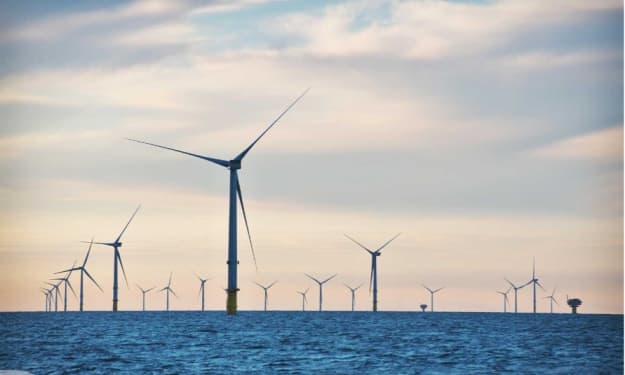
The United Kingdom’s renewable energy sector reached a significant milestone as RWE, one of Europe’s leading renewable energy companies, secured Contracts for Difference (CfDs) for 6.9 gigawatts (GW) of offshore wind capacity in UK Allocation Round 7 (AR7). Alongside this achievement, RWE also announced a long-term strategic partnership with global investment firm KKR, reinforcing confidence in the UK’s offshore wind market. This development highlights the UK’s continued leadership in offshore wind and signals strong investor confidence despite global economic challenges. Understanding the Contracts for Difference (CfD) Scheme The Contracts for Difference scheme is a key mechanism used by the UK government to support low-carbon electricity generation. It guarantees renewable energy developers a fixed price for the electricity they produce, protecting them from market volatility while ensuring consumers benefit from stable energy costs. By securing CfDs in Allocation Round 7, RWE has ensured long-term revenue stability for its offshore wind projects, enabling large-scale investment and timely project delivery. Scale and Impact of the 6.9 Gigawatts Offshore Wind Capacity The 6.9 GW of offshore wind capacity secured by RWE represents one of the largest allocations in the latest funding round. Once operational, these projects are expected to generate enough clean electricity to power millions of UK homes. This capacity will significantly reduce carbon emissions, lower dependence on fossil fuels, and contribute directly to the UK’s target of achieving net-zero emissions by 2050. Contribution to the UK’s Net-Zero and Energy Security Goals Offshore wind is central to the UK’s clean energy strategy, with a national goal of reaching 50 GW of offshore wind capacity by 2030. RWE’s successful bids in Allocation Round 7 make a substantial contribution toward this target. In addition to environmental benefits, these projects strengthen energy security by increasing domestic power generation and reducing exposure to global energy market volatility. Strategic Long-Term Partnership Between RWE and KKR Alongside its success in AR7, RWE announced a long-term partnership with KKR, a global investment firm with a strong track record in infrastructure and energy investments. This partnership combines RWE’s technical expertise in offshore wind development with KKR’s financial strength and investment capabilities, allowing both companies to scale projects efficiently and manage long-term risks. Boosting Investor Confidence in the UK Renewable Market The RWE–KKR collaboration sends a strong message to international investors about the attractiveness of the UK offshore wind sector. Despite challenges such as inflation, rising interest rates, and supply chain constraints, the UK remains a stable and competitive market for renewable energy investment. Such partnerships are crucial in maintaining momentum as global competition for clean energy capital intensifies. Economic Growth and Job Creation Opportunities Large-scale offshore wind projects bring wide-ranging economic benefits. From turbine manufacturing and port infrastructure to maintenance and engineering services, RWE’s projects are expected to support thousands of jobs across the UK. The long-term nature of these developments ensures sustained employment opportunities, particularly in coastal and industrial regions. Challenges Facing Offshore Wind Development While the announcement is largely positive, the offshore wind sector continues to face challenges, including rising construction costs, grid connection delays, and complex regulatory processes. However, the success of Allocation Round 7 demonstrates that with stable policy frameworks and strong private-sector partnerships, these challenges can be effectively managed. A Defining Moment for the UK Energy Transition RWE securing 6.9 GW of offshore wind capacity and entering a long-term partnership with KKR marks a defining moment in the UK’s clean energy journey. This achievement underlines offshore wind’s role as a cornerstone of the UK energy system, driving sustainability, economic growth, and long-term energy resilience.
By Aarif Lashari4 days ago in The Swamp



Comments
There are no comments for this story
Be the first to respond and start the conversation.