
Trump Called Wind Power “Stupid.” Europe Responded With Action.
Five Days Later, Nine Countries Moved Forward With a Massive Offshore Wind Plan
Politics and energy have always been deeply connected. But sometimes, a single comment can highlight just how divided the global conversation has become.
When former U.S. President Donald Trump criticized wind power and suggested that investing in it was foolish, the statement sparked headlines across the world. His remarks reflected long-standing skepticism about renewable energy, particularly wind turbines, which he has frequently criticized over the years.
What happened next was striking.
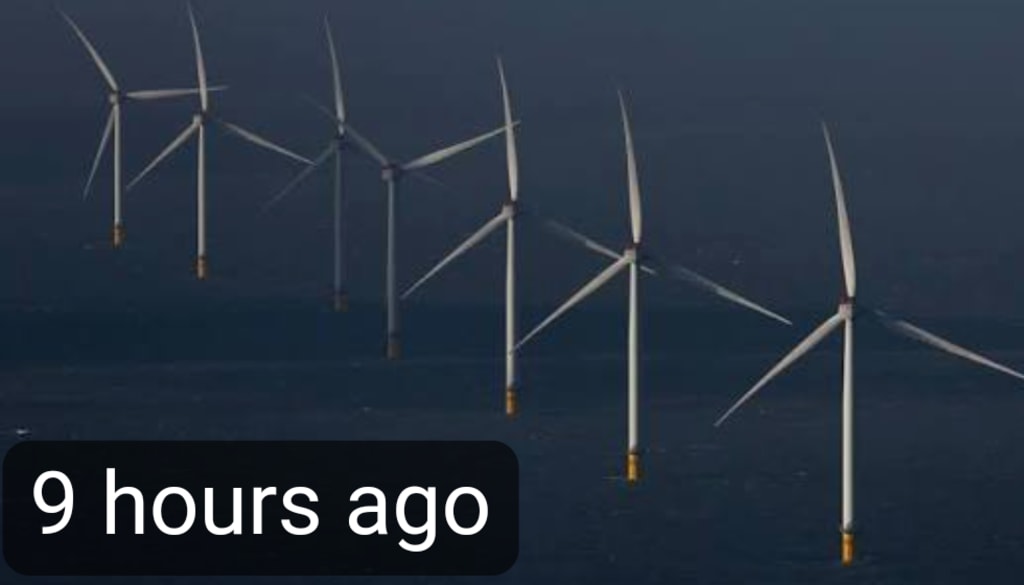
Just five days later, nine European countries reaffirmed their commitment to wind energy by advancing plans for a massive offshore wind development in the North Sea. The contrast could not have been clearer: while one side questioned wind power’s value, the other doubled down on it.
This moment tells a bigger story about the global energy transition — and about how differently nations are approaching the future of power.
The Remark That Sparked Debate
Donald Trump has never been shy about his views on renewable energy. Throughout his political career, he has openly favored fossil fuels, arguing that oil, gas, and coal are more reliable and economically beneficial.
During a public appearance, he again criticized wind energy, describing support for it in dismissive terms. His comments fit into a broader narrative that questions the efficiency, cost, and environmental impact of wind turbines.
Supporters of renewable energy quickly pushed back. Energy analysts noted that wind power is now one of the fastest-growing and most cost-effective sources of electricity worldwide. Technological improvements have significantly increased turbine efficiency, while costs have steadily declined over the past decade.
The debate wasn’t new. But the timing was important — because Europe was already preparing to move ahead with a major renewable energy expansion.
Europe’s North Sea Wind Vision
Five days after Trump’s comments made headlines, nine European nations — including Germany, Denmark, France, and the United Kingdom — moved forward with plans to dramatically expand offshore wind capacity in the North Sea.
Their shared goal? To build one of the world’s largest offshore wind power hubs.
The North Sea has long been considered prime territory for wind farms due to its strong, consistent winds and relatively shallow waters. Over the past decade, offshore wind projects there have steadily increased. Now, European leaders want to scale up even further.
The plan aims to generate enough clean electricity to power tens of millions of homes. It also involves cross-border cooperation, connecting national grids to create a more integrated and resilient energy network.
This wasn’t necessarily a direct response to Trump’s statement — but the timing made a powerful statement of its own.
Why Europe Is Betting Big on Wind
Europe’s commitment to wind energy isn’t just about climate change. It’s about energy security, economic stability, and long-term independence.
1️⃣ Energy Security
In recent years, Europe has experienced major energy shocks. Disruptions in global gas supplies exposed how dependent many countries were on imported fossil fuels. Price spikes affected households and industries alike.
Wind power offers a different model. Once turbines are built, the “fuel” — wind — is free. Offshore wind farms reduce reliance on imported gas and oil, helping stabilize domestic energy markets.
2️⃣ Climate Commitments
European nations have set ambitious carbon-reduction targets. Expanding renewable energy is essential to meeting those goals. Wind power, alongside solar energy, plays a central role in achieving net-zero emissions targets over the coming decades.
3️⃣ Economic Opportunity
The renewable energy sector is also a growing source of jobs and innovation. Offshore wind requires engineers, construction teams, maintenance workers, grid specialists, and researchers. Investing in this sector positions Europe as a global leader in green technology.
A Broader Global Divide
The contrast between Trump’s remarks and Europe’s actions highlights a broader divergence in global energy policy.
In the United States, energy strategy often shifts depending on political leadership. Some administrations strongly support renewable energy development, while others prioritize fossil fuel expansion.
In contrast, many European countries have built cross-party consensus around the long-term importance of clean energy. While political disagreements still exist, renewable infrastructure projects generally enjoy steady support.
This doesn’t mean the transition is simple. Offshore wind farms require significant upfront investment. They can also face local opposition due to concerns about cost, marine ecosystems, or visual impact.
However, supporters argue that the long-term benefits outweigh the challenges.
The Reality of Wind Power Today
Wind energy is no longer experimental. Globally, wind capacity has grown dramatically over the past two decades. Technological advancements have made turbines taller, more efficient, and capable of generating more electricity with fewer units.
Offshore wind, in particular, is seen as a key frontier. Because wind speeds are generally stronger and more consistent at sea, offshore turbines can produce large amounts of power. Floating wind technology is also emerging, allowing installations in deeper waters.
Critics often question reliability — pointing out that wind doesn’t blow constantly. However, modern energy systems combine multiple renewable sources, battery storage, and smart grids to balance supply and demand.
No single energy source is perfect. But wind has become an increasingly important piece of the global energy puzzle.
Symbolism and Strategy
The symbolic power of this moment shouldn’t be underestimated.
On one side, a prominent U.S. political figure questioned the wisdom of investing in wind energy. On the other, a coalition of European nations demonstrated confidence by accelerating major renewable projects.
Energy decisions are about more than electricity. They reflect how countries view their economic future, environmental responsibilities, and geopolitical positioning.
By expanding offshore wind, Europe signals that it sees renewable energy not as a liability, but as a strategic advantage.
Looking Ahead
The global energy transition is far from complete. Fossil fuels still supply a significant share of the world’s energy. At the same time, renewable capacity continues to grow rapidly.
Whether countries follow Europe’s example or align more closely with Trump’s skepticism will depend on political leadership, economic conditions, and public opinion.
One thing is certain: wind power is no longer a fringe idea. It is a central part of the energy conversation.
And five days after a controversial remark, Europe made it clear which direction it intends to move.
About the Creator
The Saddest Thing - The Billionaires Who Rule America Aren't Even Enjoying Themselves
This single post says more about our ruling class than a thousand policy papers. The saddest thing about today's system is that the men robbing the rest of us - sabotaging our economic prospects, our pensions, our access to affordable healthcare - are not even happy.
By Scott Christenson🌴13 days ago in The Swamp
Rubio Says Cuba’s Only Path Forward Is to Open Its Economy
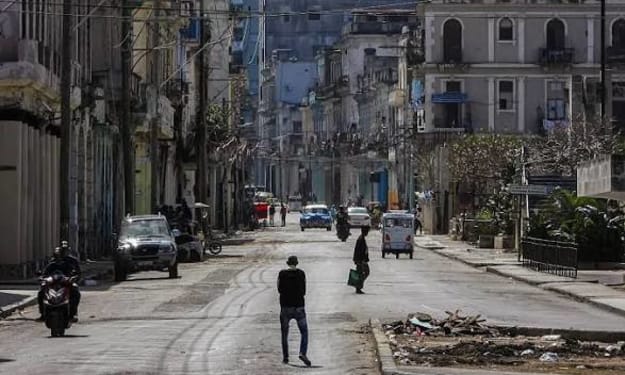
In a stark critique of the Cuban system, U.S. Secretary of State Marco Rubio said Cuba’s “only path forward” out of its deepening economic crisis is a fundamental opening of its tightly controlled economy — a shift he tied to greater freedom for the Cuban people and a possible easing of U.S. pressure. Rubio’s remarks, delivered in an interview on the sidelines of the Munich Security Conference, underscore a hardening Washington stance toward Havana even as the island faces severe shortages and political isolation. Rubio, a Cuban‑American whose family fled Cuba’s revolutionary government decades ago, described the island’s economic model as a historic failure. “The fundamental problem in Cuba is that it has no economy,” he told Bloomberg News, arguing that without substantial reforms, the regime’s insistence on controlling all major sectors guarantees stagnation. He blamed the leadership’s reluctance to cede control even of economic decision‑making, asserting that this unwillingness is at the heart of Cuba’s collapse. “For decades, Havana has maintained a rigid system that suppresses economic freedom, forbids genuine private enterprise, and keeps its citizens dependent on a state apparatus that doesn’t know how to improve everyday life,” Rubio said. “You can’t have a viable country without a functioning economy, and that means giving people freedom — not just political freedom but economic freedom.” Cuba’s Dire Economic Situation Rubio’s comments come amid one of the worst economic crises Cuba has faced in decades. A U.S. decision earlier this year to capture Venezuelan President Nicolás Maduro and disrupt oil shipments from Cuba’s most reliable ally has cut off Havana’s main source of fuel and revenue, leaving the island grappling with prolonged blackouts, fuel shortages and collapses in basic services. As international airlines have suspended flights due to jet fuel scarcity, ordinary Cubans have faced daily hardships. While U.S. sanctions themselves date back to the early 1960s and have long shaped Cuban‑American relations, Rubio’s framing shifts the debate from sanctions alone to questions of structural reform. He argued that even without the embargo, Cuba’s economy would struggle because of the state’s complete dominance of production, investment and trade. “They want to control everything,” Rubio said of the current regime’s leadership. “They don’t want the people of Cuba to control anything.” Economic Opening as the "Only Path Forward" Rubio avoided strict specifics on how the United States might incentivize or enforce such an economic opening, but he hinted that Washington might consider easing some forms of pressure if meaningful reforms are enacted. “Their willingness to begin to make openings in this regard is one potential way forward,” he said, suggesting that if Cuba allowed private initiative or foreign investment, Washington could look at what he described as “constructive engagement.” This proposal aligns with a broader U.S. policy goal of pressing authoritarian regimes through combined economic leverage and conditional incentives. However, Rubio indicated that such a path would have to be carefully calibrated and gradual. “These matters require space and time to be done correctly,” he said when pressed about concrete policy changes. CiberCuba Political Realities and Havana’s Reluctance The Cuban government in Havana has been cautious in its response to U.S. pressure. While Cuban officials have publicly expressed openness to dialogue, they have also reiterated that their political and constitutional systems are not negotiable. A recent foreign ministry statement conveyed a desire for “respectful and reciprocal dialogue” but made no concessions on internal governance. TRT World Iran Rubio’s critics argue that Washington’s approach risks deepening suffering among ordinary Cubans without offering a viable alternative blueprint. Some outside analysts say that lifting sanctions incrementally or allowing humanitarian engagement could alleviate hardship, but Rubio has thus far emphasized structural economic reform as the core requirement before any major relief. Despite the administration’s strong rhetoric, there is no indication that Cuba is ready to undertake the sweeping economic liberalization Rubio describes. Cuban leaders have historically feared that opening the economy risks undermining political control — a fear Rubio says explains their resistance. “They would much rather be in charge of the country than allow it to prosper,” he told reporters, a comment that drew both agreement from anti‑communist policymakers and criticism from those who view it as oversimplified. Mirage News Broader Implications Rubio’s statements reflect a broader debate within U.S. foreign policy over how best to address authoritarian states with entrenched economic models. While sanctions have long been a tool of Washington policy toward Cuba, Rubio’s framing emphasizes internal transformation over external coercion alone. Whether such a strategy can succeed where others have failed remains uncertain, particularly as ordinary Cubans face ongoing hardship. For now, Rubio’s message is clear: without economic liberalization and expanded freedoms for the Cuban people, Havana’s current trajectory will likely continue to produce instability and stagnation. And in his view, opening the economy is the only path forward that offers hope for a more prosperous and free Cuba.
By Fiaz Ahmed 5 days ago in The Swamp



Comments
There are no comments for this story
Be the first to respond and start the conversation.