
Trudeau Faces Political Turmoil Following Freeland's Resignation Over Trump Tariff Dispute
Trudeau's Government Faces Crisis After Freeland's Sudden Resignation
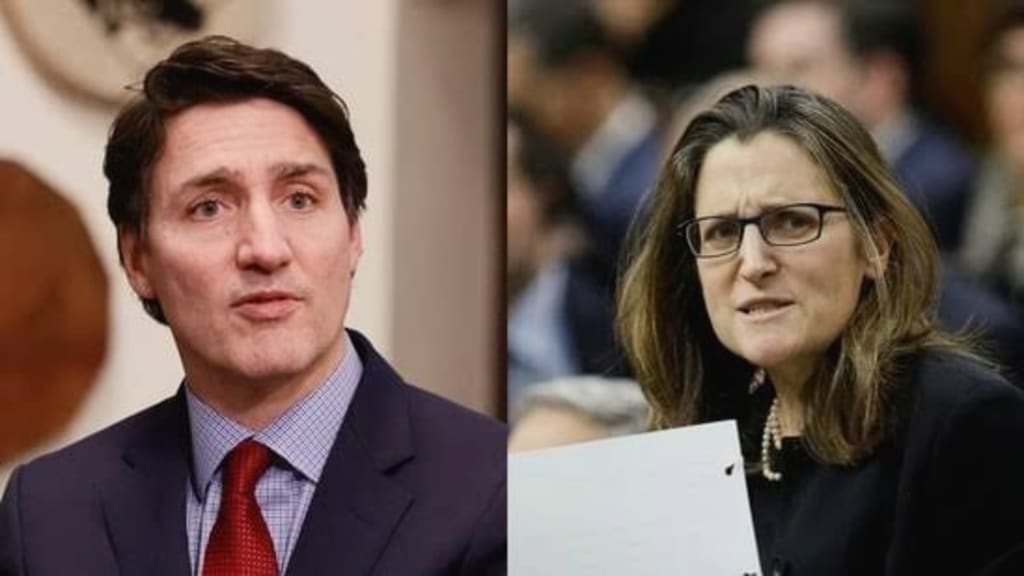
Canadian Prime Minister Justin Trudeau's administration is grappling with significant upheaval following the unexpected resignation of Finance Minister Chrystia Freeland. Freeland, a pivotal figure in Trudeau's cabinet, stepped down due to disagreements over handling the impending economic challenges posed by U.S. President-elect Donald Trump's aggressive trade policies.
Freeland's Departure and Its Implications
Chrystia Freeland, who also served as Deputy Prime Minister, announced her resignation on December 16, 2024, just hours before she was scheduled to deliver a crucial economic update. In her resignation letter, Freeland cited a divergence in vision with Prime Minister Trudeau regarding Canada's future, particularly in response to Trump's threats to impose a 25% tariff on Canadian imports. citeturn0search12.
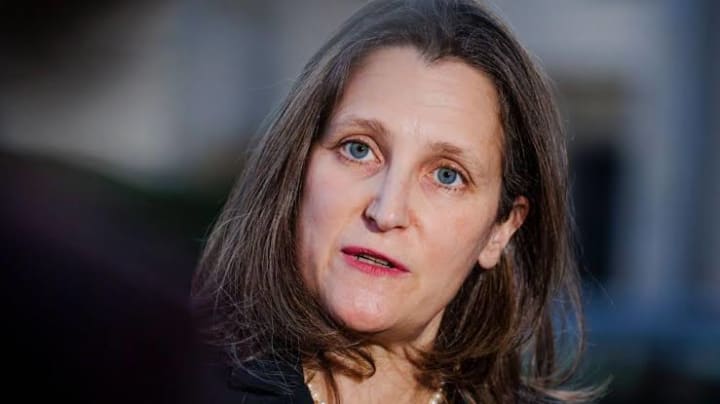
Freeland emphasized the need for prudent fiscal management and collaborative efforts across provinces to counter the 'America First' stance of the incoming U.S. administration. She expressed concerns that Trudeau's approach favored "costly political gimmicks" over addressing the serious threat posed by Trump's economic nationalism. citeturn0search12
Trump's Tariff Threats and Canada's Response
President-elect Donald Trump has pledged to implement a 25% tariff on imports from Canada and Mexico unless both countries take action to curb the flow of drugs and unauthorized migrants into the United States. citeturn0search2 This aggressive trade policy poses a significant threat to the Canadian economy, with economists warning of potentially devastating effects.
In response, the Canadian government announced a proposal of C$1.3 billion ($913.05 million) for border security, aiming to address U.S. concerns and avert the imposition of tariffs. This funding is intended to enhance the capabilities of agencies such as Public Safety Canada and the Canada Border Services Agency. citeturn0news14
Political Repercussions for Trudeau
Freeland's resignation has intensified internal strife within the Liberal Party, with some members calling for Trudeau's resignation. The departure of such a key ally, especially ahead of an election year, raises questions about Trudeau's leadership and the future direction of his administration.
Adding to the political turmoil, the Liberal Party suffered a defeat in the Cloverdale-Langley City by-election in British Columbia, marking their third by-election loss of the year. This string of defeats underscores the challenges facing Trudeau's minority government.
International and Domestic Reactions
Donald Trump responded to Freeland's resignation with characteristic bluntness, criticizing her approach to economic policies and mocking Trudeau by referring to him as the "Governor" of the "Great State of Canada." citeturn0news16 This rhetoric highlights the strained relations between the incoming U.S. administration and the Canadian government.
Domestically, opposition leaders have seized upon the crisis to question Trudeau's leadership. Jagmeet Singh, leader of the New Democratic Party, has called for Trudeau's resignation, further amplifying the pressure on the Prime Minister. citeturn0news17
Future Prospects
In the wake of Freeland's departure, Trudeau appointed Public Safety Minister Dominic LeBlanc as the new Finance Minister. LeBlanc faces the immediate challenge of navigating the economic threats posed by the impending U.S. tariffs and restoring stability within the Liberal Party.
Freeland, meanwhile, has stated her intention to remain a Member of Parliament and run for re-election in Toronto. Her continued presence in Canadian politics suggests that she will remain an influential figure, potentially advocating for a more fiscally conservative approach in response to external economic pressures.
Conclusion
The resignation of Chrystia Freeland marks a pivotal moment in Canadian politics, exposing deep divisions within the Liberal Party and casting uncertainty over Prime Minister Justin Trudeau's leadership. As Canada braces for the economic challenges posed by President-elect Donald Trump's trade policies, the government's ability to present a unified and effective response remains in question.
The coming months will be critical in determining whether Trudeau can navigate this crisis, restore confidence within his party, and effectively safeguard Canada's economic interests in the face of external pressures.
About the Creator
European Troops in Greenland Will Not Impact Trump’s Takeover Plans, White House Says
The White House has stated that the deployment of European troops to Greenland will not affect former President Donald Trump’s plans regarding the strategic Arctic territory, a remark that has intensified diplomatic tensions among NATO allies and reignited debate over Greenland’s geopolitical future. The statement comes as European nations, alongside Denmark, bolster their military presence in Greenland amid growing concerns over sovereignty, security, and global power competition in the Arctic. While the White House emphasized that the troop presence is a matter of collective defense, it also signaled that US strategic interests in Greenland remain unchanged. Greenland’s Strategic Importance Greenland has long been viewed as a critical geopolitical asset due to its location between North America and Europe. The island hosts vital shipping routes, advanced missile early-warning systems, and untapped reserves of rare earth minerals essential for modern technology and defense industries. As climate change accelerates ice melt, Greenland’s accessibility has increased, transforming it into a focal point for military planning and economic competition. These factors have drawn heightened attention from global powers, including the United States, Russia, and China. European Troop Deployment Explained European troops were deployed to Greenland as part of a NATO-backed defensive initiative, aimed at reinforcing Arctic security and supporting Denmark’s sovereignty over the autonomous territory. Officials from Denmark and other European states have described the deployment as precautionary rather than provocative. The troops are tasked with surveillance, infrastructure protection, and joint exercises designed to enhance readiness in harsh Arctic conditions. NATO leaders insist the move reflects alliance unity and is not directed against any single country. White House Downplays Impact Despite the visible show of European military support, the White House stated that the deployment does not interfere with US strategic planning, including Trump’s previously expressed interest in expanding American influence over Greenland. A senior White House official said the United States continues to view Greenland as “vital to hemispheric defense,” adding that troop movements by allies do not alter Washington’s long-term objectives in the Arctic. The comment has sparked criticism from European leaders, who argue that Greenland’s status and defense arrangements should be determined collectively, not unilaterally. Trump’s Greenland Ambitions Revisited Trump first drew global attention in 2019 when he openly discussed the idea of acquiring Greenland, a proposal that was firmly rejected by Denmark and Greenland’s leadership. Since then, his remarks have resurfaced periodically, often framed around security concerns and economic opportunity. Supporters argue that US involvement could bring investment and enhanced defense capabilities to the island. Critics, however, view such ambitions as outdated imperial thinking that undermines international norms and the sovereignty of smaller nations. The White House’s latest remarks suggest that Trump’s interest in Greenland remains strategically driven, regardless of allied military actions. Denmark and Greenland Push Back Danish officials have reiterated that Greenland is not for sale and not subject to external takeover plans. Prime Minister Mette Frederiksen has emphasized that Greenland’s defense is a shared NATO responsibility, grounded in cooperation and mutual respect. Greenland’s autonomous government has also voiced concern over rhetoric suggesting external control. Leaders in Nuuk have stressed the importance of respecting Greenlanders’ right to self-determination and involving local communities in decisions affecting the island’s future. NATO Unity Tested The situation has placed NATO unity under strain. While the alliance maintains that its Arctic posture is defensive and cooperative, differing messages from Washington risk complicating diplomatic relations. Some European officials worry that downplaying the significance of allied troop deployments could weaken trust within NATO. Others fear that unilateral statements about Greenland could embolden rival powers seeking to exploit divisions within the alliance. Nevertheless, NATO leadership continues to frame the Arctic as a region requiring collective vigilance rather than competitive ambition. Global Reactions and Geopolitical Stakes International reactions have been swift. Russia and China, both increasingly active in the Arctic, have criticized NATO’s expanding footprint while closely monitoring US statements about Greenland. Analysts warn that conflicting narratives among Western allies could create openings for rival powers to advance their interests in the region. The Arctic, once considered a zone of cooperation, is increasingly viewed as a potential arena for great-power rivalry. Implications for Arctic Governance The controversy underscores broader questions about Arctic governance, sovereignty, and the future of international cooperation. As melting ice opens new trade routes and resource opportunities, competition is likely to intensify. Experts argue that maintaining stability will require clear communication among allies, respect for international law, and meaningful engagement with indigenous and local populations. Any perception of unilateral ambition risks destabilizing a fragile geopolitical balance. What Comes Next While European troops remain stationed in Greenland for the foreseeable future, diplomatic efforts are expected to continue behind the scenes. Denmark, Greenland, and NATO partners are likely to seek assurances that allied unity remains intact. Meanwhile, US officials insist that strategic discussions about Greenland are ongoing but emphasize that no immediate changes are planned. Conclusion: A Delicate Arctic Balance The White House’s assertion that European troops in Greenland will not impact Trump’s takeover plans highlights the complex and sensitive nature of Arctic geopolitics. As military presence increases and strategic interests converge, Greenland finds itself at the center of a growing international debate. Whether cooperation or competition will define the Arctic’s future depends on how global powers manage their ambitions. For now, Greenland remains a symbol of both opportunity and tension in an increasingly contested region.
By Aarif Lashari3 days ago in The Swamp


Comments
There are no comments for this story
Be the first to respond and start the conversation.