
‘Trauma Does Not Define Us’: Living With Loss in Wartime Ukraine
Stories of survival and strength from families affected by war Civilians rebuild their lives while carrying the weight of loss Inside the emotional battle faced by ordinary Ukrainians From grief to courage: life beyond the front lines Children, families, and elders cope with trauma together Mental health and humanity in a nation at war Finding meaning and connection in the shadow of conflict

In a small apartment block on the outskirts of Kyiv, the walls still bear the marks of shelling from months earlier. Windows have been replaced with plastic sheets, and families gather around portable heaters to survive another cold evening. For many Ukrainians, daily life continues in the shadow of war, shaped by grief, resilience, and an unbreakable sense of identity.
“Trauma does not define us,” says Olena, a schoolteacher who lost her husband in fighting near the eastern front. “It is part of our story, but it is not who we are.”
Across Ukraine, millions have experienced loss—of loved ones, homes, and certainty about the future. Yet communities continue to rebuild, refusing to let devastation erase their humanity.
A Nation Marked by Grief
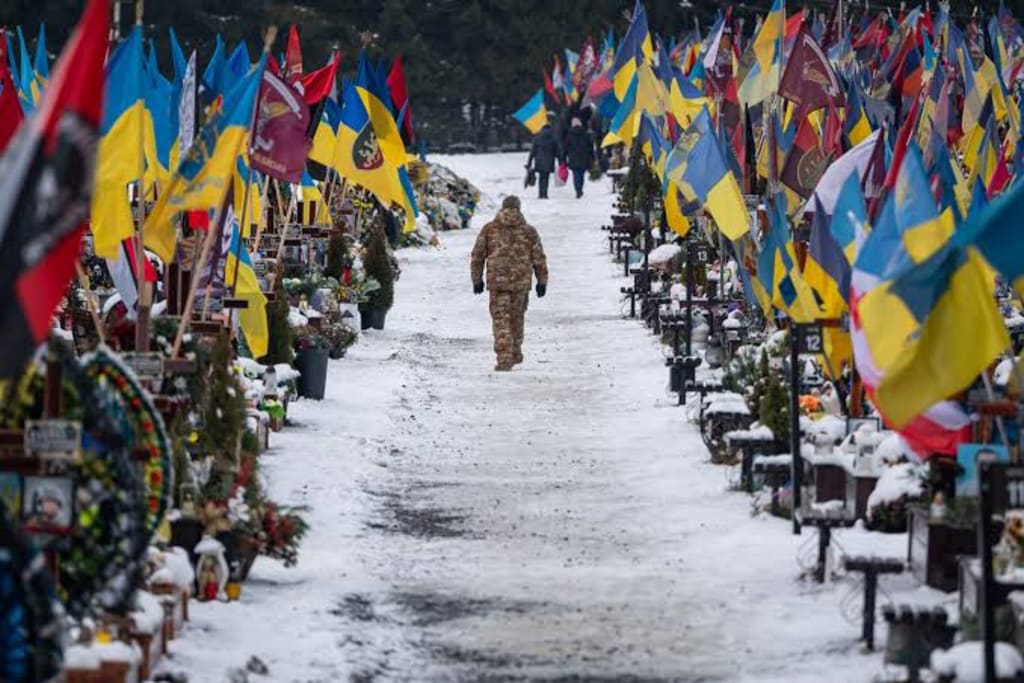
Since the conflict escalated, entire towns have been emptied, and countless families displaced. Cemeteries have expanded rapidly, while makeshift memorials line city streets. Photographs of fallen soldiers and civilians hang from lampposts, reminding passersby of the cost of survival.
For many Ukrainians, grief is not a single moment but an ongoing reality. Psychologists report rising levels of anxiety, depression, and post-traumatic stress among adults and children alike.
“Children draw pictures of tanks instead of flowers,” says Kateryna, a counselor working with displaced families in western Ukraine. “But they still laugh, still play. That contrast is heartbreaking and powerful.”
Finding Strength in Community
In villages and cities alike, local networks have become lifelines. Churches, schools, and volunteer groups distribute food, clothing, and emotional support. These spaces have evolved into centers of healing as much as survival.
Every week, Olena attends a support group organized by neighborhood volunteers. There, she sits with others who have lost family members. They share stories, tears, and small victories—such as returning to work or helping children feel safe again.
“We talk about memories, not just pain,” she explains. “We remind each other that life continues.”
Such gatherings are common across Ukraine, reflecting a culture of collective endurance. Sociologists note that this sense of shared suffering has strengthened social bonds rather than weakened them.
Children Growing Up Too Fast
For Ukraine’s youngest generation, war has reshaped childhood. Schools alternate between in-person classes and underground shelters during air raid alerts. Many students attend lessons from refugee centers or foreign countries.
Ten-year-old Danylo now dreams of becoming a doctor. He says he wants to “help people who are hurt like my father was.” His mother admits she worries about the emotional burden her son carries.
“He understands death in a way no child should,” she says. “But he also understands courage.”
Teachers have adjusted lessons to include emotional expression and storytelling. Art and music therapy programs have expanded, giving children tools to process fear and loss.
The Silent Struggle of the Elderly
While much attention focuses on soldiers and families with children, elderly Ukrainians face unique challenges. Many refused to leave their homes, even when front lines moved closer.
“My husband is buried here,” says Mykola, a retired engineer in a partially destroyed village. “This is where I belong.”
For older residents, displacement can feel like losing the last link to a lifetime of memories. Volunteers deliver food and medicine to those who remain, checking on them daily.
“These people survived previous wars and crises,” says a humanitarian worker. “Their resilience is extraordinary, but they still need care and recognition.”
Mental Health in Wartime
Ukraine’s healthcare system has struggled to meet the growing need for mental health services. International organizations and local NGOs have stepped in, training counselors and providing trauma support programs.
Online therapy platforms have emerged for those unable to travel. Mobile teams visit rural areas, offering psychological first aid and referrals.
“Trauma doesn’t disappear when the bombs stop,” explains a psychiatrist in Lviv. “Healing is a long process. But acknowledging pain is the first step.”
The government has also begun integrating mental health education into schools and public campaigns, encouraging citizens to seek help without shame.
Identity Beyond Suffering
Despite hardship, Ukrainians emphasize that their lives are more than war stories. Cultural events, poetry readings, and concerts continue—even in shelters. These acts of normalcy have become symbols of resistance.
In Kharkiv, musicians recently performed in a metro station turned bomb shelter. The audience included soldiers, children, and elderly residents. For one hour, the sound of music replaced the echo of sirens.
“Art reminds us we are alive,” said one violinist. “Not just surviving, but living.”
National holidays are marked with quiet ceremonies rather than large parades, honoring those lost while celebrating what remains.
Looking Toward the Future
Many Ukrainians speak cautiously about peace, uncertain when it will come but determined to be ready for it. Rebuilding plans are already underway, focusing not only on infrastructure but also on emotional recovery.
Universities are training more psychologists. Community centers are preparing long-term counseling programs. Teachers are learning how to address trauma in classrooms.
“We will rebuild our cities,” Olena says. “But we must also rebuild hearts.”
Conclusion
Living with loss has become a shared experience in wartime Ukraine. Yet amid destruction and sorrow, a powerful message emerges: trauma does not define the nation.
Through community support, cultural expression, and an unwavering belief in tomorrow, Ukrainians continue to shape their identity beyond suffering. Their resilience is not rooted in denial of pain but in the determination to honor life in the face of it.
As one survivor put it, standing beside a memorial filled with flowers and photographs, “We remember the dead. But we live for the living.”
About the Creator
Fiaz Ahmed
I am Fiaz Ahmed. I am a passionate writer. I love covering trending topics and breaking news. With a sharp eye for what’s happening around the world, and crafts timely and engaging stories that keep readers informed and updated.
Keep reading
More stories from Fiaz Ahmed and writers in The Swamp and other communities.
Massive Multi-City Attacks by Baloch Fighters in Pakistan Raise Security Concerns
A wave of coordinated attacks attributed to Baloch insurgent groups struck multiple cities across Pakistan, raising serious concerns about the country’s internal security and the growing intensity of separatist violence in the southwestern province of Balochistan. Security officials confirmed that several police stations, government buildings, and infrastructure sites were targeted in what appeared to be a well-planned operation carried out over a short period of time. The attacks occurred in at least three major locations, including Quetta and nearby districts, and resulted in casualties among security personnel and civilians. Authorities imposed emergency measures and launched large-scale security operations to restore order and prevent further violence. Coordinated Nature of the Assaults According to officials, the attacks were carried out almost simultaneously, suggesting a high level of coordination and intelligence gathering by the militant groups involved. Armed fighters reportedly used small arms and explosives to target checkpoints and administrative offices. Security sources said the attackers aimed to demonstrate their operational strength and send a political message regarding long-standing grievances in Balochistan. “This was not a random act of violence,” said a senior police officer. “It was carefully planned to create fear and disrupt government control in several areas at once.” Several roads were temporarily closed, and residents were advised to remain indoors as security forces conducted search operations. Background of the Conflict Baloch insurgent groups have waged a low-intensity rebellion for decades, demanding greater autonomy and a larger share of revenues from natural resources such as gas, minerals, and ports. The province of Balochistan is rich in resources but remains Pakistan’s poorest and least developed region. Militant organizations accuse the central government of exploiting local resources without fairly compensating the population. The government denies these claims and says it has invested heavily in infrastructure and development projects. The conflict has intensified in recent years with attacks on Chinese-backed projects linked to the China-Pakistan Economic Corridor (CPEC), which militants view as symbols of foreign exploitation. Impact on Civilians Civilians were caught in the middle of the violence, with reports of injuries and property damage in several neighborhoods. Schools and businesses closed temporarily as fear spread through affected areas. Hospitals were placed on high alert to treat the wounded, while emergency services struggled to reach some locations due to blocked roads and ongoing clashes. “We heard explosions and gunfire for hours,” said a resident of Quetta. “People were terrified and stayed inside their homes.” Human rights groups expressed concern about the humanitarian impact of the violence and urged all sides to protect civilian lives. Government and Military Response The Pakistani government condemned the attacks and vowed to bring those responsible to justice. Interior Ministry officials announced that counterterrorism operations had been launched and that several suspects had been detained. The military also increased patrols and surveillance in sensitive areas. Checkpoints were reinforced, and intelligence agencies were placed on high alert for potential follow-up attacks. Prime Ministerial officials described the violence as an attempt to destabilize the country and disrupt development efforts. “These attacks will not weaken the state,” a government spokesperson said. “Our forces are fully capable of responding to this threat.” Regional and International Implications The renewed violence has raised concerns among neighboring countries and foreign investors, particularly China, which has major infrastructure and port projects in Balochistan. Security analysts warn that instability could affect regional trade routes and economic cooperation. China has previously called for stronger protection of its workers and investments after past attacks on Chinese engineers and facilities. Diplomatic sources said Pakistan has reassured international partners that security would be tightened and that projects would continue as planned. Political Reactions Opposition leaders criticized the government’s handling of security in Balochistan, arguing that military action alone cannot solve a political problem. “There must be dialogue and meaningful development,” said one opposition lawmaker. “Force without reform will only deepen resentment.” Some Baloch political figures also called for renewed talks and confidence-building measures between Islamabad and local communities. Analysts’ View Security experts say the attacks reflect the evolving tactics of militant groups and their ability to strike multiple targets at once. “This signals a shift toward more coordinated and symbolic operations,” said a regional security analyst. “It’s designed to gain attention and show resilience.” Analysts also warn that unless underlying political and economic grievances are addressed, violence is likely to continue. What Comes Next Authorities remain on high alert as investigations continue. Security has been tightened at airports, government buildings, and transport hubs across the region. The government has promised compensation for victims and announced a review of intelligence failures that may have allowed the attacks to occur. While the immediate threat appears to be contained, the situation highlights the fragile security environment in Balochistan and the broader challenges Pakistan faces in balancing counterterrorism efforts with political reconciliation. Conclusion The multi-city attacks by Baloch fighters mark one of the most serious security incidents in recent months, underscoring the persistent instability in Pakistan’s southwest. As the nation mourns the victims and security forces pursue the perpetrators, the incident has reignited debate over how to resolve a conflict rooted in decades of mistrust and inequality. Whether through stronger security measures or renewed political dialogue, the events serve as a reminder that lasting peace in Balochistan will require more than military responses—it will demand inclusive development, justice, and sustained engagement with local communities.
By Fiaz Ahmed about 4 hours ago in The Swamp
Sahibzada Farhan: A Promising Talent in Pakistan's Cricketing World
Sahibzada Farhan, the name that is making waves in the world of Pakistani cricket, has emerged as one of the most promising young talents of the game. Known for his explosive batting and sharp fielding skills, Farhan has carved a niche for himself in both domestic and international cricket. This article takes a closer look at Sahibzada Farhan’s career, his rise to prominence, and the role he is playing in shaping the future of Pakistan's cricket.
By Ayesha Lashari3 days ago in The Swamp



Comments
There are no comments for this story
Be the first to respond and start the conversation.