
New York’s Self-Driving Future Faces a Political Divide Over Waymo
As New York considers welcoming Waymo’s autonomous vehicles, a growing clash between Governor Kathy Hochul and progressive lawmakers reveals deeper concerns about safety, jobs, and corporate power.


A Turning Point for Autonomous Vehicles in New York
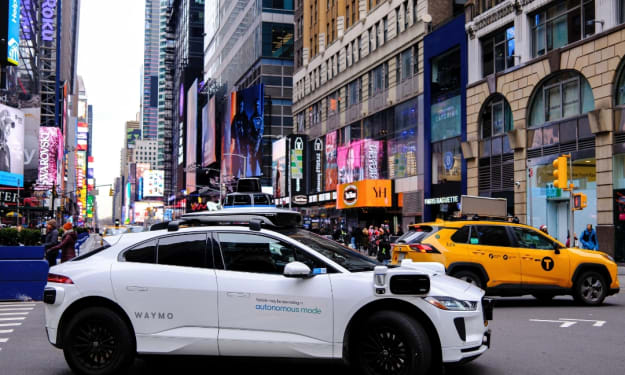
New York may soon face a defining decision about the future of transportation. At the center of the debate is Waymo, the autonomous vehicle company owned by Alphabet, and whether its self-driving technology should be allowed to operate in the nation’s most complex urban environment.
Governor Kathy Hochul has signaled openness to exploring autonomous vehicle programs, framing the issue as one of innovation, economic competitiveness, and modernization. However, resistance from progressive lawmakers—most notably Zohran Mamdani—suggests that Waymo’s path into New York will not be smooth.
The disagreement reflects broader national tensions around emerging technologies, corporate influence, and public accountability.
Why Waymo Wants New York
Waymo has already launched autonomous ride-hailing services in cities like Phoenix, San Francisco, and Los Angeles. Expanding into New York would represent a major milestone, proving that its technology can handle dense traffic, aggressive driving patterns, pedestrians, cyclists, and unpredictable weather.
Supporters argue that autonomous vehicles could eventually reduce crashes caused by human error, improve accessibility for people with disabilities, and offer long-term environmental benefits through optimized driving.
For New York, allowing Waymo to operate could also mean attracting tech investment, high-skill jobs, and infrastructure development—a key priority for Hochul’s administration.
Hochul’s Innovation-First Approach
Governor Hochul has positioned herself as a pragmatic leader focused on keeping New York economically competitive. With other states moving quickly to accommodate autonomous vehicle testing, Hochul appears reluctant to let New York fall behind.
Her administration has not proposed unrestricted access for Waymo but has shown interest in regulated pilot programs, which would allow the state to evaluate performance while maintaining oversight.
From this perspective, cautious experimentation—not outright rejection—is seen as the responsible path forward.
Mamdani and the Progressive Resistance
On the other side of the debate stands Zohran Mamdani, a vocal progressive lawmaker who has consistently challenged corporate expansion into public services without strict safeguards.
Mamdani’s concerns center on worker displacement, public safety, and democratic control. He argues that autonomous vehicle companies threaten jobs in transportation sectors such as taxi services, delivery, and public transit—many of which are unionized.
Progressive critics also warn that allowing Waymo onto New York streets could turn public infrastructure into a testing ground for private corporations, without sufficient transparency or community consent.
Safety and Accountability Concerns
Safety remains one of the most divisive issues in the debate. Autonomous vehicle companies often cite data showing reduced accident rates, but critics counter that real-world conditions in New York are far more challenging than controlled test environments.
Dense foot traffic, double-parked vehicles, emergency responders, construction zones, and extreme weather all raise questions about whether self-driving technology is ready for New York City streets.
Opponents argue that when accidents happen, accountability becomes murky. Questions about liability—whether it lies with the company, the software, or regulators—remain unresolved.
Labor and Economic Impact
Beyond safety, labor concerns are central to the opposition. Transportation jobs support thousands of families across New York, particularly in immigrant and working-class communities.
Progressive lawmakers fear that widespread adoption of autonomous vehicles could erode job security and weaken labor protections unless strong safeguards are put in place.
Supporters of Waymo counter that new technology creates new jobs, but critics argue that these jobs often require specialized skills and may not benefit displaced workers.
Regulatory Challenges Ahead
New York currently has strict autonomous vehicle regulations, requiring human oversight and extensive approvals. Any move to allow Waymo would require legislative changes and coordination between state and city governments.
This creates a natural bottleneck where political disagreement can slow progress. Hochul may favor incremental reform, while Mamdani and allies push for stronger conditions—or outright rejection.
The outcome will likely depend on public opinion, safety data from other cities, and whether compromises can be reached around labor protections and transparency.
What the Debate Reveals About the Future
The clash over Waymo is about more than cars—it reflects competing visions of progress. One side sees innovation as essential to economic survival; the other sees unchecked technology as a threat to equity and democracy.
As cities across the country confront similar questions, New York’s decision could set a precedent. Whether Waymo is welcomed, restricted, or blocked entirely will signal how one of the world’s most influential cities balances technology, power, and public trust.
Conclusion
New York’s debate over Waymo exposes a deep political divide over how emerging technologies should be integrated into public life. Governor Kathy Hochul’s openness contrasts sharply with Zohran Mamdani’s skepticism, highlighting unresolved questions about safety, labor, and corporate influence.
As autonomous vehicles continue to advance, New York’s response will shape not only its transportation future, but also its stance on who controls innovation—and who pays the price for it.
About the Creator
Asad Ali
I'm Asad Ali, a passionate blogger with 3 years of experience creating engaging and informative content across various niches. I specialize in crafting SEO-friendly articles that drive traffic and deliver value to readers.
‘Act of Great Stupidity’: Trump Launches Another Tirade Against a NATO Ally — This Time It’s the UK
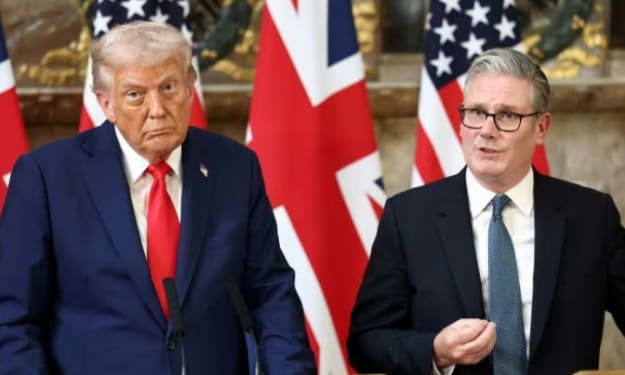
Former U.S. President Donald Trump has once again stirred controversy on the international stage, this time directing his ire toward one of America’s closest allies: the United Kingdom. In a recent public tirade, Trump reportedly described a UK policy decision as an “act of great stupidity,” marking yet another episode in his long-running pattern of criticizing NATO allies. The remarks have sparked backlash in both Washington and London, while reigniting debate about Trump’s approach to diplomacy and alliances. A Familiar Pattern of Criticism Trump’s criticism of NATO members is hardly new. During his presidency from 2017 to 2021, he repeatedly accused alliance members of failing to meet defense spending commitments and portrayed the United States as unfairly burdened by the cost of collective security. Germany, France, and Canada were frequent targets. The UK, however, largely escaped Trump’s harshest rhetoric during those years, often being described by him as a reliable partner. That dynamic now appears to have shifted. In his latest comments, Trump took aim at a UK government decision related to defense and foreign policy—framing it as reckless and harmful to Western interests. While Trump did not shy away from dramatic language, critics argue that his remarks lacked nuance and ignored the complex political and security considerations facing Britain. Why the UK Became a Target Analysts suggest Trump’s criticism of the UK may be rooted in broader frustrations with NATO and the post–World War II alliance system. Trump has long argued that alliances should be transactional, measured primarily by financial contributions rather than shared values or long-term strategic stability. The UK’s strong alignment with NATO and its continued support for multilateral cooperation stand in contrast to Trump’s “America First” worldview. By singling out Britain, Trump may be attempting to reinforce his message to U.S. voters that traditional alliances are outdated or mismanaged—a theme that resonates with parts of his political base. Reactions from Britain and Beyond British officials have responded cautiously, avoiding direct escalation while reaffirming the strength of the U.S.–UK relationship. Diplomats emphasized that the alliance between the two countries is built on decades of cooperation, shared intelligence, and mutual defense commitments that extend beyond any single political figure. Political commentators in the UK were less restrained. Several lawmakers and analysts criticized Trump’s remarks as uninformed and unnecessarily provocative, arguing that they undermine unity at a time when NATO faces significant challenges, including ongoing tensions with Russia and global security instability. Across Europe, Trump’s comments have revived concerns about the future of NATO should he return to power. Many leaders remember the uncertainty of his first term, when he openly questioned the alliance’s relevance and reportedly considered withdrawing the U.S. altogether. Implications for NATO Unity Trump’s renewed attacks come at a sensitive moment for NATO. The alliance has worked to present a united front amid geopolitical crises, and internal divisions—especially involving the United States—could weaken its deterrence capabilities. Experts warn that rhetoric like Trump’s, even when delivered outside of office, can have real consequences. It may embolden adversaries, sow doubt among allies, and complicate diplomatic efforts. For countries like the UK, which rely heavily on transatlantic cooperation, such uncertainty is deeply unsettling. A Political Strategy or Personal Grievance? Some observers view Trump’s comments less as a policy critique and more as a political strategy. As he remains a dominant figure in U.S. politics, his statements often serve dual purposes: shaping foreign policy narratives and energizing domestic supporters. By attacking a NATO ally, Trump reinforces his image as a leader willing to defy convention and challenge established norms. Supporters praise this as honesty and strength, while critics see it as reckless and damaging to global stability. Conclusion Trump’s description of a UK decision as an “act of great stupidity” is more than just another headline-grabbing insult—it reflects a deeper divide over the role of alliances in a rapidly changing world. While the U.S.–UK relationship remains strong at an institutional level, repeated attacks from influential political figures risk eroding trust and cooperation. As global security challenges continue to mount, the question remains whether future leaders will prioritize unity and diplomacy or embrace confrontation—even with long-standing allies. For now, Trump’s latest tirade serves as a reminder that the debate over NATO, and America’s place within it, is far from over.
By Aqib Hussain7 days ago in The Swamp
Siri Set to Become Apple’s First AI Chatbot in Late 2026
Apple has been at the forefront of technology and innovation for years, and now the tech giant is preparing to take its most iconic digital assistant, Siri, to the next level. In late 2026, Siri is set to become Apple's first AI chatbot, evolving from its traditional role as a voice assistant into a full-fledged conversational agent powered by advanced artificial intelligence (AI) and machine learning (ML) technologies. This move is poised to significantly transform how users interact with their Apple devices, as well as how they engage with AI chatbots in general.
By Muhammad Hassan5 days ago in The Swamp


Comments
There are no comments for this story
Be the first to respond and start the conversation.