
Massive Multi-City Attacks by Baloch Fighters in Pakistan Raise Security Concerns
Wave of violence sparks nationwide security alert Government launches major counterterrorism operations after attacks Civilians caught in crossfire as tensions escalate Renewed insurgency raises fears over regional stability Calls grow for dialogue alongside military action

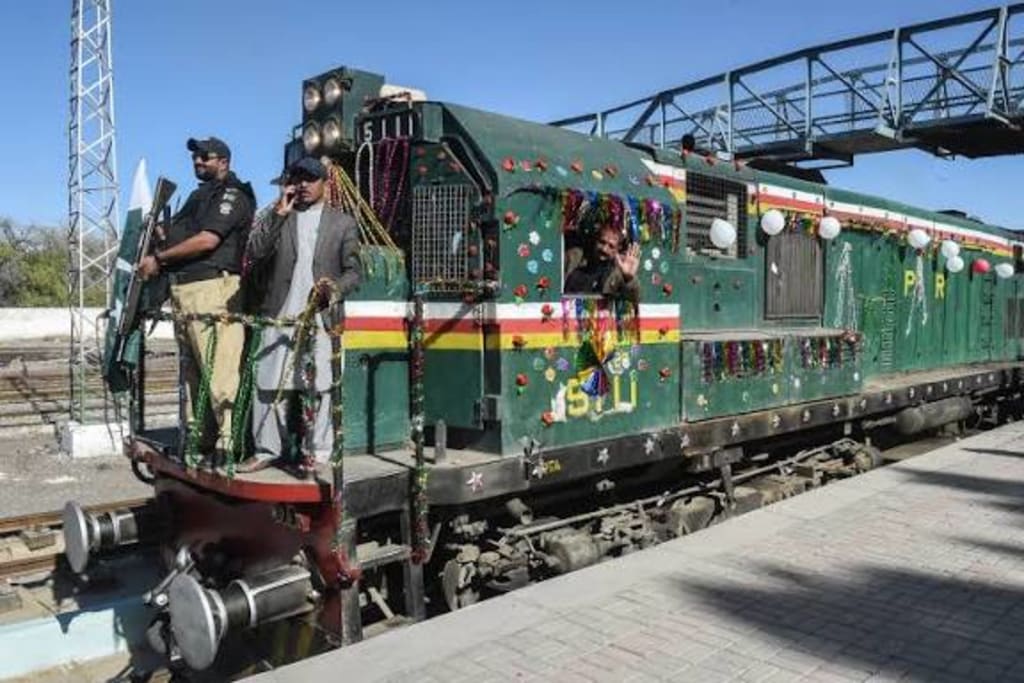
A wave of coordinated attacks attributed to Baloch insurgent groups struck multiple cities across Pakistan, raising serious concerns about the country’s internal security and the growing intensity of separatist violence in the southwestern province of Balochistan. Security officials confirmed that several police stations, government buildings, and infrastructure sites were targeted in what appeared to be a well-planned operation carried out over a short period of time.
The attacks occurred in at least three major locations, including Quetta and nearby districts, and resulted in casualties among security personnel and civilians. Authorities imposed emergency measures and launched large-scale security operations to restore order and prevent further violence.
Coordinated Nature of the Assaults
According to officials, the attacks were carried out almost simultaneously, suggesting a high level of coordination and intelligence gathering by the militant groups involved. Armed fighters reportedly used small arms and explosives to target checkpoints and administrative offices.
Security sources said the attackers aimed to demonstrate their operational strength and send a political message regarding long-standing grievances in Balochistan.
“This was not a random act of violence,” said a senior police officer. “It was carefully planned to create fear and disrupt government control in several areas at once.”
Several roads were temporarily closed, and residents were advised to remain indoors as security forces conducted search operations.
Background of the Conflict
Baloch insurgent groups have waged a low-intensity rebellion for decades, demanding greater autonomy and a larger share of revenues from natural resources such as gas, minerals, and ports. The province of Balochistan is rich in resources but remains Pakistan’s poorest and least developed region.
Militant organizations accuse the central government of exploiting local resources without fairly compensating the population. The government denies these claims and says it has invested heavily in infrastructure and development projects.
The conflict has intensified in recent years with attacks on Chinese-backed projects linked to the China-Pakistan Economic Corridor (CPEC), which militants view as symbols of foreign exploitation.
Impact on Civilians
Civilians were caught in the middle of the violence, with reports of injuries and property damage in several neighborhoods. Schools and businesses closed temporarily as fear spread through affected areas.
Hospitals were placed on high alert to treat the wounded, while emergency services struggled to reach some locations due to blocked roads and ongoing clashes.
“We heard explosions and gunfire for hours,” said a resident of Quetta. “People were terrified and stayed inside their homes.”
Human rights groups expressed concern about the humanitarian impact of the violence and urged all sides to protect civilian lives.
Government and Military Response
The Pakistani government condemned the attacks and vowed to bring those responsible to justice. Interior Ministry officials announced that counterterrorism operations had been launched and that several suspects had been detained.
The military also increased patrols and surveillance in sensitive areas. Checkpoints were reinforced, and intelligence agencies were placed on high alert for potential follow-up attacks.
Prime Ministerial officials described the violence as an attempt to destabilize the country and disrupt development efforts.
“These attacks will not weaken the state,” a government spokesperson said. “Our forces are fully capable of responding to this threat.”
Regional and International Implications
The renewed violence has raised concerns among neighboring countries and foreign investors, particularly China, which has major infrastructure and port projects in Balochistan. Security analysts warn that instability could affect regional trade routes and economic cooperation.
China has previously called for stronger protection of its workers and investments after past attacks on Chinese engineers and facilities.
Diplomatic sources said Pakistan has reassured international partners that security would be tightened and that projects would continue as planned.
Political Reactions
Opposition leaders criticized the government’s handling of security in Balochistan, arguing that military action alone cannot solve a political problem.
“There must be dialogue and meaningful development,” said one opposition lawmaker. “Force without reform will only deepen resentment.”
Some Baloch political figures also called for renewed talks and confidence-building measures between Islamabad and local communities.
Analysts’ View
Security experts say the attacks reflect the evolving tactics of militant groups and their ability to strike multiple targets at once.
“This signals a shift toward more coordinated and symbolic operations,” said a regional security analyst. “It’s designed to gain attention and show resilience.”
Analysts also warn that unless underlying political and economic grievances are addressed, violence is likely to continue.
What Comes Next
Authorities remain on high alert as investigations continue. Security has been tightened at airports, government buildings, and transport hubs across the region.
The government has promised compensation for victims and announced a review of intelligence failures that may have allowed the attacks to occur.
While the immediate threat appears to be contained, the situation highlights the fragile security environment in Balochistan and the broader challenges Pakistan faces in balancing counterterrorism efforts with political reconciliation.
Conclusion
The multi-city attacks by Baloch fighters mark one of the most serious security incidents in recent months, underscoring the persistent instability in Pakistan’s southwest. As the nation mourns the victims and security forces pursue the perpetrators, the incident has reignited debate over how to resolve a conflict rooted in decades of mistrust and inequality.
Whether through stronger security measures or renewed political dialogue, the events serve as a reminder that lasting peace in Balochistan will require more than military responses—it will demand inclusive development, justice, and sustained engagement with local communities.
About the Creator
Fiaz Ahmed
I am Fiaz Ahmed. I am a passionate writer. I love covering trending topics and breaking news. With a sharp eye for what’s happening around the world, and crafts timely and engaging stories that keep readers informed and updated.
Keep reading
More stories from Fiaz Ahmed and writers in The Swamp and other communities.
Ukraine–Russia Peace Talks Begin Amid Humanitarian Crisis
Ukraine and Russia have entered a new round of peace talks as the humanitarian crisis caused by the prolonged conflict continues to worsen. The negotiations, held with international mediation, aim to explore possible ceasefire arrangements and humanitarian corridors while addressing broader political and security concerns that have divided the two nations for years.
By Fiaz Ahmed about 6 hours ago in The Swamp
When Hope and Horror Collide: Gaza Under Fire as a Ceasefire Inches Forward
A Ceasefire Shadowed by Bloodshed In Gaza, hope rarely arrives alone. It usually comes carrying grief. As international mediators speak in careful language about ceasefire progress, families in Gaza bury their dead. On a day when the world expected calm to grow stronger, Israeli airstrikes killed at least 30 Palestinians, including children. The timing was brutal, the symbolism unavoidable. While talks moved forward on paper, violence surged on the ground. For the people of Gaza, this contradiction is not new. Ceasefires have come and gone before, often collapsing under the weight of mistrust, retaliation, and unresolved injustice. Yet each announcement still sparks a fragile optimism — a belief that maybe this time, the bombs will stop. This time, they didn’t. A Deadly Day in Gaza The strikes hit multiple locations across the Gaza Strip. Residential buildings, a police station, and areas sheltering displaced families were among the targets. Hospitals quickly filled with the wounded, while doctors struggled with limited supplies, overcrowded wards, and exhausted staff. Among the dead were women and children — names added to a growing list that has become tragically long. For many families, there was no warning, no time to escape, and no safe place left to run. Parents searched hospital corridors for their children. Survivors described explosions that tore through sleeping neighborhoods. Tents meant for refuge became sites of mourning. Each casualty represented not just a number, but a life interrupted: a student who would never return to school, a child whose favorite toy lay buried under rubble, a parent whose role as protector ended in helplessness. The Ceasefire That Exists — and Doesn’t Officially, a ceasefire has been in place. Unofficially, Gaza has remained under constant threat. Ceasefires in this conflict are rarely absolute. They are fragile understandings, often broken by accusations from both sides. Israel claims it strikes in response to security threats. Palestinian groups accuse Israel of violating truces with disproportionate force. This creates a deadly loop: one side claims defense, the other calls it aggression, and civilians pay the price. For Gaza’s residents, the term “ceasefire” has lost much of its meaning. It does not guarantee safety. It does not ensure electricity, clean water, or medical access. And it certainly does not promise that children will sleep through the night without fear. Children Caught in a War They Did Not Choose Perhaps the most devastating aspect of this latest violence is the loss of young lives. Children in Gaza are born into siege, raised under drones, and educated amid ruins. Many have never experienced a day without the sound of aircraft overhead. Psychologists warn of widespread trauma, anxiety, and emotional numbness among Gaza’s youth. When children are killed during ceasefire talks, it sends a painful message: even moments of supposed peace are unsafe. For parents, the fear is constant. Do you send your child outside to play? Do you let them sleep near a window? Do you hope, or do you prepare for the worst? In Gaza, parenting has become an act of courage. Rafah Crossing: A Gate of Survival One of the most discussed elements of the ceasefire negotiations is the reopening of the Rafah border crossing with Egypt. For Gaza, Rafah is more than a checkpoint — it is a lifeline. Its reopening would allow: Medical evacuations for critically ill patients Entry of humanitarian aid Movement for families trapped inside the strip Yet even this hopeful step remains uncertain. Past openings have been limited, temporary, and heavily controlled. Each delay costs lives, especially for patients needing urgent treatment unavailable inside Gaza. The strikes came just as optimism around Rafah was growing, raising questions about whether political progress can truly protect civilians. The International Response: Words Without Weight Global reactions followed a familiar pattern. Statements of concern. Calls for restraint. Renewed emphasis on negotiations. But for Gazans, words without action feel hollow. Human rights organizations continue to warn that repeated civilian casualties may violate international humanitarian law. Aid groups stress that Gaza’s healthcare system is near collapse. Journalists document destruction, yet accountability remains elusive. The international community’s inability to enforce lasting peace has bred deep cynicism. Many in Gaza believe the world sees their suffering but lacks the will to stop it. Israel’s Perspective: Security Above All Israel maintains that its military actions are necessary to protect its citizens. Officials argue that militant groups exploit ceasefires to regroup and that strikes target threats, not civilians. From Israel’s viewpoint, security concerns are immediate and non-negotiable. Rocket fire, tunnels, and armed groups remain central to its justification for military operations. However, critics argue that overwhelming force in densely populated areas inevitably leads to civilian deaths — regardless of intent. The line between security and collective punishment remains heavily contested. Life in Gaza: Survival as Routine Beyond headlines and death tolls, life in Gaza continues — not because it is easy, but because stopping is not an option. People queue for bread. Families ration water. Children attend makeshift schools. Fishermen risk their lives at sea. Doctors perform surgeries by generator light. Resilience has become a necessity, not a choice. Yet resilience should not be mistaken for acceptance. Beneath daily survival lies exhaustion, anger, and grief. Many Gazans feel trapped in a cycle they did nothing to create and cannot escape. The Psychological Toll of Endless Conflict Wars do not end when bombs stop falling — especially when they never truly stop. Mental health professionals report soaring cases of post-traumatic stress disorder, depression, and anxiety in Gaza. Children reenact airstrikes in their games. Adults struggle with survivor’s guilt. Each broken ceasefire deepens psychological wounds. Each loss reinforces a sense of abandonment. Peace, when it comes, will need to heal minds as much as rebuild homes. A Future Held Hostage The tragedy of Gaza is not only what is happening now, but what it steals from the future. Education is disrupted. Economic development is impossible under blockade. Dreams shrink to basic survival. A generation grows up knowing checkpoints better than playgrounds and sirens better than lullabies. Every child killed is not just a life lost, but a future erased. Can Peace Ever Be More Than a Pause? History suggests that ceasefires without justice are temporary. Without addressing root causes — occupation, blockade, security fears, political division — violence returns. True peace requires more than silence in the sky. It demands accountability, dignity, and equal value for all human lives. Until then, ceasefires will remain fragile pauses in an ongoing tragedy. Conclusion: Between Diplomacy and Destruction The latest Israeli strikes in Gaza, killing dozens including children, expose the painful reality behind diplomatic language. Ceasefires may inch forward, but peace remains distant. For Gaza’s civilians, the question is no longer when peace will come, but whether it ever will. Until the world moves beyond statements and toward solutions, hope in Gaza will continue to arrive hand-in-hand with grief — fragile, fleeting, and heartbreakingly incomplete.
By Zahid Hussaina day ago in The Swamp
Pornhub to Restrict Access for UK Users From Next Week
Pornhub, one of the world’s largest adult entertainment platforms, will restrict access for UK users starting next week, following ongoing legal scrutiny and regulatory pressures over content moderation and age verification. The move marks a significant development in the UK’s attempts to control online pornography and protect users from illegal or inappropriate content.
By Ayesha Lashari5 days ago in The Swamp


Comments
There are no comments for this story
Be the first to respond and start the conversation.