
Trade or Trap? Investors Reassess Japan’s Outlook After Sanae Takaichi’s Landslide
Markets weigh policy direction, fiscal plans and regional trade strategy as leadership shift reshapes expectations


A Political Shift with Market Impact
Japan’s financial markets are adjusting to a new political reality after Sanae Takaichi secured a landslide victory in her party leadership race, positioning her to take a leading role in government. The scale of her support surprised some analysts and triggered renewed discussion about Japan’s economic and trade direction.
Investors are now debating whether her leadership signals continuity with recent economic policy or a shift toward a more assertive national strategy. The central question is whether Japan will deepen global trade ties or adopt measures that could complicate international investment flows.
Market Reaction to the Landslide
Following the leadership result, Japan’s stock market saw increased trading volumes. Export-oriented companies drew attention, as traders tried to assess whether policy changes would affect currency levels or trade agreements.
The Japanese yen also became a focus. Currency markets often respond quickly to political developments, especially when they suggest changes in fiscal or monetary priorities. While there was no dramatic swing, the discussion among analysts centered on whether economic nationalism could influence exchange rate policy.
Investors are cautious but not alarmed. Many note that Japan’s economic framework has remained stable through several leadership transitions.
Trade Policy Under Review
Trade has been central to Japan’s growth model for decades. The country is a major exporter of automobiles, electronics and industrial equipment. It is also a key participant in regional trade agreements.
Japan played a significant role in advancing the Comprehensive and Progressive Agreement for Trans-Pacific Partnership after the United States withdrew. It has also supported regional cooperation within Asia.
Under Takaichi’s leadership, some observers expect a stronger emphasis on economic security. This could include measures to protect critical industries such as semiconductors and energy infrastructure. The balance between open trade and strategic safeguards will be closely watched.
Economic Security and Supply Chains
Global supply chain disruptions in recent years have prompted many governments to rethink dependence on single suppliers. Japan is no exception.
Policy discussions have included incentives for domestic manufacturing and diversification of import sources. These measures aim to reduce vulnerability while maintaining access to global markets.
Investors generally support supply chain resilience, but they also monitor the cost. Expanding domestic production can require significant public spending. The impact on Japan’s already high public debt levels remains a concern for bond markets.
Fiscal Policy Questions
Japan’s fiscal position is among the most challenging in the developed world, with public debt exceeding 200 percent of GDP. Any new spending initiatives are therefore examined carefully.
Takaichi has previously spoken about supporting economic growth through targeted investment. Infrastructure, defense spending and technological innovation are often cited priorities.
Financial analysts are asking whether new commitments would be matched by revenue measures or spending adjustments elsewhere. Bond yields could respond if markets perceive fiscal expansion without a clear funding strategy.
Monetary Policy and the Bank of Japan
Monetary policy remains under the authority of the Bank of Japan. However, political leadership can influence the broader economic tone.
Japan has experienced years of low inflation and low interest rates. Recent global price pressures have led to gradual adjustments in policy, but rates remain relatively low compared with other major economies.
Investors are considering whether new political leadership could encourage a more flexible approach to monetary normalization. Clear communication between the government and the central bank will be important for market stability.
Relations with the United States and China
Japan’s trade relationships with the United States and China are central to its economic outlook. The United States remains a key security partner and trading partner. China is Japan’s largest trading partner overall.
Any shift in policy must account for this balance. Tensions between Washington and Beijing have increased scrutiny on technology exports and investment screening. Japan has already introduced measures aligned with broader security concerns.
Markets are watching for signals about how strongly Japan will align with U.S. trade restrictions or seek a more independent path. Companies operating across Asia need clarity to plan investments.
Corporate Governance and Reform
Japan has spent the past decade improving corporate governance standards. Reforms aimed at increasing shareholder returns and transparency have attracted foreign investment.
Investors want reassurance that these reforms will continue. Stable regulatory frameworks support long-term capital inflows. Any perception of abrupt policy changes could slow investment momentum.
So far, there has been no indication that corporate governance reforms will be reversed. Still, investors prefer explicit confirmation of continuity.
Domestic Political Considerations
A landslide victory can strengthen a leader’s position, but it also raises expectations. Takaichi will need to manage competing priorities within her party and coalition partners.
Domestic economic challenges include an aging population and a shrinking workforce. Policies addressing labor participation, immigration and productivity will shape Japan’s medium-term growth.
Investors often view demographic trends as structural factors. Political responses to these trends can influence confidence in future economic performance.
Regional Investment Trends
Foreign direct investment into Japan has grown gradually, supported by stable institutions and transparent regulations. Domestic pension funds and institutional investors also play a significant role in capital markets.
If policy signals remain predictable, Japan may continue to attract investment seeking stability within the Asia-Pacific region. However, any indication of protectionist trade barriers could alter this dynamic.
The question for investors is whether the new leadership represents a pragmatic adjustment or a more assertive shift in economic strategy.
Risk and Opportunity
Political change always introduces a degree of uncertainty. For some investors, this creates opportunity. Sectors linked to defense, technology and domestic infrastructure may benefit if spending increases.
At the same time, export-dependent industries could face pressure if trade disputes intensify. Market participants are assessing portfolios with both scenarios in mind.
Analysts note that Japan’s institutions have historically provided continuity even during leadership changes. This track record may temper fears of sudden shifts.
Global Context
Japan’s economic choices do not occur in isolation. Global growth has slowed in parts of Europe and Asia. Energy markets remain sensitive to geopolitical events. Trade flows are increasingly influenced by strategic competition among major powers.
In this environment, Japan’s ability to maintain open markets while protecting critical sectors is central to investor confidence.
Conclusion
The landslide victory of Sanae Takaichi has prompted renewed attention to Japan’s trade and economic direction. Markets are weighing whether her leadership will strengthen Japan’s global trade role or introduce new constraints under the banner of economic security.
So far, reactions remain measured. Investors are seeking clarity on fiscal discipline, monetary coordination and regional trade policy. Japan’s strong institutions and established frameworks provide a degree of reassurance.
The coming months will reveal whether the current debate leads to incremental policy adjustments or more significant shifts. For investors, the issue is not only political change but how that change translates into economic outcomes. Japan’s position as a major global economy ensures that its policy decisions will continue to draw close attention from markets worldwide.
About the Creator
Saad
I’m Saad. I’m a passionate writer who loves exploring trending news topics, sharing insights, and keeping readers updated on what’s happening around the world.
The Saddest Thing - The Billionaires Who Rule America Aren't Even Enjoying Themselves
This single post says more about our ruling class than a thousand policy papers. The saddest thing about today's system is that the men robbing the rest of us - sabotaging our economic prospects, our pensions, our access to affordable healthcare - are not even happy.
By Scott Christenson🌴13 days ago in The Swamp
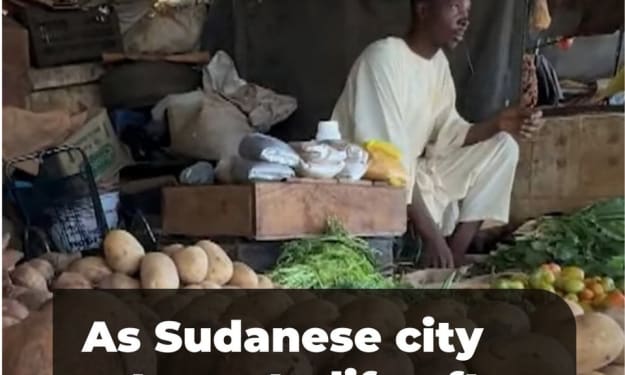
As Sudanese City Returns to Life After Two-Year Siege, Drone Threat Lingers
After nearly two years of isolation, hunger, and constant shelling, parts of a once-thriving Sudanese city are cautiously returning to life. Markets have reopened, children are back in makeshift classrooms, and families are attempting to rebuild homes reduced to rubble. Yet despite the visible signs of recovery, fear still hangs in the air as drone attacks and sporadic fighting continue to threaten fragile stability. The city, located near the conflict-scarred capital region of Khartoum, had been under siege since fighting erupted between the Sudanese Armed Forces and the paramilitary Rapid Support Forces in April 2023. Roads were blocked, electricity cut, and medical supplies depleted as residents endured months of bombardment and starvation. Now, with front lines shifted and some checkpoints lifted, civilians are slowly returning to neighborhoods that had been abandoned. Street vendors have resumed selling vegetables and tea, while small workshops are repairing bicycles, phones, and generators. “We survived on dried bread and rainwater for months,” said Ahmed, a shopkeeper who reopened his grocery stall last week. “It feels like the city is breathing again.” Hospitals that were once overwhelmed or destroyed are beginning to function with limited capacity. Volunteer doctors and aid workers have re-established clinics using donated equipment and emergency supplies brought in through newly accessible routes. However, health services remain fragile. Many medical professionals fled during the siege, and medicine shortages persist. Despite the return of daily activity, danger has not disappeared. Drone attacks have become a defining feature of the conflict’s latest phase. Residents report hearing buzzing sounds overhead, followed by explosions targeting military positions or suspected supply routes. While the strikes are often aimed at fighters, civilians are frequently caught in the crossfire. “Drones don’t distinguish between soldiers and families,” said Fatima, a mother of four whose home was damaged by a blast last month. “We are rebuilding, but every time we hear one, we run inside and pray.” Security analysts say drones have changed the nature of the war. Once dominated by ground battles and artillery fire, the conflict now includes long-range aerial surveillance and targeted strikes. Both sides accuse each other of using drones to intimidate civilian populations and disrupt humanitarian efforts. International organizations warn that renewed attacks could reverse the fragile recovery. Aid agencies are attempting to expand food and medical assistance but face challenges due to insecurity and damaged infrastructure. Power lines and water systems remain unreliable, forcing residents to depend on generators and wells. The humanitarian toll remains staggering. Millions across Sudan have been displaced since the war began, with entire communities pushed into refugee camps or neighboring countries. Those returning to the city describe scenes of devastation: schools reduced to shells, mosques burned, and markets looted. Local leaders have formed neighborhood committees to organize clean-up efforts and mediate disputes. Young volunteers sweep debris from streets and repair shattered windows using scrap wood and plastic sheets. These grassroots efforts have become symbols of resilience in a city that many feared would never recover. Still, residents say peace feels temporary. Nighttime curfews remain in place, and many families sleep in one room for safety. The sound of distant gunfire is common after dark, reminding everyone that the conflict is far from over. Diplomatic efforts to broker a ceasefire have so far failed to bring lasting peace. Talks mediated by regional and international partners have stalled repeatedly, while clashes continue in multiple parts of the country. For now, people are focused on survival and small victories—opening a shop, planting vegetables, or sending children back to school. “We don’t know what tomorrow will bring,” said Ahmed. “But today, at least, we can live.” As the city struggles to rise from the ruins of a two-year siege, its future remains uncertain. Life is returning, but under the constant shadow of drones and renewed violence, the path to lasting peace still seems distant.
By Fiaz Ahmed 4 days ago in The Swamp



Comments
There are no comments for this story
Be the first to respond and start the conversation.