
Title: Second Marriage Without First Wife’s Consent May Lead to Criminal Action: SC
Supreme Court clarifies legal boundaries in Muslim family law, holding that unapproved second marriages can attract criminal and civil consequences in Pakistan.


The Supreme Court of Pakistan has issued a pivotal ruling that could redefine how second marriages are legally treated in the country, especially where the first wife’s consent is concerned. In a landmark verdict delivered in Islamabad, the nation’s highest court underscored that a husband who contracts a second marriage without the written consent of his first wife and the approval of an arbitration council risks facing both criminal and civil proceedings under existing legal frameworks.
This judgment, unanimously issued by a division bench presided over by Chief Justice of Pakistan Yahya Afridi, with Justice Musarrat Hilali authoring the detailed five‑page decision, was handed down in the context of a petition filed by Naila Javed. She sought judicial relief after her husband remarried without her consent, neglecting both legal protocol and his marital obligations.
---
Legal Background: Muslim Family Laws Ordinance & Consent
Under Pakistan’s legal system, the Muslim Family Laws Ordinance 1961 governs polygamous marriages for Muslim men, establishing procedural safeguards that require a man to seek Arbitration Council approval before entering into another marriage. The ordinance’s Section 6 explicitly frames a second marriage without this approval as unlawful.
In this context, the Supreme Court reaffirmed that permission from an Arbitration Council is mandatory, and where that approval is absent — especially without the first wife’s consent — the act constitutes a legal violation with tangible consequences.
The Court also clarified that family courts cannot, on their own initiative, convert a petition for divorce into a khula (judicial divorce) without the voluntary agreement of the wife. This protects women from being deprived of their rights, such as entitlement to full mahr (dower), when marital disputes arise.
---
The Naila Javed Case: Facts and Findings
At the heart of the ruling was the case of Naila Javed v. Nasser Khan, wherein Javed accused her husband of remarrying without her written consent and without obtaining arbitration council approval. The husband himself admitted to the procedure in court, failing to provide maintenance (nafaqah) and even attempting to harm his wife’s credibility during cross‑examination.
The Supreme Court, scrutinizing these facts, described the husband’s actions as oppression (zulm), emphasizing that the first wife’s refusal to cohabit under these circumstances cannot be considered disobedience. The bench ruled that Javed’s marriage was to be dissolved on the basis of valid legal grounds, protecting her rights under the Dissolution of Muslim Marriages Act.
The verdict ordered the husband to pay Rs1.2 million in remaining mahr to the first wife, while invalidating previous decisions by both the Family Court and the Peshawar High Court.
---
Criminal and Civil Consequences
Beyond the civil remedy of dissolution and financial compensation, the Supreme Court’s judgment clarified that a second marriage entered without required consent and council approval may trigger criminal action as well. This interpretation amplifies the legal weight of Section 6 of the Muslim Family Laws Ordinance and has profound implications for future cases.
Although the ordinance itself does not elaborate detailed penalties, existing legal procedures allow for prosecution where a man violates statutory requirements. Legal experts suggest that the threat of criminal proceedings — including fines or imprisonment — functions as a deterrent against arbitrary remarriages.
---
Rights of Women in Marital Law
The Supreme Court’s ruling has also been lauded for strengthening the position of women under Pakistani law. By centering consent and fairness in matrimonial practices, the Court reaffirmed that marital decisions affecting women cannot be taken unilaterally.
This ruling aligns with ongoing legal discourse in Pakistan that seeks to protect women’s dignity, economic rights, and marital security. It echoes earlier directives from the Supreme Court cautioning lower courts not to convert divorce petitions into khula without clear consent, ensuring women do not lose their due mahr or legal protections.
---
Social and Legal Implications
The judgment is expected to have far‑reaching impacts on how polygamous marriages are negotiated and litigated in Pakistan. Some key implications include:
Strengthening procedural safeguards: The need for written consent and council approval will likely reduce unilateral decisions by husbands to remarry.
Empowerment of first wives: Women may assert their legal rights more confidently, backed by clear judicial precedent.
Legal clarity for courts: Lower courts now have a well‑defined judicial framework for evaluating disputes surrounding second marriages.
---
Criticism and Debate
Despite widespread praise, some critics — including members of the **Islamic Ideological Council in past responses — have argued that giving wives unilateral power to terminate marriages due to second marriages may conflict with traditional interpretations of Muslim law. However, such views do not carry binding legal authority and have been considered separate from the Supreme Court’s jurisprudence.
---
Conclusion
The Supreme Court’s ruling that second marriages without the first wife’s consent and Arbitration Council approval may lead to criminal action marks a defining moment in Pakistani family law. By affirming women’s rights, upholding structured legal safeguards, and clarifying the interplay between marital consent and statutory requirements, the verdict promotes justice and fairness in matrimonial relationships.
As the legal landscape evolves, this landmark decision is expected to serve as a precedent for future cases and a deterrent against arbitrary remarriages that undermine the rights and dignity of women.
About the Creator
Keep reading
More stories from Salaar Jamali and writers in The Swamp and other communities.
EU Council President Arrives in India to Seal Historic Trade Pact
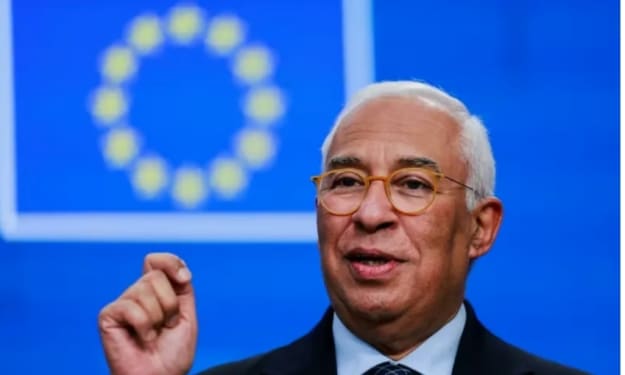
New Delhi, India — The European Union’s top political representative, European Council President António Costa, has touched down in New Delhi, signalling a critical moment in long‑running negotiations with India over a free trade agreement (FTA) that both sides hope will reshape global economic ties. Costa’s arrival comes amid celebrations of India’s Republic Day and on the eve of a high‑stakes EU‑India summit, where leaders aim to finalize the deal after nearly two decades of diplomacy and talks.
By Salaar Jamaliabout 17 hours ago in The Swamp
Fancy Buying a Home that Inspired a Turner Painting? It's Yours for £1.5m
Introduction Imagine living in a home that inspired one of the most celebrated artists in British history—J.M.W. Turner. Now, this dream can become a reality. A picturesque property located in the heart of England, which is said to have been the inspiration behind Turner’s iconic paintings, is on the market for £1.5 million. This article takes you through the fascinating history of the home, its connections to Turner, and why it could be your chance to own a piece of artistic legacy.
By Ayesha Lashari2 days ago in The Swamp



Comments
There are no comments for this story
Be the first to respond and start the conversation.