
Time to Dump Trump? Europeans Whisper Last-Resort Options to Save Greenland
Why Europe is quietly preparing contingency plans to protect the Arctic — and what it says about the future of transatlantic trust
For years, the idea of the United States “buying” Greenland sounded like political theater — a headline-grabbing curiosity that few took seriously. But as global power dynamics shift and the Arctic becomes a strategic hotspot, Europe is no longer laughing. Behind closed doors in Brussels, Copenhagen, Paris, and Berlin, uncomfortable conversations are taking place. The question no one wants to say aloud — but many are thinking — is this: Is it time for Europe to distance itself from Donald Trump to save Greenland?
Greenland: A Cold Island With Hot Strategic Value
Greenland may be sparsely populated, but it is rich in what the 21st century values most: strategic positioning, rare-earth minerals, and access to emerging Arctic shipping routes. As ice melts, the island’s importance only grows. Control of Greenland means influence over the Arctic, leverage over NATO’s northern flank, and a foothold in a region increasingly contested by Russia and China.
For Denmark and the European Union, Greenland is not a bargaining chip. It is a matter of sovereignty, international law, and alliance trust. Any suggestion — even rhetorical — that a NATO ally could pressure another ally into surrendering territory is seen as a red line.
Why Europe Is Nervous — And Why It’s Whispering
Publicly, European leaders are unified and calm. Privately, they are anxious. The concern is not just about Greenland, but about precedent. If a powerful ally openly entertains territorial acquisition from another ally, what does that say about the stability of the post-war order?
This unease has led to quiet contingency planning — not because Europe wants confrontation, but because it no longer assumes restraint is guaranteed.
Last-Resort Options Europe Is Considering
1. A Stronger European Presence in the Arctic
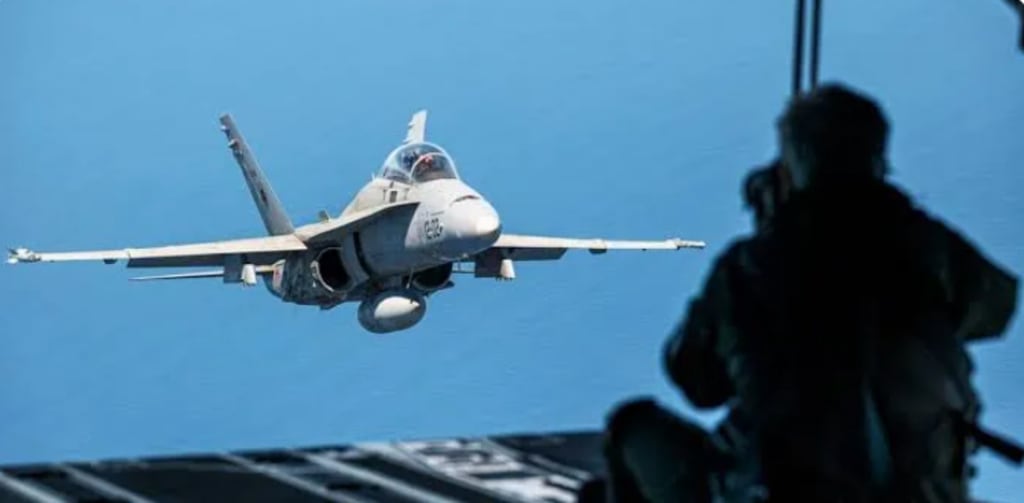
One of the clearest signals Europe can send is boots on the ice. Denmark, supported by other European partners, has been strengthening its military presence in and around Greenland. These deployments are symbolic as much as practical: they signal that Greenland is not isolated, and any move against it would trigger a broader European response.
This also reflects a growing European desire to reduce over-reliance on U.S. military leadership in sensitive regions.
2. Reframing Arctic Security Inside NATO
Another option being quietly discussed is reshaping NATO’s Arctic mission. The goal would be to internationalize Greenland’s defense under a clearly defined alliance framework — making unilateral action politically impossible.
Such a move would preserve NATO unity while limiting any single member’s ability to dominate Arctic decision-making.
3. Diplomatic Trade-Offs Instead of Territory
Some European strategists believe the crisis could still be defused through expanded cooperation rather than confrontation. That might mean offering the U.S. greater access to military facilities, joint mineral projects, or scientific partnerships — without any change in sovereignty.
This approach appeals to pragmatists but carries risks: it could be seen as rewarding pressure tactics, encouraging similar behavior in the future.
4. Economic and Political Leverage
The most sensitive option — and the one least discussed publicly — involves economic pressure. The European Union has tools designed to counter coercive behavior, including trade and regulatory measures. While few leaders want to escalate tensions with Washington, the fact that these tools are even being discussed marks a shift in mindset.
Europe is preparing for scenarios it once believed impossible.
Is This Really About Trump?
In many ways, yes — but not only Trump. The deeper issue is predictability. European leaders are increasingly concerned about a United States that prioritizes short-term national advantage over long-standing alliances. Greenland has become a symbol of that fear.
This explains why some officials privately question whether Europe must accelerate its push toward “strategic autonomy” — the ability to defend its interests without depending entirely on Washington.
What’s at Stake for Europe — And the World
If Europe feels compelled to protect Greenland from an ally, it would represent a historic fracture in transatlantic relations. NATO would survive, but it would not be the same. Trust, once shaken, is difficult to restore.
Greenland itself has made its position clear: its future will be decided by Greenlanders, not foreign capitals. Europe’s challenge is to ensure that principle survives pressure from all sides.
Final Thoughts
The whispers in Europe are not about abandoning the United States — they are about safeguarding sovereignty, rules, and stability in a rapidly changing world. Greenland may be cold, remote, and often overlooked, but it has become the testing ground for something much bigger.
Whether diplomacy prevails or tensions deepen, one thing is clear: the Arctic is no longer a quiet frontier — and Europe is preparing for a future where loyalty cannot be taken for granted.
About the Creator
Keep reading
More stories from Aqib Hussain and writers in The Swamp and other communities.
Gaza Technocratic Panel Meets for First Time, as Officials Fear It’s Hobbled from Get-Go
After months of war, uncertainty, and diplomatic maneuvering, a newly formed Gaza technocratic panel has officially met for the first time. On paper, this moment signals progress — a step toward stabilizing a territory devastated by conflict and humanitarian collapse. In reality, however, many officials and observers are already questioning whether this panel is doomed to struggle from the very beginning.
By Aqib Hussain3 days ago in The Swamp



Comments
There are no comments for this story
Be the first to respond and start the conversation.