
Gaza Technocratic Panel Meets for First Time, as Officials Fear It’s Hobbled from Get-Go
A fragile start to Gaza’s post-war governance experiment
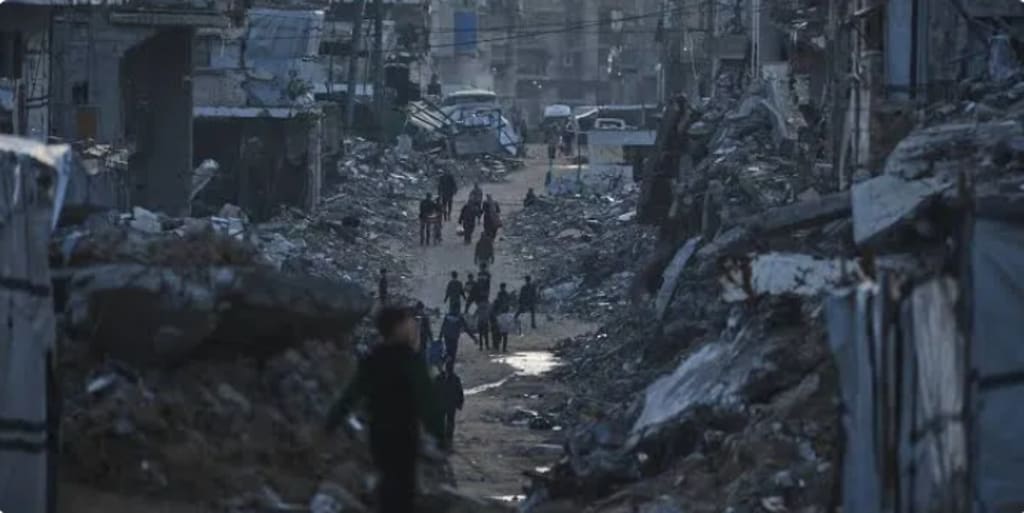
After months of war, uncertainty, and diplomatic maneuvering, a newly formed Gaza technocratic panel has officially met for the first time. On paper, this moment signals progress — a step toward stabilizing a territory devastated by conflict and humanitarian collapse. In reality, however, many officials and observers are already questioning whether this panel is doomed to struggle from the very beginning.
This first meeting was not a celebration. It was cautious, tense, and overshadowed by unresolved political, security, and humanitarian challenges. While the creation of the panel reflects international and regional efforts to shape Gaza’s post-war future, doubts are growing about whether it has the authority, legitimacy, or freedom to truly govern.
What Is the Gaza Technocratic Panel?
The technocratic panel, officially designed as a temporary civil administration, is meant to oversee Gaza during a transitional period. Its members are not politicians or factional leaders but professionals — engineers, economists, administrators, and public service experts — chosen for their technical expertise rather than political affiliations.
The idea is simple:
Remove politics from the equation and focus on rebuilding.
In theory, this panel will manage essential services such as healthcare, water, electricity, education, and infrastructure. It is also expected to coordinate humanitarian aid and lay the groundwork for long-term reconstruction.
But theory and reality rarely align in Gaza.
A Symbolic First Meeting — With Heavy Baggage
The panel’s inaugural meeting took place amid a fragile ceasefire and ongoing negotiations over Gaza’s future. Rather than marking a clean break from the past, the meeting highlighted how deeply entrenched political divisions and security concerns remain.
Officials familiar with the process have expressed concern that the panel lacks real power. While it may be able to administer civil affairs on paper, it does not control borders, security forces, or armed groups operating within Gaza. Without authority in these areas, governance risks becoming symbolic rather than effective.
Simply put:
You can’t rebuild a city if you don’t control the ground it stands on.
Fear of Being “Hobbled From the Get-Go”
One phrase keeps surfacing in discussions around the panel: hobbled from the get-go. That fear stems from several core issues.
First, the panel operates under external constraints. Its mandate is shaped by international agreements, ceasefire terms, and regional mediators. Any misstep could lead to political pushback or a suspension of cooperation.
Second, there is the issue of security. Armed factions still exist in Gaza, and no clear plan has been agreed upon for full demilitarization. Without a monopoly on force, the panel’s ability to enforce decisions remains questionable.
Third, there is public trust — or lack thereof. Many Gazans are skeptical of externally designed solutions, especially after years of blockade, war, and broken promises. If the panel is seen as imposed rather than representative, its legitimacy may erode quickly.
Caught Between Power Players
The technocratic panel finds itself stuck between multiple power centers:
International donors, who will likely fund reconstruction but demand oversight and stability
Regional mediators, who are balancing their own political interests
Israeli security concerns, which affect border access and movement
Palestinian factions, some of which have agreed to step aside administratively but not militarily
Navigating these pressures requires more than technical expertise — it demands political finesse, leverage, and time. Unfortunately, time is something Gaza does not have.
A Humanitarian Crisis That Won’t Wait
While governance models are debated in conference rooms, Gaza’s humanitarian situation remains catastrophic. Large parts of the territory are uninhabitable. Hospitals are overwhelmed. Clean water is scarce. Entire neighborhoods lie in ruins.
For ordinary civilians, the success of the technocratic panel will not be measured by diplomatic statements or international approval — but by results:
Is electricity restored?
Are schools reopening?
Is aid reaching families consistently?
If the panel cannot deliver visible improvements quickly, public frustration may turn into outright rejection.
Leadership Under the Microscope
The panel’s leadership has emphasized professionalism, neutrality, and reconstruction over ideology. That approach has earned cautious support from some international actors who see technocratic governance as a way to avoid political paralysis.
However, critics argue that Gaza’s problems are not purely technical. They are deeply political, shaped by occupation, conflict, and decades of instability. Without addressing those realities, even the most competent administrators may find themselves powerless.
In other words, expertise alone cannot fix a broken system.
Can This Experiment Succeed?
The first meeting of Gaza’s technocratic panel represents both hope and hesitation. It is a sign that the international community is trying something different — but also a reminder of how difficult meaningful change can be in a place shaped by prolonged conflict.
The panel’s future depends on several unanswered questions:
Will it gain real authority or remain advisory?
Can it operate independently without being undermined by politics?
Will Gazans see it as a partner or another temporary fix?
For now, the panel has taken its first step. Whether it can walk — or run — toward genuine recovery remains uncertain.
About the Creator
Keep reading
More stories from Aqib Hussain and writers in The Swamp and other communities.
Trump Suspends Immigrant Visas for 75 Countries: Who’s Affected?
In a sweeping move, President Donald Trump’s administration has announced a pause on immigrant visa processing for citizens of 75 countries. The new policy, effective January 21, 2026, applies to family-based and employment-based green cards. It’s one of the broadest immigration actions in recent U.S. history and has raised questions worldwide about who exactly will be affected.
By Aqib Hussain2 months ago in The Swamp
The Forsyth House Fire
Since 1851, Forsyth House has stood on the corner of Union Street and Gordon Street in the heart of Glasgow. Its iconic, or was... because on Sunday 8th of March, 2026, a fire broke out in a small, seemingly un-named shop in the building and tore all that history down. As I write, the rubble is still unsettled and the street is still blocked off. Central Station is quiet on the upper level, and around 30 small businesses have quite literally gone up in smoke.
By S. A. Crawford3 days ago in The Swamp
Why Didn't Anyone Tell Us
Men, move along. This is not for you. This is for the women. I was forty-five when I began menopause. It is pretty young for that to be going on in a woman’s life, but I had undiagnosed PCOS, my entire life. Thank you to all the gynecologists I had seen my entire life. That in itself should encourage women to keep seeking second opinions, especially when you are not getting correct answers or any at all.
By Alexandra Grant6 days ago in Humans


Comments
There are no comments for this story
Be the first to respond and start the conversation.