
TikTok Closes Deal With White House to Split US App From Global Business
“TikTok to operate independently in the U.S., ensuring data security and compliance while continuing global growth”
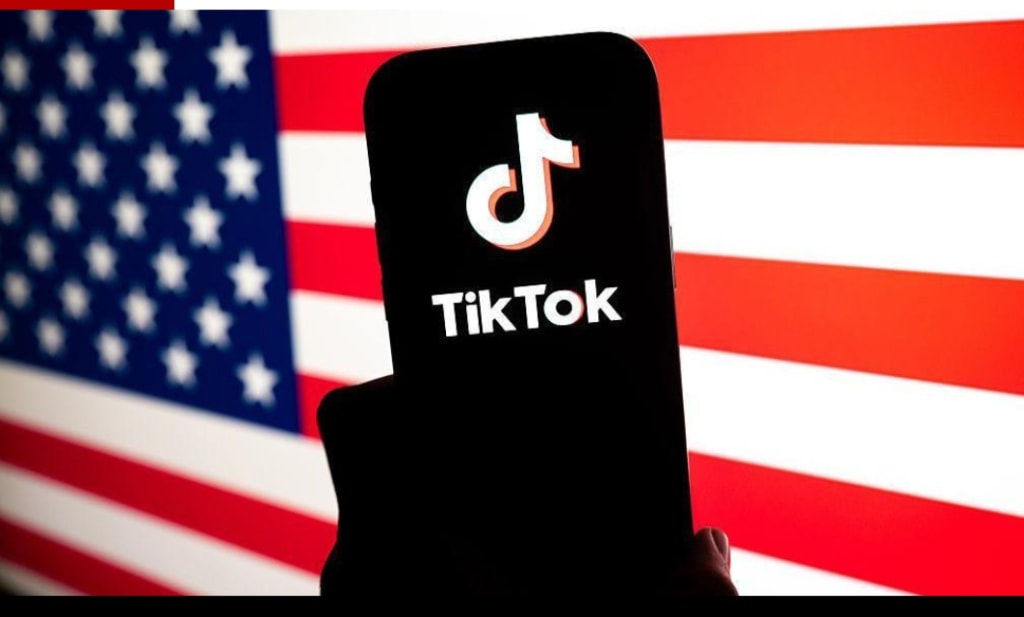
TikTok has officially reached an agreement with the White House to separate its U.S. operations from its global business, marking a major development in the ongoing scrutiny of Chinese-owned apps in the United States. The deal, which has been in negotiations for months, aims to address national security concerns while allowing TikTok to continue serving its American user base without disruption.
The move comes amid growing pressure from U.S. lawmakers and government agencies over the potential for user data to be accessed by foreign entities. By splitting its U.S. operations, TikTok hopes to reassure regulators and maintain its position as one of the most popular social media platforms in the country.
Background of the Deal
For years, TikTok has faced scrutiny over its Chinese ownership by ByteDance. U.S. officials have repeatedly expressed concerns that American user data could be accessed by the Chinese government, raising questions about privacy and national security. These concerns intensified under the previous administration, which considered banning the app unless ownership issues were resolved.
Negotiations over a potential split have involved multiple stakeholders, including TikTok, U.S. regulators, and prospective investors. The objective has been to establish a structure where U.S. user data is isolated and controlled independently, reducing the risk of foreign interference.
Key Terms of the Agreement
While specific financial and structural details remain partially confidential, reports indicate that:
TikTok’s U.S. operations will operate under a new, U.S.-based entity
U.S. user data will be stored domestically and managed independently of ByteDance
Investment and oversight from U.S. companies will provide additional governance safeguards
The app’s global operations, including markets in Asia and Europe, will remain under ByteDance control
The arrangement is designed to satisfy U.S. national security requirements without disrupting TikTok’s service or content creation ecosystem.
Why the U.S. Government Pushed for a Split
The U.S. government’s concerns center around data privacy, content moderation, and potential foreign influence. Key issues include:
Access to personal data – TikTok collects vast amounts of user information, from location data to viewing habits.
Algorithm transparency – Lawmakers have sought clarity on how TikTok’s recommendation engine operates and whether it could be influenced by foreign actors.
Potential content censorship – Concerns that content moderation policies could be influenced by foreign governments.
By splitting the U.S. app from the global business, officials hope to mitigate these risks while allowing American users to continue enjoying the platform.
Impact on TikTok Users
For most U.S. users, the change is likely to be seamless. The app will continue to function as usual, and user-generated content will remain accessible. However, the split may affect:
Data storage policies – Users’ data will now be stored under U.S. jurisdiction
Corporate governance – TikTok’s U.S. operations may adopt stricter privacy and security standards
Investment opportunities – U.S.-based investors may now have a stake in the platform
Experts suggest that separating the U.S. app could also pave the way for further business innovation and monetization strategies in the U.S. market.
Business Implications
The separation represents a significant restructuring for TikTok and ByteDance. Analysts note:
Financial Impact: TikTok’s valuation in the U.S. may rise due to greater investor confidence.
Operational Complexity: Managing two separate entities may increase administrative and technical challenges.
Market Influence: TikTok will remain a dominant social media platform in the U.S., competing with Instagram, YouTube, and Snapchat.
Industry observers highlight that this deal could serve as a model for other Chinese tech companies navigating U.S. regulatory environments.
Political Reactions
The announcement has drawn mixed reactions from politicians and stakeholders:
Supporters argue that the deal protects national security while preserving user freedom.
Critics suggest that the split may not go far enough in preventing potential foreign interference.
International observers note that this move could set a precedent for tech regulation in other markets.
White House officials described the agreement as a “balanced approach” that safeguards U.S. interests while supporting innovation and entrepreneurship.
Global Perspective
Outside the United States, TikTok will continue to operate under ByteDance, unaffected by the U.S. split. The company’s global growth has been remarkable, with over 1 billion active users worldwide. Markets in Europe, Asia, and Latin America are expected to continue seeing robust engagement, while the U.S. separation serves primarily as a national security measure.
Some analysts believe that the split could eventually encourage regionalized versions of global tech platforms, where data sovereignty and local compliance become standard practice.
Challenges Ahead
Despite the agreement, TikTok faces ongoing challenges:
Maintaining consistent user experience between U.S. and global platforms
Compliance with evolving U.S. regulations
Balancing content moderation and avoiding censorship concerns
Technical integration to ensure security while keeping the app functional
TikTok executives have expressed confidence in their ability to navigate these challenges while continuing to provide a dynamic and engaging platform.
Conclusion
The closure of the deal to split TikTok’s U.S. operations from its global business marks a significant milestone in the intersection of technology, politics, and national security. By addressing concerns over data privacy and foreign influence, the agreement allows TikTok to continue thriving in the U.S. while adhering to regulatory expectations.
For users, the experience is largely unchanged, but the separation underscores the growing importance of data sovereignty, corporate accountability, and international regulatory compliance. As technology platforms continue to expand globally, TikTok’s deal may serve as a blueprint for balancing innovation with security in an interconnected world.
About the Creator
Keep reading
More stories from Aarif Lashari and writers in The Swamp and other communities.
Teens Among Missing After Landslide at New Zealand Campsite
A sudden landslide at a popular campsite in New Zealand has left authorities scrambling to account for several missing individuals, including teenagers. The incident, which occurred in the early hours of the morning, has shocked the local community and drawn attention to the dangers posed by natural disasters in mountainous and coastal areas. Rescue teams are working under challenging conditions, and the search continues as families anxiously await news of their loved ones.
By Aarif Lashariabout 17 hours ago in The Swamp
Britain Approves ‘Mega’ Chinese Embassy in London Despite National Security Fears
Big news from London: the UK government has just approved the construction of a massive new Chinese embassy right in the heart of the city — and it’s raising more than a few eyebrows. Despite concerns from security experts, lawmakers, and local residents, ministers have given the green light to what’s set to become Europe’s largest Chinese diplomatic mission. Let’s break down why this decision is so controversial — and what it could mean for Britain, China, and global diplomacy. A Long Road to Approval The saga began back in 2018 when China bought Royal Mint Court, a historic site near the Tower of London, for hundreds of millions of pounds. Plans for a sprawling 20,000 square metre embassy have been in limbo ever since, facing delays, legal challenges, and repeated scrutiny from the UK government. Originally, local officials rejected the plans, citing security risks and concerns from the surrounding community. But under the current government led by Prime Minister Sir Keir Starmer, the central authorities ultimately signed off on the embassy in January 2026. This decision ends a seven-year planning saga, but it’s far from quiet: many are still worried about what this mega-embassy could mean for London and the UK’s national security. Security Fears Take Center Stage It’s not hard to see why people are concerned. The embassy is close to critical fibre-optic cables and major data infrastructure, which means it could theoretically be a hotspot for espionage. MI5 itself has acknowledged that it’s “not realistic to eliminate every potential risk” associated with the embassy. At the same time, government officials insist that intelligence services were fully consulted, and that security measures will help mitigate risks. They even argue that consolidating China’s diplomatic operations — currently scattered across seven separate sites — might actually make it easier to monitor activities rather than harder. Still, critics remain unconvinced. Political and Public Backlash Opposition has been loud and bipartisan. Figures like Kemi Badenoch and Priti Patel have called the approval a “security surrender” to Beijing. Protests have cropped up around Royal Mint Court, with locals citing not just espionage fears but also potential disruptions to their daily lives. Some residents are even raising funds for legal action to block the embassy’s construction, arguing that the development threatens community safety and could strain local police resources. Why the UK Is Moving Ahead So why did the government approve it despite all these red flags? Partly, it’s about diplomacy and economics. Britain wants to maintain open channels with China, which remains one of the world’s largest economic powers. Officials have hinted that this approval could pave the way for Starmer’s visit to China — the first by a UK prime minister since 2018 — unlocking potential trade and climate cooperation. Beijing, on the other hand, has criticized the delays as politically motivated and called the opposition to the embassy “malicious slander.” For China, the mega-embassy is a symbol of friendship and a statement of its global influence. Bigger Picture: Diplomacy vs. Security This decision highlights the delicate balancing act Britain faces today: protecting national security while engaging economically with powerful global players. The embassy, with its vast footprint and secretive basement spaces, could become a focal point for intelligence activities, not just in the UK, but across Europe. It also sparks a bigger debate: how should democracies manage the presence of foreign powers on their soil, especially when digital and geopolitical vulnerabilities are involved? And how much power should local planning authorities really have when national government priorities override community concerns? What Comes Next Construction is expected to begin soon, and China is set to consolidate its diplomatic operations in London. But the story isn’t over. Critics promise ongoing legal battles, and lawmakers are calling for more transparency and stricter security safeguards. As London prepares to host Europe’s largest Chinese embassy, the eyes of the UK — and indeed the world — will be on this project. How it unfolds could shape Sino-British relations for decades, and offer a glimpse into the broader dynamics of modern global diplomacy. Bottom line: The mega-embassy is more than just a building. It’s a symbol of the UK’s careful, sometimes uneasy, dance with China — balancing trade, diplomacy, and security in an increasingly complex world.
By Aqib Hussain4 days ago in The Swamp
Trump’s Redistricting Clash Ignites GOP Tensions in Indiana
Donald Trump has never been known for quiet disagreements, and his latest clash within the Republican Party is no exception. This time, the former president has turned his attention to Indiana, where a redistricting dispute has sparked an unusually personal political feud. Trump has publicly vowed to “take out” a leading Indiana GOP figure, accusing the state party leadership of undermining conservative voters through the redrawing of congressional maps. The episode highlights not only Trump’s enduring influence over Republican politics but also the deep divisions within the party over power, loyalty, and representation. At the center of the controversy is Indiana’s redistricting process, a routine but highly consequential political exercise that occurs after census data reshapes population counts. In theory, redistricting is meant to ensure fair representation as communities grow or shrink. In practice, it often becomes a fierce partisan battle, with lawmakers drawing district lines that protect incumbents or favor one party over another. Indiana, a reliably Republican state, has long seen internal GOP negotiations play a decisive role in how maps are finalized. Trump’s anger appears rooted in his belief that the new district lines dilute the influence of his preferred candidates and grassroots supporters. According to his statements, the Indiana GOP leadership failed to prioritize what he sees as “America First” conservatives, instead crafting maps that safeguard establishment figures. For Trump, this is not merely a technical disagreement over boundaries; it is a perceived betrayal of the movement he helped build. The language Trump used to describe the situation quickly drew attention. When he said he would “take out” the Indiana GOP leader responsible, he was speaking politically, not physically, signaling his intention to back primary challengers and mobilize his base against party insiders. Still, the phrasing underscored how personal and confrontational Trump’s approach remains, even years after leaving the White House. Redistricting fights are rarely this public within a single party. More often, disagreements are resolved behind closed doors to present a united front against Democrats. Trump’s intervention disrupted that tradition. By calling out an Indiana Republican leader by name, he sent a clear message to other state officials across the country: crossing Trump’s political priorities could come at a cost. For Indiana Republicans, the situation presents a dilemma. On one hand, Trump remains immensely popular with GOP voters, particularly in Midwestern states. His endorsement can make or break a primary campaign, and few politicians are eager to find themselves on the wrong side of his base. On the other hand, state leaders argue that redistricting decisions require balancing multiple interests, including legal requirements, demographic realities, and long-term electoral stability. They insist that the maps were drawn to preserve Republican strength overall, not to target Trump-aligned candidates. This tension reflects a broader struggle within the Republican Party. Since 2016, Trump has reshaped the GOP into a more populist, personality-driven movement. Loyalty to Trump often carries as much weight as policy positions. Figures who were once considered reliable conservatives can suddenly find themselves labeled as “RINOs” or establishment obstacles if they diverge from Trump’s expectations. The Indiana redistricting fight fits squarely into this pattern. Political analysts note that Trump’s vow to unseat the Indiana GOP leader may have ripple effects beyond the state. Redistricting battles are unfolding nationwide, and many Republican officials are watching closely. If Trump successfully helps defeat a prominent state party leader over redistricting, it could embolden him to intervene in similar disputes elsewhere. Conversely, if his efforts fall short, it may signal limits to his influence at the state level. There is also the question of voter fatigue. While Trump’s base remains highly energized by his combative style, some Republicans worry that constant internal warfare distracts from broader goals, such as winning general elections or advancing conservative policy. Public feuds over redistricting risk reinforcing Democratic arguments that Republicans are more focused on power struggles than governance. From a democratic perspective, the episode raises important questions about how district lines should be drawn and who gets to decide. Critics of partisan redistricting argue that both parties manipulate maps to entrench themselves, often at the expense of competitive elections. Trump’s outrage highlights one version of this problem: even within a dominant party, mapmaking can be used to marginalize certain factions. Supporters of independent redistricting commissions point to cases like Indiana as evidence that removing politicians from the process could reduce conflict and restore trust. Still, Trump shows no interest in structural reform. His focus remains firmly on winning battles and asserting dominance within the party. By vowing to “take out” an Indiana GOP leader, he is reinforcing his role as a political kingmaker who demands loyalty and rewards defiance of the establishment. Whether Trump follows through on his promise will depend on upcoming election cycles and the availability of viable challengers. If he throws his support behind a primary opponent, the race will become a test of Trump’s continuing hold over Republican voters in Indiana. For now, the threat alone has already reshaped the conversation, turning a technical redistricting debate into a high-profile political showdown. In the end, the Indiana redistricting fight is about more than lines on a map. It is a window into the ongoing struggle for the soul of the Republican Party, where loyalty to Trump, control over institutions, and the future direction of conservatism remain fiercely contested. As long as Trump stays politically active, clashes like this are likely to continue, reminding Republicans and Democrats alike that the former president still knows how to command attention and ignite controversy.
By Saboor Brohi 6 days ago in The Swamp



Comments
There are no comments for this story
Be the first to respond and start the conversation.