
Three Indian Fighter Jets Crash in Jammu and Kashmir Amid Heightened Tensions
Tensions Soar Over Kashmir as Three Indian Fighter Jets Crash Amid Cross-Border Conflict

Three Indian Fighter Jets Crash in Jammu and Kashmir Amid Heightened Tensions
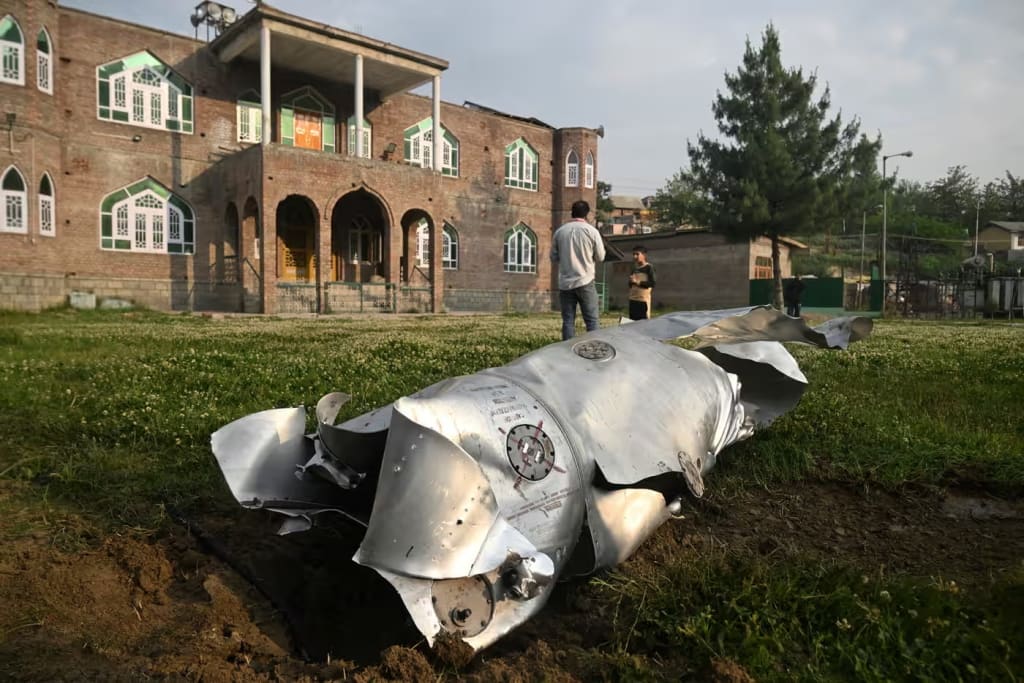
Jammu and Kashmir, May 7, 2025 — In a dramatic escalation of military tensions between India and Pakistan, three Indian Air Force (IAF) fighter jets crashed in the region of Jammu and Kashmir on Tuesday, according to local government sources. The crashes occurred amidst a volatile backdrop of cross-border hostilities following recent airstrikes and retaliatory fire between the two nuclear-armed nations.
Background of Rising Tensions
The incident came shortly after India launched “Operation Sindoor,” a series of targeted airstrikes aimed at what the Indian government described as terrorist infrastructure within Pakistan and Pakistan-administered Kashmir. The strikes were conducted in response to a deadly attack on April 22 that killed 26 Hindu pilgrims in Indian-administered Kashmir. Indian officials blamed Pakistan-based groups, specifically Jaish-e-Mohammed (JeM) and Lashkar-e-Taiba (LeT), for orchestrating the attack.
India claimed its airstrikes targeted nine locations linked to militant training and logistical support, adding that the strikes were carefully executed to minimize civilian casualties. However, the Pakistani government condemned the strikes, labeling them “an act of aggression” and reported that several civilians had been killed, including women and children.
Details of the Crashes
Local sources in Jammu and Kashmir reported that the three Indian fighter jets crashed nearly simultaneously, suggesting a coordinated attack or a systemic failure. Eyewitnesses described loud explosions and saw thick smoke rising from different areas where the debris landed.
While the Indian Air Force has confirmed the loss of three aircraft, it has not officially disclosed the model of jets involved or the status of the pilots. Preliminary investigations are underway to determine whether the crashes were due to mechanical failure, hostile engagement, or electronic interference.
Pakistan, on the other hand, has claimed responsibility for shooting down at least five Indian jets during retaliatory defense operations. While India has not officially acknowledged this claim, the timing of the jet crashes appears to coincide with Pakistani air defense activity.
Political and Military Fallout
The crashes mark one of the most significant military incidents in the region since the 2019 Pulwama-Balakot crisis. The Indian defense establishment is currently on high alert, and the Line of Control (LoC) has seen increased deployment of troops and artillery on both sides.
India’s Ministry of External Affairs issued a statement urging Pakistan to stop harboring terrorist organizations and warned of “stronger retaliatory actions” if provocations continue. Meanwhile, Pakistan's Prime Minister called for an emergency meeting of the National Security Council, stating that any violation of Pakistan's sovereignty would be met with full force.
Civilian Impact and Humanitarian Concerns
Civilians on both sides of the LoC are bearing the brunt of the escalating conflict. In border districts of Jammu and Kashmir, residents have been advised to stay indoors, and several schools and public institutions have been closed. Power outages and internet shutdowns were reported in several towns due to security concerns.
Hospitals are preparing for an influx of casualties, and humanitarian organizations have called for immediate international intervention to prevent further loss of life.
International Reactions
The international community has reacted with deep concern. The United Nations Secretary-General urged both countries to exercise restraint and offered to mediate peace talks. The United States, United Kingdom, and China have issued statements encouraging diplomatic engagement and warning against escalation.
India and Pakistan have fought three wars since their independence in 1947, two of which were over Kashmir. The region remains a deeply contentious and militarized zone with frequent ceasefire violations and militant activity.
What Comes Next?
As investigations into the fighter jet crashes continue, military analysts warn that the situation could spiral into open conflict if diplomatic channels are not urgently activated. With both nations maintaining strong military presences in the region and domestic pressures mounting, the path forward remains uncertain.
For now, the Indian government is focusing on the aftermath of the crashes and preparing for potential future escalations. Meanwhile, Pakistan has stated it will continue to “defend its territorial integrity” while calling on the global community to recognize what it describes as Indian aggression.
About the Creator
Adnan Rasheed
Author & Creator | Writing News , Science Fiction, and Worldwide Update| Digital Product Designer | Sharing life-changing strategies for success.
Keep reading
More stories from Adnan Rasheed and writers in The Swamp and other communities.
Chinese Fighter Jets Soar Over Egypt in First Joint Exercises
Chinese Fighter Jets Soar Over Egypt in First Joint Exercises In a significant move signaling deepening military cooperation Chinese fighter jets took to the skies over Egypt for the first time as part of joint aerial exercises between the two nations. The drills which commenced in early May 2025 mark a milestone in Sino Egyptian relations and reflect China’s growing strategic presence in the Middle East and North Africa (MENA) region. The exercise dubbed Sky Guardians-2025 involves China's J-10C multirole fighter jets and Egypt's Rafale and F-16 aircraft. Conducted at an undisclosed air base in Egypt’s western desert the joint maneuvers include air to air combat simulations, joint strike missions aerial refueling and electronic warfare scenarios. According to military analysts the operation is designed not only to boost interoperability between the two air forces but also to send a clear geopolitical message. This historic exercise reflects the warming ties between Beijing and Cairo. Egypt historically aligned with the West and reliant on American and European military hardware has diversified its international partnerships in recent years. As part of its Look East policy Cairo has sought closer ties with China Russia and other non Western powers. Chinese defense ministry spokesperson Senior Colonel Wu Qian stated The joint exercises with Egypt are a symbol of mutual trust and strategic cooperation. They aim to enhance combat readiness share tactical expertise and promote regional stability. Egyptian officials echoed similar sentiments emphasizing that the cooperation is in line with Egypt’s sovereign right to diversify its military alliances.
By Adnan Rasheed9 months ago in The Swamp
Examining ICE Tactics in Minnesota After the Renee Good Shooting
The fatal shooting of Renee Nicole Good on January 7, 2026, by a U.S. Immigration and Customs Enforcement (ICE) agent in Minneapolis, Minnesota has sent shockwaves across the country. What started as a routine federal immigration enforcement operation quickly became a national controversy over policing practices, federal authority, and the use of force in civilian areas. Protests erupted across the U.S., federal prosecutors resigned in protest, and lawmakers debated whether ICE’s tactics were accountable, transparent, or even appropriate for community safety. At the center of the debate is one pressing question: Did ICE follow proper procedures, or did its own policies contribute to this tragedy? The answers reveal a complex situation with serious implications for civil rights and public trust. What Happened in Minneapolis? According to federal authorities, Renee Good was shot during a targeted ICE operation. Officials claimed the agent fired in self-defense after Good’s vehicle allegedly attempted to hit him. DHS described the incident as a defensive action and labeled Good’s behavior as dangerous. However, video footage and eyewitness accounts tell a different story. The videos show Good’s vehicle angled away from the agent at the moment shots were fired. Experts reviewing the footage question whether lethal force was necessary. Local leaders, including Minneapolis Mayor Jacob Frey and Minnesota Governor Tim Walz, criticized the federal narrative, saying the shooting lacked justification. Thousands of residents protested in Minneapolis, Chicago, Washington D.C., and other cities, demanding accountability. Adding to the controversy, the U.S. Justice Department announced it would not open a civil rights investigation into the shooting. This decision led at least six federal prosecutors in Minnesota to resign, citing concerns over a lack of accountability. ICE’s Tactics Under Scrutiny ICE’s official policies allow agents to use force if they believe there is imminent danger. Critics argue, however, that the specifics of this encounter reveal troubling tactics. Footage shows agents approaching Good’s vehicle and physically pulling at the door handle—a move some law enforcement experts say can provoke panic and escalate risk. Shooting into a moving vehicle, especially while positioned directly in front of it, goes against many standard police safety protocols. Experts also note that ICE agents may receive different training from municipal police, often emphasizing aggressive enforcement rather than de-escalation. In community settings, such tactics can heighten tensions rather than reduce them. Community Impact and Fear The shooting left many Minneapolis residents terrified. Witnesses described the scene as chaotic, with sounds of honking, yelling, and then gunfire. Immigrant communities, in particular, felt vulnerable. Many now avoid public spaces or interactions with authorities to prevent escalation. Local organizers have launched civilian patrols to monitor ICE activity and keep residents informed about federal operations. Protests have spread beyond Minneapolis, signaling a national concern about federal enforcement and its impact on communities. Political Backlash and Accountability Questions The shooting sparked political battles at the national level. Democratic lawmakers called for greater oversight of federal agents and transparency about ICE operations. Some urged Congress to require independent investigations into use-of-force incidents involving ICE. Meanwhile, supporters of ICE defended the agent’s actions, arguing that Good’s behavior justified the use of deadly force. Former President Donald Trump publicly backed the agent, even as video evidence raised doubts about whether Good posed a direct threat. Critics argue that the Justice Department’s refusal to investigate civil rights violations, combined with the resignations of federal prosecutors, raises questions about political influence over law enforcement accountability. Broader Questions About Federal Enforcement Renee Good’s shooting also raises larger questions about ICE and federal enforcement: Use-of-force standards: Should ICE align its protocols with civilian police departments or independent best practices for de-escalation? Transparency: How much public disclosure should be required when federal officers operate in local communities and make life-or-death decisions? Community trust: Does aggressive enforcement erode trust, making residents less likely to cooperate with authorities or seek help when needed? These are not just hypothetical concerns. Every ICE operation has the potential to either strengthen or weaken public trust, especially in diverse urban communities. Moving Forward: Reform or Retribution? In Minnesota, state and local leaders are taking legal action against ICE. Lawsuits challenge the agency’s authority and tactics. Civil rights lawyers, including those who represented George Floyd’s family, are advocating for accountability and transparency. For many advocates, Renee Good’s death is more than a single tragedy—it symbolizes systemic issues with federal enforcement in civilian spaces. Whether these events lead to meaningful reform remains uncertain. What is clear is that the shooting has sparked a national conversation about enforcement tactics, civil rights, and the role of federal agencies in everyday American life. The outcome of this debate will shape how communities and government balance security and civil liberties for years to come.
By Muhammad Hassan5 days ago in The Swamp


Comments
There are no comments for this story
Be the first to respond and start the conversation.