
Things Happen’ – Trump Defends Saudi Crown Prince Over Khashoggi Killing
A Controversial Defense That Rekindles Questions About Morality, Power, and Global Alliances.”

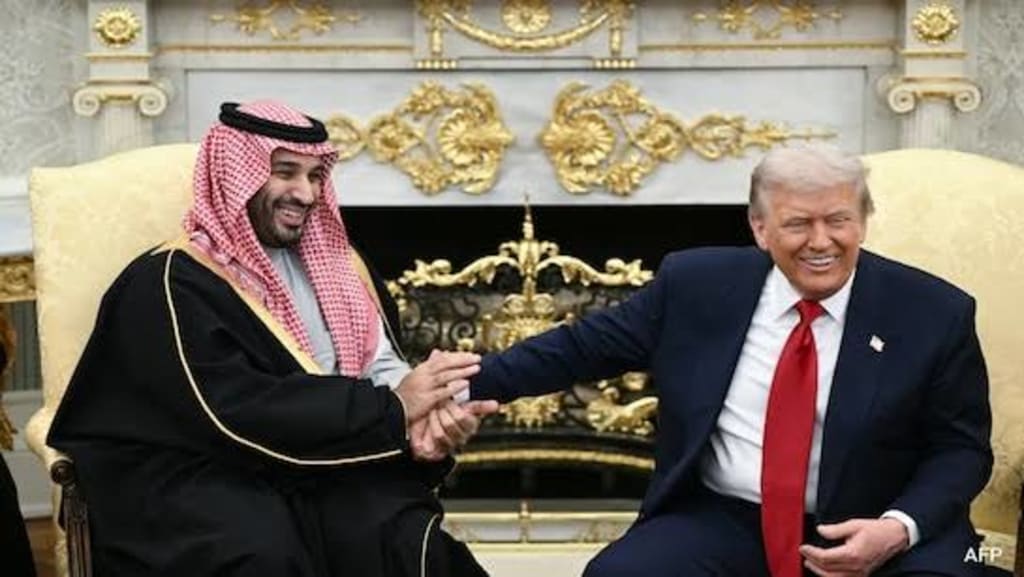
When former U.S. President Donald Trump commented that “things happen” while defending Saudi Crown Prince Mohammed bin Salman (MBS) over the killing of journalist Jamal Khashoggi, the world reacted with shock, criticism, and renewed debate. The murder of Khashoggi in 2018 remains one of the most disturbing political scandals of the past decade. Yet Trump’s recent remarks have revived global attention—not only on the case itself, but on how political leaders balance morality with strategic alliances.
A Murder That Shook the World
Jamal Khashoggi was a respected journalist and columnist for The Washington Post. Known for his bold criticism of Saudi leadership, especially the Crown Prince, he had been living in self-imposed exile in the United States. On October 2, 2018, Khashoggi entered the Saudi consulate in Istanbul to collect paperwork for his upcoming marriage. He never emerged alive.
Turkish authorities later revealed shocking details: Khashoggi had been killed, dismembered, and disposed of by a team allegedly sent from Saudi Arabia. The incident drew global outrage. Human rights activists, world leaders, and journalists demanded justice. Saudi Arabia denied MBS’s involvement, though international intelligence agencies, including the CIA, indicated otherwise.
Trump’s Remark That Stirs Controversy Again
Years later, Trump’s casual comment—“things happen”—has reignited the conversation. Speaking in an interview, Trump repeated his long-standing defense of MBS, suggesting that maintaining the strategic U.S.–Saudi partnership was more important than placing blame over the killing.
His remark reflects the approach he took as president, where he consistently emphasized geopolitical and economic considerations above human rights concerns. During his term, Trump repeatedly highlighted Saudi Arabia’s role in countering Iran, purchasing American weapons, and stabilizing oil markets.
For Trump, the alliance was too valuable to risk. But critics argue that such statements normalize injustice and undermine global human rights standards.
Why Saudi Arabia Matters in U.S. Politics
To understand Trump’s stance, one must consider the enormous strategic importance of Saudi Arabia. The kingdom is not only the world’s largest oil exporter but also a central player in Middle Eastern security dynamics. For decades, U.S.–Saudi relations have been shaped by:
Energy dependence, especially before the rise of American shale oil
Arms deals worth billions, supporting U.S. defense industries
Shared political interests, including countering Iranian influence
Regional stability, particularly regarding Israel and global energy markets
Any disruption in this partnership would have global consequences. Trump used this argument to justify his continued support for MBS even at the height of the Khashoggi scandal.
Human Rights vs. Realpolitik
The divide between moral responsibility and geopolitical strategy is at the heart of this issue. Critics say that dismissing a journalist’s murder as something that “happens” devalues human life and emboldens authoritarian regimes. Human rights groups argue that such statements:
Send a dangerous signal to governments that silence critics
Undermine global press freedoms
Damage America’s reputation as a defender of democracy
Supporters of Trump, however, claim he is simply being realistic. They argue that nations often work with imperfect partners, and leaders must prioritize national interests over idealism.
This clash of perspectives is not unique to Trump, but his blunt language makes the moral tension more visible.
Growing Global Divide Over MBS
Mohammed bin Salman has built his reputation as a modernizer through projects like Vision 2030, women’s rights reforms, and major economic diversification efforts. Yet the Khashoggi killing remains a dark cloud over those achievements. Many governments continue dealing with him out of necessity, even as activists demand accountability.
Trump’s latest comments reinforce the perception that powerful countries are willing to overlook abuses if the strategic benefits are high enough.
A Case That Refuses to Fade
The Khashoggi story continues to resonate because it symbolizes something larger: the struggle for truth in an era of rising authoritarianism. Journalists face growing threats worldwide, and the muted global response to Khashoggi’s murder still feels unsettling to many.
Trump’s defense of MBS is not just a political statement—it is a reminder that human rights can become bargaining chips.
The Bigger Question: What Should Justice Look Like?
For Khashoggi’s family, justice means accountability. For human rights advocates, it means setting a global precedent that such attacks cannot be ignored. For world leaders, it means walking the tightrope between condemnation and diplomacy.
The question remains: Where should the line be drawn?
Trump’s words—“things happen”—suggest that for some political leaders, the line is fluid.
A Story That Challenges Our Values
The renewed controversy reminds us that the fight for truth, freedom, and justice never ends. Khashoggi’s legacy continues to challenge global conscience. His story forces us to ask whether we accept a world where journalists can be killed without consequence—or whether we believe accountability must always come first.
About the Creator
Fiaz Ahmed
I am Fiaz Ahmed. I am a passionate writer. I love covering trending topics and breaking news. With a sharp eye for what’s happening around the world, and crafts timely and engaging stories that keep readers informed and updated.
Keep reading
More stories from Fiaz Ahmed and writers in The Swamp and other communities.
Why Has Former Bangladesh PM Sheikh Hasina Been Sentenced to Death?
Understanding the Shocking Verdict That Has Shaken South Asia The political landscape of Bangladesh has been rocked by one of the most dramatic and polarising verdicts in the nation’s history: former Prime Minister Sheikh Hasina, one of South Asia’s longest-serving leaders, has been sentenced to death in absentia. The ruling has triggered intense debate, global reactions, and deep uncertainty about the country’s future. But what exactly led to such a drastic sentence, and why is this case so controversial?
By Fiaz Ahmed 4 months ago in The Swamp
The Forsyth House Fire
Since 1851, Forsyth House has stood on the corner of Union Street and Gordon Street in the heart of Glasgow. Its iconic, or was... because on Sunday 8th of March, 2026, a fire broke out in a small, seemingly un-named shop in the building and tore all that history down. As I write, the rubble is still unsettled and the street is still blocked off. Central Station is quiet on the upper level, and around 30 small businesses have quite literally gone up in smoke.
By S. A. Crawford3 days ago in The Swamp


Comments
There are no comments for this story
Be the first to respond and start the conversation.