
Trump Officials and Israel Indicate Fighting in Iran Will Continue for Weeks
U.S. and Israeli leaders signal a prolonged military campaign as regional tensions escalate and diplomatic solutions remain uncertain.
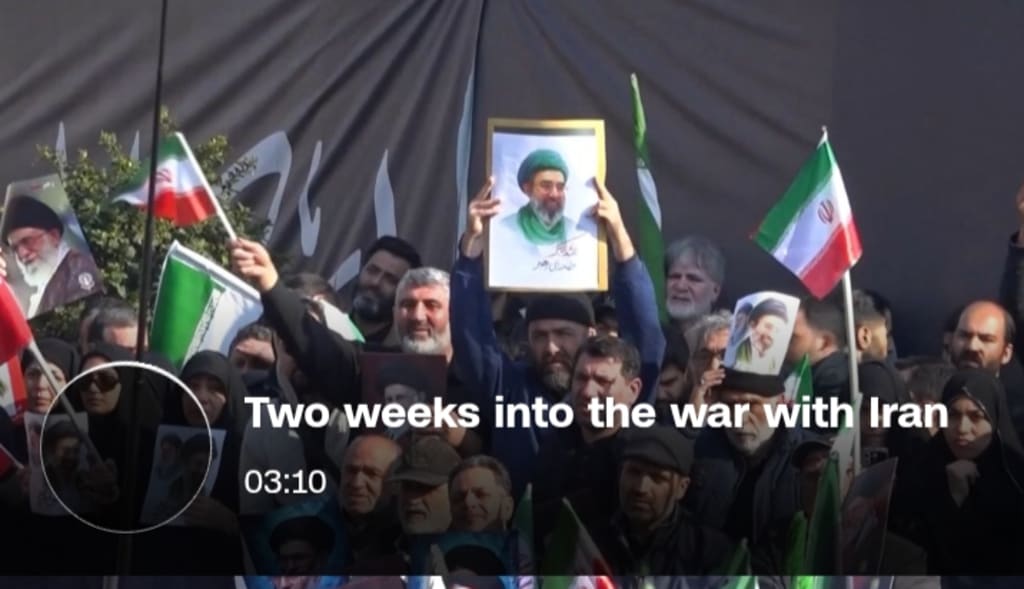
The war involving Iran, Israel, and the United States has entered a critical phase, with officials from both Washington and Jerusalem indicating that military operations are likely to continue for several weeks. Despite early speculation that the conflict could end quickly, recent statements from government leaders suggest the campaign may last longer as strategic objectives remain unfinished.
The conflict began escalating rapidly after joint strikes by U.S. and Israeli forces targeted Iranian military and nuclear-related facilities. Those attacks triggered retaliatory missile and drone strikes from Iran, expanding the confrontation across multiple areas of the Middle East and raising concerns about a wider regional war.
A Campaign With No Immediate End
Officials aligned with U.S. President Donald Trump have signaled that the ongoing military campaign could extend for weeks while the United States and Israel attempt to achieve strategic goals. These goals reportedly include weakening Iran’s missile capabilities, limiting its nuclear program, and reducing its ability to project military influence across the region.
Trump himself has suggested that the operation could last several weeks or longer depending on battlefield developments. Military leaders have emphasized that the scope and timeline of the campaign remain flexible and will depend largely on how Iran responds to continued strikes.
At the same time, Israeli officials have indicated they are prepared for a sustained operation. According to statements from Israel’s military leadership, thousands of potential targets in Iran remain under consideration, including command centers, missile launch sites, and military infrastructure.
For Israeli leaders, the campaign is framed as an effort to remove what they view as an existential threat posed by Iran’s military capabilities.
Escalation Across the Middle East
The war’s impact has not been confined to Iran alone. Retaliatory strikes and proxy conflicts have expanded across the Middle East, drawing in other countries and armed groups connected to Tehran.
Missile and drone attacks have targeted Israeli cities, while strikes have also hit U.S. military installations and strategic locations across the Persian Gulf. These actions have heightened fears that the conflict could spread further if additional actors become involved.
Iran has also conducted missile strikes against Israeli territory in response to the initial attacks, causing casualties and damage despite Israel’s advanced missile defense systems.
As the conflict intensifies, civilians across the region face rising uncertainty. Air raid sirens, disrupted infrastructure, and military mobilization have become part of daily life in several areas affected by the war.
Strategic Targets and Military Objectives
From the perspective of the United States and Israel, the military campaign aims to significantly weaken Iran’s strategic capabilities. Initial strikes reportedly targeted missile facilities, air defense systems, and command-and-control centers in multiple Iranian cities.
These operations were part of a broader effort to limit Iran’s ability to retaliate effectively and reduce the threat posed by its ballistic missile and nuclear programs. The strikes reportedly hit hundreds of locations across at least a dozen cities, including key military installations.
Israeli military officials have also suggested that dismantling Iran’s operational networks could require sustained pressure over time. This expectation is one of the reasons officials believe fighting could continue for several weeks.
Economic Consequences and Energy Concerns
Beyond the battlefield, the war is already affecting global markets. One of the most significant concerns centers on the Strait of Hormuz, a crucial shipping route through which a large share of the world’s oil supply passes.
The conflict has increased tensions around the strait, with threats to shipping routes raising fears of major disruptions to global energy supplies. Rising oil prices and increased shipping insurance costs are early signs of the economic ripple effects spreading worldwide.
Governments and international organizations are closely monitoring the situation, as a prolonged conflict could create broader economic instability.
Diplomatic Efforts Struggle to Gain Momentum
Despite the escalation in military operations, some international leaders continue to push for diplomatic solutions. European governments and global organizations have called for restraint and urged both sides to pursue negotiations instead of further escalation.
However, meaningful diplomacy has been difficult to achieve. Deep mistrust between Washington and Tehran, combined with ongoing military actions, has created significant barriers to dialogue.
Iranian leaders have stated that they will not negotiate while facing active military attacks, while U.S. and Israeli officials insist that pressure must continue until their strategic objectives are achieved.
This stalemate leaves diplomacy in a fragile position, with few signs that negotiations could begin in the immediate future.
Domestic Political Pressure
The war is also generating political debate within the United States. Polls suggest that many Americans are skeptical about the long-term benefits of the military campaign and are concerned about the risk of a wider regional war.
Critics argue that extended military involvement could draw the United States deeper into another prolonged Middle Eastern conflict. Supporters, however, claim that decisive action now could prevent greater threats in the future.
This debate reflects broader questions about the role of military force in addressing geopolitical challenges.
The Uncertain Path Ahead
For now, officials in both Washington and Jerusalem appear prepared for continued fighting as they pursue their strategic objectives in Iran. Military planners believe that sustained operations may be necessary to significantly weaken Iran’s capabilities and reshape the regional balance of power.
At the same time, the longer the war continues, the greater the risks of unintended escalation. Additional actors could become involved, humanitarian consequences could worsen, and global economic disruptions could deepen.
The coming weeks may determine whether the conflict moves toward a negotiated settlement or evolves into a broader regional confrontation.
For millions of people across the Middle East and beyond, the stakes could hardly be higher. As officials warn that the war could last weeks, the world is watching closely to see whether diplomacy can eventually replace the sounds of missiles and airstrikes.
About the Creator
The Forsyth House Fire
Since 1851, Forsyth House has stood on the corner of Union Street and Gordon Street in the heart of Glasgow. Its iconic, or was... because on Sunday 8th of March, 2026, a fire broke out in a small, seemingly un-named shop in the building and tore all that history down. As I write, the rubble is still unsettled and the street is still blocked off. Central Station is quiet on the upper level, and around 30 small businesses have quite literally gone up in smoke.
By S. A. Crawford3 days ago in The Swamp
US and Allies Clash with Russia and China Over Iran’s Nuclear Program
A Deepening Global Divide Over Nuclear Security A dramatic diplomatic confrontation has emerged on the global stage as the United States and its Western allies clash with Russia and China over Iran’s nuclear program. The dispute has unfolded at the United Nations and in international diplomacy, highlighting growing divisions among the world’s most powerful nations over how to address Iran’s expanding nuclear activities.
By Jameel Jamali4 days ago in The Swamp


Comments
There are no comments for this story
Be the first to respond and start the conversation.