
The US in Brief: Agents Who Shot Alex Pretti on Leave
Federal agents involved in Minneapolis shooting enter administrative leave amid fierce scrutiny as investigations continue

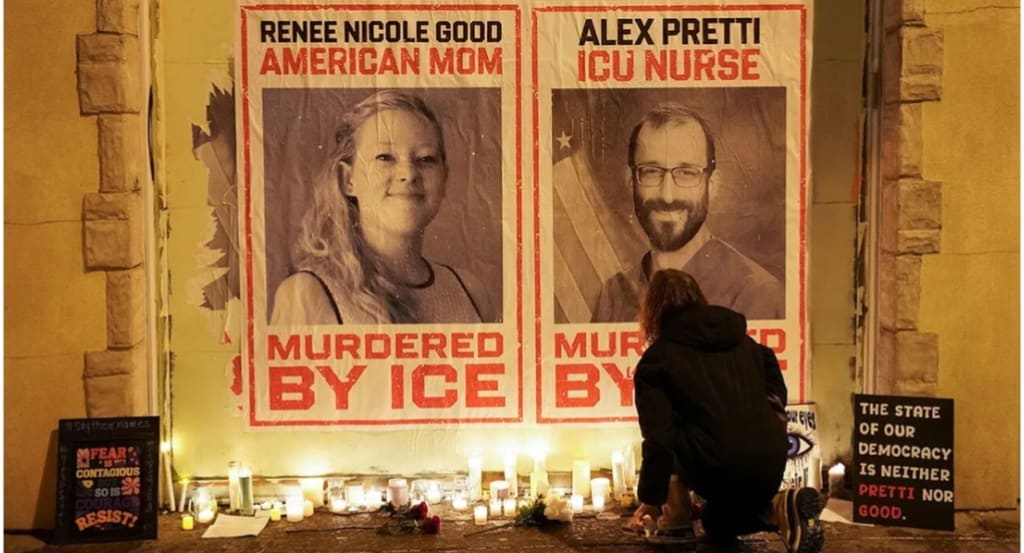
On January 28, 2026, the U.S. Department of Homeland Security (DHS) confirmed that federal agents involved in the fatal shooting of Alex Pretti in Minneapolis were placed on administrative leave, standard practice following a deadly law enforcement encounter. The move comes amid intensifying national debate over federal immigration enforcement tactics, public safety, and accountability after two recent fatal shootings of civilians by immigration officers in Minnesota.
What Happened in Minneapolis
On January 24, 2026, 37-year-old Alex Jeffrey Pretti, a registered intensive care nurse at the Minneapolis VA Health Care System, was shot and killed by U.S. Customs and Border Protection (CBP) agents during an immigration enforcement operation known as Operation Metro Surge. The incident occurred in Minneapolis amid heightened tensions over federal immigration crackdowns that have drawn protests across the city.
Video footage from bystanders shows Pretti standing near a street where agents were operating shortly before the confrontation. According to preliminary DHS and CBP reports, agents attempted to take Pretti into custody, and an altercation ensued. In the chaotic moments that followed, two agents discharged their weapons; Pretti was struck and later pronounced dead at a local medical center.
While DHS initially claimed Pretti posed a deadly threat, subsequent video review and eyewitness accounts suggest Pretti was filming the agents with his phone and may have been assisting a woman who had been pushed to the ground by officers when the situation escalated. Independent footage appears to show that Pretti never brandished or fired a weapon, contrary to early official statements.
Administrative Leave: Standard but Symbolic
DHS spokespersons confirmed that the two agents who fired their weapons during the encounter have since been placed on administrative leave, a customary step for officers involved in shootings. During this period, the agents are relieved of regular duties as federal investigators continue to review the facts and oversee evidence.
Officials noted that placing officers on leave does not imply guilt or wrongdoing but serves to ensure an “unbiased and thorough investigation” into the shooting. The agents may later return to alternative assignments or modified duties depending on the outcome of internal reviews and possible external oversight.
This administrative leave has significant symbolic weight, given the public outrage and scrutiny surrounding the incident. Many civil rights advocates, lawmakers, and activists view it as a necessary step toward accountability, while supporters of tougher immigration enforcement emphasize procedural norms and the dangers federal officers can face in volatile situations.
National Backlash and Political Fallout
The killing of Pretti has sparked widespread controversy and protest nationwide, fed by conflicting narratives about what occurred. Critics argue that Pretti, who was legally permitted to carry a firearm, was wrongly portrayed by officials and unjustly shot even after being disarmed and restrained — claims supported by video evidence circulating online.
The incident follows just weeks after another fatal shooting involving ICE agents in the same city, deepening concern over federal operations in civilian neighborhoods and the methods used by immigration authorities. Some political leaders have called for independent investigations, policy reviews, and changes to protocols that govern the use of lethal force by federal agencies. Others have defended federal officers’ actions as part of broader law enforcement responsibilities amid rising tensions over immigration.
President Donald Trump has been drawn into the debate, facing pressure to respond to civil liberties concerns while maintaining his administration’s tough stance on immigration enforcement. As political figures weigh in, the story has become a flashpoint in broader national discussions about civil rights, public safety, and the balance between enforcement and community trust.
Conflicting Accounts and Video Evidence
One of the most contentious aspects of the Pretti case involves conflicting accounts of the encounter. Official DHS briefings initially asserted that Pretti brandished a firearm and posed an imminent threat. However, multiple video analyses and witness testimonies contest that version, showing Pretti holding only a cell phone at critical moments before federal agents tackled him.
The footage shows that an agent appears to remove Pretti’s handgun shortly before shots were fired. For critics, this detail raises urgent questions about command decisions, situational awareness, and the justification for lethal force. Moreover, the apparent absence of clear evidence that Pretti fired his weapon has intensified public scrutiny and calls for transparency from federal authorities.
Investigations Underway
Federal investigations involve multiple agencies. The CBP’s Office of Professional Responsibility and DHS review units are examining body camera footage, agent testimonies, and other evidence. These inquiries aim to determine whether the use of force complied with federal guidelines and what tactical decisions were made in the lead-up to the shooting.
At the same time, Minnesota state authorities, including the Minnesota Bureau of Criminal Apprehension (BCA), have sought involvement in evidence handling and scene reconstruction — an effort that has encountered procedural friction with federal agencies. Local prosecutors have stressed the importance of cooperative investigation frameworks to ensure accountability and rebuild community trust.
Broader Impacts and Community Response
Public reaction to the shooting and the administrative leave has been deeply emotional. Supporters of Pretti, including nurses, veterans’ groups, and civil liberties organizations, have held vigils and rallies, emphasizing his service to veterans and his commitment to helping others. Many call for rigorous independent scrutiny and systemic reforms to federal enforcement tactics.
Conversely, some law enforcement advocates argue that federal officers operate under high-stress conditions and that administrative leave is a necessary procedural step that respects due process while investigations are ongoing.
Conclusion
The placement of the border agents who shot Alex Pretti on administrative leave underscores the complex legal, political, and ethical challenges surrounding the case. As investigations proceed and more evidence is reviewed, officials and the public alike are seeking clearer answers about how the fatal encounter unfolded and what measures might prevent similar tragedies in the future.
With national attention focused on Minneapolis, the Pretti case continues to fuel intense debate over federal enforcement practices, accountability standards, and the delicate balance between public safety and civil liberties.
About the Creator
Keep reading
More stories from Salaar Jamali and writers in The Swamp and other communities.
You Can’t Have Guns”: What Is Donald Trump’s Real Stance on the Second Amendment
Donald Trump has long branded himself as one of the strongest defenders of the Second Amendment in modern American politics. On the campaign trail and at conservative gatherings, he has repeatedly warned supporters that Democrats want to “take away your guns” and positioned himself as the last line of defense against federal overreach. Yet moments when Trump has said things like “You can’t have guns” have fueled debate and confusion about where he truly stands on gun rights. An examination of his rhetoric, policy decisions, and political alliances shows a stance that is both firmly pro-gun in principle and surprisingly flexible in practice.
By Salaar Jamali2 days ago in The Swamp
Speculation Mounts: Japan to Buy Yen, Perhaps With US Help
Financial markets are abuzz with speculation that Japan may intervene to support the yen, potentially with coordination or assistance from the United States. The move would mark a rare but significant step in currency management, as Japan seeks to stabilize the yen amid volatility that has rattled investors and global trade.
By Aarif Lashari7 days ago in The Swamp
The European Summit That Will Really Wind Up Trump
In the world of international politics, few events are designed to send messages as clearly as Europe’s latest summit. The European summit held earlier this month has attracted global attention — not just for its policy discussions, but for the way it is reshaping perceptions of U.S. leadership and, in particular, former President Donald Trump. While Trump remains a powerful figure in American politics, this summit has showcased Europe’s ability to coordinate on issues where his approach may seem at odds with longstanding alliances, sparking commentary and debate across news outlets, social media, and political circles worldwide. What the European Summit Is About The summit, attended by leaders from the European Union, NATO member states, and other strategic partners, focused on several pressing issues: Collective defense and NATO coordination, especially in light of ongoing tensions in Eastern Europe Energy security, following recent disruptions and price volatility Climate commitments, as Europe works to meet emission reduction targets Trade policies and economic resilience, particularly in a post-pandemic and post-inflation context While these topics might seem routine for an EU summit, the decisions and statements coming out of the meeting directly challenge the positions Trump often championed during his presidency, including skepticism toward NATO, confrontational trade policies, and a more unilateral U.S.-centric approach. Why This Summit Is Ruffling Trump’s Feathers Trump has long prided himself on his “America First” stance, which often positioned the U.S. against traditional allies when it came to defense spending, trade agreements, and global cooperation. This summit, however, is highlighting European cohesion and assertiveness in ways that stand in stark contrast to that philosophy. Analysts point out several reasons why the summit might be particularly frustrating for Trump: Unified Stance Against Russian Influence The summit emphasized coordinated defense and energy strategies to counter Russia’s influence in Europe. Trump, during his presidency, was often criticized for appearing conciliatory toward Russian interests, which makes Europe’s firm stance a clear rebuke to his approach. Economic Autonomy and Trade Deals Leaders discussed strategies to reduce dependency on U.S. supply chains for critical technologies and energy. This shows a shift toward European self-reliance in ways that contrast with Trump’s trade-focused America First policies. Climate and Green Energy Commitments The summit also reinforced Europe’s commitment to green energy investments and climate targets. Trump, known for rolling back environmental regulations during his administration, has often been at odds with global climate initiatives, making Europe’s proactive stance another point of contention. Public and Media Reactions Across the Atlantic, American media and political commentators have seized on the summit’s outcomes. Headlines are framing it as a strategic move by Europe to assert independence, while simultaneously casting a shadow on Trump’s record and rhetoric. Social media, predictably, has amplified the conversation. Memes and posts highlight Trump’s past skepticism of alliances and climate policies, contrasting them with Europe’s unified actions. Pundits argue that the summit demonstrates what a post-Trump foreign policy might look like in practice, even as he remains a prominent political figure. Why Europe Is Doing This Now Europe’s timing is strategic. With ongoing global challenges — from inflation and energy volatility to security threats in Eastern Europe — presenting a cohesive front strengthens Europe’s bargaining position globally. By sending a clear message about unity and long-term planning, European leaders are not just addressing immediate concerns; they are signaling to the world, including U.S. political figures like Trump, that Europe is capable of acting decisively, independently, and in alignment with long-term strategic interests. Implications for Trump’s Political Influence While Trump still has a significant base and influence over the Republican Party, summits like this have symbolic power. They: Contrast Europe’s collaborative approach with Trump’s unilateral style, highlighting potential shortcomings in his leadership philosophy Shift the narrative on international cooperation, potentially affecting how Trump’s foreign policy proposals are perceived by the public and political analysts Demonstrate the evolving nature of global leadership, showing that key international players can act without deference to past U.S. policies In short, the summit serves as both a practical geopolitical meeting and a subtle political message to Trump and his supporters. The Bigger Picture This summit isn’t just about Trump; it reflects broader trends in global politics: Rising European assertiveness: Europe is increasingly willing to lead on defense, trade, and climate policy without waiting for U.S. approval Global multipolarity: Nations are diversifying partnerships and strategies, reducing reliance on any single superpower Symbolic diplomacy matters: Summits are as much about optics as policy, shaping narratives in ways that resonate politically around the world For Trump, these trends pose challenges not only to his foreign policy record but also to the messaging he uses domestically about U.S. strength and influence. Conclusion: More Than Just a Summit The European summit may appear to some as just another routine diplomatic meeting, but in reality, it sends a strong signal to Trump and the wider world. By emphasizing cohesion, proactive planning, and independence, European leaders are highlighting policies and approaches that stand in contrast to Trump’s “America First” philosophy. Whether Trump sees this as a political challenge, a point of criticism, or simply the way global politics evolves, the summit has already sparked conversations that are reshaping the discourse around U.S.-Europe relations. In the end, this summit is a reminder that international gatherings are never just about policy papers or speeches — they’re about influence, messaging, and shaping the future narrative of leadership on the world stage. And in this case, it’s clear that Europe’s message is loud, coordinated, and — for Trump — hard to ignore.
By Muhammad Hassan5 days ago in The Swamp



Comments
There are no comments for this story
Be the first to respond and start the conversation.