
The U.S. Surpasses 1,100 Measles Cases in Two Months — Experts Warn More Deaths Could Follow
Falling vaccination rates, global travel, and misinformation fuel the return of a once-controlled disease
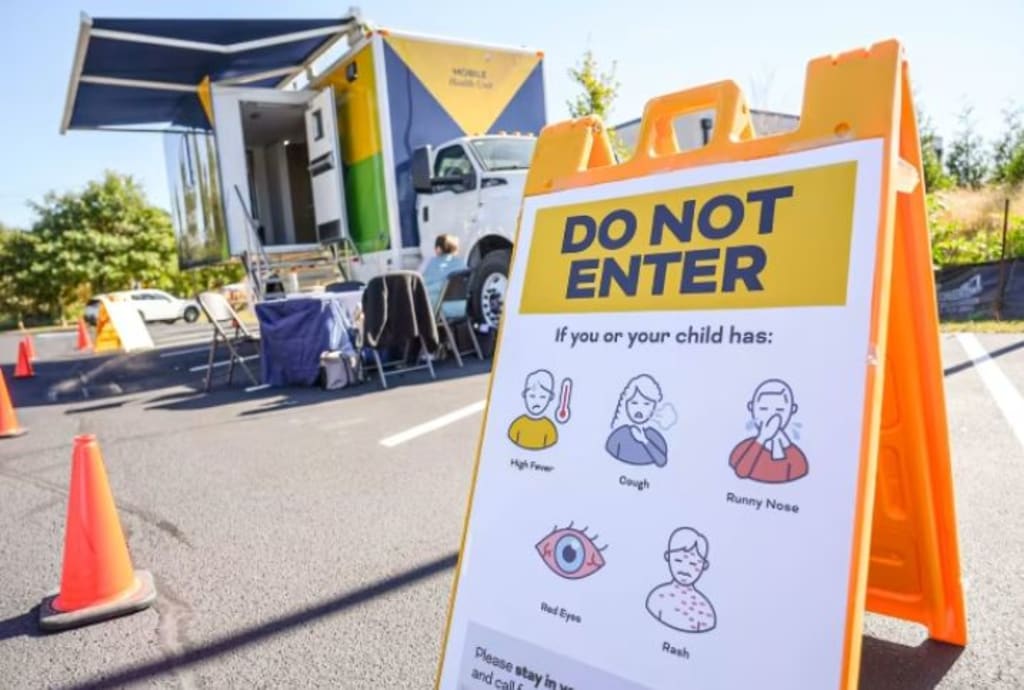
In a troubling public health development, the United States has recorded more than 1,100 measles cases within just two months, marking one of the fastest resurgences of the highly contagious virus in decades. Health officials are sounding the alarm that this surge may only be the beginning, with experts warning that additional hospitalizations — and potentially deaths — are likely if vaccination gaps persist.
Measles was declared eliminated in the U.S. in 2000, meaning continuous disease transmission had been halted. Yet elimination does not equal eradication. The virus continues to circulate globally, and outbreaks can occur when it is reintroduced into communities with low immunization coverage. The latest spike reflects precisely that scenario.
Why the Numbers Are Rising
According to data released by the Centers for Disease Control and Prevention, outbreaks have been concentrated in clusters where childhood vaccination rates have fallen below the threshold needed for herd immunity. Measles spreads through respiratory droplets and can remain in the air for hours, making it one of the most infectious diseases known.
Public health experts say multiple factors are converging:
Declining routine childhood vaccination following pandemic disruptions
Growing vaccine hesitancy fueled by misinformation
Increased international travel reintroducing the virus
Underfunded local public health infrastructure
Even small decreases in vaccination coverage can produce large outbreaks because measles requires about 95% community immunity to prevent sustained spread.
The Human Toll
While many people recover, measles is far from harmless. The virus can cause severe complications including pneumonia, brain swelling, long-term neurological damage, and death — particularly in young children, pregnant individuals, and those with weakened immune systems.
Hospitals in several states have reported rising pediatric admissions tied to measles complications. Doctors warn that the danger often appears after the rash fades, when secondary infections or inflammation can emerge.
Historically, before widespread vaccination, measles caused hundreds of deaths annually in the U.S. Experts fear that without swift intervention, the country could see fatalities again at levels not witnessed for years.
The Global Context
The resurgence is not limited to one country. The World Health Organization has reported sharp increases in measles cases across multiple regions, citing pandemic-era disruptions to routine immunization campaigns as a key driver.
When vaccination programs stalled, millions of children missed scheduled doses. As travel resumed, the virus found opportunities to spread across borders and ignite outbreaks in pockets of vulnerability.
Public health researchers note that measles often acts as an early warning sign. When it returns, it suggests broader cracks in vaccination systems that could affect other preventable diseases.
Vaccine Hesitancy and Misinformation
A major contributor to the current surge is vaccine hesitancy — the delay or refusal of vaccines despite availability. Social media has amplified misinformation about vaccine safety, sometimes overshadowing decades of scientific evidence.
The measles, mumps, and rubella (MMR) vaccine is highly effective, providing about 97% protection after two doses. Serious side effects are rare, and the vaccine has been extensively studied worldwide.
Yet trust has eroded in some communities. Experts emphasize that rebuilding confidence requires more than data; it demands community engagement, transparent communication, and culturally tailored outreach.
What Happens Next
Public health officials expect additional cases in the coming months, particularly as spring and summer travel increases. Schools, childcare centers, and densely populated urban areas remain high-risk environments when vaccination coverage is uneven.
Officials are responding with:
Targeted vaccination campaigns
School immunization audits
Rapid outbreak response teams
Public awareness messaging
Expanded access to vaccines in pharmacies and clinics
However, experts caution that containment becomes more difficult once outbreaks reach multiple states simultaneously.
The Economic and Social Impact
Beyond health risks, measles outbreaks carry significant economic costs. Local health departments must conduct contact tracing, provide emergency vaccination clinics, and sometimes close schools temporarily. Families face medical bills, missed work, and long-term care expenses in severe cases.
There is also a broader societal impact: outbreaks can strain already stretched healthcare systems and deepen polarization around public health measures.
A Preventable Crisis
One of the most frustrating aspects for health professionals is that measles is almost entirely preventable. Unlike many emerging diseases, the tools to stop transmission have existed for decades.
Experts emphasize that even modest improvements in vaccination coverage could dramatically reduce cases. The challenge is less scientific than social — rebuilding trust, improving access, and countering misinformation.
Protecting the Most Vulnerable
Infants too young to be vaccinated rely on community immunity for protection. So do people undergoing cancer treatment or living with immune disorders. When vaccination rates drop, these groups face the highest risk.
Pediatricians stress that measles is not simply an individual choice issue; it is a collective responsibility. Each vaccination helps create a protective barrier that shields those who cannot be vaccinated themselves.
Looking Ahead
The surge past 1,100 cases is a stark reminder that public health victories can be fragile. Diseases once considered under control can return quickly when vigilance fades.
Experts warn that without sustained action, the U.S. could experience recurring outbreaks rather than isolated incidents. Preventing that scenario will require coordinated efforts from federal agencies, local health departments, schools, healthcare providers, and communities.
The path forward is clear but urgent: restore vaccination coverage, strengthen surveillance, and rebuild trust in preventive medicine. Whether the current surge becomes a temporary setback or a long-term trend depends largely on the decisions made now.
For public health officials, the message is simple — measles is back, and complacency could make the consequences far more severe.
About the Creator
The Saddest Thing - The Billionaires Who Rule America Aren't Even Enjoying Themselves
This single post says more about our ruling class than a thousand policy papers. The saddest thing about today's system is that the men robbing the rest of us - sabotaging our economic prospects, our pensions, our access to affordable healthcare - are not even happy.
By Scott Christenson🌴21 days ago in The Swamp
Kashmir, Spying, Demolitions: How Modi’s India Embraced the ‘Israel Model’
India’s security policies in India, particularly in the disputed region of Kashmir, have increasingly drawn comparisons with the approach used by Israel in the Palestinian territories. Analysts describe this shift as the adoption of an “Israel model” — a strategy that combines heavy surveillance, military dominance, and strict administrative controls to suppress dissent and reshape contested regions. Since Narendra Modi took office in 2014, India has significantly deepened defense and intelligence cooperation with Israel. Once distant partners, the two countries now share advanced surveillance technology, counterterrorism expertise, and military hardware. This relationship has influenced how New Delhi manages Kashmir, especially after the revocation of the region’s semi-autonomous status in 2019. Surveillance and Intelligence Expansion One of the most visible elements of the “Israel model” is the rapid expansion of digital surveillance. Kashmir has become one of the most heavily monitored regions in the world. Authorities have installed extensive networks of CCTV cameras, facial recognition systems, and drone patrols. Mobile phone data and internet activity are closely tracked, and communication blackouts have been imposed during periods of unrest. Israeli-made technologies, particularly advanced spyware and reconnaissance tools, have reportedly been incorporated into India’s security apparatus. Supporters argue these measures are necessary to combat militancy and prevent attacks. Critics, however, warn that such tools are increasingly used against journalists, political activists, and ordinary citizens, shrinking space for dissent and privacy. Human rights groups say this mirrors Israel’s methods in the West Bank and Gaza, where surveillance is used not only for security but also to exert constant pressure on the population. Demolitions and Collective Punishment Another controversial practice linked to this model is the demolition of homes belonging to suspected militants or protesters. In Kashmir, authorities have razed dozens of houses in recent years, claiming they were used to shelter insurgents. Officials describe demolitions as a deterrent strategy designed to discourage families from supporting militancy. This policy resembles Israel’s long-standing use of house demolitions as punishment for families of accused attackers. International legal experts argue that such actions amount to collective punishment, which is prohibited under international humanitarian law. Despite these criticisms, the tactic has gained political support within India as a visible demonstration of state power. Local residents in Kashmir describe demolitions as devastating, leaving entire families homeless without due legal process. Many see it as a tool to intimidate communities and reshape demographics through fear and displacement. Militarization of Daily Life The “Israel model” also involves the normalization of military presence in civilian spaces. Kashmir is already one of the most militarized regions on earth, with hundreds of thousands of troops stationed across towns and villages. Checkpoints, armored vehicles, and fortified bunkers have become part of everyday life. Schools, hospitals, and markets often operate under the watch of armed personnel. Curfews and movement restrictions are frequently imposed after attacks or protests. Supporters argue this level of control has reduced militant activity. Critics say it has deepened resentment and alienation among Kashmir’s Muslim majority population. The shift reflects a broader ideological change within India’s ruling establishment, which increasingly frames Kashmir not as a political dispute but as a security problem requiring permanent force. Political Messaging and Public Support Domestically, the comparison with Israel carries political weight. Israel is often portrayed by Indian nationalist media as a model of toughness and technological superiority in fighting terrorism. The Modi government’s close ties with Israel have been celebrated as proof of India’s rise as a strong global power willing to abandon past restraint. This narrative resonates with voters who support hardline policies and see Kashmir primarily through the lens of national security. The government’s actions are presented as restoring order and integrating the region fully into India. However, opposition parties and civil society groups warn that the approach risks eroding India’s democratic foundations. They argue that policies tested in an occupation context cannot be safely applied within a constitutional democracy without severe consequences for civil liberties. International Concerns International observers have increasingly voiced alarm at India’s direction. The United Nations and several human rights organizations have criticized internet shutdowns, detentions without trial, and restrictions on press freedom in Kashmir. Comparisons to Israeli practices have intensified these concerns, especially given the long-standing criticism of Israel’s policies in Palestinian territories. While India rejects the “Israel model” label, insisting its actions are internal security measures, the parallels are difficult to ignore. Both rely on surveillance, force, and administrative control rather than political reconciliation. A Risky Path Forward The embrace of this strategy marks a turning point in India’s governance of Kashmir. It may bring short-term stability, but experts warn it could fuel long-term instability by deepening grievances and mistrust. By adopting techniques associated with occupation and control, India risks redefining its democracy through the lens of permanent security. The Kashmir experiment, modeled increasingly on Israel’s methods, raises a profound question: can lasting peace be achieved through surveillance and demolitions, or does it require political dialogue and respect for rights? For now, the “Israel model” has become a defining feature of Modi’s India in Kashmir — one that continues to shape the region’s future and India’s global image.
By Fiaz Ahmed 4 days ago in The Swamp



Comments
There are no comments for this story
Be the first to respond and start the conversation.