
The U.S. Government Shutdown and Emerging Budget Challenges
Brief overview of the shutdown and new budget challenges.
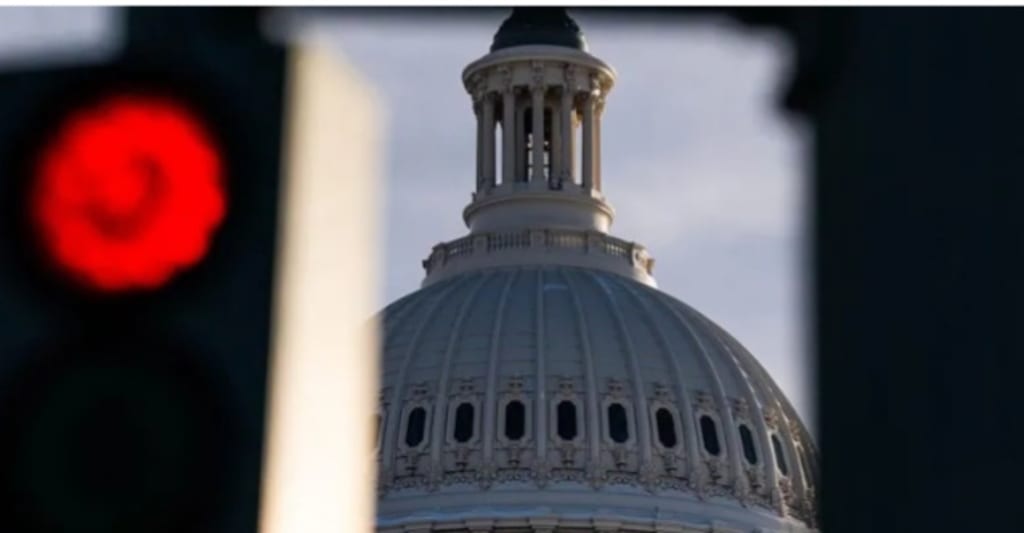
The United States recently faced a partial government shutdown in early February 2026, highlighting long-standing budget challenges and political divisions. The shutdown lasted for a few days before Congress passed a $1.2 trillion funding bill, which the President signed, ending the immediate crisis. But the event underscored deeper fiscal issues that the U.S. government must address to avoid future disruptions.
What is a Government Shutdown?
A government shutdown occurs when Congress fails to pass funding bills or continuing resolutions before the fiscal year begins on October 1. During a shutdown, many federal agencies close or reduce operations. Essential workers continue, but others are furloughed without pay.
Shutdowns are often the result of political disagreements over spending priorities. Lawmakers may disagree on issues such as defense budgets, healthcare, or social programs. When these disagreements cannot be resolved, the government temporarily loses funding.
Why the 2025–2026 Shutdown Happened
The recent shutdown stemmed from disputes over Department of Homeland Security (DHS) funding and immigration policies. Democrats wanted stricter oversight and reforms, including body cameras for agents and warrants for certain actions. Republicans resisted tying funding to policy conditions, leading to a stalemate.
This standoff reflects broader budgetary and partisan challenges in Washington. Healthcare, social programs, and entitlement spending remain frequent points of contention, complicating timely budget approval.
Immediate Effects of the Shutdown
Even a short shutdown has real-world consequences. Hundreds of thousands of federal workers may be furloughed without pay. Essential employees continue working but may not be paid immediately.
Social programs, such as SNAP (food assistance), experienced delays, affecting millions of families who rely on monthly benefits. Economic data reporting, including labor statistics, can also be delayed, complicating financial planning and policy decisions.
Local communities and businesses also feel the impact. Hospitals dependent on Medicare or Medicaid may face delays in reimbursements, while small businesses lose revenue tied to federal contracts or employee spending.
Economic Costs
Government shutdowns can significantly slow economic growth. Analysts estimate that a six-week shutdown can reduce GDP growth by 1.5%, and an eight-week shutdown can reduce it by 2%. Even after the shutdown ends, the economy may experience lasting losses.
The economic impact comes from delayed government spending, unpaid workers, and reduced consumer demand. Small businesses, especially those near federal facilities, are often hit hardest. Local economies, dependent on government contracts or employees, feel these disruptions immediately.
Political and Institutional Challenges
The U.S. budget process is complex. The fiscal year starts on October 1, and Congress is expected to pass multiple appropriations bills on time. However, political gridlock often results in continuing resolutions, which temporarily fund government operations.
Repeated shutdowns reveal weaknesses in political consensus and raise concerns among credit rating agencies. While the U.S. maintains a stable sovereign rating, repeated budget crises could undermine confidence in long-term fiscal management.
Social Impacts
Shutdowns affect public trust in government. Citizens experience delays in services like passport processing or public safety programs, which reduces confidence in government efficiency.
Federal employees face uncertainty, low morale, and potential financial hardship, which can affect long-term workforce stability. Nonprofit organizations relying on federal grants may also struggle, forcing cuts to programs that support vulnerable communities.
Long-Term Solutions
Experts suggest several reforms to prevent future shutdowns:
Automatic Continuing Resolutions – Ensures funding continues if regular appropriations are delayed.
Simplifying the Budget Process – Reduces opportunities for political standoffs.
Adjusting the Fiscal Calendar – Allows more time for negotiations before the fiscal year starts.
While political polarization makes reform difficult, the costs of repeated shutdowns—economic, social, and institutional—make it clear that change is necessary.
Conclusion
The 2025–2026 government shutdown was short, but it highlights deep structural challenges in U.S. budget management. Economic growth, public trust, and government efficiency all suffer during shutdowns.
Avoiding future crises will require political compromise, process reforms, and stronger fiscal planning. As the United States faces rising debt and complex social obligations, the stakes are higher than ever. A government shutdown is not just a political issue—it affects millions of Americans and the health of the nation’s economy.
About the Creator
Keep reading
More stories from Ayesha Lashari and writers in The Swamp and other communities.
Trump’s Surprising Shift: White House Talks with ‘Terrific’ Petro After Months of Feuding
For months, Donald Trump and Colombian President Gustavo Petro appeared locked in an ideological standoff that symbolized the wider rift between conservative populism and Latin America’s new left. Their exchanges—marked by sharp rhetoric, public criticism, and mutual distrust—left little room for cooperation. That is why reports of renewed talks, and Trump’s unexpected praise of Petro as “terrific,” have raised eyebrows across diplomatic and political circles.
By Ayesha Lashari4 days ago in The Swamp
Why Black History Matters in America?
The United States of America is celebrating their 250th anniversary in 2026. I'm proud to be an American and as someone who was born here, I wouldn't imagine myself living anywhere else. This is a country where opportunities are possible. Where anyone can be successful in anything they desire to do. Equality, community, and togetherness are the backbones of what America is and should be about. However, we have an administration who wants to erase and disregard those who have made positive, meaningful impacts in our country, specifically Black figures, such as Martin Luther King, Jr., Rosa Parks, and Maya Angelou. President Trump and his administration have been constantly complaining and fighting against what they call the "Woke agenda". They use this excuse as a distraction from other issues they refuse to address, such as the high cost of living, climate change, and inflation. That equality is dividing America, when in reality, it's bringing us together. Being woke is not tied to a specific political party. No matter where you stand on the political spectrum, you can still care about other people and their plights. Compassion and empathy for others isn't tied to a political party, either. We were taught as children to treat others the way we want to be treated and not judge others because they're different from us. Caring about others isn't a personal attack on your beliefs. It doesn't make you any less of a person. People who are easily offended over African American figures, past or present, or anything related to it, are grasping at straws. Current and future generations need to know who people like Harriet Tubman and Shirley Chisholm were, especially in the classroom. Black History is part of American History. It should be recognized, not hidden or forgotten. Besides, you can't shield children from everything, just because your feelings are easily hurt.
By Mark Wesley Pritchard 6 days ago in The Swamp




Comments
There are no comments for this story
Be the first to respond and start the conversation.