
The Politics of Compromise, Shall We Dance
The Handshake of Political Theatre


Luis Peña stood at the office window; his eyes fixated on the near-perfect lawns of Parliament Hill. Traditional media declared the polls brutal and urged him to quit in shame, while some social media advocated for his public hanging. Every carefully planned policy seemed to go catastrophically wrong and only deepen public hatred of him. Where democracy once felt sacred, now, it was the stage of his undoing. The beloved politician, who once dominated the polls, was crumbling, and his family name was in shambles.
“I am Prime Minister of a fractured nation… and a ruined man,” he thought.
Approval ratings had collapsed. Allies vanished. His marriage disintegrated under media scrutiny, and the constant protesters who appeared everywhere calling for his public execution. The public didn’t just want him gone—they wanted him publicly executed. The Peña name, once synonymous with leadership, had become a late-night punchline and a meme in every digital sewer. He truly understood what his parents went through thirty-plus years earlier when her time as prime minister was in its last days.
He turned from the window like a dictator turning from a burning capital as the dogs broke through the palace gates. Lifting the edge of his desk mat, he pulled out a brass key. From the bottom drawer, he retrieved an old burner phone—the last relic of an unthinkable political maneuver. “May history forgive me,” he thought.
As he lifted the phone and dialled, he wondered how it could ever come to this.
He hesitated only a moment, then dialled. The line crackled.
“This is Luis. Put him on.”

The voice that came through was unmistakable—drawling, smug, self-satisfied, like the used car salesperson moving in for the sale.
“Louie, baby! You’ve seen the numbers. Every time that fossil stumbles on stage, I gain. November’s mine. Once elected, I might get a statue put up with my right hand holding up the old bastard’s head before I put it on a platter.”
“I received the package,” Luis replied, ignoring the commentary. “We’ll talk after your Thanksgiving.”
There was a chuckle. “Smart move, Louie.”
He hung up without another word. The drawer clicked shut, and the key twisted back into place. The darkness of his office enveloped him. He’d just made a deal with the one man he loathed above most others, a demagogue who thrived on chaos and cruelty and grim humour. A man who treated politics like an event in the Roman Coliseum.
But he was counting on an arrogant bottom-feeder to rescue his party, maintain his nation and allow him to bow out of politics with some form of grace.
As the weeks went by and summer turned to fall, his government spiralled further into paralysis. As the “government-in-waiting,” the official opposition, weary of the government’s self-inflicted wounds, had already called for an election. This fragile coalition with the socialists had become the elephant in the room. Every new concession only further alienated his base and infuriated moderates, no matter how positive it was for the people of his nation. Cabinet members leaked many private meetings to the press. Anonymous MPs called for a leadership review or were prepared to announce their retirement. He received daily messages—some from party insiders, others from emboldened citizens—demanding his resignation, or worse, his public trial followed by his execution.
While Peña stood on the edge of ruin, his unlikely American ally continued as the rising star of American politics. An attempted assassin had grazed his neck at a public rally. Turning him from a politician into a martyr or some right-wing voters, a new Messiah. Another attacker got within a few feet of him, with a vest full of explosives, but the detonator jammed. This new political messiah would laugh the next day because the detonator was from a third-world country. “If he bought from our great nation, neither one of us would be here today.”
Every unhinged comment, every conspiracy-laced rant, only drew more followers. The right-wing press adored him, and his cult-like base treated him seemed to worship him. All the while, the world cringed at the thought of this man returning to the office.
Peña would sit in the Commons chamber, watching the little worm across the aisle—Leader of the Opposition—spit out half-truths, outright lies, and nationalist dog whistles. And the press? They lapped it all up. Peña wondered to himself if that little man across the aisle had shares in oil companies. The amount of grease on his hair these days seemed to increase.
On some days, people smeared Peña as a closet communist. Other days, a sex-crazed degenerate. Social media accused him of beating his wife. One tabloid claimed he once wore a gorilla costume—without the mask—at an underground fetish club. Worse still, one group followed his estranged wife and asked her if she wanted to make a statement or risk being executed with him. His estrangement from his wife and the events wrecked his personal life. His political and private legacy, poisoned.
One night, he sat in his office and removed a small revolver once given to him as a gift. For a moment, he considered pulling the trigger. In the semi-darkness of his office, phone locked away, the thought hung heavy in the air; he would wait until events played out south of the border. Still, as he sipped a diet pop, he wondered whether history would remember his reforms, his efforts to mend a wounded country, or would it remember the memes, the scandals, the fall?
In late August, several things all at once seemed to happen on the world stage. Terrorists started shelling shipping between Africa and the Middle East. The current leader to the south, during a debate, forgot what he was talking about and asked for a taxi to his hotel. The current administration was in shambles as the Vice President took over the campaign.
Days slowly turned into weeks, and weeks into the southern Thanksgiving festival. Election time, the world watched, breath held, as the impossible happened: the former president returned—electrified by rage, revenge, and a rabid base ready to claw the eyes out of all the foreign devils responsible for their nation’s economic and military woes. The result sent a seismic shock across the globe. Markets trembled. Alliances shifted. A few rarely used words, “tariffs” and “global interest,” erupted during his victory speech.
Now, the game was truly afoot.
Luis Peña waited for a week as the president-elect started talking about high global tariffs against his country’s physical closest neighbours. Their neighbour’s actions felt like a betrayal of trust and established agreements. Under the cover of diplomatic necessity, he travelled south for a meeting no one believed would happen. The electronic media always seemed to be one step ahead, and the press found him. A single drone shot—grainy, distant, clouded showed Prime Minister Peña stepping onto the tarmac of a private airstrip at a Caribbean retreat.
Headlines soon exploded:
'PRIME MINISTER PEÑA MEETS WITH PRESIDENT-ELECT AT CARIBBEAN RETREAT. '
'PRIME MINISTER GOING FOR A SWIM WITH ENEMY '
'IS THIS THE TIME TO PUT ON THE BATHING SUIT, PEÑA, YOU LOSER! '
The estate— a fortress of wealth and ego, and gluttony was where Luis was to meet the yet-to-be fully crowned demigod. As Luis reached the large circular table at one end of a grand ballroom, he extended his hand. The president-elect didn’t rise. He reclined in his chair like a king expecting tribute.
“Louie, baby,” he sneered, drink in hand. “Time for your little nation to pay… or maybe it’s time you joined us. We’ve got room for a new governor if you know how to smile and salute.”
Luis remained stone-faced.
“Louie, baby,” he sneered. “Time for your little nation to pay, or maybe it’s time you joined us. You could be a governor if you play your cards right.”
Mockery followed: tariffs, taxes, threats. “Nothing personal, just business,” he said. But to Louis, it was annexation disguised as a handshake.
The footage leaked as these things tend to do. The president’s insults went viral. And the people, silent for so long, awoke.
National pride surged enough before the Prime Minister returned to Canada. Regional divides that had lasted for over a hundred years vanished. Flags flew everywhere across the nation. He was almost ready to resign and allow another to take charge. A day later, he rose in Parliament and spoke of pride in his nation, pride in how we do things and that we would never surrender our sovereignty.
For the first time in years, national pride surged. French-speaking separatists marched beside prairie farmers. Indigenous leaders locked arms with business leaders. Veterans raised flags. Students painted their faces. Transgender people stood next to Fundamentalists, Muslims, and Jews waved the National Flag proudly. A once-divided country began to rediscover itself—not because of politics, but because of humiliation.
The party, thought dead, came back roaring. Every threat from the South improved the party’s fate. It was now time for Prime Minister Luis Peña could call a leadership convention and prepare to step down. The campaign for the leader was very one-sided and bright, a businessman.
The big convention night was a chance for him to leave party leader not in disgrace or as someone fleeing, but as a statesman, someone who believed in his nation and stood for its sovereignty. He resigned not in disgrace but with strategy, allowing a clean face to lead a rejuvenated party now surging in the polls like never before in history. The public, once poisoned by scandal, began to see him differently, not as a failure, but as a statesman who had taken the hits but believed in his nation. As he gave his final address to the party, he could see his estranged wife and his teenage children in the right corner of the room. It may be the night his party gets another chance, and maybe he gets a chance with his family.
The election was called, and analysts would call it not a mere campaign but a movement. One analysis called it a chance for a nation to take back its sovereignty. No one knew of Luis’s quiet conspiracy to save a party and a nation. A nation humiliated a few months ago became a nation reborn.
The days turned into weeks, and everyone slowly stopped talking about the comeback of a political party and focused on all the comments and threats coming out of their southern neighbour. Luis Peña, like most former leaders in his nation, faded away very quickly. He had lots of time to spend with family and friends. He occasionally would look at the news and read about other nations being threatened militarily
The day of reckoning was suddenly very close at hand; travel had become so much simpler. With no throngs of security around him, he rarely saw negative or threatening media messages. This made his disappearance on a Sunday morning so much simpler. He decided to take connecting flights to Hagerstown, where he took a room at a local hotel. He planned to stay the night and wait for some further instructions. That evening, he went into the hotel pool and swam several lengths before getting out of the pool. One woman stopped him and said he looked familiar, until one of her friends laughed, saying she said that to every man she met who appeared to be under sixty-five.
He awoke early to the sound of the hotel telephone ringing. He picked up the receiver, a voice politely told him to check his incoming email. He thought this was getting a little cloak-and-daggerish for him, but he had insisted it be done this way. A few moments later, he scanned his incoming emails and found a message saying two men would meet him outside the hotel by the Breakfast House restaurant at 9:30 a.m.
He decided to move early so he could at least get coffee in the restaurant before the next leg of his journey. The restaurant itself looked like something out of a sitcom, and some of the clients looked like stereotypical Midwesterners; the staff all looked like they came from an old American sitcom called Alice. A quick coffee and some slightly burnt toast helped him prepare for the next leg of his journey.
His two escorts looked like they'd stepped out of a political thriller—one Black, one white—identically dressed in crisp black suits, white shirts, narrow black ties, and mirrored sunglasses. He smiled as he remembered watching the movie “Men in Black” with his children several years ago. For a moment, he half-expected to be shoved into a vintage Crown Vic. Instead, a sleek black Suburban rolled to a quiet stop. The men guided him inside without a word, then turned and walked away, never entering the vehicle themselves.
As the SUV eased toward the military side of the airport, he scrolled through the latest updates. The President was already claiming a diplomatic triumph, citing stability restored at both international sea canals. More interesting to the former Prime Minister, the president’s veiled threats toward the northeast seemed to have reshaped public sentiment. What was once a cry for full independence had shifted; residents now expressed a sudden loyalty to their European overseers. It seemed he still targeted his northern and southern neighbours ruthlessly and now wanted them both to join his nation.
A few hours later, the small military aircraft was landing in Guantanamo Bay, Cuba. He had visited the poor Caribbean country twice, once with his mother and siblings, the other time as the leader of his nation, but he had never been to the American base there. A Marine sergeant escorted him from the aircraft to a waiting military vehicle. “Welcome to Cuba,” he said with a commanding grin as the car sped away.
Moments later, he was escorted through the front entrance of an official-looking government building. He expected the sterility of a military outpost—concrete walls, fluorescent lights, the faint scent of oil and paperwork. Instead, the interior unfolded like a high-end Manhattan hotel. Polished marble floors reflected soft ambient lighting, and a curated art collection lined the walls.
Beyond a velvet-curtained threshold, he found himself entering a private club space—quiet, opulent, and unmistakably exclusive. It was here, in this unexpected elegance, that the real surreal world began. Two other global figures stood nearby—seasoned powerbrokers with polished smiles and hidden histories. Their faces, long known in diplomatic circles, it seemed, for tonight, they were all allies, at least in theory.
A massive digital map flickered overhead, confirming what had taken years to orchestrate: the canal lanes had been cleared of Southeast Asian influence at least for the moment. Trade routes that seemed forever choked by regional tensions and politics now seemed ready to make peace or at least come to an understanding. Half a world away, the Arctic glowed on the screen. A new multinational pact was nearly ready to be signed. Soon, it seemed vast frozen corridors for submarines and forward operating bases would begin. Before long, the oil and rich minerals hiding silently beneath the ice would be found and exploited.
Louis took a slow breath, his smile tight and joyless. The taste of victory was bittersweet. He wasn’t the only one who had bartered away principles for power or love of their nation. Around him, toasts were raised with practiced ease, crystal chiming against crystal. Every human in that room had made their deal with the devil. Some choose the boardrooms of the world, others in backchannels soaked in blood, sweat and tears.
As the glasses were raised, a subtle shift in the room’s air drew his attention. At the edge of the chamber, where shadows clung like ghosts of past misdeed, a figure emerged, uninvited, unwanted, but there. Tall, composed, and unnervingly quiet, the man exuded a presence that made the room still. The room slowly became silent.
He raised a bottle in his hand as he approached the others. He smiled and said, “Privet!”
Luis was stunned as he watched the man stand next to the southern president with whom he had made plans.
Louis’s throat dried as he stood stunned. This wasn’t just a new player; it was one of the puppet masters.

The President, oblivious or pretending to be, raised his glass higher and let out a booming laugh. “To the New World Order,” he declared, his voice echoing through the hall of mirrored lies.
And for a moment, no one drank.
Authors Notes
Disclaimer: This is a work of fiction. Any resemblance to actual persons, living or dead, or real events, locations, or organizations is purely coincidental.
If you enjoyed my writings, please subscribe and share this or any of my stories with others.
Cheers Bruce C
About the Creator
Bruce Curle `
Greetings! I’m a Canadian writer, certified Life Coach, and actor with a passion for storytelling, creativity, and versatility.
Keep reading
More stories from Bruce Curle ` and writers in The Swamp and other communities.
A Gathering of Evil Bosses
“I’m the queen of chin jutting while I smooth my hair, attacking, insulting, and deflecting to protect my appointer.” “Oh, please, Blondi, my hair is curled, highlighted, and longer than yours. I feature television commercials telling immigrants that we will give them a free plane ride home, and if they voluntarily turn themselves in, they will be allowed to legally apply for re-entry. It runs everywhere, and I look good in it! You can’t compete because of your blond hair. Mine is nicer, and my lips are prettier than yours.”
By Andrea Corwin 10 days ago in The Swamp
Pratt & Whitney Unveils Possible Design for Sixth-Generation F-47 Fighter Jet
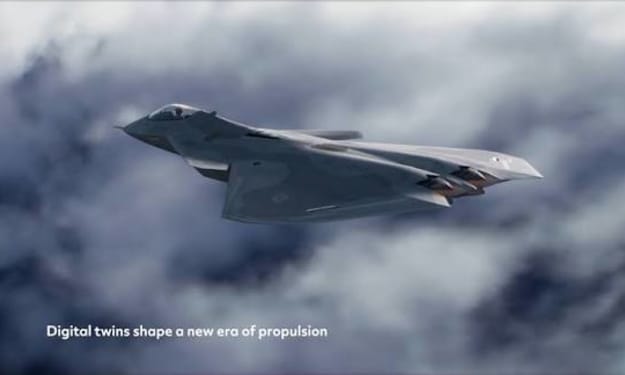
Pratt & Whitney has revealed preliminary design concepts for its sixth-generation F-47 fighter jet, signaling a major step forward in next-generation aerial combat technology. The announcement, made at a confidential industry briefing last week, highlights potential advances in propulsion, stealth, and networked warfare capabilities that could redefine air superiority for allied forces in the coming decades. Vision for the F-47 According to Pratt & Whitney engineers, the F-47 is envisioned as a highly adaptable, multi-role fighter capable of dominating both air-to-air and air-to-ground operations. Key design priorities include: Advanced propulsion systems that promise higher thrust-to-weight ratios, improved fuel efficiency, and supersonic cruise capabilities without afterburners. Enhanced stealth features, including radar-absorbing materials and adaptive surface geometry to minimize detection across multiple spectrums. Integrated sensor networks that allow seamless communication with other aircraft, unmanned systems, and ground-based command centers. The aircraft is also expected to incorporate modular systems, allowing for rapid upgrades in avionics, weapons payloads, and electronic warfare suites. This flexibility is seen as essential in a rapidly evolving threat environment where adversaries are deploying increasingly sophisticated anti-air systems. Propulsion Breakthroughs Pratt & Whitney emphasized that the F-47’s propulsion design could leverage next-generation adaptive cycle engines. These engines are designed to switch between high-thrust and high-efficiency modes depending on mission demands, a capability that could significantly extend operational range and loiter time. “Adaptive propulsion is a game-changer,” said a senior engineer at the briefing. “It allows the fighter to maintain performance while optimizing fuel use, reducing the need for frequent refueling and increasing mission flexibility.” Stealth and Survivability Stealth remains a central focus. While exact specifications are classified, Pratt & Whitney indicated the F-47 design integrates both passive and active measures to avoid detection. This includes adaptive coatings, low-observable exhaust management, and smart airframe shaping to minimize radar and infrared signatures. Electronic countermeasures and advanced avionics are also planned to improve survivability against emerging integrated air defense systems. Analysts note that survivability, more than raw speed or armament, is increasingly the determining factor in future fighter effectiveness. Strategic and Operational Implications The F-47 program is seen as critical to maintaining a technological edge over potential peer adversaries in the Asia-Pacific and European theaters. The aircraft is expected to operate in conjunction with unmanned aerial vehicles, satellites, and networked sensor systems to create a highly integrated battlefield picture. Defense analysts suggest that the F-47 could serve both national and allied needs, potentially integrating into NATO or other coalition frameworks. Its modular design could allow customization for specific mission profiles, from high-intensity combat to reconnaissance and electronic warfare. Challenges Ahead Despite the promise of the F-47, experts caution that development faces significant hurdles. Advanced materials, engine technology, and AI-driven sensor networks require extensive testing and validation. Additionally, integrating such capabilities while controlling costs will be a critical challenge. “The technology is feasible, but turning concept into production is a complex, multi-year endeavor,” said an aerospace industry consultant. “There are risks in propulsion, stealth, and avionics integration that must be carefully managed.” Looking Ahead Pratt & Whitney has not announced a formal production timeline, but the briefing indicated that prototypes could be tested within the next decade. The F-47 program reflects the company’s commitment to shaping the future of air combat, offering a glimpse of the next generation of fighter capabilities. “As threats evolve, so must our solutions,” a Pratt & Whitney spokesperson said. “The F-47 represents a bold step forward in ensuring air dominance and operational flexibility for the decades to come.”
By Fiaz Ahmed 7 days ago in The Swamp



Comments
There are no comments for this story
Be the first to respond and start the conversation.