
The Paradox of Indian Literature Festivals: Why a Country That Rarely Reads Loves Literary Gatherings
From Jaipur to Kolkata, India’s booming lit-fest culture reveals more about society, status, and spectacle than books alone
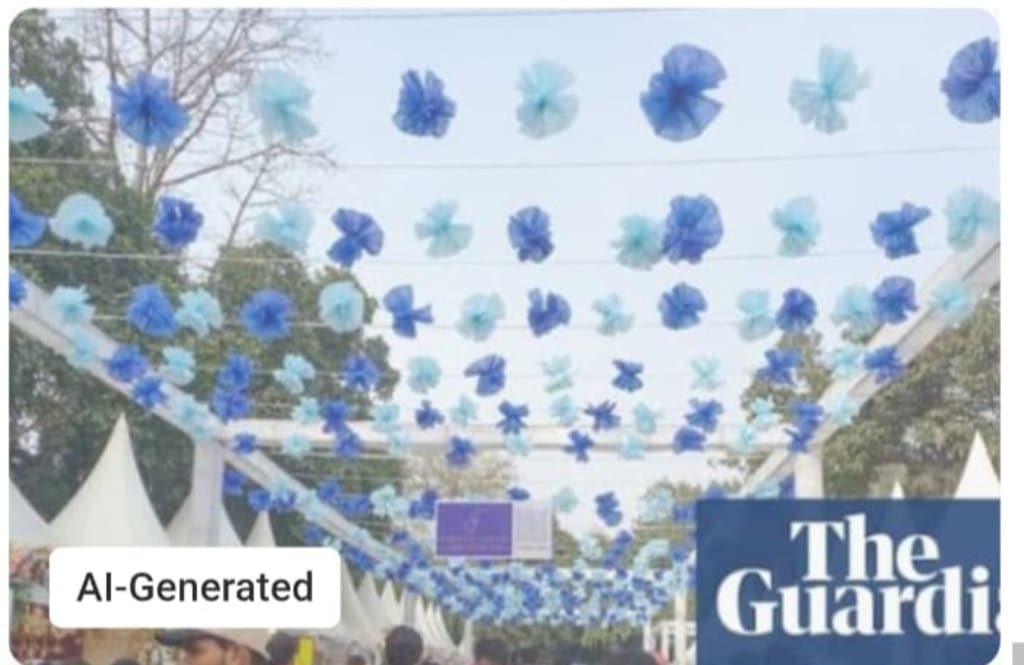
India presents a curious contradiction. On one hand, surveys repeatedly suggest that a large segment of the population does not read books regularly, especially literary fiction or serious non-fiction. On the other, the country hosts dozens of literary festivals every year, many of them lavish, well-attended, and heavily publicized. From the globally renowned Jaipur Literature Festival to smaller regional events across cities and towns, literary gatherings have become cultural spectacles.
This paradox raises an intriguing question: why does a country that rarely reads love literature festivals so much? The answer lies not only in books, but in social behavior, cultural aspiration, celebrity culture, and the evolving meaning of literature itself in modern India.
The Rise of the Indian Literature Festival
Over the past two decades, literature festivals in India have multiplied rapidly. What began as niche gatherings for writers and academics has evolved into large-scale events attracting thousands of attendees, corporate sponsors, politicians, influencers, and international authors.
These festivals are no longer confined to elite literary circles. They have become mainstream cultural events, covered extensively by media and promoted on social platforms. For many cities, hosting a literature festival is a mark of cultural prestige and global relevance.
Ironically, this growth has occurred alongside declining reading habits, especially among younger audiences who increasingly consume content through digital and visual platforms.
Literature as Performance, Not Practice
One explanation for the paradox lies in how literature is consumed at festivals. Attending a literary event does not require one to actually read books. Panels, discussions, debates, and interviews allow audiences to engage with ideas passively, without the sustained effort reading demands.
In this sense, literature festivals transform reading into a performative experience. Ideas are packaged into digestible conversations, often simplified and dramatized for wider appeal. The focus shifts from text to personality — from books to authors as performers.
For many attendees, listening to a famous writer speak for an hour feels more accessible and socially rewarding than spending weeks reading their work.
Celebrity Culture and the Star Author
Indian literature festivals thrive on celebrity appeal. Bestselling authors, journalists, politicians, filmmakers, and public intellectuals are marketed as stars. Their presence draws crowds regardless of whether the audience has read their books.
In some cases, the speaker’s fame has little to do with literature at all. Politicians promote memoirs, actors launch books, and influencers participate in panels on culture and identity. Literature becomes a gateway to broader conversations, blurring the line between literary discourse and entertainment.
This star-driven model reflects a broader cultural trend in India, where visibility and status often outweigh depth and engagement.
Social Status and Cultural Capital
Attending literature festivals also serves a social function. For India’s urban middle and upper classes, lit-fests offer a way to signal intellectual curiosity and cultural sophistication.
Being seen at such events — sharing photos, tagging locations, quoting speakers — becomes a form of cultural capital. One does not need to be a regular reader to participate in this ecosystem; presence alone is enough.
In this context, literature festivals function less as reading communities and more as networking spaces, where social identity is curated as carefully as ideas are consumed.
The English Language Factor
Another key dimension of this paradox is language. Many of India’s most prominent literature festivals are dominated by English-language programming, despite the fact that the majority of Indian readers consume content in regional languages.
English-language literature occupies a symbolic position — associated with education, global connectivity, and elite discourse. Festivals cater to this aspiration, even if it does not reflect everyday reading habits.
At the same time, regional language literature festivals often receive less media attention, reinforcing the perception that literature is something to be celebrated publicly rather than practiced privately.
Festivals as Spaces for Dialogue
To dismiss Indian literature festivals as superficial would be unfair. Despite the contradictions, these gatherings do create spaces for dialogue on important social, political, and cultural issues.
Discussions on caste, gender, identity, history, and free speech frequently take center stage. For many attendees, festivals offer exposure to ideas they might not encounter elsewhere.
In a country as diverse and complex as India, these conversations have value — even if they do not immediately translate into increased reading.
The Economics of the Lit-Fest Boom
Literature festivals also thrive because they fit neatly into the modern event economy. They attract sponsorships, tourism, media coverage, and brand partnerships.
Unlike academic conferences, lit-fests are designed to be accessible, photogenic, and commercially viable. Books may be sold, but the real currency is experience.
This commercialization does not necessarily undermine literature, but it does reshape its role — from a solitary intellectual pursuit to a shared cultural event.
Does This Paradox Harm Reading Culture?
The key concern is whether the popularity of literature festivals actually promotes reading or merely replaces it. Critics argue that festivals risk turning literature into spectacle, encouraging shallow engagement over deep reading.
Supporters counter that festivals act as gateways, sparking curiosity and introducing audiences to new voices. Even if only a fraction of attendees go on to read more, the exposure itself has value.
The truth likely lies somewhere in between. Literature festivals alone cannot revive reading culture, but they can keep literary conversation alive in a rapidly changing media landscape.
Redefining What It Means to Be a Reader
Perhaps the paradox exists because our definition of reading is evolving. In an age of podcasts, panels, audiobooks, and social media, engagement with ideas no longer happens only through printed pages.
Indian literature festivals reflect this shift. They suggest that while traditional reading may be declining, the appetite for stories, ideas, and intellectual exchange remains strong.
The challenge is to bridge the gap between listening and reading — between attending a festival and opening a book.
Conclusion
India’s love for literature festivals despite low reading rates is not a contradiction as much as it is a reflection of cultural change. These gatherings reveal how literature has adapted to social performance, celebrity culture, and experiential consumption.
While they may not turn everyone into a reader, literature festivals keep storytelling visible and relevant in public life. In a country of many languages, identities, and narratives, that visibility may be more important than it appears.
The paradox, then, is not that India rarely reads but loves literary festivals — it is that literature has found new ways to be heard, even when it is not always read.
About the Creator
Keep reading
More stories from Ayesha Lashari and writers in The Swamp and other communities.
Vinturas AI: Transforming the Future of Artificial Intelligence
Artificial Intelligence is no longer a concept confined to research labs or science fiction novels. It is now deeply embedded in everyday life, influencing how businesses operate, how decisions are made, and how societies evolve. Amid this rapid transformation, Vinturas AI is emerging as a forward-thinking force, redefining what artificial intelligence can achieve through innovation, adaptability, and responsible design.
By Ayesha Lashari3 days ago in The Swamp
The Saddest Thing - The Billionaires Who Rule America Aren't Even Enjoying Themselves
This single post says more about our ruling class than a thousand policy papers. The saddest thing about today's system is that the men robbing the rest of us - sabotaging our economic prospects, our pensions, our access to affordable healthcare - are not even happy.
By Scott Christenson🌴6 days ago in The Swamp



Comments
There are no comments for this story
Be the first to respond and start the conversation.