
Pakistan’s ‘Kashmir Solidarity Day’ Backfires as Protests Abroad Expose Growing Criticism
Demonstrations in the UK and Europe challenge Islamabad’s annual Kashmir narrative, with activists accusing Pakistan of hypocrisy and proxy politics.

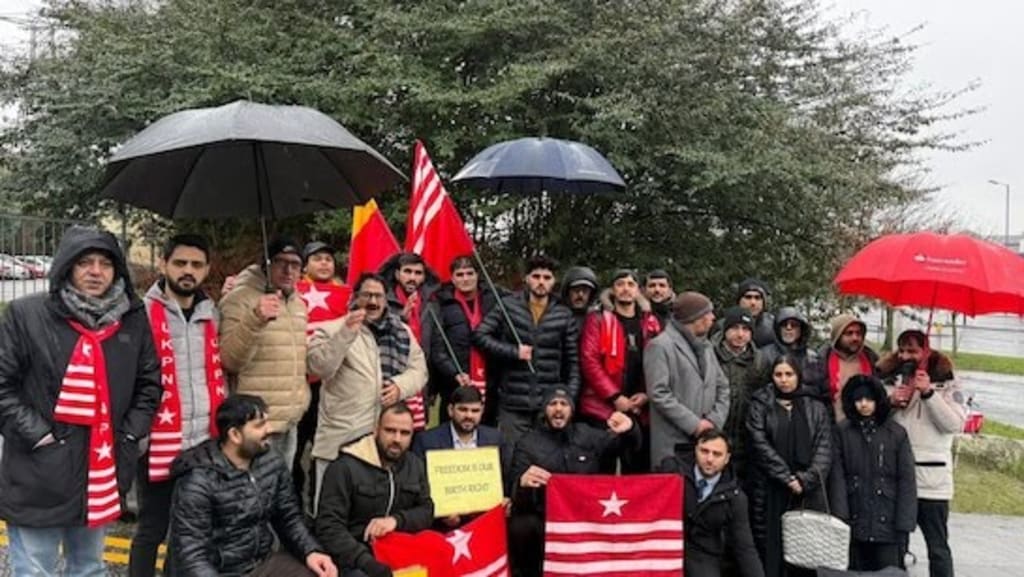
Pakistan’s annual Kashmir Solidarity Day, observed every year on February 5, is meant to project national unity and support for Kashmiris living under Indian administration. But this year, the event faced a sharp backlash—not inside Pakistan, but internationally.
Instead of strengthening Pakistan’s narrative, the day reportedly triggered protests in parts of the UK and Europe, where Kashmiri activists and dissident groups accused Pakistan of using Kashmir as a political tool while ignoring grievances in areas under its own control.
The protests raised uncomfortable questions for Pakistan’s global messaging and reignited a debate that has long remained controversial: Is Kashmir Solidarity Day a genuine show of support—or a political ritual that hides deeper realities?
What Is Kashmir Solidarity Day?
Kashmir Solidarity Day is an official event held in Pakistan each year. The government organizes:
rallies and marches
speeches by political leaders
human chains
prayers and special programs
media campaigns
The goal is to express solidarity with Kashmiris, highlight human rights concerns, and reinforce Pakistan’s diplomatic position on Kashmir at international platforms.
Over the years, the day has become one of Pakistan’s most prominent symbolic political observances.
Why Did This Year’s Solidarity Day “Backfire”?
According to reports, this year’s Kashmir Solidarity Day sparked public demonstrations abroad, especially in:
the United Kingdom
Belgium
other parts of Europe
Instead of supporting Pakistan’s message, protesters challenged it openly.
Many participants claimed that Pakistan’s solidarity campaigns do not reflect genuine concern for Kashmiris, but rather serve as:
a propaganda exercise
a diplomatic pressure tool
a narrative-building campaign
a distraction from internal issues
This is why critics described the event as “backfiring”—because Pakistan’s intended global message was met with public resistance.
Protests in the UK: A Strong Public Message
One of the most discussed protests reportedly took place outside the Pakistani Consulate in Bradford, UK.
Demonstrators accused Pakistan of:
supporting proxy conflict in Kashmir
promoting militant narratives
exploiting Kashmiri suffering for political goals
Some protesters even referred to February 5 not as a day of solidarity but as a “Day of Betrayal.”
That label alone shows how divided the diaspora debate has become.
Activists Say Pakistan’s Kashmir Narrative Is Selective
A key argument raised by protest organizers was that Pakistan’s official solidarity message focuses heavily on Indian-administered Kashmir, while ignoring:
political restrictions in Pakistan-administered Kashmir
governance issues
rights concerns in Gilgit-Baltistan
limited political freedom for Kashmiri nationalist voices
For many activists, the issue is not only about India or Pakistan—it is about the rights of Kashmiris themselves, regardless of which side controls territory.
Accusations of “Terror Links” and Proxy Politics
One of the most controversial claims linked to the protests was the allegation that Pakistan’s Kashmir policy has historically been connected with:
proxy warfare
militant groups
radicalized networks
Protesters argued that these strategies have contributed to decades of instability and violence in the region.
While Pakistan officially denies supporting terrorism and insists its Kashmir position is political and diplomatic, the protests show that the international narrative remains deeply contested.
Pakistan’s Official Position Remains Unchanged
Inside Pakistan, Kashmir Solidarity Day continues to be observed widely.
Government officials, political leaders, and military figures typically reaffirm:
support for Kashmiri self-determination
opposition to Indian policies in Kashmir
claims of human rights abuses in Indian-administered territory
The day is also used to signal Pakistan’s stance to the international community, including the UN and human rights organizations.
So while protests abroad raised criticism, Pakistan’s official position has not shifted.
A Battle of Narratives in the Diaspora
One major takeaway from this year’s events is that the Kashmir debate is no longer only happening in South Asia.
It is increasingly being shaped by diaspora communities in:
the UK
Europe
North America
Diaspora groups often have:
strong political influence
organized activism networks
media presence
access to international platforms
This is why protests in places like Bradford and Brussels matter. They don’t just challenge Pakistan—they influence how international audiences interpret the Kashmir issue.
Why This Matters for Pakistan’s Global Image
Pakistan has long tried to internationalize the Kashmir issue through:
diplomatic missions
media campaigns
lobbying
solidarity events
But when protests appear during the same observance, it creates a different image:
Pakistan’s narrative looks divided
critics gain visibility
international media attention increases
questions are raised about credibility
In global politics, perception matters. Even symbolic events can shape how countries are viewed.
What This Means for the Kashmir Issue
Kashmir remains one of the world’s longest-running political conflicts, and it continues to affect:
India-Pakistan relations
regional security
diplomacy
trade and stability in South Asia
However, this year’s backlash shows that public opinion—especially among diaspora Kashmiris—is not unified.
The protests highlight that Kashmir is not just a dispute between two states. It is also about:
identity
political representation
civil rights
and lived realities on the ground
FAQs
What is Kashmir Solidarity Day?
Kashmir Solidarity Day is observed on February 5 in Pakistan to show support for Kashmiris and raise awareness about the Kashmir dispute.
Why did protests happen during Kashmir Solidarity Day?
Some Kashmiri activists and dissidents in the UK and Europe protested, claiming Pakistan uses the day for political propaganda while ignoring issues in territories under its control.
Where did protests take place?
Reports mention protests in the UK, including Bradford, and demonstrations in parts of Europe such as Brussels.
What were protesters accusing Pakistan of?
Protesters accused Pakistan of hypocrisy, proxy conflict, and using Kashmir as a political tool rather than genuinely supporting Kashmiri rights.
Has Pakistan changed its stance?
No. Pakistan continues to officially support Kashmir Solidarity Day and maintains its diplomatic position on the Kashmir issue.
Conclusion
Pakistan’s Kashmir Solidarity Day is designed to project unity and international support for Kashmiris. But this year, the event faced unexpected resistance abroad, as protests in the UK and Europe challenged Pakistan’s narrative and raised accusations of hypocrisy and proxy politics.
Whether one agrees with Pakistan’s stance or with the protesters, one thing is clear: the Kashmir debate is becoming increasingly global, contested, and complex.
And as international audiences pay more attention, symbolic events like Kashmir Solidarity Day may no longer be one-sided political messaging—they may become platforms for confrontation, dissent, and competing truths.
About the Creator
Asad Ali
I'm Asad Ali, a passionate blogger with 3 years of experience creating engaging and informative content across various niches. I specialize in crafting SEO-friendly articles that drive traffic and deliver value to readers.
Why Black History Matters in America?
The United States of America is celebrating their 250th anniversary in 2026. I'm proud to be an American and as someone who was born here, I wouldn't imagine myself living anywhere else. This is a country where opportunities are possible. Where anyone can be successful in anything they desire to do. Equality, community, and togetherness are the backbones of what America is and should be about. However, we have an administration who wants to erase and disregard those who have made positive, meaningful impacts in our country, specifically Black figures, such as Martin Luther King, Jr., Rosa Parks, and Maya Angelou. President Trump and his administration have been constantly complaining and fighting against what they call the "Woke agenda". They use this excuse as a distraction from other issues they refuse to address, such as the high cost of living, climate change, and inflation. That equality is dividing America, when in reality, it's bringing us together. Being woke is not tied to a specific political party. No matter where you stand on the political spectrum, you can still care about other people and their plights. Compassion and empathy for others isn't tied to a political party, either. We were taught as children to treat others the way we want to be treated and not judge others because they're different from us. Caring about others isn't a personal attack on your beliefs. It doesn't make you any less of a person. People who are easily offended over African American figures, past or present, or anything related to it, are grasping at straws. Current and future generations need to know who people like Harriet Tubman and Shirley Chisholm were, especially in the classroom. Black History is part of American History. It should be recognized, not hidden or forgotten. Besides, you can't shield children from everything, just because your feelings are easily hurt.
By Mark Wesley Pritchard 7 days ago in The Swamp
Mandelson’s Exclusion from the Lords: A Divisive Issue within the Labour Party
Peter Mandelson, one of the most controversial figures in modern British political history, has long been a central figure in the evolution of the Labour Party. His exclusion from the House of Lords continues to be a hotly debated issue within the party, reflecting broader divisions over the nature of political leadership, accountability, and the role of the aristocracy in modern governance. This article delves into the reasons behind Mandelson’s exclusion from the Lords, explores the internal conflicts within Labour, and assesses how this controversy fits into the broader narrative of modern British politics.
By Ayesha Lashari6 days ago in The Swamp
The Devil's Triangle
The sails ruffled in the breeze as we cruised along. The Sea Breeze was a mid-size catamaran that sailed out of Royal Naval Dockyard in Bermuda. We had booked this trip weeks in advance and were now looking at our Captain, Spike and two boat hands. Paddy and Wilson seemed like nice guys, joking around with the passengers and telling us some stories about Bermuda that only locals would know. Their island accents sounded almost British but they were pleasant to listen to.
By Barbara Gode Wiles5 days ago in Fiction




Comments
There are no comments for this story
Be the first to respond and start the conversation.