
The Myth of the Public’s “Right to Know” Is Falling Apart
Many Can’t Handle the Truth — and It Shows

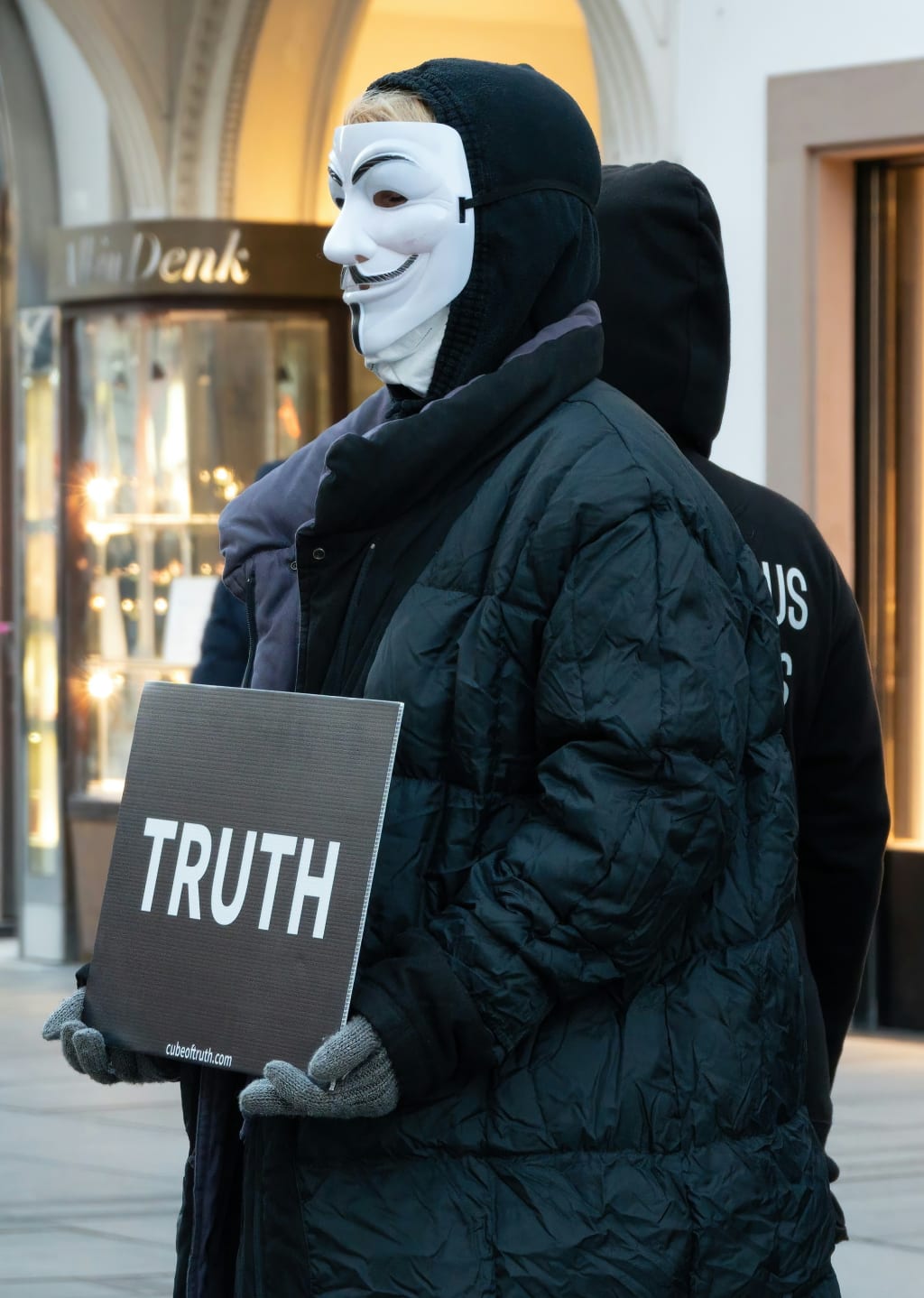
We’ve all heard it: “The public has a right to know.”
It’s a rallying cry for transparency, truth, and freedom of information. But lately, I’ve been questioning what that “right” even means — and more importantly, what people actually do with the information once they get it.
Because from what I’ve seen, the demand to “know” is often followed by something much less noble: misinterpretation, denial, manipulation, and in some cases — outright chaos.
We don’t just have a transparency problem. We have a comprehension problem.
When People Ask for Truth, Then Reject It
Let’s be honest — recent history is full of moments where people claimed they wanted the truth, only to turn on it once it arrived:
• COVID-19 guidance: Scientists updated public health recommendations as more data came in. That’s how science works. But people took evolving information as proof of lies. Entire groups decided to rewrite the facts on their own terms.
• Vaccines: After demanding data and transparency, many rejected it when it didn’t align with personal beliefs. “Do your own research” became a slogan — even when that “research” meant Facebook comments over peer-reviewed studies.
• Elections: Endless calls for audits and evidence. And when that evidence didn’t confirm conspiracy theories? It was dismissed as fake, rigged, or part of the cover-up.
• The Epstein Files: People demanded “the list,” convinced it would expose powerful abusers in one big reveal. And when over 900 court documents were unsealed in early 2024, many ignored the complexity. Names were cherry-picked. Context was lost. The outrage became another performance — not an effort to understand what really surfaced.
• Classified briefings on foreign policy and national security: When governments hold back sensitive intelligence, critics scream “cover-up.” But releasing certain data prematurely can jeopardize investigations or compromise sources. Yet again, the truth is rarely accepted unless it aligns with the outrage people are already invested in.
These weren’t just moments of confusion. They were moments where people weaponized information — or outright ignored it — because it didn’t say what they wanted it to say.
And Then There’s the Media
I used to hold international media in high regard. Where I come from — both in my community and as a freelance journalist — global news outlets were once seen as the gold standard.
But that illusion cracked wide open during the Trump era and the COVID-19 pandemic.
Many of these platforms didn’t just report — they performed. They fed panic, turned nuance into outrage, and often reduced complex issues into simplified, click-driven narratives. In doing so, they became part of the problem: polarizing, partisan, and increasingly driven by engagement over clarity.
How can the public “know” anything when the messengers themselves are unreliable?
Transparency Is Nothing Without Comprehension
We live in a time where:
• Most people skim headlines and call it “research”
• Nuance dies in comment sections
• Experts are drowned out by influencers
• Truth is judged by how well it performs online
So when people scream about their “right to know,” I can’t help but think — would they even accept the truth if they had it? Or would they just twist it, reject it, or ignore it completely?
Some information is withheld from the public for good reason. That may sound undemocratic, but when people consistently misuse the truth or cherry-pick it to fit an agenda, full transparency becomes a risk — not a solution. We've already seen how classified files, leaked reports, and court documents get hijacked by narratives instead of analyzed with care. In certain cases, disclosure can derail legal proceedings, endanger lives, or inflame mass paranoia.
Let’s be clear: this isn’t about gatekeeping or elitism. It’s about realism. The public isn’t always equipped to handle the truth, and transparency is useless without the ability to process what’s being revealed. People treat information like a right — but ignore the responsibility that should come with it.
And I’m not blaming “the public” in a vacuum. This failure is shared across the board:
– Media institutions distort facts and fuel tribalism.
– Influencers and self-declared experts flood timelines with oversimplified or false claims.
– Political operatives turn truth into a weapon when it fits their agenda, and cry censorship when it doesn’t.
In that kind of landscape, even the most honest disclosures don’t stand a chance.
A Different Kind of Transparency
If we really care about truth, we need more than access. We need responsibility — from the media, from institutions, and from the public.
A “right to know” should come with a willingness to listen, learn, and interpret carefully. Otherwise, what we call transparency is just a new form of noise.
About the Creator
Rena Thorne
Unfiltered. Unbought. Unapologetic.
I’m not here to provoke—I’m here to make you rethink.
Keep reading
More stories from Rena Thorne and writers in The Swamp and other communities.
Turkey Joins UAE, Bahrain, Saudi Arabia, Qatar, Kuwait and Seven Other Nations in Middle East as UK Issues High-Level Travel Advisory Amid Regional Tensions, Security Threats, and New Identity Rules
The Middle East is once again in the global spotlight as the United Kingdom has issued a high-level travel advisory, urging its citizens to exercise extreme caution when visiting several nations in the region. The advisory now includes Turkey alongside the United Arab Emirates, Bahrain, Saudi Arabia, Qatar, Kuwait, and seven other nations, reflecting growing concerns about security threats, regional tensions, and evolving identity regulations affecting travelers.
By Salaar Jamaliabout 6 hours ago in The Swamp


Comments
There are no comments for this story
Be the first to respond and start the conversation.