
The Media is the Message—And Monsanto Paid for It
How Corporate Giants Hijack Public Discourse, Science, and Truth

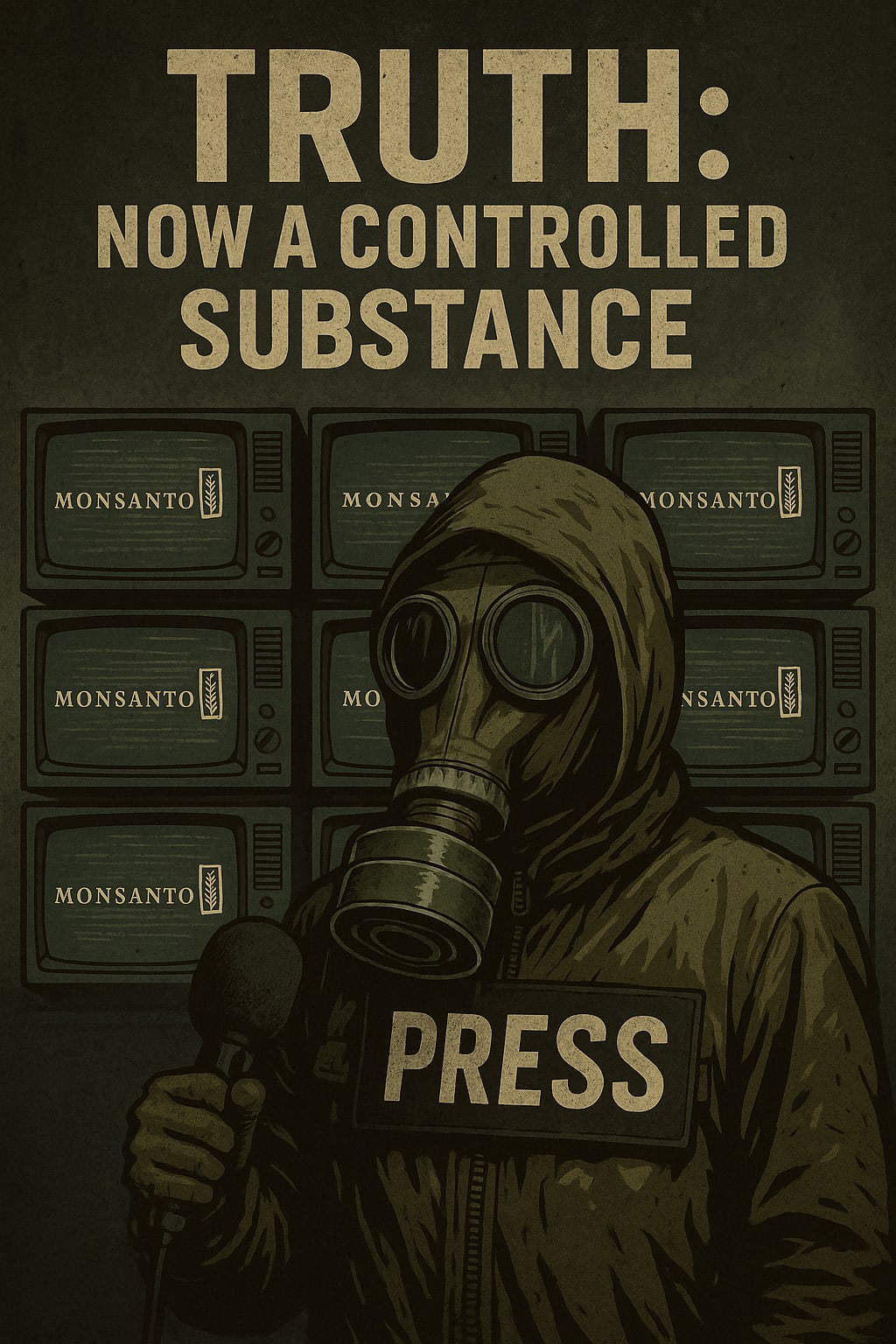
In 2025, the truth is no longer just inconvenient—it’s unaffordable. While the mainstream press obsesses over Taylor Swift sightings and celebrity divorces, global agrochemical giants like Monsanto (now Bayer) continue a far more dangerous charade: manipulating the media, co-opting science, and rewriting reality to defend products that have quietly sickened the planet for decades. This is not a conspiracy theory. It’s a well-documented, well-funded strategy of control—backed by court records, whistleblowers, and a trail of digital fingerprints.
A Monsanto-Funded Reality: When Truth Gets a PR Manager
Long before it became a subsidiary of Bayer in 2018, Monsanto mastered the art of influence—not just in Congress, but in the newsroom. And that influence hasn’t disappeared. It’s simply adapted to a new digital landscape.
Court documents, now infamously dubbed The Monsanto Papers, exposed how the company ghostwrote academic articles, hired PR firms to plant friendly content, and tracked journalists like a military target list. In fact, journalists like Carey Gillam were singled out and defamed for having the gall to do their job—investigate.
Monsanto’s “Let Nothing Go” campaign wasn’t just a social media strategy—it was a cultural scorched-earth policy. Every tweet, article, post, or whisper that dared question Roundup or GMOs was countered, drowned, or buried.
And it’s still happening in 2025.
Digital Disinformation: The Modern Pesticide is the Algorithm
Thanks to Project Censored’s latest report, we now know Monsanto’s digital reach extends beyond Facebook ads and YouTube influencers. In partnership with ad-tech firms, Monsanto’s campaigns in 2024–2025 exploited platform algorithms to manipulate search results and boost pro-corporate content.
Think that explainer video on GMOs is just an educational resource? Think again. Many were bankrolled quietly by the same corporations under fire for environmental contamination.
On social platforms like X, Monsanto-connected accounts still churn out sanitized content minimizing glyphosate’s health risks—never disclosing ties to Bayer. AI bots and influencer campaigns give the illusion of public consensus. In reality, it’s scripted theater, bought and paid for.
Buying Silence: The Real Journalism Monsanto Fears
Why hasn’t this story made national headlines? Simple: money talks—and journalism listens when it's broke.
With 80% of American newspapers owned by conglomerates, and ad revenue increasingly dependent on pharmaceutical, chemical, and agribusiness dollars, few editors are willing to greenlight coverage that might cost them sponsors.
According to a 2025 NPR report, CBS producers were pressured to tone down coverage of Bayer-linked PFAS pollution after Paramount’s corporate team flagged it as “potentially damaging.” That’s not journalism. That’s public relations in disguise.
Monsanto's Favorite Tool: The Lawsuit Threat
Want to scare a reporter into silence? Don’t send a rebuttal—send a subpoena.
Over the past decade, Monsanto and its legal army have weaponized defamation lawsuits to stifle dissent. Small farmers who saved seeds? Sued. Activists exposing risks? Sued. Scientists warning about carcinogenic links? Threatened with job loss or worse.
In a country built on free speech, the message is clear: Speak against the agro-giants, and you’d better lawyer up.
What Else Are We Missing?
The Monsanto story is just a symptom of a much bigger disease: corporate media capture.
Big Pharma influences medical journalism the same way Monsanto warps ag reporting.
Fossil fuel interests sponsor "climate optimism" think pieces to delay real action.
Tech giants suppress stories about surveillance or bias under the guise of “content moderation.”
And now with AI, it’s easier than ever to simulate consensus. Corporate-friendly narratives are no longer just placed in newspapers—they’re engineered into the digital bloodstream.
The Real Victims: Public Health and Environmental Accountability
Let’s not forget what this manipulation conceals:
- Billions paid in Roundup settlements—while many still don’t know what glyphosate is.
- PFAS contamination spreading through American water systems—barely mentioned in prime-time news.
- Ecological degradation from GMO farming—dismissed as “fearmongering” by lobbyist-backed “experts.”
All while the corporations behind it fund "independent research," push favorable algorithms, and make sure real stories stay buried beneath a mountain of junk content.
Conclusion: Don’t Trust the Narrative—Follow the Money
In a functioning republic, the press is supposed to keep power in check. But when that press becomes a partner in deception, democracy withers.
Monsanto’s story is not unique—but it is a warning.
If we want truth, we must demand transparency. If we want accountability, we must support real journalism—not the digital puppets echoing talking points from corporate boardrooms. In the end, the biggest poison isn’t glyphosate—it’s manufactured consent.
About the Creator
Michael Phillips
Michael Phillips | Rebuilder & Truth Teller
Writing raw, real stories about fatherhood, family court, trauma, disabilities, technology, sports, politics, and starting over.
Keep reading
More stories from Michael Phillips and writers in The Swamp and other communities.
From “Conspiracy Theory” to Policy Disaster — and Back Again
They mocked us in 2020. They called it misinformation, disinformation, or “dangerous right-wing paranoia.” But by 2024, nearly every “conspiracy theory” the Left swore would never happen had become official Democrat policy — cheered on by federal agencies, mainstream media, and corporate enforcers.
By Michael Phillips6 months ago in The Swamp
Elon Musk’s xAI Datacenter Generating Extra Electricity Illegally, Regulator Rules
Elon Musk, known for pushing boundaries in technology—from electric cars to space exploration—is now facing scrutiny over one of his latest ventures. According to a recent ruling by a national energy regulator, xAI’s datacenter has been generating more electricity than authorized, a violation of regulations designed to ensure fair and safe power distribution. The announcement has sparked widespread debate, raising questions about corporate responsibility, regulatory oversight, and the environmental impact of large-scale artificial intelligence operations. The Regulator’s Findings Authorities revealed that xAI’s datacenter, a facility designed to support the company’s artificial intelligence research and operations, produced electricity beyond its permitted levels. While datacenters are already known for high energy consumption, regulators have strict rules to prevent overproduction or unreported energy usage, which can strain local grids, interfere with supply, and bypass reporting requirements. According to the official ruling, xAI had not properly disclosed the additional electricity generation, prompting concerns about transparency and compliance. The facility reportedly used advanced power systems to augment its energy needs, but the unapproved scale of this generation triggered the investigation. Why Datacenters Consume Massive Energy AI datacenters, particularly those supporting large-scale models, require enormous computational power. GPUs, specialized processors, and cooling systems all consume vast amounts of electricity. Estimates suggest that training cutting-edge AI models can consume millions of kilowatt-hours, rivaling the energy usage of small cities. This context helps explain why xAI’s datacenter may have sought to supplement its energy needs independently. By generating extra electricity on-site, the company may have aimed to ensure uninterrupted operations and maintain performance, but regulators view such actions as a violation when they exceed permitted levels or bypass official reporting channels. Musk’s Track Record With Energy Elon Musk’s ventures have long intersected with energy production. Tesla’s solar and battery projects, along with SpaceX’s energy-intensive launches, have consistently challenged conventional energy norms. Musk has promoted self-sufficient power systems, often emphasizing renewable energy and sustainability. However, past successes do not exempt new projects from compliance. The xAI ruling underscores that even high-profile innovators must adhere to regulations designed to maintain grid stability and protect communities. Implications for AI Development The incident highlights a broader tension between rapid technological advancement and regulatory frameworks. AI companies often operate on the cutting edge of computational demand, pushing systems beyond traditional limits. Yet this rapid growth can clash with established rules designed for safety and fairness. Experts note that energy-intensive AI models are increasingly under scrutiny for environmental and legal compliance. “We are entering an era where computational growth must balance innovation with responsibility,” says energy analyst Dr. Priya Menon. “Datacenters can no longer operate in isolation from their energy obligations.” Potential Consequences for xAI The regulator’s ruling could carry multiple consequences. These may include fines, mandatory operational adjustments, or stricter oversight, depending on the severity of the violation and the company’s response. There is also the possibility that local authorities could impose limits on future datacenter expansions. For Musk and xAI, the ruling presents both a legal and reputational challenge. Critics argue that even if the overproduction was intended to support AI research, ignoring regulatory limits sets a concerning precedent for corporate behavior in high-stakes technology sectors. The Public Reaction The news has sparked debate across social media and industry circles. Some defend Musk’s approach, citing the necessity of uninterrupted energy for AI research, while others criticize the move as another example of tech giants operating above the law. Environmental groups have also weighed in, noting that unauthorized energy generation can have broader implications for grid stability and carbon emissions, depending on the source of power. The discussion is amplifying scrutiny on energy practices within the fast-growing AI industry. Regulatory Oversight in the AI Era The xAI case exemplifies the growing role of regulatory bodies in overseeing high-tech energy use. As AI applications expand, so does the demand for power. Datacenters cannot simply scale energy consumption at will; regulators must ensure compliance with grid capacities, environmental standards, and reporting protocols. This situation may prompt new policies specifically targeting AI-specific energy consumption, potentially affecting not just xAI but other tech companies operating large-scale computational infrastructures. Musk Responds As of now, Elon Musk has not released a formal statement addressing the ruling. However, his companies’ history suggests that compliance adjustments are likely while maintaining operational priorities. Musk has previously framed regulatory challenges as opportunities to innovate around limits, and xAI may explore ways to align its energy generation practices with legal requirements while sustaining AI workloads. Broader Implications for the Tech Industry The xAI ruling is a cautionary tale for the tech world. It illustrates that even powerful innovators cannot ignore energy regulations, particularly when operations have systemic impacts on communities and the environment. For emerging AI companies, this incident underscores the need to integrate legal compliance, sustainability, and innovation. Failure to do so may result in penalties, public backlash, and operational disruption—issues that can undermine even the most ambitious technological goals. Conclusion The case of Elon Musk’s xAI datacenter generating electricity illegally is more than a regulatory headline—it is a snapshot of the complex relationship between technology, power, and oversight. As AI continues to grow in scale and influence, the balance between innovation and compliance will become ever more critical. For xAI, the immediate task is clear: adjust operations to meet regulatory standards. For the industry at large, the message is equally clear—responsible energy use is not optional in the era of AI. Musk’s next move will likely shape not only his company’s trajectory but also the broader conversation around sustainable, lawful energy practices in cutting-edge technology.
By Aarif Lasharia day ago in The Swamp
Wild Card Weekend Recap: What Happens Now?
I think I figured out why I love Wild Card Weekend so much. It's because it's the first playoff anything of the calendar year. The NFL season starts in the fall, and once upon a time, the champion was crowned either on or slightly before New Year's. The evolution of the NFL schedule has resulted in the playoffs starting just into the New Year, and currently, the final week of the season falls on the first weekend of the New Year, with Wild Card Weekend coming a week after that. So yes, chronologically, the NFL's Wild Card Weekend serves as the first playoff anything of the calendar year.
By Clyde E. Dawkins5 days ago in Unbalanced



Comments
There are no comments for this story
Be the first to respond and start the conversation.